









Nigeria’s automotive landscape is approaching a critical tipping point as industry experts project a massive boom in electric vehicle (EV) adoption throughout 2026. Data from the National Bureau of Statistics reveals that passenger car imports surged to ₦1.01 trillion in the first nine months of 2025, with a distinct shift toward alternative energy models.
In recent interviews, EV distributors in Lagos and Abuja confirmed that customer inquiries more than doubled last year, signaling that high fuel costs and subsidy removals have made the economic case for electric mobility undeniable.
The legislative backbone for this transition is the Electric Vehicle Transition and Green Mobility Bill 2025, which passed its second reading in the Nigerian Senate in November 2025. This bill mandates government agencies to prioritize locally assembled EVs and introduces visual distinctions such as special green number plates to drive consumer interest.
To further de-risk the sector, the government has maintained a reduced import duty of 10 percent on fully built electric units while pushing for a 30 percent local production target by 2033.
Local manufacturers like Roxettes Motors are already scaling operations at their assembly plants in Obuaku Industrial City to meet this rising demand. Company Chairman Dr. Kaycee Orji warned that Nigeria must accelerate its transition to avoid becoming a dumping ground for internal combustion engine (ICE) vehicles as China and Europe phase them out.
To prevent this, the National Automotive Design and Development Council plans to implement a strict End-of-Life Vehicle policy by the second quarter of 2026, which will restrict the importation of substandard or non-roadworthy used cars.
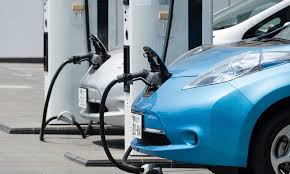
Infrastructure providers are also ramping up investment to support the estimated 20,000 EVs currently on Nigerian roads. LUG West Africa recently announced plans to deploy over 250 public charging points across Lagos State by the end of 2026.











 adoption throughout 2026. Data from the National Bureau of Statistics reveals that passenger car imports surged to ₦1.01 trillion in the first nine months of 2025, with a distinct shift toward alternative energy models.)