





Keypoints
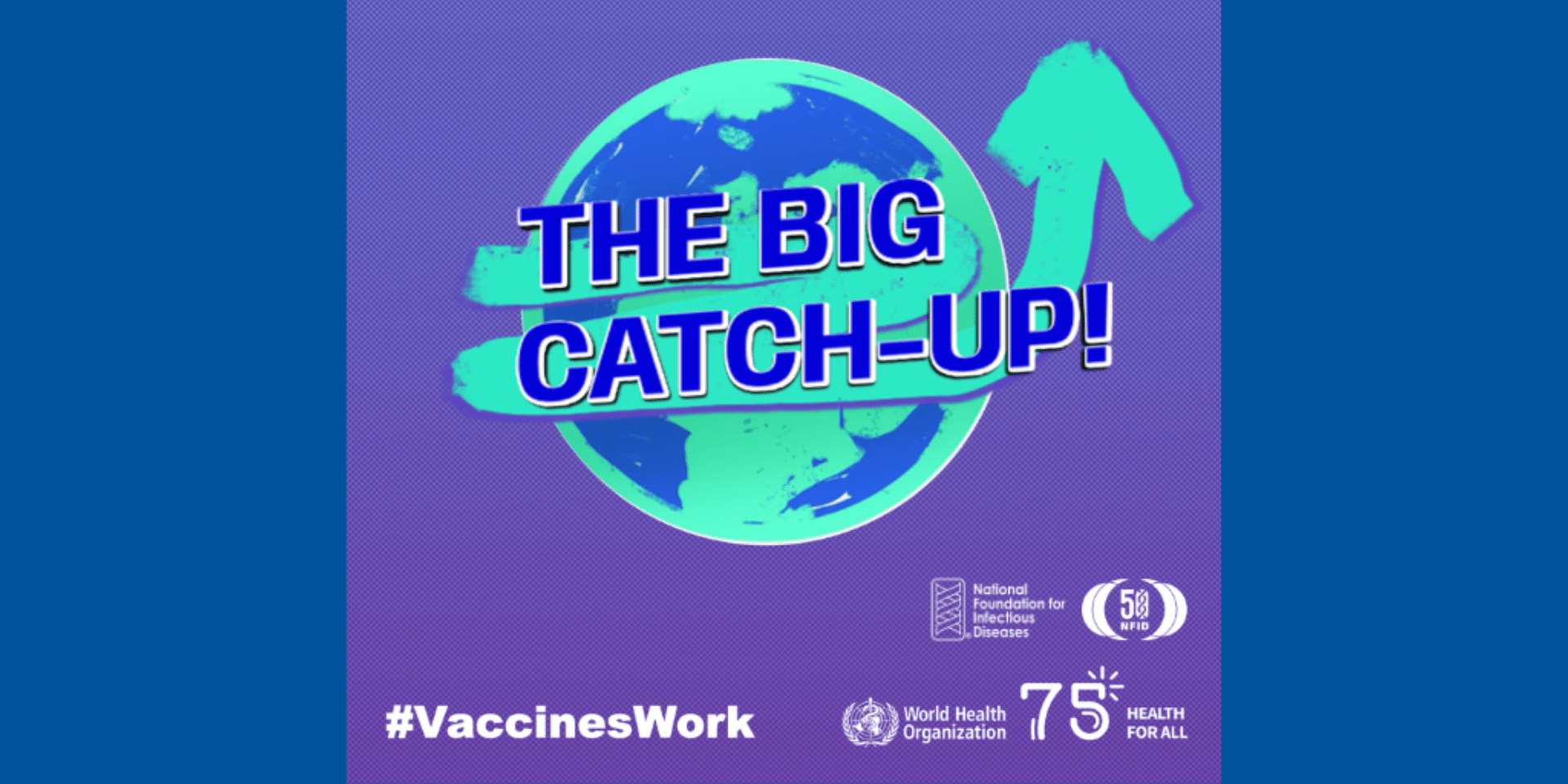
- The Big Catch-Up (BCU) programme has vaccinated 18.3 million children across 36 countries between 2023 and March 2026.
- Over 100 million doses were delivered, specifically targeting children aged one to five who missed routine shots during COVID-19 disruptions.
- Out of those reached, 12.3 million were “zero-dose” children who had never received a single vaccine.
- Ethiopia and Nigeria led the progress, reaching 2.5 million and 2 million under-immunized children, respectively.
- Global health agencies (WHO, UNICEF, Gavi) warned that while the campaign was successful, measles outbreaks are rising, with 11 million cases reported in 2024.
Main Story
The massive effort to repair the damage done to global health by the COVID-19 pandemic has reached a major milestone.
On Friday, April 24, 2026—marking the start of World Immunization Week—WHO, UNICEF, and Gavi revealed that the “Big Catch-Up” initiative has successfully put 18.3 million children back on the path to health.
The program focused on the “missing generation” of children born during pandemic lockdowns who were bypassed by traditional infant immunization schedules.
The initiative has fundamentally changed how health systems operate by proving that routine immunization can be scaled to reach older children (ages 1–5).
Beyond just administering shots, the BCU invested in the “last mile” of healthcare, training workers to track down unvaccinated children in conflict zones and fragile regions.
While the program officially concluded in March 2026, it has left behind a digital and physical infrastructure for monitoring coverage that health leaders hope will prevent future “equity gaps” in global medicine.
The Issues
The primary challenge is the routine-sustainability gap; while mass catch-up campaigns like BCU are effective at clearing backlogs, they are resource-intensive and cannot replace a functioning daily immunization system. Authorities must solve the problem of rising vaccine hesitancy, which combined with declining coverage caused measles outbreaks to triple globally since 2021.
Furthermore, there is a conflict-zone logistics risk; the 36 countries targeted by the BCU account for 60% of the world’s zero-dose children, many of whom live in areas where displacement and war make consistent healthcare nearly impossible. To succeed, the “Immunization Agenda 2030” must ensure that the policy updates made during the BCU—such as expanded age eligibility—become a permanent part of national health laws.
What’s Being Said
- “The Big Catch-up has helped to undo one of the pandemic’s major negative consequences,” stated Tedros Ghebreyesus, Director-General of the WHO.
- UNICEF Executive Director Catherine Russell warned that while millions were reached, “many more remain out of reach,” requiring long-term health system investment.
- Sania Nishtar, CEO of Gavi, described the initiative as “proof of what coordinated global action can achieve” when governments and communities collaborate.
- Global health estimates for 2024 showed 14.3 million infants still did not receive a single routine vaccine, highlighting the “persistent gaps” that remain.
What’s Next
- Health ministries in the 36 participating countries are expected to integrate the BCU monitoring systems into their permanent national health databases.
- A major push is anticipated during World Immunization Week 2026 to secure funding for the second half of the “Immunization Agenda 2030.”
- Nigeria and Ethiopia will likely serve as case study hubs to teach other nations how to identify and vaccinate “zero-dose” children in high-density urban and remote rural areas.
- International monitors will keep a close eye on measles transmission rates in late 2026 to see if the 100 million catch-up doses have successfully blunted the surge in global outbreaks.
Bottom Line
The Big Catch-Up has successfully “stopped the bleeding” caused by pandemic-era health service collapses. However, with 11 million measles cases still being reported annually, the transition from emergency catch-up campaigns to rock-solid routine healthcare is the next great challenge for global stability.