Key Points
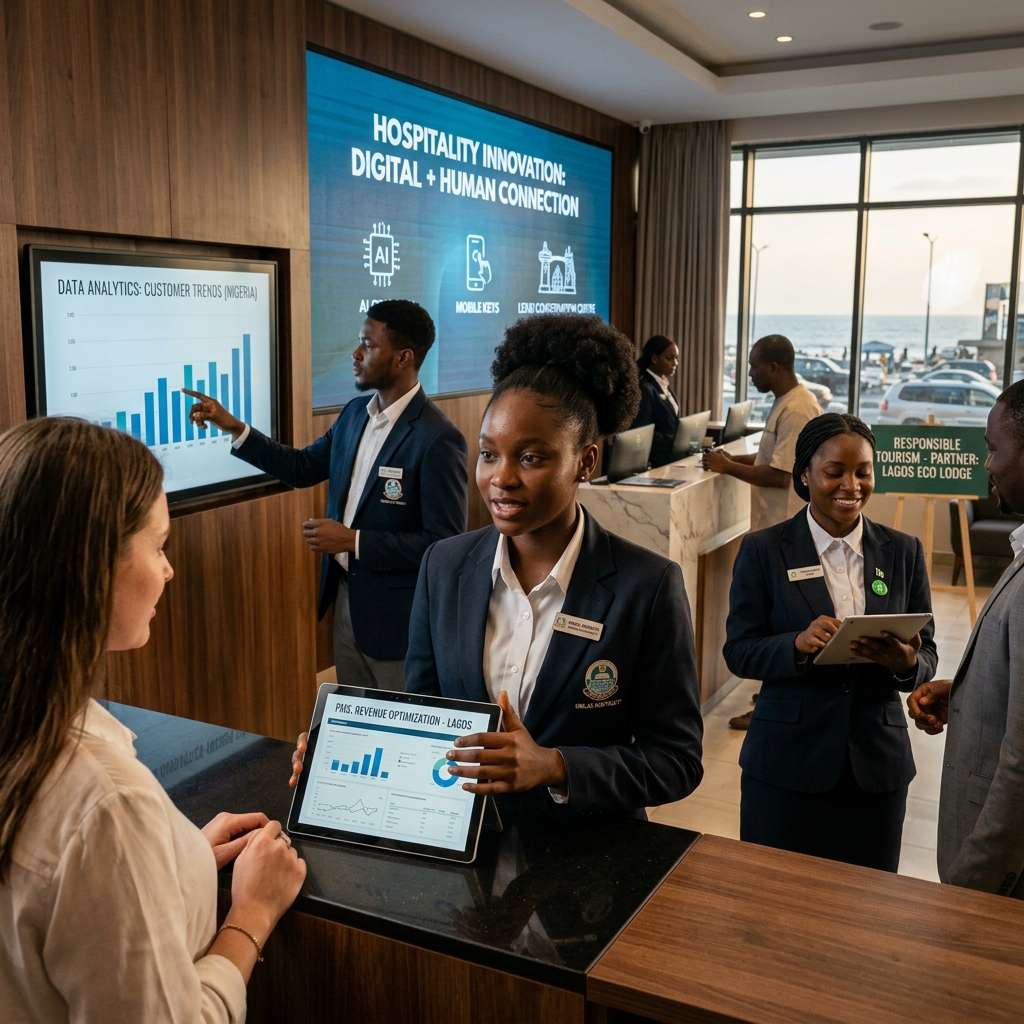
- Digital technology, including artificial intelligence and automation, is reshaping how hotels, travel agencies, and tourism businesses serve their customers.
- Sustainability has become an important part of hospitality education, with greater attention to environmental protection and responsible tourism.
- Data analytics, financial management, and digital marketing are helping tourism professionals make smarter business decisions.
- Cultural awareness, communication, and personalised service remain essential in an industry built around human experiences.
- Universities and training institutions must adapt their programmes to prepare graduates for the changing demands of the global tourism industry.
Main Story: A New Era for Hospitality and Tourism
The hospitality and tourism industry has always been about people. Whether it is a hotel welcoming a tired traveller, a tour guide introducing visitors to a historic community, or a restaurant creating a memorable dining experience, the success of the industry depends on making people feel valued.
But the way these experiences are delivered is changing rapidly.
Technology is transforming how travellers discover destinations, book accommodation, communicate with service providers, and share their experiences online. At the same time, customers increasingly expect personalised services, environmentally responsible businesses, and experiences that go beyond ordinary sightseeing.
These changes are creating new opportunities, but they are also raising an important question: are graduates leaving hospitality and tourism programmes with the skills employers need?
Across the industry, traditional service knowledge remains valuable. However, it is no longer enough on its own. Today’s professionals must understand digital systems, interpret customer data, manage resources responsibly, and deliver excellent service to people from different cultural backgrounds.
For educational institutions, the challenge is to prepare students for an industry where technology and human connection must work together.
Why Digital Skills Can No Longer Be Ignored
Imagine checking into a hotel after a long international flight. Instead of standing in a queue, you use a digital check-in system, receive your room details on your phone, and adjust the lighting and temperature through a smart device.
This is increasingly the kind of convenient experience travellers expect from modern hospitality businesses.
Artificial intelligence, automated booking systems, chatbots, and smart-room technology are changing how businesses interact with their guests. These tools can answer routine questions, simplify reservations, and help staff manage everyday operations more efficiently.
For students preparing to enter the industry, understanding these technologies is becoming an important advantage.
Hospitality and tourism programmes must therefore move beyond traditional classroom instruction. Students need practical exposure to property management software, point-of-sale systems, e-commerce platforms, digital marketing, and online reputation management.
Understanding how customers discover and evaluate travel businesses online is equally important. A hotel with excellent facilities can still struggle to attract bookings if its digital presence is poor or its online reputation is neglected.
However, technology should support human service rather than replace it entirely. When a guest has a complicated complaint or needs personal assistance, empathy, patience, and sound judgment remain essential.
The real challenge is teaching future professionals when technology can improve the experience and when a personal touch matters most.
The Business Case for Responsible Tourism
Another major change in hospitality education is the growing importance of sustainability.
Tourism can create jobs, support local businesses, and introduce visitors to different cultures. Yet poorly managed tourism can also place pressure on natural resources, generate waste, and damage the communities and environments that attract visitors in the first place.
This is why responsible tourism must become part of everyday business practice.
Future hospitality professionals need to understand energy efficiency, water conservation, waste reduction, and responsible purchasing. They must also recognise the value of working with local suppliers and ensuring that tourism benefits the communities hosting visitors.
Ecotourism offers one example of how these principles can work in practice. When properly managed, tourism activities can support conservation efforts, create local employment, and encourage visitors to appreciate natural environments and cultural heritage.
Universities can help prepare students by incorporating sustainability into hotel management, event planning, destination development, and tourism marketing courses.
The goal is not simply to teach students how to attract more visitors. It is to help them understand how to build businesses that remain economically successful without ignoring their environmental and social responsibilities.
Data and Business Intelligence: Making Smarter Decisions
Behind every successful hotel or travel company are countless decisions about pricing, staffing, marketing, and customer service.
Increasingly, these decisions are informed by data.
Tourism businesses can analyse booking patterns, customer preferences, seasonal demand, and spending behaviour to understand what travellers want. This information can help hotels adjust room prices, travel companies develop more relevant packages, and restaurants plan staffing and purchasing more effectively.
As a result, data analytics and financial management are becoming valuable additions to hospitality education.
Students who understand revenue management, budgeting, digital analytics, and customer relationship management can contribute to both the customer experience and the financial performance of a business.
These skills are particularly important in a competitive market where small improvements in pricing, marketing, or resource allocation can influence profitability.
Nevertheless, data must be used responsibly. Businesses need to respect customer privacy and avoid treating personal information as a resource to exploit without appropriate safeguards.
Human Connection Still Matters
Despite the growing influence of technology, hospitality remains a people-centred industry.
A perfectly functioning booking system cannot compensate for rude service. An attractive destination may fail to leave a lasting impression if visitors feel unwelcome or misunderstood.
Cultural awareness is therefore essential.
Hospitality professionals regularly interact with people whose languages, customs, expectations, and communication styles differ from their own. Understanding these differences can prevent misunderstandings and help businesses create more welcoming experiences.
Inclusive service also means considering the needs of travellers with disabilities, older visitors, families, and people from different social and cultural backgrounds.
Meanwhile, travellers are increasingly interested in experiences that feel personal and authentic. They may want to learn a traditional cooking technique, hear the history behind a local landmark, or discover a destination through the eyes of its residents.
This creates opportunities for professionals who can combine cultural knowledge, storytelling, creativity, and strong organisational skills.
Specialist areas such as wellness tourism, culinary tourism, luxury travel, and cruise management also offer opportunities for graduates to develop expertise in particular markets.
Preparing Graduates for the Industry of Tomorrow
Hospitality and tourism education must become more closely connected to the realities of the workplace.
Universities and training institutions can strengthen their programmes through industry partnerships, internships, practical technology training, and projects that allow students to solve real business problems.
Employers can also contribute by explaining the skills they need, providing workplace learning opportunities, and helping educators keep course content relevant.
For students, the message is clear: a qualification is a starting point, not the end of professional development.
Learning digital tools, improving communication, understanding sustainability, and developing commercial awareness can help graduates remain competitive as the industry evolves.
Bottom Line: The Future Belongs to Adaptable Professionals
The hospitality and tourism industry is entering a period in which digital innovation, environmental responsibility, and personalised service are increasingly interconnected.
Preparing graduates for this reality requires more than updating a few classroom subjects. It calls for an approach to education that combines practical experience, technological competence, cultural understanding, and genuine concern for people.
The professionals who stand out will not necessarily be those who know the most about technology. They will be those who understand how to use it intelligently while preserving the human connection that makes travel meaningful.
The future of hospitality will depend on getting that balance right: smarter systems, more responsible businesses, and experiences that give people a reason to return.