











Keypoints
- The Minister of Labour and Employment and NECA identified AI skills and workforce readiness as essential tools for driving inclusive growth.
- Mandatory AI fluency training was integrated into the 2026 NECA Job and Employability Fair to address the evolving nature of work.
- Agriculture, telecommunications, and trade remain the largest employers in Nigeria, while ICT, banking, and health lead in hiring.
- Statistics reveal that 62.5 per cent of Nigerians earn less than N200,000 monthly, with only 0.4 per cent earning above one million Naira.
- The fair focused on bridging the skills gap through direct employer engagement, career guidance, and mentorship.
Main Story

The Federal Government and the Nigeria Employers’ Consultative Association (NECA) have called for Artificial Intelligence (AI) skills, employability enhancement and workforce readiness as critical tools for tackling unemployment.
Giving the goodwill message at the 2026 NECA Job and Employability Fair, held on Thursday in Lagos, the Minister of Labour and Employment, Muhammad Dingyadi, said that such tools would drive inclusive growth in Nigeria.
Dingyadi, represented by the Director, Employment and Wage, Mrs Titilayo Ayemoba, stated that empowering youths with these competencies is no longer optional but essential as AI redefines job roles across sectors.
Director-General of NECA, Mr Adewale-Smatt Oyerinde, described the fair as a strategic response to youth unemployment, aiming to create direct engagement between employers and job seekers.
In her keynote address, Edalyn Hadjula-Legarde of FrieslandCampina WAMCO Nigeria Plc provided a breakdown of the Nigerian labor market, noting that while agriculture and trade are the largest employers, the ICT and banking sectors are currently the most active in hiring.
She emphasized that sales, finance, and engineering had the highest number of vacancies in the previous year, highlighting where job seekers should focus their skill development.
The Issues
- Significant wage disparity remains a challenge, with over 60 per cent of the workforce earning less than N200,000, limiting the economic impact of the employed population.
- The rapid transformation of industries by AI necessitates an immediate overhaul of traditional vocational training to include digital literacy and emerging technologies.
- Sustained collaboration between the private sector and educational institutions is required to ensure that the “energy and innovation” of Nigeria’s youth align with actual industry expectations.
What’s Being Said
- “As AI continues to transform industries and redefine job roles across sectors, empowering our youths with these competencies is no longer optional, it is essential,” said Minister Muhammad Dingyadi.
- “This fair is more than an event; it is a deliberate and strategic response to one of the most pressing challenges facing our nation today – unemployment,” stated Mr Adewale-Smatt Oyerinde.
- “Our goal is not just to help individuals find jobs, but to empower them to build sustainable and rewarding careers,” Oyerinde added.
- Hadjula-Legarde noted that “37 per cent of employed Nigerians earn less than N100,000; while 0.4 per cent of Nigerians earn above one million Naira as income.”
What’s Next
- The Federal Ministry of Labour and Employment is expected to support further initiatives that integrate AI fluency into national vocational development programs.
- NECA and its partners plan to scale up the Job and Employability Fair model to other regional hubs to reach more of Nigeria’s youthful population.
- Educational institutions may face increased pressure to update curricula to reflect the high demand for skills in ICT, sales, and engineering as identified by industry leaders.
Bottom Line
Nigeria is shifting its employment strategy toward “AI fluency,” with the government and organized private sector reaching a consensus that digital competence is the primary requirement for reducing the country’s youth unemployment gap.




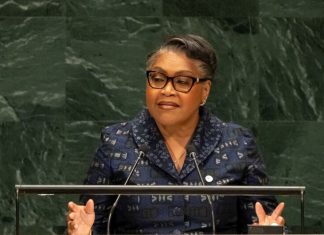







 have called for Artificial Intelligence (AI) skills, ...)