By Boluwatife Oshadiya
Key Points
- Zimbabwe says its gold reserves have surpassed 4 metric tonnes as part of efforts to strengthen the Zimbabwe Gold (ZiG) currency.
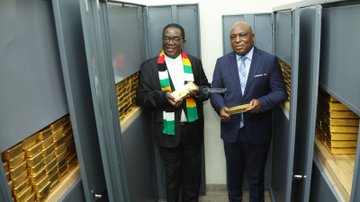
- President Emmerson Mnangagwa inspected the vaults of the Reserve Bank of Zimbabwe and described the reserves as critical to the country’s monetary sovereignty.
- Authorities aim to increase gold reserves to 5 metric tonnes before the end of the year.
- The ZiG currency, introduced in 2024, is backed by gold and foreign currency reserves to curb inflation and stabilise Zimbabwe’s financial system.
Main Story
Zimbabwean President Emmerson Mnangagwa has announced that the country’s gold-backed monetary strategy is gaining momentum after inspecting the vaults of the Reserve Bank of Zimbabwe (RBZ).
In a statement released after the inspection, Mnangagwa said Zimbabwe’s gold and foreign currency reserves have grown significantly following a government directive issued two years ago requiring mineral royalties to be accumulated in physical form.
According to the president, Zimbabwe now holds more than four metric tonnes of gold reserves, positioning the country among Africa’s leading holders of official gold reserves and one of the strongest reserve holders within the Southern African Development Community (SADC).
The reserves are being used to support the Zimbabwe Gold (ZiG) currency, which was introduced in April 2024 as the country’s latest attempt to establish a stable local currency after years of hyperinflation and currency instability.
Recent reports from Zimbabwean authorities indicated that the RBZ had already accumulated about 3.4 metric tonnes of gold by mid-2025, with officials targeting 5 metric tonnes before year-end.
RBZ Governor John Mushayavanhu has previously stated that the reserves exceed the amount of ZiG currently in circulation, helping to improve confidence in the local currency and support price stability.
The development comes as Zimbabwe continues broader economic reforms aimed at reducing dependence on the United States dollar, restoring investor confidence, and strengthening fiscal discipline.
What’s Being Said
“These reserves are tangible assets that underpin our monetary sovereignty, rather than mere numbers. With over 4 metric tonnes of gold and foreign currency reserves, our ZiG currency remains fully backed and resilient to global economic shocks,” Mnangagwa said following the vault inspection.
The president added that the government remains committed to building a “stable, transparent, and prosperous economy” anchored on mineral-backed reserves.
Economic analysts say the success of the ZiG will depend not only on gold reserves but also on policy consistency, inflation control, and public trust in the financial system.
What’s Next
Zimbabwe’s central bank is expected to continue accumulating gold reserves throughout the year while tightening monetary policy measures designed to support the ZiG.
Authorities are also expected to expand the circulation and acceptance of the ZiG currency across the economy as part of efforts to reduce dollarisation and strengthen local currency usage.
The government’s progress toward achieving its 5-metric-tonne reserve target will likely remain a key indicator for investors and financial markets monitoring Zimbabwe’s economic recovery efforts.
Bottom Line
Zimbabwe is intensifying its push to stabilise the ZiG currency through increased gold reserves and tighter monetary controls. While the strategy has shown early signs of improving currency stability, long-term success will depend on sustained fiscal discipline, reserve growth, and public confidence in the country’s economic reforms.