







Key Points
- Olatoun Gabi-Williams has unveiled the second volume of an anthology examining digital technologies and indigenous knowledge in Africa.
- Titled Our Digital Lives and Indigenous Pathways, the publication explores how technology and traditional knowledge can support sustainable development.
- Contributors examine indigenous architecture, Yoruba conservation practices, digital economic opportunities and independent filmmaking.
- The anthology aims to amplify African perspectives in global conversations about sustainable development.
- The project is seeking partnerships, wider publicity and translations into foreign and indigenous languages to expand its readership.
Main Story
A new publication examining how digital technologies and indigenous knowledge can contribute to Africa’s sustainable development has highlighted the importance of combining modern innovation with traditional practices to address the continent’s development challenges.
The second volume of Living Sustainably Here: African Perspectives on the Sustainable Development Goals (SDGs), titled Our Digital Lives and Indigenous Pathways, was unveiled by its curator, Olatoun Gabi-Williams, during the CANEX WKND 2026 at the Wole Soyinka Centre for Culture and Creative Arts, Lagos.
Gabi-Williams said the anthology examined the growing influence of digital technologies on African societies, highlighting their benefits, potential risks and the need to preserve indigenous knowledge systems.
She explained that the publication brought together professionals from different fields to share practical experiences and perspectives on achieving sustainability through knowledge, skills and resourcefulness.
According to her, the project seeks to amplify African voices in local and international development discussions while presenting sustainability as both an individual responsibility and a collective national undertaking.
She said the second volume explored how indigenous knowledge and emerging technologies could complement one another without disconnecting African development from local experiences and cultural ownership.
The Issues
Africa’s growing adoption of digital technologies presents opportunities for economic growth, education, cultural preservation and improved access to information. However, the continent also faces questions about how to ensure that technological advancement does not undermine indigenous knowledge, cultural identity and local expertise.
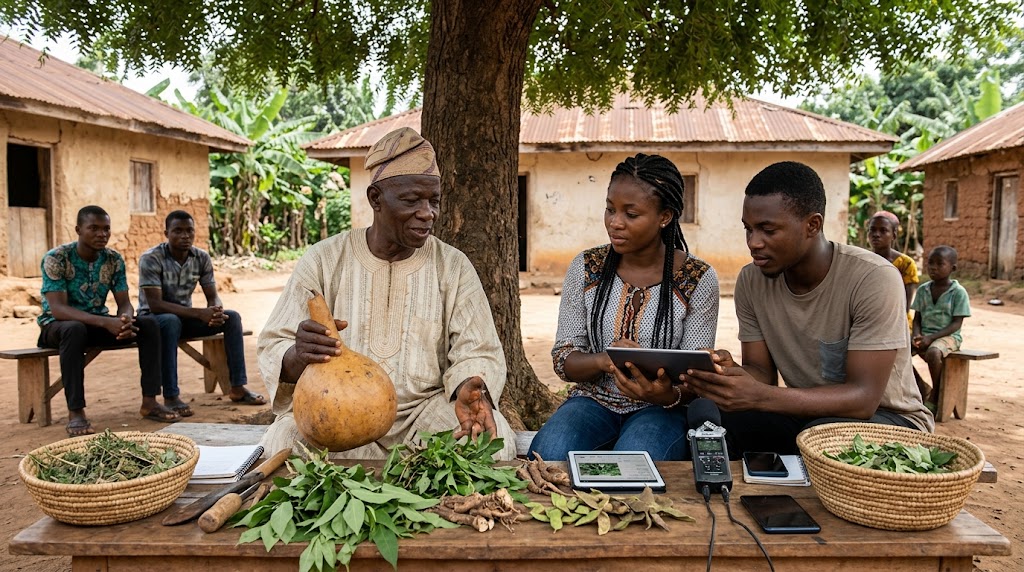
Traditional knowledge systems contain valuable practices developed over generations, particularly in areas such as environmental conservation, architecture, agriculture and community resource management.
However, these practices are not always adequately documented, promoted or integrated into modern development policies.
The new anthology addresses this challenge by examining how African societies can embrace technological innovation while protecting knowledge systems that reflect their histories, cultures and environments.
Its approach also highlights the importance of African ownership of development conversations, ensuring that solutions are informed by the continent’s experiences rather than relying exclusively on external models.
What’s Being Said
Highlighting some of the contributions, Gabi-Williams cited Pelumi Olatunji’s exploration of indigenous architecture and climate-resilient engineering.
She also identified contributions by Abdulazeez Shomade and Nicole Shomade, who examined traditional Yoruba conservation practices and their relevance to sustainable development.
Another contributor, Malik Afegbua, explored how digital technologies could create opportunities for economic empowerment and cultural preservation.
His contribution examined the potential of digital innovation to help African communities preserve their cultural heritage while participating more actively in the modern economy.
Gabi-Williams also highlighted Taiwo Egunjobi’s essay, Beyond Lagos, which examined independent filmmaking in Ibadan, Oyo State.
According to her, the contribution demonstrated how filmmakers could overcome infrastructural limitations through resourcefulness and digital technologies while expanding film production opportunities beyond Lagos.
She explained that the different contributions demonstrated how local knowledge, creativity and technological innovation could work together to address development challenges.
The curator also recalled that the first volume of the anthology, Paths to Knowledge: Production, Access, Literacy, and Sustainable Development, focused on knowledge creation, accessibility, literacy and the importance of knowledge to sustainable development.
Together, the two volumes seek to broaden discussions about how knowledge can support Africa’s social, cultural and economic progress.
What’s Next
Gabi-Williams said the project was seeking partnerships and increased publicity to expand the reach and impact of the publications.
She added that plans included translating the anthologies into foreign and indigenous languages to make their contents accessible to a wider audience.
The proposed translations are expected to help more African communities engage with the ideas presented in the publications, particularly those whose preferred languages may not be widely represented in existing development literature.
Broader readership and institutional partnerships could also create opportunities for the ideas and experiences documented in the anthologies to contribute to conversations about education, technology, cultural preservation and sustainability.
Bottom Line
Africa’s sustainable development will depend not only on adopting modern technologies but also on recognising the value of knowledge, skills and practices developed within its communities.
By bringing digital innovation and indigenous perspectives into the same conversation, Our Digital Lives and Indigenous Pathways highlights the importance of building development solutions that reflect African realities.
Its central message is that technological progress and cultural preservation do not have to compete. When properly integrated, both can contribute to a more sustainable and locally grounded future for the continent.