








KEY POINTS
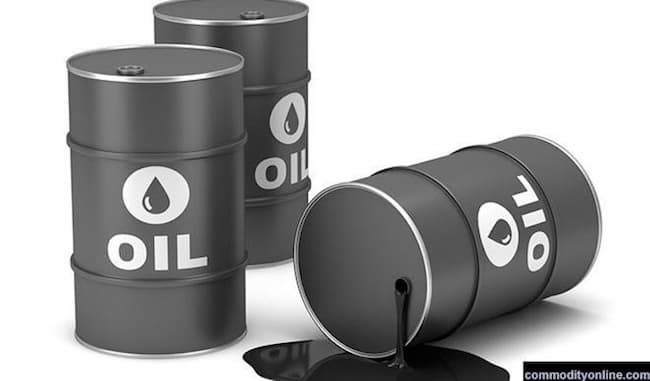
- Economic expert Dr. Chijioke Ekechukwu has called on the Federal Government to supply crude oil to domestic refineries at subsidised rates.
- The proposal aims to decouple local pump prices from the global market volatility caused by the ongoing conflict involving the U.S., Iran, and Israel.
- Ekechukwu identified the Strait of Hormuz crisis as the primary driver of current supply distortions and rising international oil prices.
- The economist emphasized that stricter border controls are essential to prevent the smuggling of refined products if a domestic discount is implemented.
MAIN STORY
Dr. Chijioke Ekechukwu, Managing Director of Dignity Finance and Investment Ltd., has advised the Federal Government to adopt a strategic dual-pricing model for crude oil to protect the Nigerian economy. In an interview with the News Agency of Nigeria (NAN) on Sunday, Ekechukwu argued that while Nigeria should continue exporting crude at high international market rates, it must supply local refiners at a discount to stabilize domestic fuel prices.
The recommendation comes as geopolitical tensions involving the U.S., Iran, and Israel have effectively disrupted the Strait of Hormuz, a critical artery for global energy trade.
Ekechukwu explained that in a deregulated market, Nigerian fuel prices are currently at the mercy of these global supply distortions. By providing subsidized feedstock to local plants like the Dangote Refinery, the government could ensure that petroleum products are sold at regular, stable prices regardless of international spikes. He noted that with its massive refining capacity, the Dangote Refinery is capable of meeting a significant portion of Nigeria’s domestic demand for refined petroleum products, thereby reducing dependence on imports.
However, Ekechukwu warned that a domestic price advantage could invite illicit activity. He stressed that the benefits of such a policy, which include targeted crude supply to domestic refiners to shield consumers from sudden price hikes would only be retained if the government significantly tightens border security. Without robust enforcement, subsidized fuel meant for Nigerians could be smuggled to neighboring countries, undermining the effort to shield local consumers from the “spiraling escalations” of the global energy crisis.
WHAT’S BEING SAID
- “For the Federal Government therefore to cushion the effect of this supply distortion… we should supply crude oil to our local refineries at subsidised prices,” stated Dr. Chijioke Ekechukwu.
- “Prices, therefore, are expected to rise because major crude oil suppliers are in crisis,” he noted, referring to the U.S.-Iranian conflict.
- Ekechukwu added that the Dangote Refinery is capable of meeting a significant portion of domestic demand, reducing the need for imports.
WHAT’S NEXT
- Market analysts expect the Federal Ministry of Finance and NNPC Ltd. to review the fiscal implications of a “subsidized crude” model versus the current international benchmark pricing.
- Customs and border patrol agencies may receive new directives to intensify surveillance along regional trade routes to prepare for potential price disparities.
- The Dangote Refinery management is likely to seek further clarity on the implementation of the Domestic Crude Supply Obligation (DCSO) in light of these expert recommendations.
BOTTOM LINE
The Bottom Line is that Dr. Ekechukwu views local refining not just as an industrial goal, but as a protective shield. By subsidizing the “raw material” (crude) for local plants while maintaining high-priced exports, he believes Nigeria can turn global instability into a domestic advantage—provided the borders remain secure.






 on Sunday, Ekechukwu ...)