






KEY POINTS
- Former African Development Bank President Akinwumi Adesina has proposed a $10 billion Africa Artificial Intelligence Frontier Technology Fund.
- The fund aims to mobilise $50 billion over 10 years for Africa’s scientific, technological and industrial development.
- The proposed financing would support research, critical infrastructure, frontier technologies and African technology companies.
- Adesina called for a coalition of governments, development banks, private investors and technology companies to finance the initiative.
- SEC Director-General Emomotimi Agama identified electricity supply as a major obstacle to AI development in Nigeria.
MAIN STORY
Former African Development Bank President Akinwumi Adesina has proposed a $10 billion Africa Artificial Intelligence (AI) Frontier Technology Fund to mobilise $50 billion over the next decade for the continent’s scientific, technological and industrial transformation.
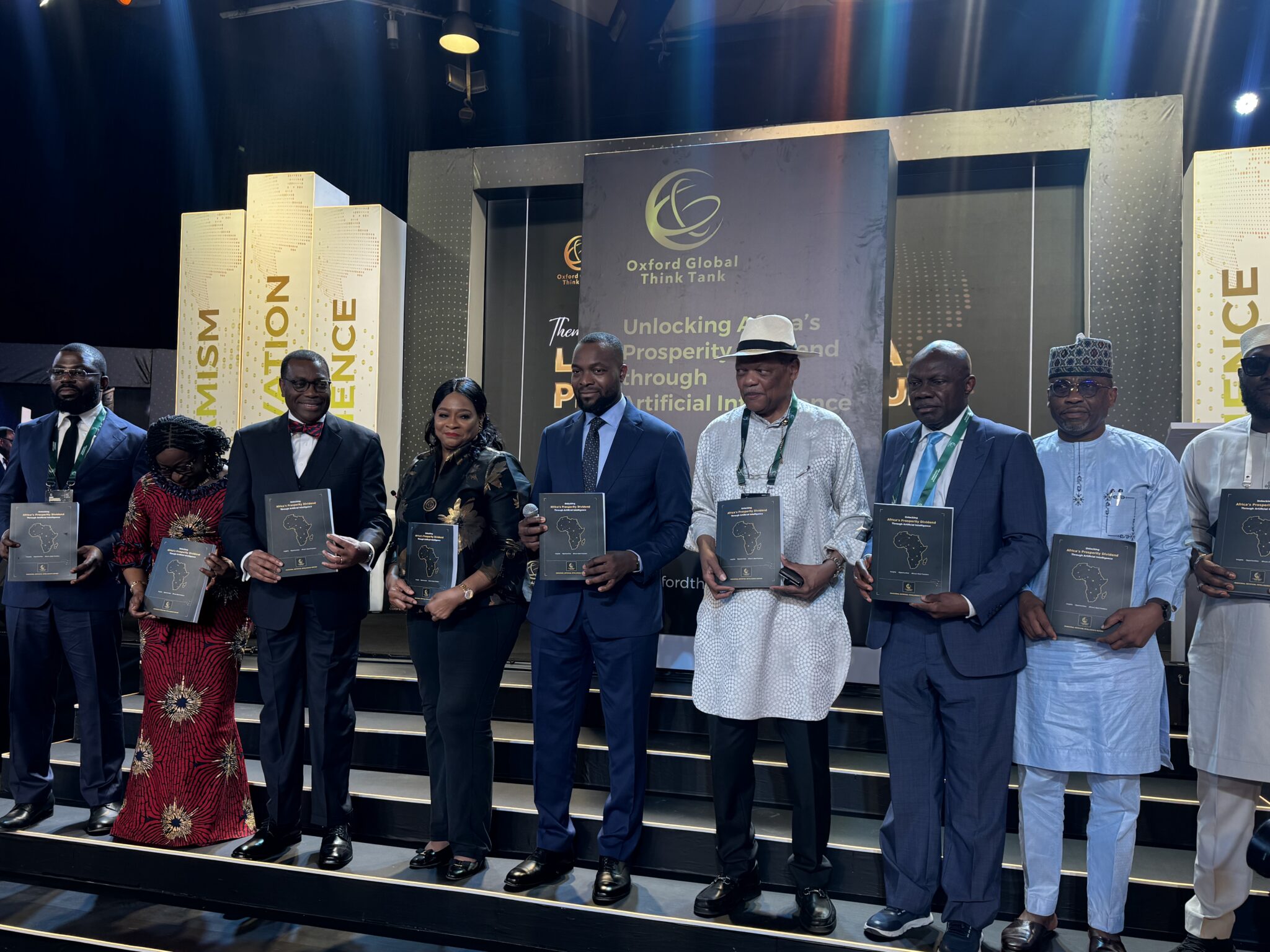
Adesina, who is Executive Chairman of the Global Africa Investment Summit, announced the proposal on Tuesday at the Oxford Global Think Tank Leadership Conference in Abuja, organised around the theme, “Leadership for a Prosperous Future.”
He said the proposed fund would provide catalytic financing for research, critical infrastructure, frontier technologies and promising African technology businesses.
The initiative is intended to bring together financing from African governments, multilateral institutions, private investors and philanthropic partners. Adesina also proposed a Coalition for Financing AI for Africa involving the World Bank, African Development Bank, other multilateral development banks, African governments and leading technology companies.
He argued that the decisions African countries make about artificial intelligence today would influence their ability to develop future technologies and capture the economic value created by them.
Without deliberate investment, he warned, the continent could become a consumer market for technologies developed elsewhere rather than participate in building and owning them.
Adesina identified five priorities for African AI leadership: investment in people, infrastructure, innovation, financing and political leadership.
On human capital, he called for greater investment in young Africans through training in artificial intelligence, data science, robotics, machine learning and advanced engineering. He also argued that the continent needed to build the infrastructure required to support these skills and technological ambitions.
“There cannot be any AI when you are walking in the dark. Talent without infrastructure cannot compete,” he said.
He further urged African governments to appoint dedicated ministers for artificial intelligence, arguing that the technology cuts across major sectors of the economy and requires coordinated policy attention.
THE ISSUES
The proposed fund places financing and infrastructure at the centre of Africa’s AI ambitions. However, the discussions at the conference also highlighted the practical constraints facing countries seeking to develop the sector, particularly the availability of reliable electricity.
Director-General of the Securities and Exchange Commission, Emomotimi Agama, identified power supply as a major obstacle to AI development in Nigeria.
Agama said the electricity required by data centres could place significant pressure on the country’s already constrained power infrastructure. He cited a data centre that would require almost 80% of Nigeria’s total power transmission capacity, describing the situation as a major challenge.
“If we do not get our electricity right, we are wasting our time,” he said.
His remarks point to an important distinction between attracting investment into AI and having the infrastructure to support it. Data centres and other computing facilities require substantial and reliable electricity, meaning that financing technology businesses alone will not resolve the constraints facing the sector.
The availability of early-stage capital and a stronger pipeline of technology businesses also featured in the discussions.
Hassan Luongo, a general partner at Resilience17, estimated that Africa currently has about 250 AI startups, but said the number could grow to 10,000. He called for greater encouragement of young people to establish AI companies, adding that advanced academic qualifications should not be treated as a requirement for starting a technology business.
Luongo also urged investors to take a longer-term approach to funding, describing venture capital investment as a 10-year commitment.
WHAT’S BEING SAID
“This is not simply a proposal to raise money for AI projects. It is a proposal to build a continental financing platform capable of transforming Africa’s position in the global economy.” – Akinwumi Adesina, Executive Chairman, Global Africa Investment Summit.
“Africa must not simply be a market for the AI revolution. We must be one of its architects.” – Akinwumi Adesina, former President, African Development Bank.
“Data is the new oil. The 10 leading post-capitalist companies in the world are all AI technology companies.” – Emomotimi Agama, Director-General, Securities and Exchange Commission.
“Investors can be patient on their returns and fundamentally believe they will come.” – Hassan Luongo, General Partner, Resilience17.
WHAT’S NEXT
The proposed fund would require commitments from governments, development finance institutions, private investors and philanthropic organisations to reach its $10 billion catalytic capital target and mobilise the projected $50 billion.
The proposed Coalition for Financing AI for Africa is expected to provide a platform for coordinating these contributions. Meanwhile, the infrastructure concerns raised at the conference highlight the need for electricity investment to accompany efforts to expand AI financing and enterprise development.
BOTTOM LINE
Adesina’s proposal seeks to mobilise $50 billion over 10 years to strengthen Africa’s position in the global AI industry. But the continent’s ability to turn that ambition into economic value will depend not only on access to capital and skilled workers, but also on reliable electricity, research capacity and the growth of African technology companies.