








KEY POINTS
- More than 143,000 vehicles were operating on compressed natural gas (CNG) in Nigeria at the end of the third quarter.
- The Presidential Initiative on CNG and Electric Vehicles says it has attracted $2.6bn in private sector investment and established 105 refuelling stations.
- The number of CNG conversion centres has increased to 430 nationwide.
- Converting a four-cylinder saloon car costs between N450,000 and N500,000 under the government-certified programme.
- The initiative is working with financial institutions to make conversion payments more affordable.
MAIN STORY
More than 143,000 vehicles in Nigeria were operating on compressed natural gas (CNG) at the end of the third quarter, as the Presidential Initiative on Compressed Natural Gas and Electric Vehicles (PICNG & EV) reported $2.6bn in private sector investment and 105 refuelling stations.
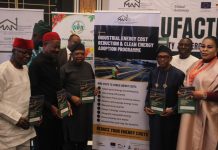
The initiative’s Executive Chairman, Barr. Ismael Ahmed, disclosed the investment and station figures at the National CNG Summit in Abuja on Tuesday. He said the programme had helped create a market that barely existed three years ago, although significant work remained to expand adoption.
Ahmed said government intervention was necessary at the early stages because private investors were unlikely to commit substantial funds without confidence that the market could generate returns.
To stimulate demand, the initiative purchased buses, converted existing vehicles and acquired modular refuelling units. It also worked to address public concerns about the safety of gas cylinders and vehicle conversions.
However, growing vehicle conversions have increased the need for a more extensive refuelling network. Ahmed explained that CNG infrastructure requires gas supply sources, compression facilities, tube skids, transportation systems and dispensing equipment, making it more expensive and complex to establish than conventional petrol distribution infrastructure.
He said government would have to take on much of the initial infrastructure development while building confidence among private investors.
THE ISSUES
The initiative’s Chief Operating Officer, Tosin Coker, said the number of conversion centres had risen to 430 nationwide, alongside the 105 refuelling stations. He described the expansion as evidence of growing acceptance of CNG as an alternative vehicle fuel.
But the cost of converting vehicles remains a barrier for some potential users. Coker said converting a tricycle costs between N300,000 and N350,000, while a regular four-cylinder saloon car costs approximately N450,000 to N500,000 under the government-certified programme.
The final cost can rise depending on the size and type of cylinder installed. Larger cylinders and lighter fibre alternatives, for instance, can increase the amount vehicle owners have to pay.
To address the upfront cost, Coker said the initiative was working with banks and conversion partners to introduce payment arrangements that would allow customers to spread the cost over time.
The programme also faces a local manufacturing challenge. Coker said Nigeria would need to begin assembling conversion kits, cylinders and vehicles domestically rather than depend entirely on imported components as adoption increases. Local production, he argued, could create jobs, develop technical skills and reduce costs.
Participants at the summit also identified access to affordable financing as a major obstacle to expansion. They called on commercial banks to offer cheaper loans for vehicle conversions and infrastructure development, while retailers sought incentives to help more filling stations install CNG facilities.
WHAT’S BEING SAID
“We have been able to build 105 stations, along with partners. We have catalysed private sector investments worth $2.6 billion.”
- Barr. Ismael Ahmed, Executive Chairman, PICNG & EV.
“We recorded over 143,000 vehicles operating on CNG at the end of last quarter.”
- Tosin Coker, Chief Operating Officer, PICNG & EV.
“We cannot do one million conversions and import every component. We have to assemble conversion kits, cylinders and vehicles in Nigeria.”
- Tosin Coker, Chief Operating Officer, PICNG & EV.
WHAT’S NEXT
Coker said the initiative expected the number of CNG-powered vehicles, conversion centres and refuelling stations to increase as more partners joined the programme.
He said the government was also working with financial operators to make vehicle conversions more accessible through instalment payments.
The expansion of the network will require continued investment in gas supply and distribution infrastructure, alongside efforts to encourage private investors to participate. Local assembly of conversion components will also be important if the programme is to scale without relying entirely on imported equipment.
BOTTOM LINE
Nigeria’s CNG programme has expanded to more than 143,000 vehicles, 105 refuelling stations and 430 conversion centres, supported by reported private investment of $2.6bn. But the next stage of growth will depend on making conversions affordable, expanding reliable gas supply infrastructure and developing local capacity to manufacture the equipment needed by the industry.




 at the end of the third quarter, as ...)