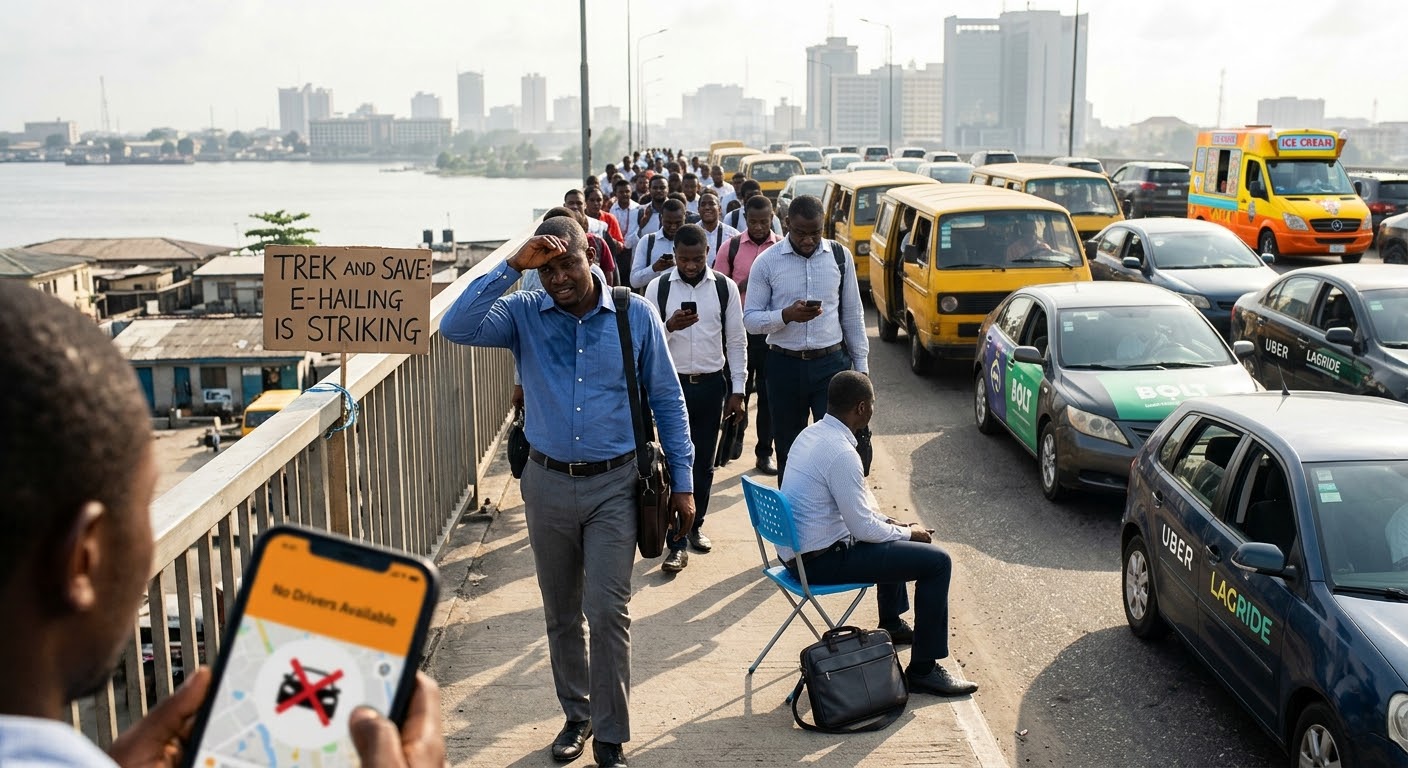
Hello, my fellow Steering-Wheel Economists, Surge-Price Survivors, and Emergency Trekking Champions. Welcome back to our weekly sanctuary! Today is Thursday, October 15, 2026. If you opened your favorite ride-hailing app this morning expecting a quick car to your office, only to see the dreaded “No Drivers Available” screen or a fare estimate that looked like a mortgage down-payment—pull up an ergonomic plastic chair. You are in the safest, most empathetic room on the internet.
Forget routine workplace boundary wars, synthetic juice panics, or long-form reading debates; today, we are auditing the single most universally chaotic, physically demanding, and hilarious urban survival story currently sweeping across Lagos and major Nigerian hubs: The E-Hailing Drivers’ Indefinite Strike and The Great Commuter Calisthenics!
Earlier this week, driver unions across the state pulled the emergency handbrake on digital cab platforms, declaring an indefinite strike over skyrocketing fuel costs, heavy platform commissions, and base fares that haven’t kept up with market realities.
Let’s break down the explicit details, hilarious street realities, and commuting physics behind our latest transit crisis.
If you tried booking a ride between Ikeja, Lekki, Yaba, or Victoria Island over the past 48 hours, you were treated to a masterclass in modern frustration:
The Phantom Car Trap: You see five tiny car icons spinning on your map screen, giving you false hope. You click Request, and the app searches for 12 minutes before returning a polite pop-up message essentially telling you, “My friend, go and wear comfortable sneakers!”
The “Offline” Negotiation: The few drivers brave enough to venture onto the roads are executing the ultimate Nigerian compromise—accepting the ride on the app, calling you immediately, and asking: “Boss, how much are you actually adding offline? Because what the app is showing cannot buy half a liter of petrol!”
When digital cabs stop moving, the ripple effect on the rest of urban transport physics is swift and unforgiving:
Danfo Conductors as Stock Brokers: The local yellow bus conductors instantly activated Wall Street-level surge pricing. A standard ₦500 leap from Maryland to CMS suddenly turned into ₦1,800, complete with conductors shouting, “No change o! If you don’t have exact fare, stay at home!”
The Unexpected Marathon: Corporate professionals in crisp suits and pristine sneakers were spotted doing accidental 5km brisk walks across the Ikoyi Link Bridge and Iyana-Oworo. Suddenly, smartwatch step-counters across the city were breaking historical records before 9:00 AM!
Behind the inconvenience and viral memes lies a genuine economic dilemma. Drivers are facing high fuel pump prices, vehicle maintenance costs, and platform commission deductions, while passengers are fighting inflation on every side.
When both sides are squeezed, the platform becomes a pressure cooker. The strike is a real-time reminder that in 2026, the gig economy isn’t an isolated tech bubble—it lives and dies by the daily cost of living on the street.
Lessons to Carry into the Weekend
Dust Off Your Walking Shoes: Keep a pair of comfortable, flat shoes in your office bag or car trunk. When urban transport dynamics break down, mobility becomes a personal physical asset!
Negotiate with Empathy: If you must use private transport or offline arrangements during a strike, remember that fuel isn’t cheap for the driver either. Find a fair middle ground without losing your cool.
Embrace Off-Peak and Remote Windows: If your workplace allows flexible hours or remote days, this is the week to utilize them. Avoid unnecessary cross-city trips during peak rush hours.
Stay safe out there, keep your hustle sharp, hydrate properly on your treks, and don’t let the commute humble you too early. See you next Thursday!