







Hello, my fellow Ingredient-Label Forensics, Kitchen-Table Auditors, and Beverage Detectives. Welcome back to our weekly sanctuary! Today is Thursday, September 24, 2026. If you spent your week staring suspiciously at a glass of cold orange juice in your fridge—trying to figure out whether you are drinking liquid sunshine or a chemical cocktail brewed with industrial dye and tap water—pull up an ergonomic plastic chair. You are in the safest room on the internet.
Forget national road construction warnings, corporate boundary wars, or viral social media arguments; today, we are auditing the single most alarming, hilarious, and universally discussed consumer safety story sweeping across Lagos, Ogun, and major urban centers: The Great “Barkas Juice” Factory Bust and The Mystery of Fake NAFDAC Numbers.

Earlier this week, officers of the Nigeria Security and Civil Defence Corps (NSCDC) in Lagos uncovered an illicit, unhygienic factory operating in Aradagun, Badagry.
The facility was caught producing and distributing a popular branded fruit drink using zero actual fruit—just water, synthetic colorants, industrial sweeteners, and a completely fabricated NAFDAC registration number!
Let’s break down the explicit details, hilarious street realities, and consumer survival physics behind our daily food safety scares.
To understand why kitchen-table economists and parents are losing their minds over this story, look at how the drink was actually manufactured.
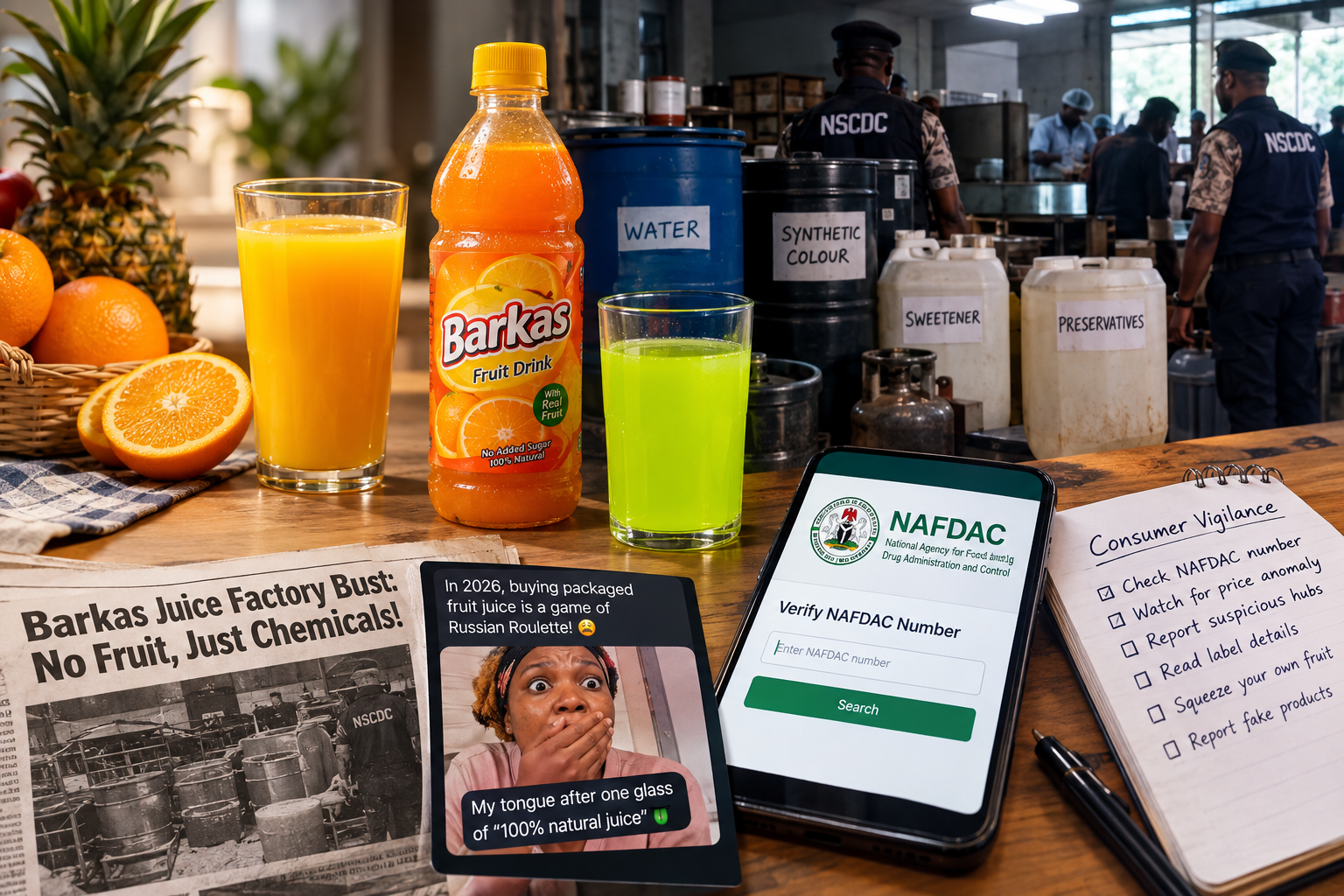
According to NSCDC investigators, the factory operated behind closed doors for days under surveillance. When security operatives finally moved in, they didn’t find oranges, mangoes, pineapples, or apples. They found drums of water, industrial dye, synthetic flavorings, gas cylinders, and chemical preservatives!
The street commentary across WhatsApp groups and X timelines as the news broke was peak survival humor.
In 2026, buying packaged fruit juice in the market is a game of Russian Roulette! You drink one glass of ‘100% Natural Orange Juice,’ and instead of getting Vitamin C, your tongue turns neon green for three days and your stomach starts singing national anthems!
Where the story moves from criminal investigation to pure Nollywood drama is the defense statement offered by the facility’s operator.
When paraded before journalists, the owner didn’t deny that the factory lacked approved NAFDAC clearance. Instead, she explained that the business was originally established by her grandmother nearly twenty years ago as a small bottled water unit, and she was simply “expanding the family legacy” into fruit drinks while awaiting official approval!
The human interest element is peak comedy mixed with real horror. Thousands of families realized they had been serving “Grandmother’s Special Chemistry Mix” to guests at birthday parties and Sunday afternoon lunches!
Behind the hilarious memes and viral headlines lies a critical, educational lesson for everyone shopping in Nigerian markets in 2026: Fake products are becoming sophisticated, and basic consumer vigilance is your first line of defense.
1. Verify NAFDAC Numbers Digitally: Never rely on the mere presence of numbers printed on a plastic bottle. Use the official NAFDAC Green Book portal or SMS verification codes to check whether a product is legitimately registered.
2. Watch for Price Anomaly Traps: If a 1-liter bottle of “pure natural fruit juice” is being sold for ₦400 while a single fresh orange costs ₦200 at the market stand, the math doesn’t work! Real fruit processing carries production costs; ridiculously cheap juice is usually liquid sugar and food dye.
3. Report Unsanitary Neighborhood Hubs: The Badagry factory was uncovered because local residents noticed unusual chemical smell trends and unmarked delivery trucks operating at odd hours. Community vigilance protects public health.
Consumer Survival Protocols for the Week
Check the Label Details: Look for manufacturing addresses, batch numbers, expiry dates, and full ingredient lists. Legitimate brands state the percentage of real fruit juice concentrates.
Squeeze Your Own Fruit: Whenever possible, buy fresh oranges, pineapples, or watermelons directly from local vendors and blend them at home for 100% guaranteed safety.
Report Fake Products: If a drink smells like paint thinner, tastes unnaturally chemical, or stains your glass permanently, stop drinking it immediately and notify health authorities.
See you next Thursday—hopefully with real fruit juice, verified labels, clean kitchens, and zero timeline drama!