







KEY POINTS
• Dangote Industries plans to build a 600 kilometre offshore gas gathering pipeline to connect offshore producers to onshore facilities.
• The refinery and fertiliser complex currently generates more than 650MW of electricity for its own operations.
• The company plans to expand fertiliser production to 12 million tonnes annually and double refinery capacity to 1.4 million barrels per day.
MAIN STORY
Dangote Industries Ltd. is preparing to develop a 600 kilometre offshore gas gathering pipeline as part of a wider expansion of its oil, gas, power and fertiliser operations in Nigeria and other African markets.
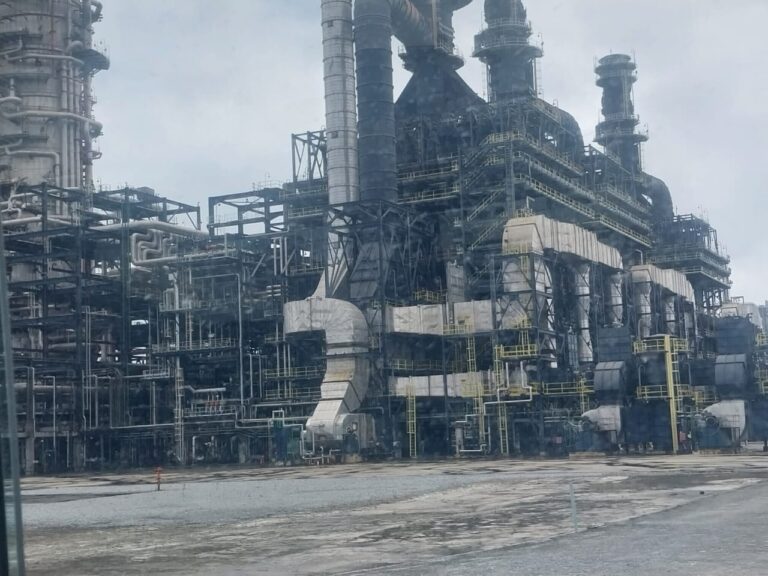
Mr Devakumar Edwin, Group Vice President, Oil and Gas and Fertiliser, disclosed this on Friday during a tour of the Dangote Petroleum Refinery in Lagos.
Edwin said the East West offshore pipeline would provide infrastructure for connecting offshore gas producers to a system that would transport the gas to shore for processing and utilisation.
He said the engineering design had been completed and construction was expected to begin soon.
Under the proposed arrangement, offshore producers would be able to connect their gas wells to the pipeline and either have the gas treated and returned to them or sell it to Dangote for use.
Edwin said the project was intended to address the infrastructure gap limiting the movement of offshore gas to onshore facilities.
He explained that some gas discoveries remained undeveloped because producers lacked infrastructure to transport the resource to shore.
“When we strike a gas well, if it is full of gas, we just cap the well and sit it,” he said.
The company is also generating significant electricity for its industrial complex. Edwin said the refinery currently produces 501MW for its operations, while the fertiliser complex generates more than 150MW.
This puts total generation across the complex at more than 650MW, although the electricity is currently consumed internally, including standby capacity.
Edwin said the company had the capability to generate more electricity and could eventually commercialise power generation as a separate business.
He identified inadequate electricity distribution infrastructure and challenges with revenue collection as obstacles to taking the additional power to commercial users.
“The opportunity is there to generate power and go into it as a business,” he said.
He said Dangote had experience with several power generation technologies, including gas turbines, gas engines, coal and other thermal systems.
Beyond energy, the company is expanding its fertiliser business, with plans to raise annual production from three million tonnes to 12 million tonnes.
Edwin said four additional fertiliser trains were planned in Nigeria, alongside projects in Ethiopia and another African country.
The expansion will also introduce additional products, including diammonium phosphate and single super phosphate, as the company seeks to serve growing fertiliser demand across Nigeria and other African markets.
Edwin said the broader strategy was to process locally available raw materials into higher value products within the countries where they are sourced.
“We want to take the raw materials from the countries and add value, create employment, add to the GDP,” he said.
The company is also expanding its chemical operations, with planned projects for linear alkyl benzene and base oil production, while polypropylene production is also expected to increase.
The gas, power and industrial projects form part of Dangote’s wider investment programme.
Dangote Petroleum Refinery and Petrochemicals is currently seeking about N2.15 trillion through an initial public offering to finance expansion and strengthen its capital base.
Edwin said the refinery itself would be expanded from its current 700,000 barrels per day capacity to 1.4 million barrels per day.
He said most of the engineering work had been completed and major equipment had already been ordered, with the company targeting completion within three years or potentially earlier.
“We are targeting for three years, and probably we may be even doing faster,” he said.
The company is also developing pipelines and storage facilities across Africa as part of efforts to improve fuel distribution and energy security.
According to Edwin, the infrastructure would reduce reliance on road transportation and improve petroleum product access in landlocked countries.
The projects are part of Dangote’s Vision 2030 strategy, which focuses on expanding industrial value addition across Africa.
THE ISSUES
- The proposed offshore pipeline addresses a specific infrastructure constraint in Nigeria’s gas industry by creating a route for offshore gas to reach shore. Without such infrastructure, some discovered gas resources may remain undeveloped.
- Dangote’s existing power generation shows the scale of energy required to operate its refinery and fertiliser complex. The more than 650MW currently generated is being used internally, while further commercial generation would depend partly on the availability of distribution infrastructure and effective revenue collection.
- The planned fertiliser expansion would significantly increase the company’s stated production capacity, with additional trains and new product lines intended to serve markets in Nigeria and elsewhere in Africa.
- The refinery expansion would also substantially increase processing capacity. The company says the engineering work is largely complete and major equipment has been ordered, with a three year target for the expansion.
- The wider pipeline, storage and processing investments reflect Dangote’s strategy of increasing local value addition, reducing reliance on road transportation and expanding industrial operations across African markets.
WHAT’S BEING SAID
“We want to run, in the first place, a 600 kilometre pipeline in the sea.” – Devakumar Edwin, Dangote Industries Ltd.
“The opportunity is there to generate power and go into it as a business.” – Devakumar Edwin, Dangote Industries Ltd.
“We want to take the raw materials from the countries and add value, create employment, add to the GDP.” – Devakumar Edwin, Dangote Industries Ltd.
WHAT’S NEXT
Dangote Industries expects to commence construction of the offshore gas gathering pipeline after completing its engineering design.
The company is also proceeding with refinery expansion, additional fertiliser trains, chemical projects and pipeline and storage infrastructure across Africa.
BOTTOM LINE
Dangote is expanding beyond refining into a broader network of gas, power, fertiliser, chemical and distribution infrastructure. The planned investments are designed to increase processing capacity and local value addition while expanding the company’s industrial footprint across Africa.