





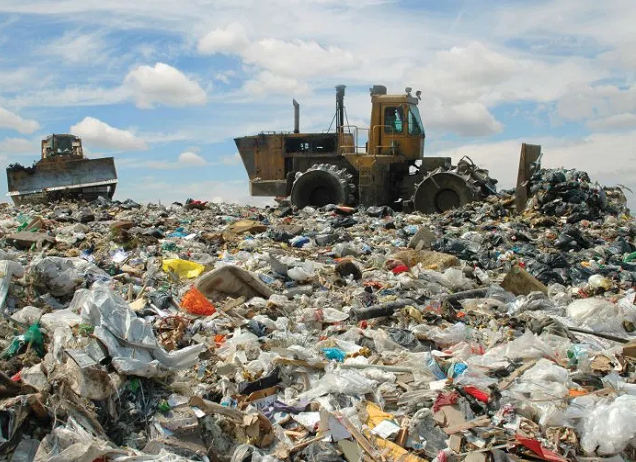
Key Points
- Environmental consultant Dr Lawrence Umoh wants Nigeria to treat waste as an economic resource.
- He recommends recycling, waste-to-energy systems and formalisation of informal waste collectors.
- Regulatory gaps and weak standards remain barriers to investment in the circular economy.
Main Story
Nigeria could create jobs, generate energy and develop new industries by treating urban waste as a resource rather than simply something to be discarded, environmental consultant Dr Lawrence Umoh has said.
Umoh made the call in Abuja on Tuesday during an interview with the News Agency of Nigeria (NAN), advocating greater investment in recycling, renewable energy and inclusive waste management.
He said one of the immediate challenges was the weak collection of waste at its source, which allows refuse to accumulate in communities before it can enter recycling or recovery systems.
To address this, Umoh proposed community drop-off centres and incentives that would encourage households and businesses to connect with recycling markets.
He also called for the formal integration of informal waste pickers into the waste management system through cooperative-led Extended Producer Responsibility schemes.
According to him, formalisation could improve the earnings of waste pickers while giving them better access to protective equipment and creating greater traceability within recycling chains.
Umoh cited a clean-up exercise in Lagos in which 34 volunteers gathered 2.1 tonnes of plastic and earned N47,000 after sorting the materials and connecting them to recycling markets.
He said similar systems could be expanded to demonstrate the economic value of materials currently treated as refuse.
Beyond recycling, Umoh advocated integrated waste-to-energy facilities capable of processing food waste through anaerobic digestion to produce biogas for cooking and electricity, as well as fertiliser.
He said agricultural residues and other dry waste could also be processed into materials for use in construction, potentially reducing reliance on conventional cement.
Technology, he added, could improve the efficiency of such facilities. Artificial Intelligence and Internet of Things sensors could be used to monitor methane production, anticipate maintenance requirements and maintain the quality of recovered materials.
Umoh further urged governments to use green public procurement to create reliable demand for products derived from waste.
Such policies, he said, could include the procurement of waste-based construction materials and renewable natural gas, providing investors with more predictable markets.
He cautioned against relying on conventional mass-burn incineration because of the risk of toxic emissions, arguing that integrated recovery systems could produce energy and useful materials while generating fewer harmful by-products.
However, Umoh identified weak standards for waste-derived products and the absence of a clear policy framework for biogas as obstacles to scaling investment in the sector.
He therefore called for regulatory reforms that would give investors greater certainty and support Nigeria’s transition from a disposal-based waste system towards a circular economy.
The Issues
Nigeria’s waste challenge is also an economic opportunity, but capturing that value depends on how waste is collected, sorted and processed.
A major gap occurs at the first-mile stage, where waste must be collected from homes, offices and businesses before reaching recycling or treatment facilities. Integrating informal collectors and establishing community collection points could improve the flow of recyclable materials into the formal economy.
The proposed waste-to-energy model could also give organic waste an additional economic use, while better standards and clearer policies would be needed to attract investment into waste-derived products and biogas.
What’s Being Said
“Agricultural residues and other dry waste can be processed into supplementary cementitious materials, reducing dependence on high-emission cement in construction,” — Dr Lawrence Umoh, environmental consultant.
What’s Next
Umoh is calling for governments to develop clearer regulations, strengthen standards for waste-derived products and establish a policy framework for biogas.
He also wants public procurement policies to create demand for recycled and waste-derived products, while communities and informal waste workers are brought into more organised collection and recycling systems.
Bottom Line
Nigeria’s urban waste could become a source of jobs, energy and industrial inputs if collection and recycling systems are redesigned around resource recovery. But turning that potential into a viable industry will require stronger regulation, market incentives and greater inclusion of informal waste workers.