Key points
- Minister says President Tinubu will deliver the 700-kilometre Lagos-Calabar Coastal Highway as planned.
- Construction is progressing across multiple sections, with some segments already completed or nearing completion.
- Umahi says engineering considerations, not political interests, informed changes to parts of the highway’s alignment.
Main story
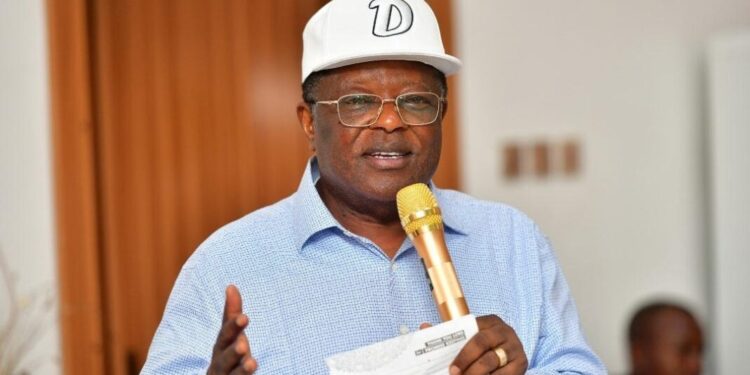
The Minister of Works, Engr. David Umahi, says the 700-kilometre Lagos-Calabar Coastal Highway remains on schedule, assuring Nigerians that President Bola Tinubu’s administration will deliver the project as planned.
Umahi gave the assurance on Wednesday while inspecting ongoing construction at the Ondo section of the highway in Ilaje Local Government Area of the state.
He said work was progressing across several sections of the highway, noting that Section One, covering 7.47 kilometres from Victoria Island to Elepe Village, had been completed.
According to him, Section Two, spanning about 50 kilometres from Lagos to the Ogun border, is about 70 per cent complete, while Sections 3A and 3B, covering approximately 67 kilometres, have reached about 30 per cent completion.
Umahi added that construction is also progressing on Section Four, an 82-kilometre stretch extending from Ogun into Ondo State, while work is ongoing on Section Five, a 180-kilometre segment in Akwa Ibom State.
He disclosed that another 100-kilometre section beginning from the Ondo axis is currently at the design stage, after which only the sections passing through Rivers, Bayelsa and Delta states would remain.
The minister dismissed criticisms of the project, insisting that the coastal highway remained a priority infrastructure project capable of transforming the country’s economy.
Responding to comments by former Cross River State Governor Donald Duke, Umahi said the project would extend beyond Epe as planned.
He also rejected allegations that parts of the highway were diverted to favour owners of private estates, saying engineering considerations informed the alignment.
According to him, soil investigations along the originally proposed coastal route revealed peat deposits extending between 40 and 50 metres deep, making construction technically difficult and significantly more expensive.
Umahi explained that while peat deposits were also encountered in the Lagos sections, they were shallower and easier to manage than those identified along the Ondo corridor.
He added that investigations also showed that the available marine sand was unsuitable for the project, making a revised alignment necessary.
The minister commended the contractor for the pace and quality of work, expressing confidence that the project would be delivered successfully.
The issues
The Lagos-Calabar Coastal Highway is one of the Federal Government’s flagship infrastructure projects aimed at improving connectivity, supporting economic development and opening up coastal communities. The project has, however, generated public debate over its cost, alignment and implementation.
What’s being said
“The man who tamed the Atlantic Ocean is capable of delivering this project. I call him a divine President,” — David Umahi, Minister of Works.
“The Coastal Highway was originally planned to follow the coastline because that was our preference. However, engineering is very dynamic,” — David Umahi.
What’s next
Construction will continue across the ongoing sections, while detailed design work progresses on additional segments before work extends to Rivers, Bayelsa and Delta states.
Bottom line
The Federal Government says the Lagos-Calabar Coastal Highway remains on course, with construction advancing across multiple sections despite criticism over the project’s alignment and execution.