







Hello, my fellow Timeline Forensics, Political Analysts, and Heavy-Hearted Neighbors. Welcome back to our weekly sanctuary! Today is Thursday, July 16, 2026. If you spent your morning reading three different institutional accounts of the same event and trying to map out exactly where the truth is hiding, pull up a plastic chair. You are in the safest room on the internet.
This week, the Nigerian digital space across X, Facebook, and Instagram isn’t just buzzing—it is fiercely fractured. The 56-day captivity of the 44 rescued pupils and teachers from Oriire Local Government Area of Oyo State has ended. But as the children reunite with their families under the hospital lights of LAUTECH, a massive institutional storm has broken out above their heads.

Let’s bypass the propaganda, lay out the explicit details, and look at the deep controversies, political chess moves, and tragic human costs with the complete neutrality and profound empathy that defines our Chronicles.
Before we look at the political drama on television, we must explicitly acknowledge the blood spilled in the dirt. This was not a game or a staged movie script; it was a brutal assault on our collective humanity. Multiple families are permanently broken. Let us state the names of those who paid the ultimate price:
The Educators:
Mr. Adegboye Adesiyan: A dedicated teacher shot and killed on day one (May 15, 2026) while trying to protect his students during the initial school raid.
Mr. Michael Oyedokun: A beloved Mathematics teacher and church Deacon who was brutally executed by the terrorists deep inside the Old Oyo National Park forest. The abductors filmed his end and circulated it online as a horrific psychological weapon to force the government’s hand.
The Uniformed Heroes:
Lieutenant F.A. Isaac (N/20349): The brave military officer who was fatally wounded while leading his troops into the heart of the forest to recover the children.
Private Silas Musa (23NA/84/4604): An 81 Battalion soldier killed in action during the fierce tactical exchange.
Sergeant Abena John Jerome (F/No. 234511): A member of the Nigeria Police Force special unit who gave his life on the front line.
These five men did not survive the 56 days. While the algorithm bickers, their families are planning funerals.
The first wave of controversy hit the timeline the moment the military released the first videos of the rescued captives.
A significant portion of the Nigerian public, deeply traumatized by years of opaque official communications, began running their own “visual audit” on the footage. Critics pointed out that many of the children did not look emaciated, hyper-malnourished, or deeply unkempt after living in a harsh forest for nearly two months. Comments flooded the space alleging that the rescue was a “politically staged theatrical production.”
However, this cynicism met a sharp reality check when the school principal, Mrs. Rachael Alamu, explicitly detailed their nightmare. She recounted being marched for hours through torrential rain at night, the smaller children being repeatedly beaten, and the men being kept blindfolded, handcuffed, and chained. The clean aesthetic on camera was simply the result of the victims being medically stabilized and cleaned up at Odogbo Barracks before being presented to the world. It shows our deep national dilemma: we are so used to being deceived that we sometimes struggle to accept a hard-fought relief.
The controversy took an entirely new, explosive turn on Monday when Oyo State Governor Seyi Makinde delivered a shocking statewide broadcast shortly after receiving the victims.
Instead of sticking to the usual script of praising federal agencies, Governor Makinde openly questioned the circumstances of the mass abduction. He boldly called upon the United Nations (UN) and international accountability bodies to launch an independent probe into how 46 citizens could vanish into thin air for 56 days.
Makinde argued that an international investigation was necessary to uncover institutional security gaps and restore public confidence. Earlier, while speaking in Bauchi State, the governor explicitly dropped a political bombshell, stating that the mass kidnapping was engineered by dark forces desperate to sabotage his rumored 2027 presidential ambition.
The federal government and the Red Chamber did not take Makinde’s international appeal lightly. On Tuesday, the Nigerian Senate officially slammed the brakes on the governor’s request.
Following a motion led by Senate Leader Opeyemi Bamidele, and an additional prayer fiercely pushed by Edo North Senator Adams Oshiomhole, the Senate cautioned Governor Makinde against “politicizing national tragedy” and trivializing a domestic security success.
Oshiomhole and Senate President Godswill Akpabio maintained that inviting the UN to investigate an internal rescue operation executed by the Nigerian Armed Forces was a direct insult to national sovereignty and an attempt to discredit the local security agencies who lost men in the line of duty. The Presidency chimed in via spokesman Bayo Onanuga, mocking Makinde’s lack of trust in domestic institutions and accusing him of weaponizing the trauma of small children for early 2027 campaign optics.
Meanwhile, the Oyo State House of Assembly immediately rose to defend their governor, firing back that mass school abductions have assumed a transnational dimension and that a UN probe is not about blame, but about finding permanent structural answers.
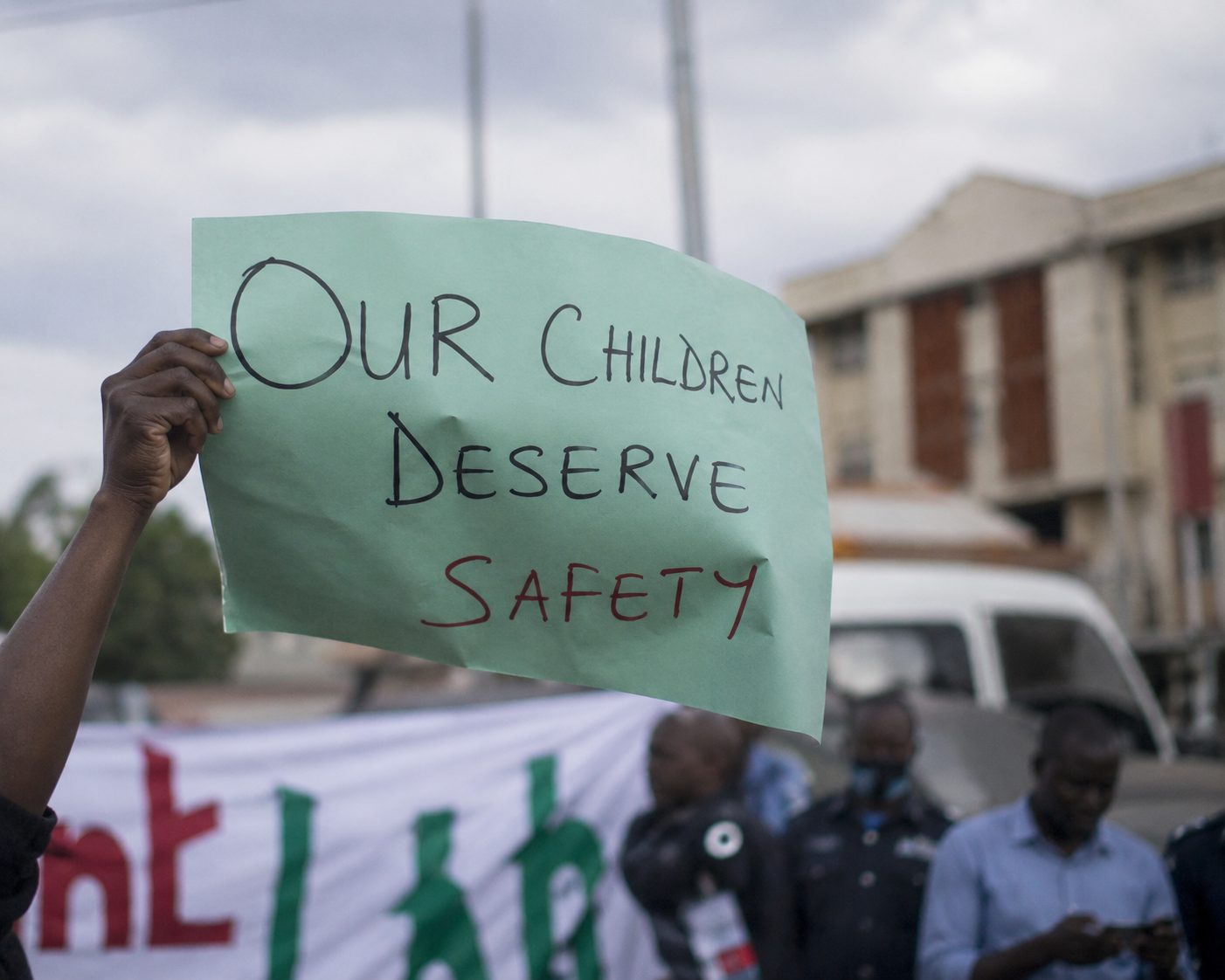
Beneath the political warfare between Ibadan and Abuja lies a vulnerable, fragile reality. While the Senate defends sovereignty and the Governor calculates political optics, parents in Oriire have openly declared that they are withholding their children from returning to school. The trust contract is broken. Sovereignty means nothing to a mother if it cannot guarantee that her child will return home with a school bag instead of a medical report.
Let the politicians play their chess, but let our collective empathy stay focused on the classroom desks that will remain empty forever.
Reflections for the Weekend
Let the Survivors Heal: These children and teachers have physical and emotional scars that may take a lifetime to fade. As they undergo psychological rehabilitation, they deserve privacy, quiet support, and empathy—not to be treated as props in an online debate.
Demand Real School Security: The conversation must move past online conspiracy theories and focus on practical solutions. We must hold authorities accountable for implementing robust measures under the Safe School Initiative so that no parent has to worry if a school bell will be replaced by gunfire.
Filter the Speculation: The internet is full of “inside sources” claiming to know exactly what went down in the forests. Avoid sharing unverified rumors that could compromise ongoing security efforts or cause unnecessary panic.
See you next Thursday—hopefully with a quieter timeline, genuine safety for our communities, and justice for the fallen.