Key points
- Thirty-nine pupils and six teachers were abducted from three schools in Oyo State and held for 56 days.
- Survivors recount forced journeys through forests, beatings and the killing of a teacher to intimidate security forces.
- Governor Seyi Makinde wants international scrutiny of the abduction, but the Presidency says the demand is unnecessary and politically motivated.
- The rescue has now triggered a wider debate over security failures, accountability and the vulnerability of rural schools.
Main Story
For 56 days, classrooms in Ahoro-Esienle and Yawota communities carried the memory of children and teachers who never returned home after armed men stormed three schools in Oyo State.
When 39 pupils and six teachers were abducted on May 15, 2026, the attack pushed a familiar Nigerian security crisis into a part of Oyo State where an incident of such scale had been considered almost unthinkable.
Their eventual rescue brought jubilation. But behind the celebrations were deaths, trauma and uncomfortable questions about how armed groups penetrated rural communities, moved dozens of captives through forests and sustained their operation for nearly two months.
Now, the return of the victims has opened another battle — not in the forest, but over who should investigate what happened and whether Nigerians have been told the full story.
Oyo State Governor Seyi Makinde has called for scrutiny by international human rights and accountability mechanisms, including those within the United Nations system.
The Presidency has pushed back, accusing the governor of politicising the tragedy.
At the centre of the dispute are 45 survivors whose ordeal has exposed the human cost of insecurity and renewed concerns about the safety of rural schools.
The victims’ account offers a glimpse into the organisation and brutality behind the abduction.
Rachael Alamu, Principal of Community High School, Ahoro-Esienle, said the abductees were moved through unfamiliar forest routes after the attackers used her vehicle during the initial stage of the operation.
The captives walked for about an hour before bicycles and roughly 10 motorcycles were brought to transport them deeper into the forest.
For another four hours, they travelled through paths known to their abductors. The experience became more brutal as captivity continued.
Alamu said the youngest children suffered severe beatings and that mathematics teacher Michael Oyedokun was killed to frighten pursuing security operatives
“The reason the kidnappers killed one of the teachers, Michael Oyedokun, was to scare away the security agencies and to send a clear message to the government that they meant business,” she said.
For Alamu, who has worked for 28 years, returning to a rural posting is now an uncertain prospect.
“Going to the rural area now will take the grace of God,” she said.
Her fear raises a deeper concern: if teachers begin to abandon vulnerable rural communities because of insecurity, the damage from school kidnappings could extend far beyond the immediate victims.
A rescue operation paid for in blood
The military says the operation to secure the victims was complex and deadly. Major General Chinedu Nnebeife, General Officer Commanding 2 Division of the Nigerian Army, said security forces pursued the abductors from the first day but struggled with dense forest terrain.
Aerial surveillance initially failed to locate the victims, forcing security agencies to intensify ground operations. The mission involved the military, police, Department of State Services, Amotekun, vigilantes and other security formations. Security forces also targeted the abductors’ logistics networks and associates, tracking suspected links across states including Adamawa and Kano.
According to Nnebeife, pressure intensified after forces blocked a major logistics base in Ashamu, eventually forcing the abductors to release the victims unconditionally. But the rescue came at a cost.
Security personnel were killed and others were wounded. Makinde also mourned teachers who died during the abduction and captivity, including Joel Adesiyan, John Olaleye, and Michael Oyedokun.
The rescue is over. The questions are not
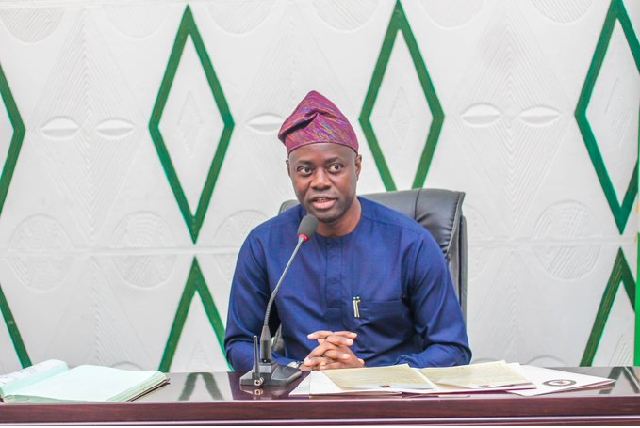
For Makinde, the safe return of the pupils and teachers cannot close the case. “The reunion of these children and teachers with their families does not mark the end of this painful chapter. It marks the beginning of another responsibility: our collective responsibility to establish the truth,” the governor said.
He wants a full account of the abduction, including whether institutional failures, negligence or collusion contributed to the incident.
Makinde argues that international scrutiny would not undermine Nigerian security institutions but could strengthen public confidence in the investigation. “The circumstances surrounding this incident are sufficiently grave and unusual to warrant independent scrutiny beyond our domestic institution,” he said.
The governor insists the demand is about justice and the right of Nigerian children to attend school without fear.
Presidency sees politics in Makinde’s demands for answers
The Presidency has sharply rejected the suggestion that domestic institutions are incapable of establishing the truth.
Presidential spokesman Bayo Onanuga described Makinde’s demand as “unwarranted” and “absolutely unnecessary”. He questioned why anyone within government or the security establishment would deliberately allow children to spend 56 days in captivity.
“Look at those kids. Some of them are just about four or six years old. Will anyone want to deliberately subject them to the trauma they went through for 56 days?” Onanuga asked.
The Presidency also pointed to the deaths and injuries suffered by security personnel during the rescue operation as evidence of the risks taken to secure the victims.
But Onanuga went further, linking Makinde’s demand to his political ambitions and accusing him of promoting a conspiracy theory. “The man is just playing politics, and it is the politics of the bizarre,” he said.
The Issues
The political confrontation risks overshadowing the most important questions raised by the abduction.
How did armed groups successfully attack three schools and move 45 people into forest territory?
What intelligence existed before the attack?
How extensive are criminal supply and informant networks around the Old Oyo National Park?
And, perhaps most importantly, what changes will prevent another rural school from becoming a target?
The military’s disclosure that the abductors relied on logistics networks and informants suggests that the attack may not have been an isolated operation.
Makinde has now announced plans to strengthen oversight of access routes around the Old Oyo National Park through adjoining local government areas.
Although national parks fall under federal jurisdiction, the state plans to regulate movement, improve community intelligence and develop protocols aimed at preventing criminal groups from using border communities as safe passages.
A divided political response
Makinde’s demand has divided Nigeria’s political parties.
The Nigeria Democratic Congress, All Progressives Grand Alliance, Social Democratic Party and Young Progressives Party have backed calls for a wider investigation.
Their argument is centred on accountability: whoever investigates the case, the perpetrators and any individuals who enabled the crime must be identified.
The Labour Party, however, has opposed UN involvement.
Its National Publicity Secretary, Ken Asogwa, argued that inviting an international body to investigate a domestic security matter could raise sovereignty concerns.
He said Makinde should instead pressure the DSS and police to conduct a comprehensive investigation and publicly disclose any intelligence suggesting that Nigerians have not been told the full story.
What’s Next
The rescued pupils and teachers face a recovery that may last longer than the 56 days they spent in captivity.
The Oyo State Government has assumed responsibility for their medical, psychological and educational support and says it will work with the affected school management to prevent disruptions to the pupils’ education and teachers’ careers.
The victims were placed under medical observation before being reunited with their families.
But recovery alone will not answer the security questions left behind.
The next test is whether the Federal Government and Oyo State can move beyond their political disagreement and establish what made the attack possible.
Bottom Line
The rescue of the Oyo pupils and teachers ended 56 days of captivity, but it did not end the story.
Behind the celebrations are traumatised children, grieving families, dead teachers and security personnel, and rural educators now questioning whether their classrooms are safe.
Makinde wants international scrutiny. The Presidency sees political theatre.