



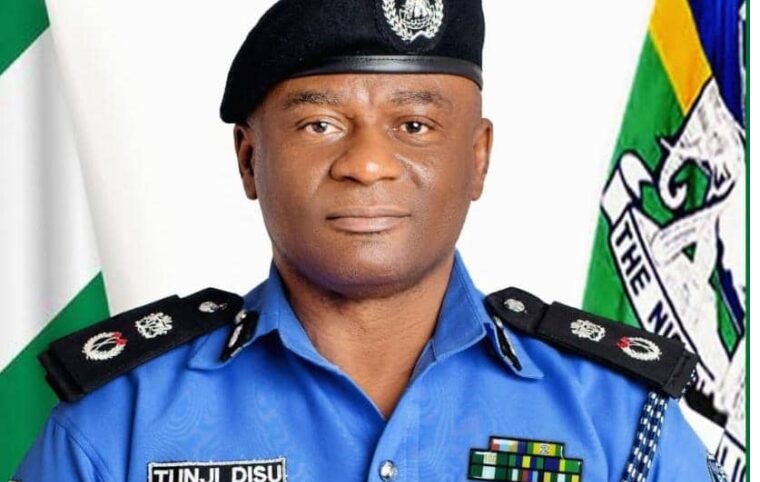
For six decades, Nigeria has policed itself the same way: one force, one command structure, one Inspector-General giving orders from Abuja to a village in Zamfara or a creek in Bayelsa. That arrangement is now, finally, coming undone and the man overseeing its unwinding spent this week not in Abuja, but eleven blocks from Times Square, telling the world why it matters.
Inspector-General of Police Tunji Disu was in New York for the fifth United Nations Chiefs of Police Summit (UNCOPS 2026), a two-day gathering of police chiefs, interior ministers and UN officials held on July 7–8 at UN Headquarters. Between sessions, he sat down with the News Agency of Nigeria to talk about a reform that has been debated in Nigeria for more than twenty years and is now, for the first time, moving through the machinery of government at speed.
State Police is not a new idea in Nigeria. Governors, security analysts and civil society groups have pushed for decentralised policing since the return to democracy in 1999, arguing that a single national force cannot adequately secure a country of more than 200 million people spread across 36 states. What is new is the pace at which the idea is now moving.
In June, President Bola Tinubu formally asked the Senate to approve the Constitution of the Federal Republic of Nigeria (Alteration) State Police Bill, 2026, legislation that would amend the 1999 Constitution to create a legal basis for state police services. The bill has already passed both chambers of the National Assembly and has since been transmitted to the 36 state Houses of Assembly, where it needs the backing of at least 24 legislatures before it can return to the President for assent.
The proposed structure is a dual one: a Federal Police Service retaining responsibility for terrorism, cybercrime, interstate offences and national security, alongside 36 individual State Police Services handling local law enforcement under nationally set standards. Ogun State Governor Dapo Abiodun, who chairs the Nigeria Governors’ Forum committee on the reform, has estimated that if each state deploys roughly 6,000 officers, the country could add nearly 200,000 personnel to its policing capacity.
Tinubu is not waiting for the constitutional process to finish. On July 8, a day after Disu spoke in New York, the President inaugurated a Presidential Working Group, chaired by his Chief of Staff, Femi Gbajabiamila, including the Attorney-General, the Inspector-General of Police, the Nigerian Bar Association president and the NGF committee chairman, to draft a National Policing Bill. That bill, Tinubu has said, is what will actually operationalise the new structure: setting minimum policing standards, certifying which states are ready, defining federal-state coordination, and building in accountability and human rights safeguards.
“We Are Still at the Teething Stage”
It is this operational gap between a constitutional framework and a working police force that Disu addressed most candidly in New York. He was blunt about the distance still to travel: State Police, he said, needs experience, education and comparative study from countries that already run decentralised systems before Nigeria can move to full implementation.
That caution sits alongside genuine enthusiasm for what the reform could restore. Disu argued that officers embedded in the communities they serve will understand those communities better, feeding more accurate intelligence back up the chain and rebuilding a level of familiarity between police and public that has eroded over the decades. He described it as a return to an era when residents largely knew the officers responsible for their own neighbourhoods, and said that proximity would translate into stronger public trust and faster response to emerging threats.
He also pushed back against a narrative that federal and state police would compete for turf, framing State Police instead as a structure that deepens collaboration between the two tiers.
The IGP’s own career gives the argument some texture. Before Abuja, Disu built his reputation commanding the Lagos State Rapid Response Squad from 2015 to 2021, where he rebranded his officers as “The Good Guys” an initiative built around visible patrols, hotspot mapping and proactive engagement rather than reactive enforcement.
Governor Babajide Sanwo-Olu has credited that stint with earning the unit recognition for crime control. It is, in miniature, the same community-first logic Disu now applies to the national argument for State Police, though critics note that translating a single successful state command into 36 separate, differently resourced police services is a considerably larger undertaking, one that legal bodies, including the Nigerian Bar Association, have warned needs strong statutory safeguards against abuse.
Nigeria’s Case at the UN Table
The State Police conversation was only part of why Disu travelled to New York. UNCOPS 2026, the UN’s fifth such summit since the format began in 2014, brought together ministers and police chiefs from more than 100 member states to discuss the future of UN policing at a moment of tightening peacekeeping budgets and a shifting operating environment for missions worldwide. This year’s sessions focused on the future of UN Police as a “system-wide service provider,” new technology in policing, and international cooperation against transnational crime.
Against that backdrop, Disu made the case for Nigeria’s record as a peacekeeping contributor, one that, he noted, stretches back to the country’s first deployment to the Congo in 1960 and has continued, without a single failed mission, ever since. He said Nigerian personnel are present in nearly every UN mission worldwide, and that the country has paid for that record in the lives of officers lost in the field.
A Regional Border Force, Proposed in New York
The IGP’s visit also produced a separate, more concrete proposal, this one from Nigeria’s Permanent Representative to the UN, Ambassador Jimoh Ibrahim, who chairs the UN General Assembly’s Fifth Committee on Budget and Administration. Hosting Disu, Gambia’s Inspector-General Seedy Touray and Belgium’s Minister of Interior Bernard Quintin at Nigeria House, Jimoh laid out figures meant to justify a new regional policing structure: 46 percent of violent incidents in the region occur within 100 kilometres of a land border, he said, and more than 90 percent of migration within West and Central Africa is inter-regional.
Those numbers, in his telling, make the case for a specialised West African border police force, one with a shared uniform, better pay, modern surveillance technology and performance-based incentives, designed to give the region a coordinated response to terrorism, organised crime and cross-border movement that no single national force can manage alone. He urged Disu specifically to champion a UN-backed Regional Stability Initiative built around that model, and noted that the UN itself spends more than $8 billion a year on peacekeeping globally — money he suggested should be matched by regional investment in prevention rather than response.
Jimoh also used the meeting to put UN weight behind Nigeria’s domestic reform, telling Disu that the UN stands ready to support Tinubu’s State Police initiative as what he called a strategic response to the country’s persistent insecurity.
What Comes Next
None of this, the State Police bill, the National Policing Bill working group, or Jimoh’s border force proposal, is finished business. The constitutional amendment still needs 24 state assemblies to ratify it. The Presidential Working Group has yet to produce draft legislation. And the West African border force remains, for now, an ambassador’s proposal rather than a funded institution.
What has changed is the sense of momentum. A reform that spent two decades as a talking point among governors and security analysts is now sitting inside a formal legislative pipeline, with a named committee, a chairman, and a deadline pressure of its own, Tinubu has told the working group not to wait for the constitutional process to finish before it starts drafting. For an Inspector-General who spent his most formative command years testing community policing on the streets of Lagos, the argument he carried to New York this week was less theoretical than personal: that policing closer to the people is not just more humane, but more effective and that Nigeria, watched by a room of the world’s other police chiefs, is finally building the legal architecture to try it nationwide.