





- From NIPCO’s Benin City roots to Banner Gas stations in Lekki, and from residential estate chargers to local government corridors — here is everything the Nigerian business community needs to understand about the country’s rapidly expanding alternative fuel ecosystem.
By Boluwatife Oshadiya│ June 22, 2026
Key Points
- Nigeria now has 75+ operational CNG refuelling stations across 20 states and 337+ certified conversion centres, up from just 7 at the initiative’s launch in 2023
- Private operators NIPCO Gas, BOVAS, and Banner Gas are driving the bulk of infrastructure expansion, with investments in the sector surpassing $1 billion
- The EV charging market, valued at USD 1.24 billion in 2025, is projected to reach USD 13.97 billion by 2035, with estates and local governments identified as the critical next frontier
- President Tinubu formally expanded Pi-CNG’s mandate to cover electric vehicles in March 2026, signalling a unified clean transport strategy
- Over 100,000 vehicles have been converted to CNG, with commercial drivers reporting savings of up to ₦22,000 per day compared to petrol costs
Main Story
Nigeria is in the middle of an energy transport revolution — and for once, the infrastructure is actually moving. When President Bola Tinubu removed petrol subsidies in May 2023, most Nigerians feared the worst. Instead, the Federal Government unveiled a parallel strategy: flood the roads with Compressed Natural Gas vehicles, retrofit the existing fleet, and begin laying the groundwork for an electric vehicle future. Less than three years later, the numbers tell a story that few predicted.
From a base of just seven CNG conversion centres and barely a dozen functional refuelling stations, Nigeria now boasts over 337 certified conversion centres, 75-plus operational refuelling stations across 20 states, and more than 100,000 converted vehicles — with over $1 billion in private sector investment committed to the sector. Meanwhile, the country’s nascent electric vehicle charging market is stirring, driven by private operators in Lagos and Abuja, government pilot projects at universities, and a new generation of entrepreneurs targeting residential estates and local government corridors as the next battleground for clean energy deployment.
This listicle breaks down the 10 most important things business leaders, fleet operators, investors, property developers, and everyday Nigerians need to understand about where CNG and EV infrastructure stands today — and where it is heading.
The Listicle: 10 Things to Know
How Nigeria Went From 7 CNG Stations to 75 in Under Three Years
The story of Nigeria’s CNG scale-up is one of the most remarkable infrastructure turnarounds in the country’s recent economic history. When Pi-CNG — the Presidential Initiative on Compressed Natural Gas and Electric Vehicles — launched under President Tinubu’s Renewed Hope Agenda in May 2023, the country had approximately seven CNG conversion centres nationwide and fewer than 15 operational refuelling stations. Most were concentrated in Benin City and a handful of Lagos locations, pioneered largely by NIPCO Gas, which had been building CNG infrastructure in Nigeria since 2009.
The pace of change since then has been extraordinary. By the end of 2024, the number of operational refuelling stations had crossed 50. By mid-2025, it had reached 54, with the 75-station milestone confirmed by Pi-CNG in official programme documents. The conversion centre count followed an even steeper curve — from 7 to more than 337 certified centres, representing what the initiative describes as a near 3,000% increase in national conversion capacity. Over 100,000 vehicles have been converted, and the initiative has trained 5,650 Nigerian CNG auto-technicians and deployed more than 490 CNG buses and 4,818 tricycles.
“When we started this programme, we had about 13 to 20 refuelling stations nationwide. Today, we have 50. I believe in the next six months that 50 should double. It’s a consistent engagement, and ensuring that investors see the opportunity,” — Michael Oluwagbemi, Pi-CNG Director, speaking in October 2024.
The initiative has also attracted significant private capital. Pi-CNG reported over $1.02 billion in private investments mobilised within its first operational year, with total commitments now exceeding $2 billion by some accounts. In March 2026, President Tinubu formally expanded Pi-CNG’s mandate to encompass electric vehicles — renaming the initiative Pi-CNG & EV — cementing its role as Nigeria’s comprehensive clean transport authority.
- NIPCO Gas: The Pioneer That Refused to Stop
If there is one company that has defined Nigeria’s CNG story more than any other, it is NIPCO Gas Limited. The subsidiary of NIPCO Plc began building CNG infrastructure in Nigeria as far back as 2009 — long before government policy caught up — starting in Benin City, Edo State, and gradually extending its network to Ibafo in Ogun State, Kogi State, and eventually to Abuja, Ibadan, and beyond.
Today, NIPCO Gas operates one of the largest CNG networks in the country, with stations across Lagos (Agidingbi on Lateef Jakande Road, Apapa), Abuja and the FCT (Kubwa, Lugbe, Tunga Maje), Edo State (multiple stations across Benin City including 2nd East Circular Road, Sapele Road, Agbor Road, Textile Hill, and Eyaen), Oyo State (Ibadan, including a station at the New Toll Gate area), Delta State (Asaba, Warri), and Akwa Ibom State (Oron). The company has also commissioned a station in partnership with the Delta State Government in Asaba, where the state provided land for the facility.
“Aligned with the Federal Government’s clean energy and post-subsidy reform agenda, NIPCO Gas Limited, in a joint venture with NGML, is currently constructing 20 additional Compressed Natural Gas stations across Nigeria,” — Nagendra Verma, Managing Director, NIPCO Gas Limited, March 2026.
Beyond refuelling, NIPCO Gas operates CNG conversion workshops — one-stop facilities where vehicle owners can both convert their engines and refuel. Conversion workshop locations include Ibafo (Ogun State), Ibadan (Oyo State), Benin City (Edo State), Abuja (FCT), and several Lagos locations. NIPCO Gas has also disclosed plans to construct an 18-inch, 80-kilometre natural gas pipeline from Sagamu to Ibadan, scheduled for completion by July 2026, which will improve gas supply reliability across the South-West.
“With the right policies and infrastructure, CNG can play a transformative role in Nigeria’s energy mix. We remain committed to driving this change and look forward to working with all stakeholders to achieve our shared vision,” — Nagendra Verma, Managing Director, NIPCO Gas Limited.
- BOVAS, Banner Gas, and the Operators Building Out the Network
NIPCO Gas may be the pioneer, but the CNG network would not have reached its current scale without a growing roster of private operators stepping in with capital and ambition.
BOVAS Group
BOVAS has established one of the strongest CNG presences in the South-West. Its stations span the Oyo State axis — including Idi-Ose, Oluyole, and Ajibode in Ibadan — as well as locations in Kwara State (Ilorin), Ekiti State (Ado-Ekiti), Osun State, Lagos State (Idimu), and the FCT (AUST campus, Bwari, Wuse). Many BOVAS stations come equipped with conversion workshops, making them genuine one-stop CNG hubs. The company has committed to an eight-station expansion, with two new Ibadan sites already in advanced preparation. Pi-CNG director Michael Oluwagbemi confirmed that BOVAS’s rollout is among the most active in the current expansion phase.
Banner Gas
Banner Gas, which operates under an Oando partnership arrangement, has built a significant presence in Lagos and Abuja. In Lagos, Banner Gas stations can be found at Marina, Igobi-Fadeyi, Itire-Ishaga (Surulere), Badore, Lekki Phase 1, Iyana School (Ketu), Ogombo (Ajah), and along LASU Road. In Abuja, the company has stations in Wuse Zone 6, Zone 1, Zone 4, and Gaduwa. The Lagos and Abuja footprints make Banner Gas one of the most geographically balanced operators in the current network.
Other Active Players
Rolling Energy operates what Pi-CNG describes as the most advanced CNG daughter station in West Africa — a high-capacity facility in Jahi, Abuja, capable of serving 900 to 1,000 vehicles daily at full capacity, backed by the Midstream and Downstream Gas Infrastructure Fund (MDGIF). AY Shafa has also emerged as a significant builder, with stations commissioned in Abuja and nine more under construction. Other operators with active or expanding CNG infrastructure include Femadec, Greenville, Emadeb Energy, Portland Gas, Powergas Africa, and Mezovest.
- What Are CNG Conversion Centres — and Where Are They?
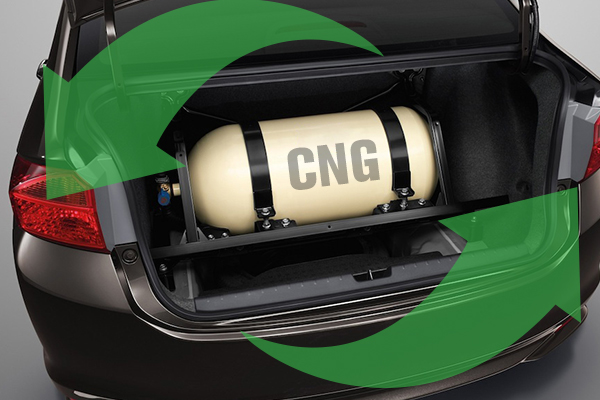
A CNG conversion centre is a certified workshop where a conventional petrol-powered vehicle is retrofitted to run on compressed natural gas. The process typically takes four to six hours and involves the installation of a CNG kit — comprising a gas cylinder, pressure regulator, injector rail, control unit, and associated components — that allows the vehicle to switch between CNG and petrol. Many converted vehicles become bi-fuel, giving drivers the flexibility to use whichever fuel is available.
Under the Pi-CNG programme, the Federal Government has subsidised or provided free conversions for eligible commercial vehicle operators, particularly members of unions like the National Union of Road Transport Workers (NURTW) and the Road Transport Employers Association of Nigeria (RTEAN). Private vehicle owners pay a subsidised rate, with financing available at 9% through the government-backed CALM Fund.
Conversion centres are now certified in at least 23 states. Key clusters include:
- Lagos and Ogun: Ibafo (along Lagos-Ibadan Expressway), Ojota, Lekki-Epe Expressway/Sangotedo, Isolo, Ikorodu — with operators including NIPCO, MBH Power, Portland Gas, Mezovest, and Femadec
- Oyo/Ibadan: NIPCO at the Mobil New Toll Gate station, BOVAS at Idi-Ose, Oluyole, and Ajibode, plus Autoclinic and other certified centres
- Edo/Benin City: Multiple NIPCO-operated centres at Eyaen, Uselu, East Circular Road, Agbor Road, and Sapele Road — the highest concentration of conversion workshops in any Nigerian city
- Abuja/FCT: SALMA Auto (Airport Road), NIPCO (Kubwa, Dealers 72 and 73), RT Briscoe (Jabi), Portland Gas (Utako), and several others in Apo and Lugbe
- Other states: Warri and Asaba (Delta), Okene and Ajaokuta (Kogi), Oron (Akwa Ibom), Port Harcourt (Rivers)
Pi-CNG reports that more than 5,650 Nigerian technicians have been trained and certified to carry out CNG conversions across all six geopolitical zones. The government has also moved to address safety concerns after a vehicle explosion at a NIPCO station in Aduwawa, Benin City — an incident investigators attributed to illegal fabrication of CNG cylinders rather than any failure in certified equipment.
- What Drivers Are Saying — The Real Economics of CNG
The most compelling argument for CNG adoption is not policy language — it is the numbers that ordinary drivers are living with every day. CNG is currently priced at roughly 40% less than petrol on a per-kilometre basis, and the savings for high-mileage commercial drivers are substantial.
Testimonies from converted drivers documented on the Pi-CNG platform and in media reports paint a consistent picture. One commercial driver noted that before converting, he spent ₦25,000 per day on fuel and cleared a daily profit. After converting to CNG, his daily fuel cost dropped to ₦3,000, allowing him to make a profit of ₦25,000 per day while also reducing transport fares for his passengers. Another driver who converted in April 2025 described spending ₦12,000 on petrol to generate ₦20,000 to ₦30,000 in income, compared to now spending ₦2,700 on CNG and making a profit of up to ₦25,000.
“The CNG is very interesting and I’m advising Nigerians to convert now. When I was using fuel I could buy ₦12,000 worth and make ₦20,000–₦30,000. Now I buy CNG for ₦2,700 and make a profit of up to ₦25,000,” — CNG-converted commercial driver, Pi-CNG testimonial, 2025.
Pi-CNG’s own data estimates average savings of ₦40,000 per month for commercial drivers who have converted. Some parks have reportedly reduced transport fares for passengers by 25%, passing a portion of fuel savings to commuters. The economic case for conversion is, in this regard, difficult to dispute for high-volume users.
- The Challenges That Still Need Solving
Nigeria’s CNG infrastructure progress is real — but so are the bottlenecks that could slow or stall the revolution if not urgently addressed.
The most persistent problem is the mismatch between conversion rates and refuelling infrastructure. As more vehicles convert — 100,000 and counting — the pressure on existing stations has intensified. Queues at CNG stations in Lagos and Abuja have become a recurring complaint, with demand outpacing supply in the most active urban markets. Pi-CNG has acknowledged this gap and is working to commission additional stations, but the shortfall remains visible.
“Insufficient infrastructure has stalled the initiative. Nigeria could have cut petrol consumption by half if Pi-CNG had started earlier,” — Mike Osatuyi, former National Secretary, Independent Petroleum Marketers Association of Nigeria (IPMAN), December 2025.
Geographic coverage remains uneven. The South-West and North-Central zones have the highest station density; the South-South, South-East, and parts of the North are still severely underserved. Pi-CNG’s stated target is coverage across all 36 states and the FCT, but as of mid-2026, full nationwide coverage remains a target rather than a reality.
Safety perception is another barrier. The Benin City explosion incident — though attributed to illegal, uncertified equipment — fed negative media narratives that dampened public confidence. The Energy Commission of Nigeria has called for stricter regulation and standardisation of CNG cylinders to prevent safety hazards from locally fabricated tanks.
“There were doubts, but one year on, even the skeptics are convinced. Nigerians love CNG. The programme is working,” — Michael Oluwagbemi, Pi-CNG Director, May 2025.
“It took over 70 years for Nigerians to adopt petrol and diesel. We cannot expect to switch to CNG in seven months. Engineering feats take time. Rome wasn’t built in a day,” — Michael Oluwagbemi, Pi-CNG Director.
- Nigeria’s EV Charging Infrastructure — Where Things Actually Stand
If CNG infrastructure is in rapid adolescence, Nigeria’s electric vehicle charging network is still in its infancy — and anyone telling you otherwise is overselling. As of mid-2025, credible estimates put the number of publicly accessible EV charging and battery-swapping sites at approximately 12 nationwide, compared to around 27,000 fuel stations spread across the country’s 195,000-kilometre road network. The gap is stark.
But the directional trend is clear. The EV charging station market was valued at USD 1.24 billion in 2025 and is projected to grow at a compound annual growth rate of 27.40% to reach USD 13.97 billion by 2035. Government policy, private investment, and the logic of falling fuel costs are beginning to align.
Current operational infrastructure is concentrated almost entirely in Lagos and Abuja:
- Qoray Mobility: Currently the most visible commercial charging network in Nigeria, with stations at Victoria Island and Marina in Lagos, offering Type 2, CCS2, and GBT connectors. Qoray also launched a fast EV charging station at the Sheraton Lagos Hotel in Ikeja in July 2025, in collaboration with the hotel. Rates run from approximately ₦300/kWh for AC charging to ₦500/kWh for DC fast charging
- SAGLEV: Has installed charging points at the rooftop car park of Mega Plaza Shopping Mall in Victoria Island, Lagos
- NADDC Pilots: The National Automotive Design and Development Council has established solar-powered EV charging stations at federal universities, including the University of Lagos (UNILAG), the University of Nigeria, Nsukka (UNN), Usman Danfodiyo University, Sokoto (UDUS), and Federal University Lafia, as proof-of-concept projects for renewable integration
- Energy Commission of Nigeria: Unveiled EV charging infrastructure at its Abuja headquarters in 2025, adding a public-sector option in the capital
- Spiro: Operating over 100 battery-swapping stations as of September 2025, primarily targeting commercial electric motorcycles
In February 2026, Lagos State Governor Babajide Sanwo-Olu inaugurated Nigeria’s first locally assembled electric SUV — the Hyundai Kona — at Stallion Group’s VON plant, marking a milestone for domestic green automotive production.
- The Estate Collaboration Opportunity — Why Gated Communities Are the Smart Next Move for EV Charging
For investors and operators looking to deploy EV charging infrastructure in Nigeria without waiting for a fully reliable national grid, gated residential estates are emerging as the most strategically intelligent entry point — and the business case is compelling.
The logic is straightforward. Gated communities offer controlled environments with known demand, predictable usage patterns, captive users who can afford EVs, and existing electrical infrastructure. Residents charge overnight — reducing pressure on the grid during peak daytime hours — and the managed setting means security for equipment is not the challenge it would be in open public spaces. Companies like Travo.ng and Glintedge Limited are already targeting this market, offering customised EV charging installation services designed specifically for Nigerian estates.
“This policy gives us the signal we needed. Now we are actively looking at partnerships with malls, estates, and fuel station operators,” — Energy startup founder quoted in Nairametrics, April 2026.
The model being advocated by infrastructure providers typically involves developer-funded or operator-managed stations, where the estate developer installs Level 2 chargers (suitable for overnight charging) and either bundles the cost into service charges or allows a third-party operator to manage billing. Solar-backed hybrid systems are increasingly favoured, given Nigeria’s grid unreliability.
The property value argument is also gaining traction. In competitive real estate markets like Lagos — where Lekki, Victoria Island, Banana Island, and Ikoyi attract buyers who are most likely to own or consider EVs — EV-ready estates are beginning to be marketed as premium lifestyle features, much as backup power and water treatment were a decade ago. Luxury developments that offer on-site charging are positioning themselves ahead of a trend that real estate consultants say is only going in one direction.
From a technical standpoint, slow (Level 2) chargers that deliver 240 volts over several hours are ideal for residential estates where vehicles are parked overnight. Fast chargers, which are more suitable for shared spaces and commercial facilities, require more robust infrastructure but are increasingly viable as operators move toward solar-battery-storage hybrid designs that reduce dependence on distribution company power. The key design consideration for estate managers is to begin with current EV demand — which may be low — but plan infrastructure for the inevitable growth curve, building in scalability from day one.
Market projections reinforce the opportunity. LUG West Africa, which has already installed over 50,000 solar-powered street lights across Lagos State, announced plans to deploy more than 250 EV charging points across Lagos by 2026, leveraging the same infrastructure base. The company’s chairman, Dr Kadri Obafemi Hamzat, noted that EV adoption in Nigeria grew by an estimated 400% between 2020 and 2025 — and that at even an 8% EV adoption rate across Nigeria’s 11 million vehicles, demand for public and residential charging infrastructure would be enormous.
- Local Government Associations and the Case for Decentralised EV Deployment
The Association of Local Governments of Nigeria (ALGON) has not yet emerged as a major formal partner in Nigeria’s EV charging rollout — but the logic for that partnership is increasingly compelling, and early state-level models are pointing toward what scaled collaboration could look like.
Lagos State offers the clearest blueprint. The state’s plans to deploy more than 250 EV charging points, announced by LUG West Africa at its 2025 end-of-year event, were attended by both the Deputy Governor of Lagos State and the Ogun State Commissioner for Local Government and Chieftaincy Affairs — a signal that local government stakeholders are being brought into the conversation around EV infrastructure. The state’s existing solar streetlight network provides a physical infrastructure backbone that, experts argue, could be adapted or co-located with EV chargers without requiring entirely new site development.
The broader argument for local government involvement rests on access to land, community reach, and the ability to integrate EV charging into public facilities — markets, motor parks, local government secretariats, public parking areas, and along major commuter routes. In the short term, even a model that places one functional EV charging point at each local government area headquarters in a state like Lagos — which has 20 LGAs and 37 LCDAs — would represent a meaningful expansion of the public charging footprint.
Pi-CNG CEO Ismaeel Ahmed has already flagged a key integration strategy that aligns CNG and EV infrastructure planning: using CNG-powered generators to power EV charging stations where grid supply is unreliable.
“We have sunlight, we have gas, and we will use them to deliver cheaper and cleaner mobility,” — Ismaeel Ahmed, Executive Chairman and CEO, Pi-CNG & EV, December 2025.
Analysts and infrastructure developers argue that local governments need to be integrated into the planning conversation around EV charging from the earliest stages — not as an afterthought. Recommendations circulating in the policy space include mandating that new commercial developments and public car parks above a certain size include EV charging provisions as a planning condition, integrating EV chargers into LGA-owned market renovations, and using land access as a local government contribution to public-private partnerships where operators bring capital and technology.
The Electric Vehicle Transition and Green Mobility Bill — which passed its second reading in the Senate in late 2025 and is currently under review — proposes tax holidays, import duty waivers, road tax and toll exemptions for EV users, and support for investors in charging infrastructure. If enacted, the bill would provide the policy framework within which local government EV collaboration could be formalised and incentivised.
The Investment Picture — What CNG and EV Mean for Nigerian Business
For Nigerian businesses — fleet operators, property developers, fuel retailers, logistics companies, and infrastructure investors — the clean energy transport transition represents one of the most significant commercial opportunities of the current decade.
On the CNG side, the investment case is already validated. More than $1 billion in private capital has flowed into the sector, with commitments exceeding $2 billion. Companies that moved early — NIPCO Gas, BOVAS, Rolling Energy — are now reaping the returns of being infrastructure owners in a market with rapidly growing captive demand. Fleet operators that convert their vehicles are seeing cost structures transform in ways that directly affect profitability. Major automakers including Hyundai Nigeria, Coscharis Motors, Dana Motors, and the Stallion Group have introduced factory-fitted CNG vehicles. Innoson Vehicle Manufacturing is investing in conversion facilities. The Midstream and Downstream Gas Infrastructure Fund has committed equity investments to ten new CNG-focused projects.
“This is the first time we can confidently say EVs will move from luxury interest to mainstream consideration. Once prices drop, the middle market opens up immediately,” — Olabisi Ajayi, Chief Executive, EV company, April 2026.
On the EV side, the Federal Government’s removal of the 5% import duty on electric vehicles has been described by industry players as the trigger the market has been waiting for. Ride-hailing companies and logistics firms are beginning to make enquiries about fleet electrification. Charging station operators are actively scouting partnership deals with malls, estates, and fuel station networks. The January 2026 memorandum of understanding between Nigeria’s Ministry of Industry, Trade, and Investment and South Korea’s Asian Economic Development Committee to build an EV assembly plant in Kano — with an annual production capacity of 300,000 vehicles — signals the kind of long-term manufacturing bet that only happens when a market is considered serious.
“Ride-hailing companies and logistics firms are already calling. They’ve been waiting for a price trigger like this. We expect demand to spike faster than inventory cycles can adjust,” — Uche Madunagwu, EV distributor, April 2026.
The projection that the EV charging market will grow from USD 1.24 billion in 2025 to USD 13.97 billion by 2035 is based on modelling that accounts for falling EV prices, improving local assembly capacity, rising fuel costs, government incentives, and growing consumer awareness. Even if the projection proves optimistic by half, it describes a market of extraordinary commercial size. The businesses that build charging infrastructure, manufacture components, manage fleets, or develop EV-ready real estate in the next three to five years will be positioned as category leaders in a market that does not yet exist at scale but, on current trends, inevitably will.
The Issues
Infrastructure vs. Demand: The CNG Bottleneck
The single greatest structural risk to Pi-CNG’s success is the gap between conversion rates and refuelling capacity. As the government accelerates vehicle conversions — targeting 250,000 to 300,000 per year — the 75 operational stations face increasing pressure. Queue culture at Lagos and Abuja CNG stations is already a documented phenomenon. Without a proportional expansion of the refuelling network, converted vehicle owners face the perverse outcome of holding a cleaner, cheaper vehicle that they cannot reliably fuel. Pi-CNG’s target of 150 stations by end-2025 has been met with modest overrun, and the push toward full nationwide coverage across 36 states remains the most urgent outstanding infrastructure task.
Grid Dependency and the EV Charging Paradox
Nigeria’s electricity grid remains one of the most unreliable in Africa. Average electricity supply in many states falls well below the hours needed to support widespread EV charging without supplementary generation. This is not an argument against EV infrastructure — it is an argument for the hybrid solar-battery-storage models that leading operators are already designing around. The paradox is that Nigeria’s grid challenges, which appear to be a barrier to EV adoption, may actually accelerate a more sophisticated, decentralised charging architecture that leapfrogs the grid-dependent models used in more developed markets.
Regulatory Speed vs. Market Pace
Both the CNG and EV sectors in Nigeria operate in an environment where regulatory approvals — from the Nigerian Midstream and Downstream Petroleum Regulatory Authority (NMDPRA), the Standards Organisation of Nigeria (SON), the National Automotive Design and Development Council (NADDC), and others — can materially slow infrastructure deployment. NIPCO Gas’s Nagendra Verma has publicly called for a more streamlined regulatory approval process to fast-track CNG expansion. The Electric Vehicle Transition Bill’s ongoing legislative journey underscores how the policy framework has not yet caught up with market momentum.
What’s Being Said
“Our mission is unwavering: to build a resilient, multi-energy transport ecosystem that lowers transport costs and positions Nigeria as a continental leader in clean mobility,” — Ismaeel Ahmed, Executive Chairman and CEO, Pi-CNG & EV, December 2025.
“Pi-CNG has made electric mobility a reality. These buses will be on the road immediately, offering Nigerians affordable transport,” — Ismaeel Ahmed, Pi-CNG & EV, on the launch of 40 electric buses, December 2025.
“NIPCO Gas is honoured with this trust and belief by the government and NNPCL and has assured that we will not leave any stone unturned to make this CNG expansion plan a reality which will relieve thousands and millions of citizens from the pain they are going through,” — Nagendra Verma, Managing Director, NIPCO Gas Limited.
“We are committed to sustainability and social responsibility. NIPCO PLC is poised to play a leading role in Nigeria’s energy revolution,” — Suresh Kumar, Managing Director, NIPCO Plc.
“Nigeria’s energy transition plan is currently based on gas, being the sector the country has strong comparative advantage in,” — Dr Olasupo Agbaje, Acting Executive Director, Economic Regulation and Strategic Planning, NMDPRA.
“We are preparing for a price war phase,” — Uche Madunagwu, EV distributor, April 2026, responding to the Federal Government’s removal of the 5% EV import duty.
“The idea is to send a signal that Nigeria is not a dumping ground for used ICE vehicles from countries that are moving away from them,” — Dr. Kaycee Orji, Chairman, Roxettes Group, April 2026.
What’s Next
- Pi-CNG & EV is targeting full CNG refuelling station coverage across all 36 states and the FCT, with Northern Corridor expansion in Kano to be inaugurated imminently. NIPCO Gas’s 20 new stations, under construction in a joint venture with NGML, are expected to come online in phases through 2026
- The Sagamu-Ibadan natural gas pipeline (18 inches, 80 kilometres), being constructed by NIPCO Gas in partnership with NNPC Gas Marketing Limited, is scheduled for completion by June or July 2026, which is expected to improve gas availability and CNG supply reliability across the South-West
- The Electric Vehicle Transition and Green Mobility Bill is expected to return to the Senate for a final vote before the end of the current legislative session. Presidential assent would formally establish the incentive framework for EV investment — including tax holidays, import duty waivers, and toll exemptions — and could accelerate both estate-level and LGA-level infrastructure deployment
- LUG West Africa’s 250-plus EV charging point rollout across Lagos State, leveraging its existing solar streetlight infrastructure, is expected to make significant progress through 2026
- Pi-CNG aims to have one million CNG-converted vehicles on Nigerian roads by 2027, implying nearly a ten-fold increase from the current 100,000-plus baseline
Bottom Line
The Bottom Line: Nigeria’s clean fuel transition is no longer a government policy aspiration — it is a live commercial market, and the early movers are already staking territory. CNG has demonstrated proof of concept at scale, with 100,000 converted vehicles and $1 billion in investment validating the economics. The EV charging sector is where the next decade’s infrastructure winners will be decided, and the smartest entry points — residential estates, local government corridors, fuel station forecourts — are available right now, ahead of mass market arrival. The businesses and investors that move in the next 24 months will not be chasing a trend; they will be setting one.