



By Boluwatife Oshadiya | June 2, 2026
Key Points
- Nigeria received about $3.653bn in World Bank-backed power sector financing between 2001 and 2024
- Funding targeted transmission upgrades, rural electrification, reforms, and renewable energy expansion
- Electricity supply remains unstable with frequent grid collapses and heavy generator dependence
Main Story
Nigeria’s persistent electricity crisis continues despite the injection of about $3.653bn in World Bank-backed financing into the power sector over the past 24 years, according to data compiled from World Bank project records between 2001 and 2024.

The funding, tracked across multiple intervention programmes, was directed at transmission rehabilitation, sector reform, rural electrification, renewable energy deployment, and broader efforts to stabilise the country’s electricity market. However, supply constraints, weak grid performance, and chronic outages have remained largely unresolved.
Key programmes included the $100m Transmission Development Project in 2001, $172m National Energy Development Project in 2005, and $400m Nigeria Electricity and Gas Improvement Project in 2009. Subsequent interventions included the $486m Nigeria Electricity Transmission Project and $350m Nigeria Electrification Project in 2018, followed by the $750m Power Sector Recovery Programme in 2020.
Despite these interventions, Nigeria continues to experience frequent national grid collapses and low generation reliability, forcing households and businesses to rely heavily on petrol and diesel generators for daily power needs.
The funding is part of a broader portfolio of support from the World Bank aimed at improving access, strengthening transmission infrastructure, and attracting private investment into Nigeria’s electricity market. Yet implementation gaps and structural inefficiencies have continued to limit outcomes.
The situation is compounded by liquidity constraints in the power market, gas supply shortages, vandalism of transmission assets, and policy inconsistency across successive administrations. These challenges have slowed the sector’s ability to translate capital inflows into reliable electricity delivery.
More recently, attention has shifted toward decentralised energy solutions. Newer World Bank-supported programmes such as the Distributed Access through Renewable Energy Scale-up initiative and the Sustainable Power and Irrigation for Nigeria project are focused on expanding solar-based electricity access in underserved communities.
In a restructuring update cited on its website, the World Bank also confirmed adjustments to Nigeria’s Power Sector Recovery Performance-Based Operation, including early closure of the programme and cancellation of undisbursed funds.
“The restructuring will result in the cancellation of the entire undisbursed balance in the amount of $717.7m equivalent, and no further disbursements will be made under the programme following approval of this restructuring,” the World Bank stated.
The Issues
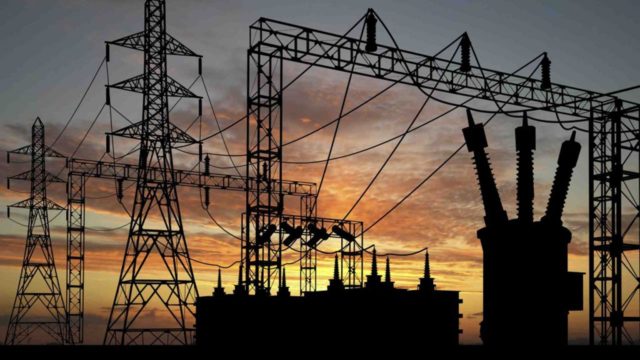
Nigeria’s electricity sector continues to face a structural mismatch between capital investment and operational performance. Despite multi-billion-dollar inflows, transmission bottlenecks remain one of the most persistent constraints, limiting the evacuation of generated power to end users.
Liquidity shortages across the electricity value chain have also weakened the financial sustainability of distribution companies, resulting in poor service delivery and delayed infrastructure upgrades. This has created a cycle where revenue shortfalls restrict reinvestment, further degrading reliability.
In addition, gas supply instability and recurrent vandalism of critical infrastructure have continued to undermine generation and transmission efficiency. These challenges have persisted even as reform programmes attempt to stabilise the market framework.
What’s Being Said
“The restructuring will result in the cancellation of the entire undisbursed balance in the amount of $717.7m equivalent, and no further disbursements will be made under the programme following approval of this restructuring,” the World Bank stated.
Energy analysts note that while sustained external financing has expanded infrastructure on paper, execution gaps and governance challenges have prevented measurable improvements in grid reliability and consumer supply outcomes.
What’s Next
- Nigeria’s power sector reform agenda is expected to continue under newer renewable-focused World Bank programmes
- Ongoing distributed energy projects are likely to expand solar mini-grid deployment in rural areas through 2026
- Further restructuring or review of legacy power financing arrangements may emerge as reform milestones remain unmet
Bottom Line
The Bottom Line: Nigeria’s power crisis underscores a deeper structural failure in translating large-scale development financing into reliable electricity delivery. While funding has expanded across transmission and reform programmes, persistent operational and governance constraints continue to prevent meaningful improvement in supply stability.