





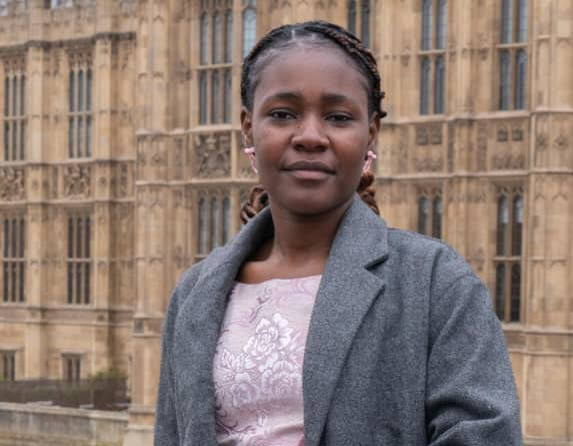
In communities where clean water is uncertain and discarded materials pile up without purpose, Joy Chiadika-Nwaeze sees neither waste nor limitation, she sees raw material for a movement.
A climate policy influencer and sustainability advocate, Chiadika-Nwaeze has built her work around a single conviction: that Nigeria’s sustainability gap is not a problem of awareness, but of access, tools, and actionable systems. Through Africa Upcycle Community and her broader advocacy at grassroots and policy levels, she is turning that conviction into measurable change – one upcycled product, one trained community, one influenced government at a time.
Q&A
At what point did climate advocacy become more than an interest and turn into a life mission for you?
Climate advocacy became a life mission when I realized that awareness alone was not enough. Around the time I began engaging more deeply with communities and seeing the tangible effects of climate risks, I realized that sustained action and systemic change, including direct engagement with governments and influencing policies, were necessary. Founding Africa Upcycle Community marked a turning point, it shifted my role from participant to driver of solution
What personal experiences or influences shaped your passion for environmental sustainability?
My passion was shaped by observing firsthand how environmental challenges disproportionately affect vulnerable communities, particularly in areas with limited access to clean water and proper waste management systems. Growing up and working within such contexts made it clear that environmental issues are not abstract; they directly impact health, livelihoods, and dignity. These lived realities, combined with my academic background in CSR and international business, pushed me to explore sustainable solutions that are both socially inclusive and economically viable.
What gap in Nigeria’s environmental or sustainability space motivated you to start your initiatives?
One of the most pressing gaps I identified was the disconnect between environmental awareness and actionable solutions, especially at the grassroots level. Many communities understand the problems but lack access to tools, knowledge, or platforms to act. Additionally, there was limited integration of circular economy practices and climate education into everyday life. My initiatives were designed to bridge that gap, making sustainability practical, accessible, and economically beneficial. It is also focused on making
How do your programmes, such as Africa Upcycle Community, translate awareness into real behavioural change?
We focus on experiential learning as well as practical, relatable experiences and community ownership. Through Africa Upcycle Community, participants don’t just learn about sustainability, they practice it. We train individuals to convert waste into valuable products, integrate climate education into local contexts, and empower them to become advocates within their own communities. This hands-on approach fosters long-term behavioural change because people see direct value in adopting sustainable practices.
In practical terms, how does your work contribute to economic opportunities or development in Nigeria?
Our programmes create green economic opportunities by equipping individuals with skills in upcycling and sustainable entrepreneurship. Participants are able to generate income from waste materials, which not only reduces environmental pollution but also supports livelihoods. By promoting circular economy models, we contribute to job creation, innovation, and local economic resilience.
What are the biggest challenges you face as a sustainability advocate working at both grassroots and policy levels?
One of the biggest challenges is navigating the gap between policy and implementation. While there is increasing attention on climate issues at policy levels, translating those commitments into real impact at the grassroots can be slow and complex. Additionally, resource constraints and limited infrastructure in some communities can hinder scalability. Balancing global advocacy with local realities also requires constant adaptation.
As a woman in this space, how do you navigate representation and leadership barriers?
I navigate these barriers by focusing on competence, collaboration, and consistency. While challenges around representation exist, I see them as opportunities to open doors for others. I actively support inclusive spaces and mentorship, ensuring that more women and young people can step into leadership roles within sustainability.
Do you believe young people in Nigeria are adequately included in conversations about the green economy? If not, what is missing?
Not yet. While there is growing interest, meaningful inclusion is still limited. Young people are often seen as beneficiaries rather than contributors. What is missing is structured engagement platforms that allow youth to co-create policies, access funding, and scale their innovations. There is also a need for more investment in green skills development.
You often speak about responsible digital behaviour, how does this connect to environmental or national development goals?
Responsible digital behaviour is an often-overlooked aspect of sustainability. Digital tools can amplify climate action, but they also contribute to environmental impact through energy consumption and misinformation. Promoting responsible use means leveraging technology for education, advocacy, and innovation while being mindful of its footprint. It also ties into national development by fostering informed, responsible citizens.
Looking ahead, what impact do you hope your work will have in the next decade?
In the next decade, I hope to see a measurable shift where sustainability is not just discussed but embedded into everyday life across communities. I aim to scale the impact of Africa Upcycle Community, influence stronger climate policies globally, and contribute to building systems where environmental responsibility and economic growth go hand in hand. Ultimately, I want to help create a future where sustainable living is accessible, practical, and inclusive for all.
Joy Chiadika-Nwaeze is a climate policy influencer, corporate social responsibility expert, and public speaker working at the intersection of governance, sustainability, and community development. Her work focuses on advancing climate action through practical, inclusive solutions, particularly in climate education, WASH advocacy, and circular economy models such as upcycling.
As the founder of Africa Upcycle Community, she has led initiatives that have equipped over 25,000 individuals with green skills and environmental awareness, as well as engaged at the policy level, influencing about three governments so far, while contributing to global conversations with institutions such as UNESCO and advising on frameworks like the Greening Education curriculum.