Keypoints
- The IMF has officially backed Nigeria’s ongoing bank recapitalisation, stating that stronger capital buffers are essential for cushioning the financial system against external shocks.
- Tobias Adrian, IMF Financial Counsellor, emphasized that well-capitalized banks are crucial for sustaining lending activities during periods of global financial stress.
- The fund noted that capital flows to emerging markets are currently driven more by debt than by equity or Foreign Direct Investment (FDI), raising long-term stability concerns.
- Middle East conflict reactions in capital markets have been observed to be twice as large as those seen during the early stages of the Ukraine crisis.
Main Story
During the Global Financial Stability Report presentation at the IMF/World Bank Spring Meetings in Washington D.C., the IMF provided a strong nod to Nigeria’s banking sector reforms.
Tobias Adrian explained that recapitalisation is not merely a regulatory hurdle but a foundational necessity for economic sustenance. He noted that robust fiscal positions allow emerging markets to withstand volatile capital flows and maintain macroeconomic stability even as international risks evolve.
Supporting this view, Jason Wu, Assistant Director at the IMF, pointed out a shifting trend in global finance: capital is flowing into emerging markets primarily as debt.
While global risk appetite remains “broadly healthy,” Wu warned that countries must continue fiscal reforms to guard against sudden outflows. The IMF’s position remains that debt sustainability and stronger fiscal positions are the primary tools for Sub-Saharan African nations to navigate the heightened sensitivities caused by ongoing geopolitical tensions.
The Issues
The primary challenge is the debt-to-equity imbalance; with capital flows leaning heavily toward debt, Nigeria faces higher long-term repayment pressures compared to more stable FDI. Authorities must solve the problem of market reversal risks, as the IMF noted that movements in capital flows are currently “twice as large” as previous crises, suggesting extreme sensitivity to global news.
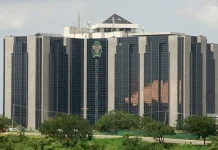
Furthermore, there is a lending-squeeze risk; banks undergoing recapitalisation must balance the need to raise funds with the mandate to “sustain lending activities” to the local economy. To maximize the benefits of this endorsement, the Central Bank of Nigeria must ensure that the new capital thresholds translate into actual credit access for businesses, rather than just becoming idle safety deposits.
What’s Being Said
- “Stronger capital positions enable financial institutions to absorb shocks and sustain lending activities,” stated Tobias Adrian.
- Jason Wu highlighted a concern that capital flows are “increasingly driven by debt rather than foreign direct investment,” which could affect long-term outlooks.
- Financial analysts in Lagos have welcomed the IMF endorsement, noting it provides “international legitimacy” to the CBN’s recent policy directives.
- Sub-Saharan Africa observers noted that the outsized reaction to the Middle East conflict proves how “tailored programs” are needed for regions with high geopolitical exposure.
What’s Next
- Nigerian Banks are expected to accelerate their capital-raising efforts through rights issues and public offers to meet the IMF-backed benchmarks.
- The Central Bank of Nigeria (CBN) is anticipated to release further guidelines on how these “stronger buffers” should be utilized to support the real sector.
- The IMF will likely monitor the “debt vs. equity” ratio in Nigeria’s capital imports throughout the rest of 2026 to assess long-term vulnerability.
- Investors are looking for a “price reaction” in the Nigerian banking sector stocks as the market processes the IMF’s vote of confidence in the industry’s resilience.
Bottom Line
The IMF’s endorsement shifts Nigeria’s bank recapitalisation from a local administrative task to a global stability priority. However, the warning about debt-driven capital flows suggests that while the “buffers” are being built, the quality of the money entering the country remains a critical area for 2026’s economic management.