






Keypoints
- Iran’s military command (Khatam al-Anbiya) has officially labeled the U.S. naval blockade of its ports as “illegal” and an act of “maritime piracy.”
- Tehran warned that no port in the Persian Gulf or Gulf of Oman will be safe if Iranian maritime traffic is impeded by U.S. forces.
- The Iranian armed forces announced the implementation of a permanent control mechanism over the Strait of Hormuz in response to the escalation.
- This development follows the collapse of weekend peace talks in Islamabad and President Trump’s order to begin intercepting vessels bound for Iran as of 10:00 ET Monday.
Main Story
In a defiant statement released on Monday, the Khatam al-Anbiya Central Headquarters—the unified command of Iran’s armed forces—condemned the U.S. naval blockade as a violation of international law.
The military leadership stated that the restrictions imposed on maritime navigation constitute “piracy” and pledged to protect Iran’s legal rights with determination.
The command further noted that the security of regional waters is an “all or nothing” proposition, warning that if Iran’s ports are threatened, the security of all neighboring ports in the Persian Gulf and Gulf of Oman will be jeopardized.
The statement confirmed that Iran will now enforce a permanent mechanism to control the Strait of Hormuz, a move Tehran justifies as a necessary response to “continued threats from the enemy.”
This follows the failure of diplomatic negotiations in Pakistan, where U.S. and Iranian officials were unable to reach an agreement regarding nuclear ambitions and regional security. While the U.S. has stated it will not impede “freedom of navigation” for ships traveling to non-Iranian ports, Tehran has signaled that vessels affiliated with “hostile entities” will be denied passage through the strategic waterway.
The Issues
The primary challenge for the region is the escalation of the “tanker war” into a formal maritime blockade, which risks a direct kinetic confrontation between U.S. and Iranian naval assets. Authorities must solve the problem of maritime misidentification, as any error in intercepting a vessel could trigger a broader conflict that threatens the 20% of global oil that flows through the region. Furthermore, there is a significant economic threat to neighboring Gulf states, whose ports have now been drawn into Iran’s “collective security” warning. To prevent a total collapse of the current ceasefire, the international community must find a way to reopen the Strait of Hormuz to all commercial traffic without violating the security red lines of either Washington or Tehran.
What’s Being Said
- “The restrictions imposed by criminal America on maritime navigation… are illegal and constitute piracy,” stated the Khatam al-Anbiya unified command.
- Iranian state media (IRIB) reported that the armed forces consider defending the country’s legal rights a “natural and legal duty.”
- U.S. Central Command (CENTCOM) has clarified that its mission is to ensure the strait is clear of mines while blockading only those ships docking in Iranian ports.
- Energy analysts have warned that the threat to “all ports” in the Gulf has contributed to oil prices surging back above $100 a barrel this morning.
What’s Next
- Iranian naval units are expected to increase patrols and potentially board “enemy-affiliated” vessels attempting to transit the Strait of Hormuz.
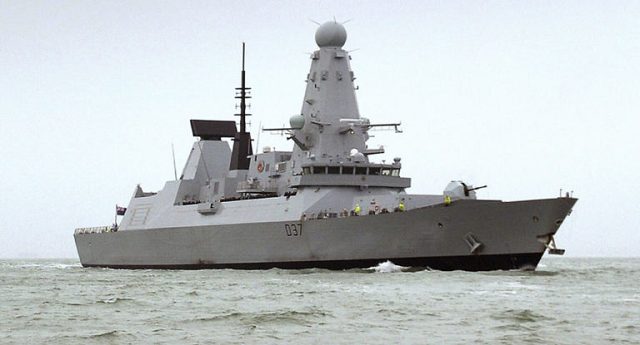
- The U.S. Navy is anticipated to continue its mine-clearing operations in the waterway while maintaining a heavy presence of destroyers to enforce the blockade.
- Gulf Cooperation Council (GCC) nations are likely to hold an emergency meeting to discuss the implications of Iran’s threat to the security of their sovereign ports.
- A period of extreme market volatility is expected as traders wait to see if the first interdiction of a vessel occurs, which would mark a major turning point in the conflict.
Bottom Line
Tehran’s response transforms the U.S. blockade from a targeted economic measure into a regional security crisis. By declaring that no port in the Gulf is safe, Iran is attempting to leverage the global economy’s dependence on the region’s stability to force a withdrawal of the U.S. naval order.