





Key points
- Stakeholders have challenged the Kaduna State Government to move beyond policy promises and fully implement its Women’s Economic Empowerment (WEE) Policy.
- The state has announced a ₦5 billion intervention targeting 15,000 women across its 23 Local Government Areas.
- Advocates say sustainable empowerment requires more than grants, with women needing access to finance, productive assets, skills, markets, technology and leadership opportunities.
- Stakeholders are calling for a dedicated budget line to guarantee sustained funding for WEE programmes.
Main Story
Stakeholders in Kaduna State have urged the government to turn its ₦5 billion women empowerment commitment into a sustainable economic development programme, warning that financial support alone will not deliver lasting economic independence for women.
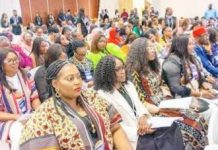
The call was made at a capacity-building workshop organised by OhrAgric, a non-governmental organisation, in Zaria on Tuesday.
The workshop, themed “Advocacy for the Full Implementation of the Women’s Economic Empowerment (WEE) Policy, Kaduna State,” brought together researchers and other stakeholders to examine ways of strengthening advocacy and ensuring that the state’s women-focused policies translate into tangible economic opportunities.
The News Agency of Nigeria (NAN) reports that the Kaduna State Government plans to support 15,000 women across the state’s 23 Local Government Areas with ₦5 billion.
For stakeholders, however, the announcement is only the beginning. They argue that the intervention must be backed by a clear implementation structure, predictable funding and effective coordination if it is to produce sustainable businesses and livelihoods.
Mr Obike Wisdom, Executive Director of OhrAgric and convener of the workshop, said full implementation of the WEE Policy would require stronger advocacy, adequate financing and collaboration among the institutions responsible for delivering it.
He said the workshop was designed to equip stakeholders with the tools needed to advocate for effective implementation and secure a dedicated budget line for WEE programmes.
Wisdom stressed that government, Civil Society Organisations (CSOs), private-sector actors, development partners and academic institutions must work together to ensure that women’s economic empowerment becomes a sustained development strategy rather than a series of isolated interventions.
He added that stronger networks could enable CSOs to access funding, technical expertise, knowledge and opportunities for joint action.
The Issues
At the heart of the debate is a simple question: Can ₦5 billion change the economic fortunes of 15,000 women without the right support system around it?
Stakeholders believe the answer lies beyond handing out money.
Women entrepreneurs require access to finance, productive assets, business knowledge, markets, technology, information and leadership opportunities. Without these complementary interventions, beneficiaries may receive funding without acquiring the capacity or market access required to build viable enterprises.
There is also the question of sustainability. A one-off intervention may provide temporary relief, but a properly implemented WEE policy can create an enterprise pipeline in which women are identified, trained, financed, connected to markets and supported as their businesses grow.
Agriculture presents another major opportunity. Kaduna’s large agricultural economy provides space for women to participate not only in farming but also in processing, packaging, distribution and marketing across the value chain.
What’s Being Said
Mr Obike Wisdom, Executive Director, OhrAgric
Wisdom said the success of the WEE Policy would depend on sustained advocacy, adequate funding and stronger institutional coordination.
He called for a dedicated budget line for the policy’s programmes and urged government to strengthen partnerships with CSOs, private-sector organisations, development partners and academic institutions.
He said strategic networking could help organisations working on women’s empowerment access funding, expertise and opportunities for joint action.
Malam Mustapha Adamu, Head of Programmes and Project Lead, World Bank NG-CARES RA3, Kaduna State Enterprise Development Agency (KADEDA)
Adamu urged policymakers to stop viewing women’s empowerment merely as financial assistance and instead treat it as a core economic development strategy.
He said women needed a complete support system covering finance, productive assets, business skills, market access, technology, information and leadership.
According to him, effective implementation of the WEE Policy could change women’s economic status from that of beneficiaries to active economic players—entrepreneurs, business owners, employers and investors.
He advocated an enterprise lifecycle approach covering identification, skills development, business formation, financing, productive assets, production, market linkages, business growth and job creation.
Adamu said Kaduna’s proposed WEE delivery framework was built around finance, enterprise development, productive assets, markets, digital inclusion, data management and institutional support.
He also urged stakeholders to place agriculture at the centre of the policy, noting:
“The sector offers significant opportunities for women across production, processing, marketing and other segments of the value chain.”
What’s Next
The next test for Kaduna’s WEE agenda is implementation.
The state government will need to translate its ₦5 billion announcement into a transparent framework that clearly defines beneficiary selection, disbursement, enterprise support, monitoring and measurable outcomes.
Stakeholders are also expected to continue advocating for a dedicated WEE budget line to protect the programme from inconsistent funding.
Beyond financial support, beneficiaries will need access to training, productive assets, digital tools, markets and business development services if the intervention is to produce enterprises capable of surviving and creating jobs.
A stronger connection between women entrepreneurs and Kaduna’s agricultural value chains could also expand the programme’s economic impact.
Bottom Line
₦5 billion can provide a significant push, but sustainable empowerment will require more than a cheque. Kaduna’s WEE Policy has the potential to turn thousands of women into productive economic actors, but only if funding is matched with skills, assets, markets, technology, institutional support and sustained policy implementation.
The real measure of success will not be how many women receive financial support, but how many businesses survive, how many jobs are created and how many women become financially independent contributors to Kaduna’s economy.