




Keypoints
- The United Kingdom has officially ruled out participation in the U.S.-led naval blockade of the Strait of Hormuz, despite rising regional tensions.
- Prime Minister Keir Starmer and Oman’s Sultan Haitham bin Tariq Al Said have issued a joint call for Washington and Tehran to resume dialogue.
- While rejecting the blockade, the UK is collaborating with France to form a maritime coalition focused on safeguarding open shipping lanes.
- President Donald Trump suggested that allies could assist U.S. efforts by deploying minesweepers, a move the UK has currently declined.
Main Story
In a clarification reported by Sky News on Monday, a British government spokesperson stated that the UK will not participate in any operations to block vessels in the Strait of Hormuz.
The statement reaffirmed Britain’s commitment to the “freedom of navigation,” which the government views as essential for global trade and the UK’s own economic stability.
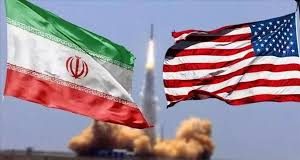
This decision comes as a direct response to President Donald Trump’s announcement that the U.S. Navy would begin intercepting ships to enforce a blockade following the collapse of peace talks.
The UK’s strategy appears focused on protection rather than interdiction. Sources indicate that London is in talks with Paris to establish a separate maritime coalition intended to safeguard commercial routes rather than impede them.
Simultaneously, diplomatic efforts are intensifying; Prime Minister Keir Starmer has engaged with Oman’s Sultan Haitham bin Tariq Al Said to urge both the U.S. and Iran to step back from the brink of open conflict. While Trump indicated to Fox News that he expects international support—specifically for minesweeping operations—the UK has signaled that its naval assets will remain dedicated to keeping the waterway open.
The Issues
The primary challenge for the UK is the diplomatic balancing act of maintaining a “Special Relationship” with the U.S. while protecting its economic interests from the $100-per-barrel oil shock caused by the blockade. Authorities must solve the problem of maritime coordination, as having two different coalitions (one blockading and one safeguarding) in the narrow 21-mile-wide strait increases the risk of accidental clashes. Furthermore, the divergence in Western policy—with the UK and France seeking de-escalation and the U.S. pursuing a “maximum pressure” blockade—could embolden Tehran to test the limits of the U.S. naval perimeter. To prevent a total energy crisis, the UK must now leverage its relationship with Gulf partners like Oman to facilitate a “back-channel” that the current U.S. administration may be unwilling to open.
What’s Being Said
- “The UK remains committed to the principle of freedom of navigation for global trade and domestic economic stability,” stated a British government spokesperson.
- Keir Starmer and Sultan Haitham bin Tariq Al Said emphasized that de-escalation is the only path to preventing a broader regional war.
- President Donald Trump stated that multiple countries could assist U.S. efforts, noting that “we have the best minesweepers, but others can help.”
- Maritime security experts have warned that the UK’s refusal to join the blockade reflects a deep-seated fear that a closed strait would lead to immediate petrol shortages in Europe.
What’s Next
- The UK and France are expected to announce the formal structure of their “Safe Passage” coalition within the next few days to provide escorts for non-Iranian tankers.
- A high-level diplomatic mission from Oman is anticipated to travel between Washington and Tehran to present a new framework for a ceasefire extension.
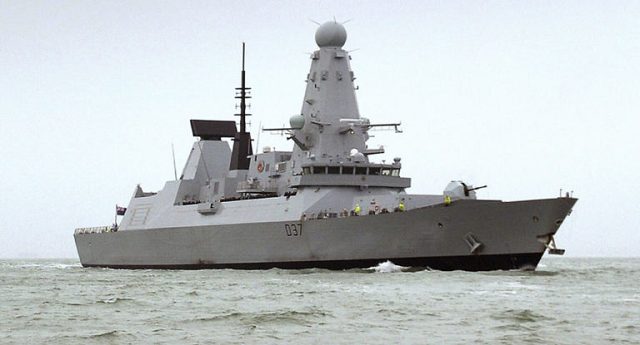
- The Royal Navy may increase the presence of its Frigates in the region to monitor the situation, though they will be under strict orders not to assist in vessel interdictions.
- PM Keir Starmer is likely to face questions in Parliament regarding the potential impact of the U.S. blockade on UK energy prices if the standoff continues beyond the April 22 ceasefire deadline.
Bottom Line
By rejecting the blockade, the UK has chosen a path of “commercial neutrality” intended to keep global energy markets from a total meltdown. While this creates a temporary rift with Washington, the focus on a European-led protection force suggests that London is betting on de-escalation as the only sustainable way to manage the 2026 energy crisis.