







Key points
- Bipartisan lawmakers reject calls for U.S. withdrawal from NATO
- Senate leaders emphasise alliance as key to global and American security
- U.S. law requires Senate approval for any NATO exit
Main story
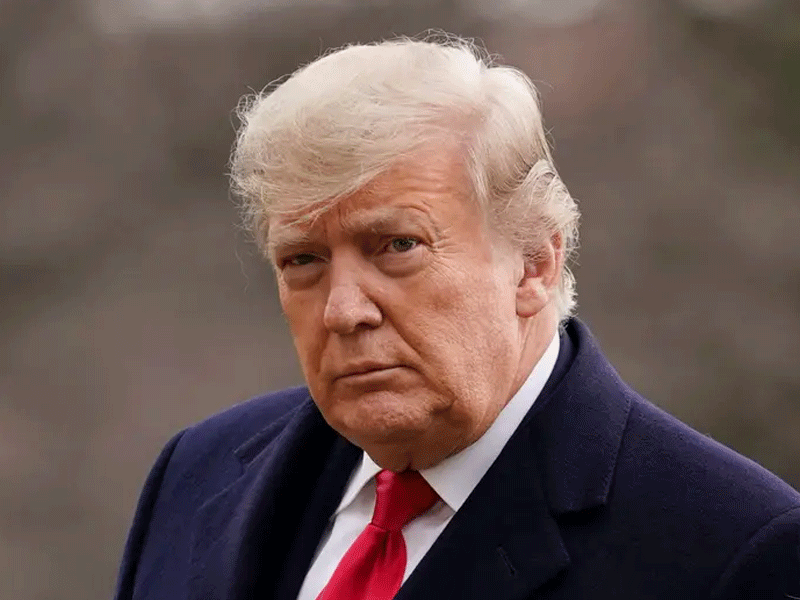
United States President Donald Trump is facing bipartisan pushback following renewed suggestions that the United States could withdraw from the North Atlantic Treaty Organisation (NATO), a move that has sparked concern among lawmakers across party lines.
In a joint statement released on Wednesday, Democratic Senator Chris Coons and Republican Senator Mitch McConnell reaffirmed strong support for the alliance, stressing its importance to global stability and American security.
“The Senate will continue to support the alliance for the peace and protection it provides America, Europe, and the world,” the lawmakers stated.
The remarks reflect a rare moment of bipartisan consensus in Washington, as both Democrats and Republicans push back against Trump’s recent comments suggesting a potential U.S. exit from NATO.
The president had earlier raised the possibility of withdrawal, citing dissatisfaction with allied positions, including their stance on the ongoing war involving Iran.
Under U.S. law, however, withdrawing from NATO would require a two-thirds majority vote in the Senate, meaning the president cannot unilaterally pull the country out of the alliance.
Coons and McConnell also highlighted NATO’s historical significance, noting that the alliance has formally invoked collective defence only once since its establishment in 1949, following the September 11, 2001 attacks.
They further emphasised the sacrifices made by allied forces, stating that NATO troops have fought and died alongside American soldiers in conflicts such as Afghanistan and Iraq.
“NATO troops fought and died in Afghanistan and Iraq alongside American forces,” the statement noted, warning against undermining such long-standing commitments.
Trump’s remarks have triggered concern among lawmakers and analysts who view NATO as a cornerstone of transatlantic security and a critical pillar of international defence cooperation.
The issues
The renewed debate highlights tensions within U.S. foreign policy, particularly regarding America’s role in global alliances. Critics warn that any move to weaken or withdraw from NATO could undermine international security and embolden geopolitical rivals.
What’s being said
Bipartisan leaders in the U.S. Senate have reiterated their support for NATO, describing the alliance as essential to maintaining global peace and safeguarding shared democratic values.
They argue that the partnership has been vital in countering security threats and fostering cooperation among allied nations.
What’s next
Any attempt to withdraw the United States from NATO would require significant legislative backing, including a two-thirds majority in the Senate.
Lawmakers are expected to continue debates on the issue, with bipartisan opposition likely to shape the outcome of any formal proposal.
Bottom line
Despite political rhetoric suggesting a possible U.S. withdrawal, strong bipartisan support in the Senate underscores NATO’s enduring importance to American and global security, making any exit both legally and politically challenging.