Key points
- President Bola Tinubu has inaugurated two strategic road projects in Abuja aimed at improving urban mobility and supporting economic development.
- The projects include the Southern Parkway Service Carriageways in Gaduwa and Collector Road CO1 in the Institution and Research District.
- The administration says the projects will reduce traffic congestion, enhance connectivity, stimulate business activities and strengthen Abuja’s long-term development framework.
Main story
President Bola Ahmed Tinubu has reaffirmed his administration’s commitment to infrastructure-led development with the commencement of two major road projects in the Federal Capital Territory (FCT), describing them as critical investments designed to improve transportation, stimulate economic activities and enhance residents’ quality of life.
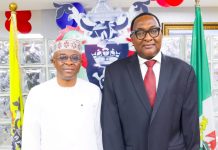
Represented by the National Chairman of the All Progressives Congress (APC), Professor Nentawe Yilwatda, the President performed the groundbreaking ceremonies on Tuesday in Abuja.
The projects comprise the construction of two service carriageways along the Southern Parkway from Arterial Road S20 to Ring Road II in Gaduwa District and the construction of Collector Road CO1 in the Institution and Research District, extending from the Nile University axis to Ring Road III.
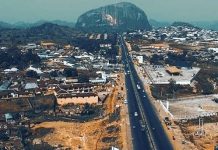
Speaking during the flag-off of the Southern Parkway project, Tinubu described the corridor as one of Abuja’s most important transportation routes, connecting several districts across Phases I, II, III and IV of the Federal Capital City.
He noted that while the main carriageway—recently completed and commissioned as Bola Ahmed Tinubu Way—has significantly improved movement within the city, the construction of the service carriageways will complete the original design and address persistent traffic challenges affecting residents of Durumi, Gudu, Gaduwa, Duboyi and adjoining communities.
According to the President, the project is expected to ease congestion, improve traffic flow, reduce travel time and transportation costs, and deliver lasting socio-economic benefits to residents and businesses.
The Southern Parkway project forms part of a broader infrastructure renewal programme being implemented across the FCT, including the N20 Corridor, the N16 Interchange linking Jahi and Gwarimpa, and road developments in Kuje, Gwagwalada and Mabushi.
At the inauguration of Collector Road CO1, Tinubu described the project as a strategic intervention aimed at strengthening access to educational institutions, research centres, legal establishments and innovation hubs within the capital city.
He stated that the Institution and Research District was conceived as Abuja’s intellectual and knowledge hub, stressing that efficient transportation infrastructure is essential to unlocking its full potential.
The President explained that the road would improve accessibility, reduce travel time and support the development of a knowledge-based economy by enhancing connectivity between major institutions and emerging innovation centres.
Tinubu further disclosed that the project complements an already completed road corridor linking the Body of Benchers, Nile University and Baze University, which is scheduled for commissioning as part of activities marking the third anniversary of his administration.
Reiterating his government’s commitment to completing inherited projects while initiating new strategic developments, the President said infrastructure remains central to the administration’s Renewed Hope Agenda and long-term economic transformation strategy.
He commended the Minister of the Federal Capital Territory, Nyesom Wike, for accelerating project delivery and revitalising abandoned infrastructure initiatives across the territory.
Tinubu also praised the Minister of State for the FCT, Mariya Mahmoud, as well as officials of the Federal Capital Territory Administration (FCTA) and the Federal Capital Development Authority (FCDA) for ensuring effective supervision and adherence to project standards.
The President urged residents to cooperate with contractors and traffic management authorities during the construction period, assuring them that temporary inconveniences would translate into long-term benefits.
He further directed contractors handling the projects to maintain quality standards, meet delivery timelines, create employment opportunities for Nigerian youths and artisans, and facilitate skills transfer to maximise local economic benefits.
Expressing optimism about the nation’s future, Tinubu said ongoing reforms across key sectors were beginning to yield visible results.
“From transportation infrastructure to housing, education and economic reforms, we are building the foundations of a nation that works for all Nigerians. The best days of Abuja and indeed Nigeria remain ahead,” he stated.
The issues
The FCT continues to face growing transportation pressures driven by rapid urban expansion, increasing vehicular traffic and inadequate supporting infrastructure in several districts. Congestion along key corridors has led to longer commuting times, increased transportation costs and reduced productivity for residents and businesses.
The government believes that expanding road networks and completing critical infrastructure projects are necessary to sustain Abuja’s growth and improve economic efficiency.
What’s being said
President Tinubu says the projects are strategic investments that will:
Improve traffic movement and reduce congestion.
Enhance connectivity between residential, commercial and institutional districts.
Support education, research and innovation activities.
Lower transportation costs and improve residents’ quality of life.
Stimulate economic growth and job creation.
Advance the objectives of the administration’s Renewed Hope Agenda.
The President also credited FCT Minister Nyesom Wike for accelerating infrastructure delivery and transforming Abuja into one of the country’s largest construction hubs.
What’s next
Construction work is expected to commence immediately on both projects.
Upon completion, the roads are expected to:
Strengthen Abuja’s transportation network.
Improve access to key educational and research institutions.
Enhance commercial activities across affected districts.
Reduce travel time for commuters.
Support long-term urban development plans within the FCT.
Government officials have also indicated that additional infrastructure projects will continue across Abuja as part of the administration’s broader development agenda.
Bottom line
The flag-off of the Southern Parkway Service Carriageways and Collector Road CO1 underscores the Federal Government’s push to use infrastructure as a catalyst for economic growth, urban mobility and sustainable development. If delivered on schedule and to specification, the projects could significantly ease transportation challenges, improve connectivity and reinforce Abuja’s position as Nigeria’s administrative, educational and economic capital.