







Key Points
- The Standards Organisation of Nigeria (SON) has called on domestic manufacturers to strictly adhere to industrial standards to ensure product safety and international competitiveness.
- Green Conversion and Assembly Limited (G-CAL) in Ilorin has become the first company of its kind in Kwara State to receive a product listing certificate from the agency.
- SON highlighted the importance of the Mandatory Conformity Assessment Programme (MANCAP) as the next critical certification step for local firms.
- Certified products from G-CAL, including electric tricycles and buses, are already being exported to other states, including a 10-bus delivery to the University of Lagos.
Main Story
The Standards Organisation of Nigeria (SON) reportedly urged manufacturers across the country to prioritise the production of standardised goods to build consumer trust and guarantee value for money.
Dr Ifeanyi Okeke, the Director-General of SON, made the call on Tuesday during a product listing ceremony for Green Conversion and Assembly Limited (G-CAL) in Ilorin.
Represented by the Kwara State Coordinator, Alhaji Oyepo AbdulRazaq, the D-G emphasised that adhering to Nigerian Industrial Standards is the only way for local products to compete effectively on the global stage.
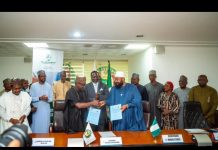
During the event, officials presented G-CAL with a product listing certificate, marking a significant milestone for industrial development in Kwara State.
The agency explained that such certifications are part of a broader product identification scheme used to track authenticity through barcodes and numbering, which also facilitates efficient recalls when necessary.
SON technicians noted that while the initial listing is a positive step, the company must now work toward full MANCAP certification to ensure its electrical and mechanical products are officially recognised and trusted by the public.
The Issue
A recurring challenge for the Nigerian manufacturing sector is the prevalence of sub-standard goods, which undermines public confidence in “Made-in-Nigeria” brands. Without rigorous certification like MANCAP, local innovations—such as the conversion of petrol tricycles to electric ones—may struggle to gain widespread market acceptance. Furthermore, the technical requirements for maintaining these standards are demanding; as SON officials pointed out, “quality has beginnings, but no ends,” requiring constant surveillance and renewal of unique certification numbers every year to ensure long-term safety.
What’s Being Said
- “Nigerian manufacturers should keep on striving so that they make the minimum required standards,” stated Alhaji Oyepo AbdulRazaq on behalf of the D-G.
- Mrs Ibukunolu Alasan, Assistant Chief Technical Officer of SON, noted that while G-CAL has made developmental strides, “the product needs to be certified with MANCAP so as to be identified in town.”
- Mr Bello Kamaldeen, Manager of Kiowope Nig. Ltd, confirmed the growing acceptance of their products, stating they have already delivered electric buses to the University of Lagos.
- Kamaldeen assured the agency that the firm would continue to uphold standards, noting that commercial motorists are increasingly seeking their services for petrol-to-electric conversions.
What’s Next
- G-CAL is expected to begin the rigorous process of attaining full MANCAP status for its four primary products: Kiowope, Buffalo, Buffalo X, and ASABI.
- SON plans to increase its supervision and support for small and medium-scale assemblers to ensure that the growing electric vehicle (EV) conversion market remains regulated.
- Manufacturers will need to prepare for annual renewals of their unique product identification numbers to maintain their listing status.
- Industry observers anticipate a rise in “Made-in-Nigeria” pride as more certified local alternatives to expensive imported transport equipment hit the market.
Bottom Line
The certification of Kwara’s first green assembly plant signals a shift toward high-tech, standardised local manufacturing. However, the transition from a “product listing” to a full “MANCAP” certification will be the true test of whether Nigeria’s emerging green-tech firms can sustain the quality required to replace petrol-dependent transport systems nationwide.








 reportedly urged manufacturers across the country to prioritise the production of standardised ...)