







Home Blog Page 96

How Not To Invest In Stocks Wrongfully: Smart Tips For NGX Investors In 2025

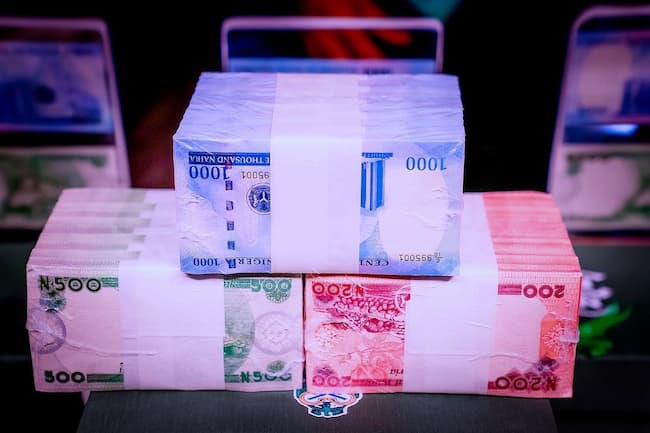
NGX Records N60bn Trading

There’s an old saying in the markets: if you doubt it, don’t buy it. That rings especially true in Nigeria’s stock market. Before you ever put money into a company’s shares, you need to know who’s behind it. If you trust their vision, maybe you’ve found a slice of the pie worth holding. If not, channel your inner Usain Bolt—run.

This year, 2025, has been a whirlwind for investors on the Nigerian Exchange (NGX). Some stocks have delivered massive returns, far beyond what most analysts projected. Anyone who hasn’t pulled at least 36% gains this year probably picked the wrong companies. That might sound blunt, but markets reward precision and punish guesswork.

Still, it’s not too late. The market’s not done serving meals, even if the main course has been gobbled up. The rally caught many off guard, flipping doubters into believers, and for those just arriving, the party’s still warm.

1. Stop Parking Your Cash in Idle Accounts

Let’s be real: leaving large sums to sit quietly in the bank is a slow leak on your financial ambitions. People who understand money know that saving comes with its own cost. Inflation eats, bank charges nibble, and in the end, your naira shrinks.

So, if you’ve been watching from the sidelines, now’s the time to recognize stocks as more than just paper slips. They’re vehicles for wealth—sometimes risky, yes, but often more rewarding than fixed income instruments. But remember, not all stocks deserve a spot in your portfolio, and clinging to a single company’s shares is a rookie mistake.

2. Don’t Ask the Wrong Questions

A lot of Nigerian investors ask, “Where can I put N1 million to get good returns?” It’s a fair question, but it’s also incomplete. The better question is: How much risk am I willing to shoulder, and how quickly do I want returns?

The truth? If you don’t invest correctly, you could lose everything. Think of Heritage Bank—imagine if its shares had been listed. Investors would have been wiped out when it collapsed. Union Bank, once listed, failed regulatory requirements and was forced out of the market. Even GlaxoSmithKline pulled out, leaving some investors stranded.

Here’s the point: don’t assume every big name is a safe bet. Markets are littered with cautionary tales.

3. Don’t Panic-Sell When the Tide Turns

Take MTN Nigeria as an example. When earnings dipped, many investors bolted, pushing the stock down to the N200 range. Fast forward six months, and the same stock now trades above N430. Those who sold in panic are licking their wounds.

The stock market isn’t a place where you buy and sleep soundly forever. It demands vigilance. Trading apps from local brokers have made it easier than ever to monitor daily movements—use them.

4. Don’t Chase Stability If You Can’t Afford It

Here’s a common trap: new investors, with relatively small capital, chasing stocks like Airtel Africa. At over N2,300 per share, Airtel rarely moves, but when it does, it swings big. Unless you’re buying in millions—or aiming for a board seat—you’ll tie up your capital in a stagnant giant.

For smaller investors, liquidity matters. You want stocks that actually move, where momentum offers opportunities. Volatility isn’t a bug; it’s the very feature that delivers capital gains.

5. Don’t Ignore Company Fundamentals

Let’s cut through the noise. Stocks move on sentiment, but fundamentals decide longevity. Before you buy into a company, ask:

  • Is it profitable?
  • Does it pay dividends (interim or final)?
  • How strong is its leadership, and is there key man risk?

Take GTCO, for instance. It’s consistently profitable, pays dividends, and carries relatively low leadership drama. Compare that to First Holdco, where internal infighting has slowed progress. Fundamentals aren’t the whole story, but they’re a compass in stormy seas.

6. Don’t Overestimate Your Strength

New investors often get burnt by trying to play in the big leagues too quickly. With N100,000, buying Dangote Cement may not make sense. With N1 million, does BUA Foods look better? Maybe. The answer depends on your target.

Think of the market as a jungle. Antelopes don’t challenge lions head-on. As a retail investor, avoid “lion stocks” that swallow your capital without movement. Instead, hunt where opportunities are smaller but sharper.

Wema Bank is a good example. A few months ago, its rights issue was priced at N10.45. Today, the share trades above N23. Investors who spotted the trend doubled their money—no fancy math required. Timing and discipline did the trick.

7. Don’t Trade in the Dark

The market isn’t a guessing game; it’s a chessboard. Prices rise and fall for reasons—regulatory delays, dividend announcements, earnings surprises, even whispers about the Central Bank’s stance.

Just last week, Tier-1 banks dragged the index down because investors feared interim dividends might be blocked. That wasn’t random. It was a calculated retreat ahead of potential bad news. Sophisticated investors think this way—and if you want to win, you need to think like them.

Final Word: Avoid Rookie Mistakes, Play the Long Game

Stock investing is about more than numbers. It’s about psychology, timing, and yes, sometimes a bit of luck. Don’t over-romanticize any company. Don’t ignore fundamentals. And please, don’t bet money you can’t afford to lose.

The Nigerian market has proven to be a money-making machine in 2025, but it rewards caution as much as courage. You don’t need a finance degree to succeed—you just need curiosity, discipline, and a willingness to learn from others’ mistakes. So, the next time you feel the urge to chase a hot tip or cling stubbornly to a sinking stock, pause and ask yourself: Am I investing smart, or am I investing wrongfully?
Nigeria’s Banking Sector Sees Decline In Funding Rates Amid Excess Liquidity

Funding rates in Nigeria’s money market fell below 27% last week as surplus liquidity flowed into the financial system, easing pressure on deposit money banks (DMBs) and reducing their reliance on the Central Bank of Nigeria’s (CBN) Standing Lending Facility.

Both open repo and overnight lending rates recorded sharp declines week-on-week, despite the apex bank’s aggressive liquidity mop-up through open market operations (OMO). The decline came as the system benefited from maturing OMO bills and significant inflows from statutory revenue distributions, including allocations from the Federation Accounts Allocation Committee (FAAC).

To curb the liquidity surge, the CBN sterilised part of the inflows with two OMO auctions, absorbing N1.19 trillion in short-term instruments. Despite this, liquidity remained strong, with the market closing the week at a net long position of N1.52 trillion, compared with N159.40 billion the week before.

Analysts at Cordros Capital noted a surge in placements at the CBN’s Standing Deposit Facility (SDF), where weekly averages reached N1.20 trillion, almost triple the previous week’s N419.77 billion. They added that upcoming OMO maturities worth N459.60 billion could further boost liquidity unless additional mop-up measures are introduced.

The improvement in system liquidity caused interbank rates to ease across all maturities. The Overnight Nigerian Interbank Offered Rate (NIBOR) dropped by 197 basis points to 26.78%, while the 1-month, 3-month, and 6-month benchmarks slipped to 27.39%, 28.16%, and 28.78% respectively. Open repo and overnight lending rates also declined by 240bps and 220bps, settling at 26.50% and 26.95%.

Meanwhile, trading in the secondary market showed heightened investor demand for higher yields, driving an upward adjustment in the Nigerian Treasury Bills Yield (NITTY) curve across most short- to mid-term maturities. Data from Cowry Asset Management revealed that the 1-month NITTY rose to 16.37%, while the 3-month and 6-month benchmarks climbed to 17.68% and 18.45% respectively. Only the 12-month maturity eased, slipping by 31bps to 20.43%.

Looking ahead, analysts warned that the current liquidity relief may be temporary. With the CBN expected to sustain liquidity tightening through auctions and the deposit facility window, market yields could face renewed upward pressure. Additionally, Treasury bill maturities of N324.41 billion this week may provide short-term relief, but the CBN’s planned issuance of N480 billion in new Treasury bills is anticipated to reinforce tightening pressures.

CBN To Issue N480 Billion Treasury Bills At September Auction

The Central Bank of Nigeria (CBN) is set to auction N480 billion worth of Treasury bills this Wednesday, offering investors an opportunity to subscribe across the standard 91-day, 182-day, and 364-day maturities. The auction, to be conducted by the Debt Management Office (DMO) on behalf of the apex bank, is expected to attract robust demand.

Market analysts noted that the offer will coincide with maturing Treasury bills worth N324.41 billion, which will inject additional liquidity into the system and strengthen subscription levels.

However, rate expectations remain mixed among analysts, given the CBN’s recent stance at open market operations (OMO). Last week, the bank conducted two OMO auctions totaling ₦700 billion but ended up absorbing ₦1.19 trillion, with stop rates closing at 26.49% and 26.50% for the 83-day and 84-day instruments.

Fixed-income experts believe the central bank may not offer attractive yields on Treasury bills, given its recent pricing of OMO securities sold to both foreign portfolio investors and local banks at relatively high rates.

Analysts at AAG Capital Limited commented: “The first Treasury bills auction for September is expected to attract strong demand. We anticipate a mixed outcome, given prevailing volatility in the market, but interest in longer-dated instruments should persist.”

During the previous week, the Treasury bills market witnessed subdued activity as investors waited for the bond auction. Limited trading was seen in select short-term papers, including the 16-Dec, 17-Feb, and 7-Apr maturities, while activity in the OMO segment dominated market attention.

NGX Pursues International Alliances To Accelerate Market Expansion

The Nigerian Exchange Group (NGX) has reiterated its ambition to deepen Nigeria’s capital markets through increased product offerings, expanded listings, and stronger global partnerships.

Chairman of NGX, Dr Umaru Kwairanga, disclosed this during a strategic engagement with executives of the Brazil Stock Exchange and Over-the-Counter Market (B3) in São Paulo on Sunday.

Kwairanga highlighted that NGX, which has been operating for over six decades, currently hosts more than 400 listed securities with a combined market capitalisation approaching N100 trillion. He admitted that while the figure remains modest compared with B3’s one trillion-dollar market size, the Nigerian Exchange is committed to growth through international collaboration and innovative strategies.

He recalled that four years ago, the Exchange transitioned from a mutual company limited by guarantee into a publicly listed profit-driven entity, introducing new governance and regulatory challenges alongside opportunities for expansion.

Commending B3’s century-long track record, Kwairanga pointed to the exchange’s successful adoption of advanced technology and modernised regulations, which boosted its investor base to millions. “We are eager to learn from B3’s expertise in developing vibrant online trading systems, establishing world-class regulatory frameworks, and expanding listings,” he said.

The NGX chairman also noted the shared economic similarities between Nigeria and Brazil, including large populations, resource wealth, and growth potential, which he said provide fertile ground for cooperation.

“In today’s interconnected global markets, partnerships and knowledge exchange are critical to driving sustainable growth,” Kwairanga stressed. “This visit is about learning, sharing, and collaborating to achieve mutual benefits for both exchanges.”

Nigerian Stock Market Slumps 0.50% Amid Tier-1 Banking Sector Losses

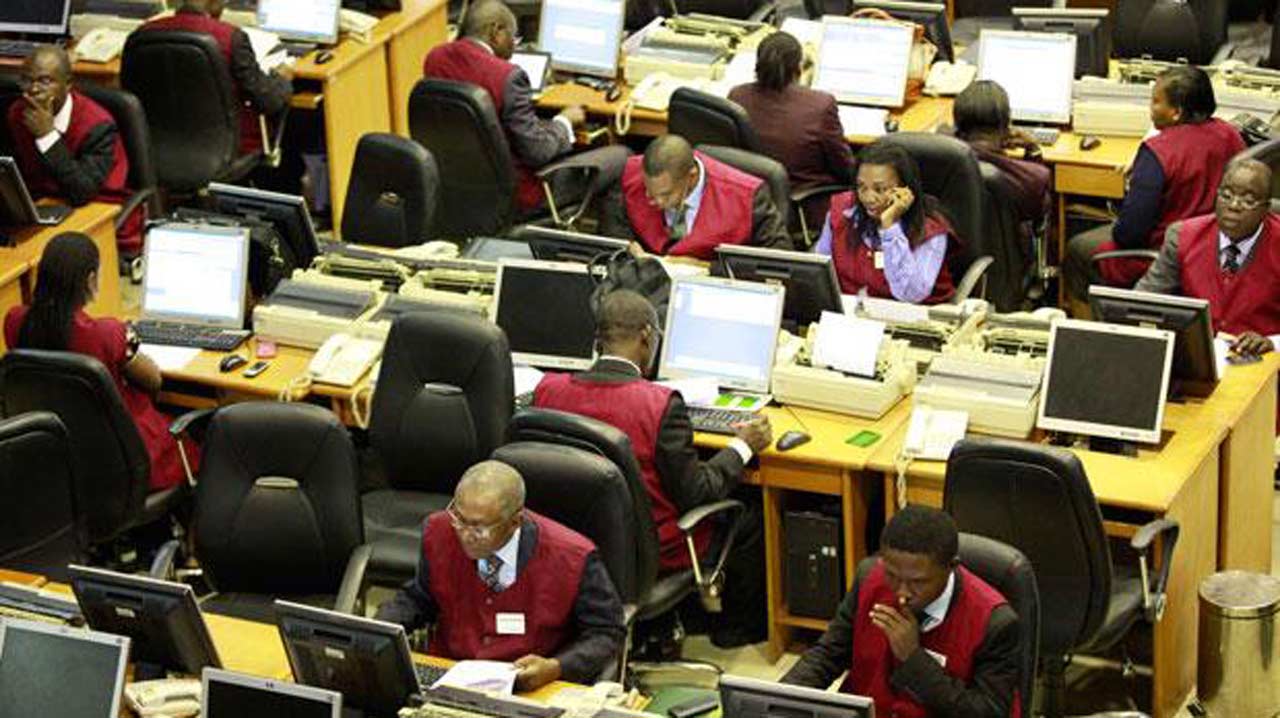
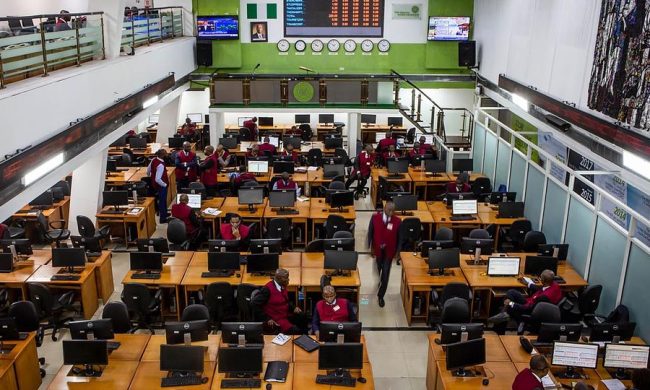
Nigerian Stock Exchange

The Nigerian Exchange (NGX) closed the week on a bearish note as the All-Share Index (ASI) dipped by 0.50%, pressured by sustained selloffs in Tier-1 banking stocks. Analysts attribute the decline to investor concerns stemming from delayed corporate earnings, which have weakened sentiment across the market.

The equities market has now recorded three consecutive weeks of losses as the initial excitement around half-year earnings reports and interim dividend declarations continues to fade. This has prompted investors to rotate their portfolios across sectoral indices in search of stability.

Major selloffs in Zenith Bank (-5.70%), GTCO (-2.13%), WAPCO (-3.38%), and Aradel Holdings (-1.73%) dragged the index lower, offsetting notable gains in Geregu (+11.11%), Nigerian Breweries (+3.24%), and Stanbic IBTC (+6.38%).

By the close of trading, the benchmark index stood at 140,295.49 points, down from the previous week’s 141,004.14 points, while market capitalization dropped by ₦439 billion to ₦88.77 trillion. Year-to-date returns eased to 36.31%.

Market breadth remained weak, with only 31 gainers against 57 losers, giving a ratio of 0.54x. Trading activity also slowed as total deals fell by 6.54% to 142,654, while volume and value dropped by 41.03% and 21.21% respectively, closing at 3.20 billion units valued at ₦85.47 billion.

Sectoral performance was broadly negative:

  • Banking Index: -1.21%
  • Insurance Index: -1.02%
  • Consumer Goods Index: -0.89%
  • Industrial Goods Index: -0.36%
  • Commodities Index: -0.30%
  • Oil & Gas Index: -0.18%

According to Cowry Asset Management, the equities market is likely to trade in a mixed pattern in the coming week, with cautious sentiment dominating due to tight liquidity and persistent macroeconomic concerns.

Crude Oil Prices Edge Higher On Strong US Economy And Supply Concerns

Global crude oil prices recorded modest weekly gains as resilient US economic growth and renewed hopes for a Federal Reserve rate cut outweighed concerns over new trade tariffs and slowing demand.

Brent crude settled at $67.64 per barrel on Friday, a 0.5% rise from the previous week’s $67.32. Similarly, West Texas Intermediate (WTI) advanced by 0.6% to close at $64.08 per barrel, compared to $63.66 the week before.

Prices spiked earlier in the week following Ukrainian drone strikes on Russian energy facilities, including a fire outbreak at the Kursk Nuclear Plant and disruptions at the Ust-Luga export terminal. These events reignited fears about global supply security.

Further upward momentum came after US President Donald Trump threatened additional sanctions on Russia if peace talks with Ukraine failed. However, market optimism was tempered by Washington’s decision to impose 50% tariffs on Indian imports, double the previous 25%, raising fears of weaker global trade and energy demand.

Data from the US Energy Information Administration (EIA) showed that commercial crude inventories declined by 2.4 million barrels, while gasoline stocks fell by 1.2 million barrels last week, highlighting solid consumption during the summer travel season. Still, analysts warned of possible demand weakness as the driving season winds down.

Support for oil prices came from the US economy, which expanded by 3.3% in Q2 2025, surpassing earlier estimates of 3%. Traders also grew optimistic over a potential September rate cut by the Federal Reserve, with markets pricing in an 85% chance of a 25-basis-point cut and a possible additional reduction before year-end.

Wema Bank Emerges As Top Performer, Delivers 158% Return In Eight Months

WEMA Bank Logs N4.3bn Profit Before Tax In H1 2021

Wema Bank Plc has outperformed all other listed financial institutions in Nigeria, delivering a remarkable 158% return on investment to shareholders between January and August 2025.

The bank’s impressive run has been driven by its aggressive expansion in the retail banking segment and increased investment in digital banking platforms, particularly through ALAT by Wema, which has enhanced its appeal among tech-savvy customers.

Despite the gains, analysts remain divided on the bank’s valuation outlook. While Atlass Portfolio Limited projected a potential downside of 15% and urged investors to take profits, other analysts offered bullish forecasts. Afrinvest Securities Limited projected a further upside of 58.6%, while Alpha Morgan Capital Limited gave a target return of 19.15% at a reference price of ₦23.50 per share.

At the close of trading last week, Wema Bank’s market capitalization stood at ₦492.894 billion, with its share price at ₦23, following the exchange of 4.088 million units worth ₦91.093 million.

Financially, the bank posted strong earnings growth in the first half of 2025, recording a 229% year-on-year profit surge to ₦87.51 billion, compared to ₦26.59 billion in H1 2024. Gross earnings rose by 10% to ₦303.19 billion over the same period.

In a move to consolidate its growth, Wema Bank recently launched a rights issue of 14.29 billion shares at ₦10.45 each, aimed at strengthening its capital base and expanding lending to SMEs, retail, commercial, and corporate clients.

Naira Weakens Against Pound, Euro, And Real Despite CBN Support

Federation Account Amasses Over ₦5trn In 6months- RMAFC

The Nigerian naira posted a mixed performance across global foreign exchange markets last week, despite ongoing interventions from the Central Bank of Nigeria (CBN).

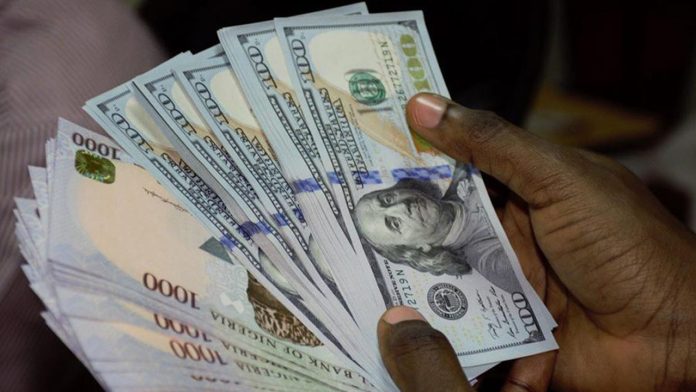
At the official window, the naira appreciated slightly by 0.03%, closing at ₦1,531.57 per US dollar. However, the local currency depreciated against major counterparts including the British pound, euro, and Brazilian real.

Data from the CBN showed exchange rates as follows:

  • Pound Sterling: ₦2,063.57
  • Euro: ₦1,788.60
  • Chinese Yuan: ₦214.71
  • Japanese Yen: ₦10.41
  • US Dollar: ₦1,531.07

The naira lost 0.73% against the pound (up 7.84% year-to-date), and 0.71% against the euro (up 12.48% year-to-date). It also weakened by 0.75% against the yuan and 0.19% against the Brazilian real, which has appreciated by 14.46% in eight months.

Anchoria Limited noted that the depreciation reflects the strength of foreign currencies and domestic economic challenges. However, analysts expect relative short-term stability, supported by the CBN’s policy interventions and sustained foreign inflows.

Brent Crude Loses $4 In August On Weak Demand Outlook And India Tariffs

Oil Prices Drop, Here's Why

Brent crude prices fell sharply in August, snapping a three-month rally as weak demand indicators and rising trade tensions weighed heavily on the market.

After climbing steadily since May, Brent settled the month at $67.37 per barrel, representing a 6% drop from July’s closing price of $71.71. This translates to a monthly loss of about $4.34 per barrel.

The decline was driven largely by the US decision to double tariffs on Indian imports to 50%, which triggered fears of weaker trade flows and energy demand. Analysts said the slowdown in fuel consumption at the end of the summer season also contributed to the decline.

Earlier gains had been fueled by positive developments: in May, Brent rose 2.6% to $62.60 after Trump delayed EU tariff deadlines; in June, a trade deal with China pushed prices 6.2% higher; and in July, renewed sanctions on Iran and Russia lifted Brent 7.9% to $71.71.

Industry experts warn that the market may now face a potential supply glut. According to Kate Dourian of the Arab Gulf States Institute, OPEC+ has already begun unwinding voluntary production cuts earlier than expected, which could worsen oversupply concerns.

Similarly, Osama Rizvi of Primary Vision cautioned that refinery runs remain elevated, which may result in stockpiling if demand continues to weaken.

Analysts expect Brent to remain range-bound in the coming months, with a stronger likelihood of prices slipping into the $50 range than rebounding toward the $70 mark.

GTCO Raises GTBank’s Paid-Up Capital To ₦504 Billion

GTCO Shareholders To Receive ₦3 Per Share

Guaranty Trust Holding Company Plc (GTCO) has completed a major recapitalisation of its flagship subsidiary, Guaranty Trust Bank Ltd (GTBank), raising the bank’s paid-up capital to ₦504 billion.

The increase followed GTCO’s subscription to GTBank’s rights issue of 6,994,050,290 ordinary shares priced at 50 kobo each, valued at ₦365.85 billion. Consequently, the bank’s share capital jumped from ₦138.19 billion to ₦504.04 billion, in compliance with the Central Bank of Nigeria’s (CBN) recapitalisation directive for international banks.

The capital raise was funded through GTCO’s two-phase equity programme. The initiative, launched in July 2024, included a public offering in Nigeria that secured ₦209.41 billion from 130,617 valid applications for 4.7 billion shares, as well as an international fully marketed offering on the London Stock Exchange (LSE), which raised $105 million from institutional investors in exchange for 2.29 billion new shares.

GTCO became the first West African financial institution to achieve a dual listing on both the NGX and LSE.

According to management, the new equity capital will be deployed towards branch expansion, asset growth, technology upgrades, and leveraging emerging opportunities in both Nigeria and international markets where GTBank operates.

Segun Agbaje, Group CEO of GTCO Plc, described the recapitalisation as a “pivotal step” in strengthening the group’s foundation. He added:

“With the CBN recapitalisation directive now fulfilled, our focus is on deepening innovation, driving performance, and expanding across high-growth markets, while upholding the industry-leading standards that define GTCO.”

GTCO confirmed it still holds 100% ownership of GTBank’s issued and paid-up capital, with no director having direct or indirect interests in the shares.

NGX Stock Market Weekly Report – 25.8% Drop In Equity Turnover Value

Stock Exchange Closes Trading Week With N30bn Gain

The Nigerian Exchange (NGX) recorded a sharp decline in market activity last week, as investors executed 3.199 billion shares worth ₦85.399 billion in 142,477 deals. This reflects a 25.8% fall in transaction value compared to the preceding week, when 4.773 billion shares valued at ₦107.426 billion were exchanged across 152,965 trades.

The Financial Services sector maintained dominance, leading the activity chart with 2.195 billion shares worth ₦42.689 billion, representing 68.61% of the total turnover volume and 49.99% of its value. The Consumer Goods sector followed with 277.881 million shares valued at ₦9.91 billion, while the Services sector ranked third, posting 178.992 million shares worth ₦1.308 billion.

Among individual equities, FCMB Group Plc, Champion Breweries Plc, and Access Holdings Plc emerged as top movers, jointly accounting for 778.603 million shares worth ₦13.155 billion in 11,288 trades—24.34% and 15.40% of total market turnover by volume and value, respectively.

The NGX All-Share Index (ASI) dipped 0.50% to 140,295.50 points, while market capitalisation fell 0.49% to close at ₦88.769 trillion. All sector indices closed lower except the NGX AFR Div Yield Index, which gained 0.94%, while the NGX ASeM Index closed flat.

Market breadth weakened as 32 equities appreciated versus 43 in the prior week, while 57 declined, higher than 54 in the previous week. Another 57 equities remained unchanged, up from 49.

Top losers included Secure Electronic Technology, Guinea Insurance, Lasaco Assurance, University Press, and Mutual Benefits Assurance, which dropped 25k, 35k, 46k, 76k, and 50k, respectively. Conversely, the top five gainers were McNichols (+18.75%), NEM Insurance (+17.29%), Berger Paints (+15.31%), Coronation Insurance (+12.77%), and Learn Africa (+11.43%).

On the listings front, NGX announced the addition of 270,382 Chapel Hill Denham Nigeria Infrastructure Debt Fund (NIDF) units arising from its 2025 Q2 scrip dividend. This increases the fund’s outstanding units from 1,055,744,147 to 1,056,014,529.

In addition, 87.9 million units of Coronation Asset Management Ltd’s Series 1 Infrastructure Fund under a ₦200 billion programme were admitted to the exchange. Furthermore, Industrial & Medical Gases Nigeria Plc commenced a rights issue of 199,797,458 ordinary shares at ₦32.00 per share, on the basis of two new shares for every five held as of May 21, 2025.

The NGX also confirmed the listing of additional Federal Government of Nigeria (FGN) Bonds issued in May 2025.

NGX ASI Slides As Sell Pressure Hits Banking, Industrial Stocks

The Nigerian Exchange (NGX) ended trading on a negative note last week, as the All-Share Index (ASI) declined 0.5% week-on-week (w/w) to close at 140,295.50 points. Market capitalisation fell to ₦88.77 trillion, reflecting broad-based selloffs across key sectors.

Despite the pullback, market returns remained positive Month-to-Date (+0.3%) and Year-to-Date (+36.3%), underlining longer-term resilience.

The downturn was attributed to persistent sell pressure on blue-chip stocks, particularly in the banking and industrial goods sectors. Notable laggards included Zenith Bank (-5.7%), ETI (-6.8%), GTCO (-2.1%), and WAPCO (-3.4%). Analysts suggested that investors may be rotating portfolios into safer assets, driven by rising fixed-income yields and macroeconomic uncertainty.

In contrast, select mid- and small-cap stocks attracted speculative inflows. Learn Africa (+9.86%), Union Dicon (+8.04%), Prestige Assurance (+6.75%), Academy Press (+6.11%), Omatak (+6.06%), Berger Paints (+5.73%), RT Briscoe (+5.36%), and Caverton Offshore (+5.34%) posted impressive gains.

Sectoral performance was largely negative as Banking (-1.2%), Insurance (-1.0%), Consumer Goods (-0.9%), Industrial Goods (-0.4%), and Oil & Gas (-0.2%) all closed lower.

Analysts expect the market to trade sideways in the near term absent new policy drivers or corporate actions. However, the Q3 2025 earnings season in October may provide fresh momentum.

Medium-term market trajectory will depend on GDP growth, inflation and FX stability, CBN monetary policy direction, fixed-income yields, and corporate earnings guidance.

Nigeria Reduces Gas Flaring As Output Climbs 8.58% – NUPRC

Nigeria has recorded progress in both gas production and environmental sustainability, as daily output rose to 7.59 billion standard cubic feet per day (BSCFD) in July 2025, marking an 8.58% increase from the 6.99 BSCFD recorded in 2024. Simultaneously, gas flaring dropped to 7.16%, according to the Nigerian Upstream Petroleum Regulatory Commission (NUPRC).

The Commission attributed the development to its ongoing initiatives aimed at eliminating routine gas flaring by 2030, including the Nigerian Gas Flare Commercialisation Programme (NGFCP), a Decarbonisation and Sustainability Blueprint, and the introduction of the Upstream Petroleum Decarbonisation Template (UPDT).

Gas delivery under the Domestic Gas Delivery Obligation (DGDO) improved to 72.5% in July, up from 71.8% in June, while contract-type data showed 63% of production came from Marginal Sole Risk operators, 24% from Production Sharing Contracts (PSCs), 10% from Joint Ventures (JVs), and 3% from Sole Risk operators.

In terms of utilisation, 35.88% of production was exported, 27.82% supplied to the domestic market, while 29.13% was used for field and plant operations. Gas-to-Power supply also strengthened, rising 3.48% month-on-month to 862.86 MMSCF/D, its highest level in three months.

NUPRC emphasised that the sustained rise in production alongside reduced flaring reflects Nigeria’s commitment to balancing energy security, revenue generation, and climate action.

Insurance Brokers Council Backs Wider Adoption Of Fintech Solutions

The Nigerian Council of Registered Insurance Brokers (NCRIB) has reaffirmed its commitment to supporting initiatives that drive fintech adoption and deepen financial inclusion across the country.

NCRIB President, Mr. Babatunde Oguntade, represented by Mrs. Bukola Ifemade, a former Chairman of the Lagos Area Committee, stated this at the 2nd Business Journal Fintech and Financial Inclusion Roundtable on Friday in Lagos.

Oguntade noted that fintech holds vast potential for Nigeria’s financial sector, particularly in expanding access to insurance services. Describing the conference theme, “Fintech and Financial Inclusion: The Opportunity and Challenges for Nigeria,” as timely, he stressed the importance of collaboration and innovation in addressing industry challenges.

“On the part of insurance brokers, our council is ready to collaborate and support initiatives that integrate fintech into insurance operations. We see it as an enabler of our practice,” he said.

Oguntade also highlighted the recently signed Nigerian Insurance Industry Reform Act (NIIRA) 2025 as a milestone for the sector, citing its provisions on digitisation, compulsory coverage, and stricter enforcement of claims settlement timelines. According to him, the Act will create a more conducive business environment, spur innovation, and strengthen consumer protection.

He, however, cautioned that greater reliance on technology must be matched with strong data protection and cybersecurity measures. He commended the Nigeria Data Protection Commission (NDPC) for its enforcement of the Nigeria Data Protection Act (NDPA) 2023, assuring that brokers remain committed to safeguarding clients’ sensitive information.

Also speaking at the event, Dr. Biodun Adedipe, Chief Consultant at B. Adedipe & Associates Ltd., urged policymakers to prioritise policy clarity, digital identity systems, and regulatory sandboxes to accelerate fintech growth. He stressed that trust, transparency, affordability, and financial literacy—particularly for women and rural communities—are vital for driving sustainable financial inclusion.

Naira Closes Stronger At ₦1,531 As CBN Intervenes With Dollar Sales

The naira appreciated to ₦1,531 per U.S. dollar at the official foreign exchange window on Friday, following intervention by the Central Bank of Nigeria (CBN).

The local currency had faced heavy pressure earlier in the week, with the spot rate nearing ₦1,539 at the interbank market. This prompted the apex bank to step in, selling $50 million to authorised dealer banks to ease demand and stabilize the market.

The intervention helped narrow volatility, with the naira touching an intraday high of ₦1,534.50 on Friday. In contrast, the parallel market closed at about ₦1,540, leaving a gap of roughly ₦9 per dollar amid continued speculative activity.

Meanwhile, Nigeria’s gross external reserves rose to $41.27 billion on Friday, supported by an inflow of $23.42 million. Oil prices also provided a boost, with Brent crude set for a second consecutive weekly gain of about 1%, trading just above $68 per barrel.

US Court Of Appeals Strikes Down Majority Of Trump-Era Tariffs

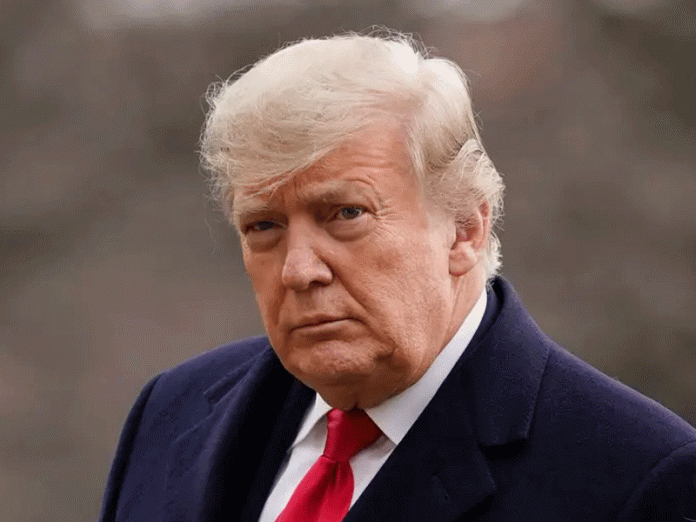
A US federal appeals court has ruled that most tariffs imposed by former President Donald Trump were unlawful, finding that he exceeded his authority under the International Emergency Economic Powers Act (IEEPA).

The ruling, delivered on August 29, 2025, covers tariffs introduced in February and April against countries including China, Canada, and Mexico. Judges determined that the IEEPA does not empower a president to levy import taxes, as that constitutional authority belongs to Congress.

Although the tariffs remain in place pending further legal proceedings, the decision sets up a high-stakes battle likely headed for the Supreme Court.

The Trump administration swiftly appealed, arguing that the president acted within powers delegated by Congress to protect national and economic security. White House spokesman Kush Desai said Trump’s actions were lawful, while Trump himself condemned the ruling as “highly partisan” and warned of “total disaster” if the tariffs were removed.

The judgment carries major domestic and international implications, raising uncertainty over Trump’s trade policy as negotiations continue with the EU, China, and others. Countries such as India, grappling with cumulative 50% tariffs, are reassessing their economic strategies in response.

The decision does not affect steel and aluminum tariffs imposed under separate legislation. However, the court delayed enforcement until October 14, giving the Trump administration time to seek relief from the Supreme Court.

UK Bars Foreign Recruitment In 100 Job Roles To Curb Migration

The United Kingdom government has announced sweeping new restrictions on overseas recruitment, barring more than 100 occupations from being filled by foreign workers as part of efforts to reduce net migration.

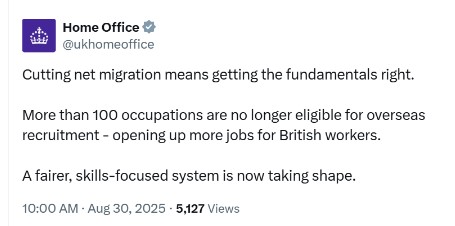
The Home Office disclosed the policy shift in a statement on X on Saturday, noting that the decision was aimed at creating more opportunities for British workers while reshaping the visa system.

“Cutting net migration means getting the fundamentals right. More than 100 occupations are no longer eligible for overseas recruitment – opening up more jobs for British workers. A fairer, skills-focused system is now taking shape,” the statement read.

The measure is the latest policy move under Prime Minister Sir Keir Starmer, who took office on July 5, 2024, following Labour’s landslide election victory that ended Rishi Sunak’s Conservative-led government.

However, critics have cautioned that the restrictions could deepen labour shortages in key sectors such as health and social care. The affected roles are reported to include positions across hospitality, logistics, healthcare support, public services, and the creative industries—jobs that thousands of foreign workers previously relied on for legal employment in the UK.

The Home Office is expected to publish the updated list of restricted occupations in due course.

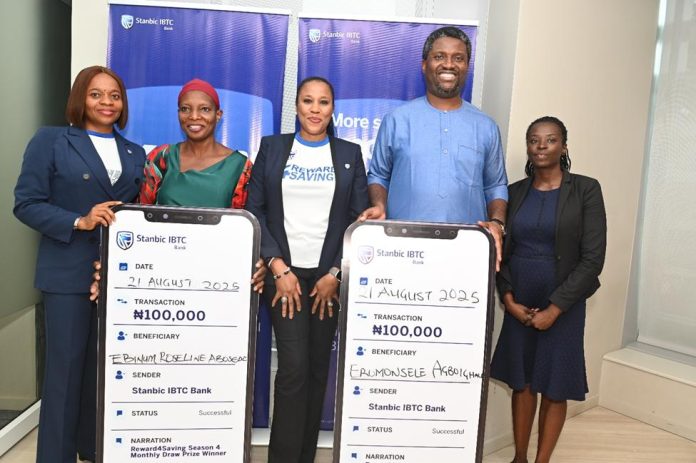
Stanbic IBTC Bank Celebrates Fourth Monthly Draw; Rewards 70 Lucky Winners In Reward4Saving Promo 4.0

Stanbic IBTC Bank has reaffirmed its dedication to fostering a sustainable savings culture in Nigeria through the successful hosting of the fourth monthly draw in its Reward4Saving Promo –  Season 4. The event took place in Lagos and witnessed the emergence of 70 lucky winners, from the Bank’s seven business zones; each winning ₦100,000 for maintaining a minimum savings balance of ₦10,000 in their Stanbic IBTC Savings Account or @ease Wallet. The balances were maintained for a minimum of 30 consecutive days respectively.

The draw was conducted with keen oversight from regulatory representatives to ensure transparency and fairness. Notable attendees included representatives of the Federal Competition & Consumer Protection Commission (FCCPC); Advertising Regulatory Council of Nigeria (ARCON); and Lagos State Lotteries and Gaming Authority (LSLGA).

Since the commencement of the Reward4Saving Promo – Season 4, a total of 288 customers have shared in ₦37 million worth of cash rewards, with the total prize expected to reach ₦130 million by the conclusion of the initiative in April 2026. With ₦93 million remaining in the prize pool, excitement continues to climb among customers of Stanbic IBTC Bank nationwide.

Speaking during the draw, Oluwakemi Zollner, Head of Sales and Distribution, Lagos Mainland, stated, “Stanbic IBTC Bank is committed to rewarding loyal customers while enhancing the savings culture within society. The promo is open to both existing and new customers. By saving just ₦10,000 in your Stanbic IBTC Savings Account or @ease Wallet for 30 consecutive days, you qualify for the draw. More savings equal higher chances of winning.”

One of the recent winners, Ebinum Abosede, an entrepreneur, shared her emotional journey upon receiving her prize. “When I initially received the call, I was doubtful and thought it could be a scam. Even my daughter warned me against going. But now that I am here and have received my alert, I could not be happier. I just moved into a new house and was searching for funds to paint my apartment. Thank you to Stanbic IBTC Bank; I can finally give my new home a fresh coat of paint.”

The Reward4Saving Promo continues to create a buzz across Nigeria, inspiring individuals to practice financial discipline while being rewarded for their dedication. Through this initiative, Stanbic IBTC Bank celebrates the achievements of savers and strengthens its role in promoting financial inclusion and empowering local communities.

To participate, customers can save ₦10,000 or more for 30 consecutive days in a Stanbic IBTC Savings Account or @ease Wallet. For more details, visit www.stanbicibtcbank.com, download the Stanbic IBTC 3.0 Mobile App, or walk into any branch nationwide.

Grooming Centre Renews Decade-Long Partnership with Sesor Foundation For Displaced Persons In Nigeria

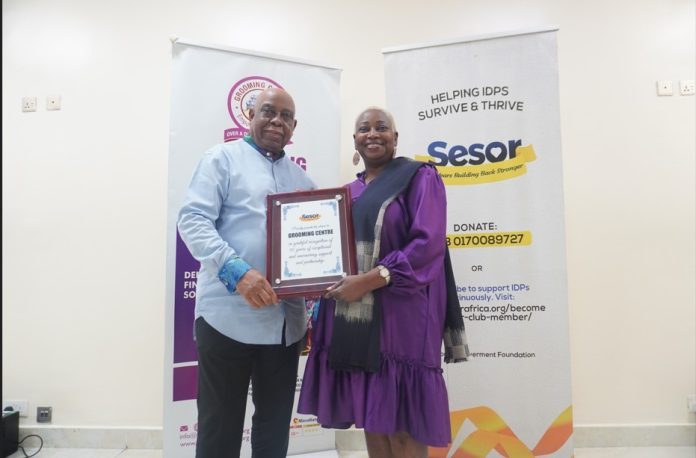
Ms. Ier Jonathan-Ichaver (right), CEO of Sesor Empowerment Foundation, presents a plaque of appreciation to Dr. Godwin Nwabunka, CEO of Grooming Centre, in recognition of a decade of partnership supporting internally displaced persons (IDPs) across Nigeria. The ceremony marked the renewal of their collaboration for the 2025 project year, expanding initiatives that have already reached over 110,000 displaced persons through relief aid, psychosocial support, and livelihood empowerment.

Sesor Empowerment Foundation (“Sesor”) and Grooming People for Better Livelihood Centre (“Grooming Centre”) have renewed their partnership for the 2025 project year, marking more than a decade of impactful collaboration in aiding internally displaced persons (IDPs) across Nigeria.

Under the renewed agreement, Grooming Centre has expanded its support for Sesor’s programmes, covering the operation and inupgrade of Safe Day Spaces in Lagos and Benue States, relief outreaches to 300 IDP households, livelihood training for 200 women, and targeted disbursement of livelihood support funds to vulnerable women. The funding also includes monitoring, reporting, and media engagement to ensure transparency and measurable results.

The signing ceremony marked a decade of partnership that has reached over 110,000 displaced persons through relief aid, psychosocial care, and sustainable livelihood initiatives.

Speaking at the signing ceremony, Dr. Godwin Nwabunka, CEO of Grooming Centre, said:

“We believe every life holds value and dignity, and no one should be left without hope. For over ten years, our partnership with Sesor Foundation has been one way we stand with displaced families. This renewal strengthens our resolve to help rebuild lives and restore hope for those affected.”

Ier Jonathan-Ichaver, Founder of Sesor, expressed gratitude for Grooming Centre’s consistent partnership:

“This relationship has endured and delivered real change. In the past decade, we have reached displaced persons in 14 states, offering relief, support, and paths to recovery. Grooming Centre has stood with us in urgent response efforts and joint outreach missions to communities like Apa and Otukpo LGAs. We look forward to achieving even more together.”

During the event, Sesor presented Grooming Centre with a plaque of appreciation, in recognition of their longstanding commitment and support.

The renewed partnership reaffirms both organisations’ shared commitment to restoring dignity, providing opportunities, and fostering resilience among Nigeria’s displaced communities.

BetKing Unveils FameHouse: BBNaija-Inspired Game Where Every Cashout Counts

If you thought the tension of Big Brother Naija evictions kept you glued to your screen, then brace yourself, because BetKing has just brought that same heart-pounding suspense to gaming with its brand-new innovation: FameHouse.

Imagine this: you stake your bet, watch your winnings grow, and then – boom! – The eviction siren could sound at any second. The big question is, will you cash out in time or risk losing it all? That’s the electric thrill at the heart of FameHouse, BetKing’s latest game inspired by BBNaija eviction nights.

So, Here’s How It Works

•            Players can join the excitement with a minimum stake of ₦5,000.

•            Each round comes with a shared ₦2 million prize pool.

•            The tension builds as winnings multiply, but only those bold (and smart) enough to cash out before eviction get to walk away with their share.

It’s a delicate dance between risk and reward, perfectly capturing the drama of BBNaija evictions while giving fans a chance to win real money.

Open to All BetKing Players

The best part? FameHouse is open to both new and existing BetKing customers. Whether you’re a seasoned player or a newbie looking to spice up your entertainment, this is your chance to experience BBNaija-style suspense with real winnings on the line.

But hurry, the promotion runs only until September 21, 2025. That means just a few weeks to test your nerve and see if you have what it takes to cash out before eviction calls your name.

Why It’s a Big Deal

Reality TV has always been about suspense, emotions, and strategy. By blending that same energy with gaming, BetKing is giving Nigerians something fresh: a game that’s not just about winning but about timing, instinct, and courage.

With FameHouse, entertainment and gaming collide in a way that keeps you on the edge of your seat, just like BBNaija eviction nights. Just so you know, alot of people are already playing and inviting their friends to join, case in point is Wanni and Handi- the celebrity twin DJs- in this video.

So, are you ready to play, stake, watch, and cash out before eviction? The house is open, and the clock is ticking.

BizWatchNigeria.Ng
Privacy Overview

This website uses cookies so that we can provide you with the best user experience possible. Cookie information is stored in your browser and performs functions such as recognising you when you return to our website and helping our team to understand which sections of the website you find most interesting and useful.