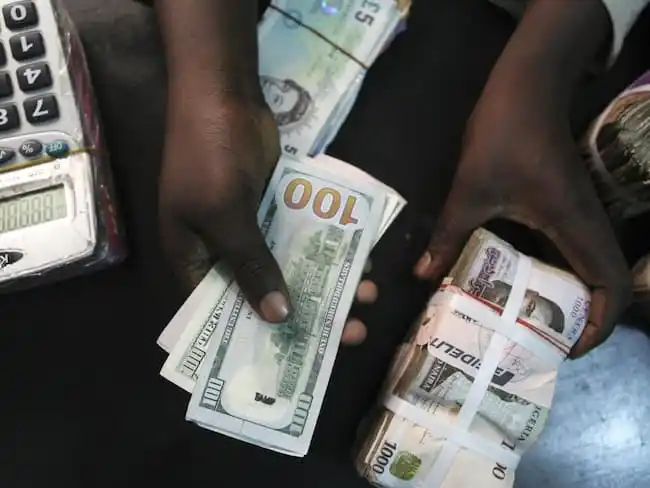
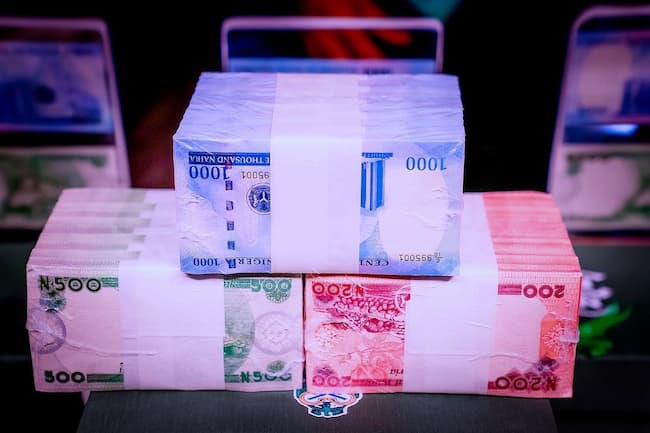
The exchange rate between the Naira and the US dollar, according to the data released on the FMDQ Security Exchange, the official forex trading portal, showed that the naira closed at 1515.00 per $1 on Tuesday, September 16th , 2025. The naira traded as high as 1492.00 to the dollar at the investors and exporters (I&E) window on Monday.
Dollar to naira exchange rate today black market (Aboki dollar rate):
The exchange rate for a dollar to naira at Lagos Parallel Market (Black Market) players buy a dollar for ₦1522 and sell at ₦1506 on Monday 15th September, 2025, according to sources at Bureau De Change (BDC).
Please note that the Central Bank of Nigeria (CBN) does not recognize the parallel market (black market), as it has directed individuals who want to engage in Forex to approach their respective banks.
Dollar to Naira Black Market Rate Today
Dollar to Naira (USD to NGN)
Black Market Exchange Rate Today
Buying Rate
₦1525
Selling Rate
₦1515
Dollar to Naira CBN Rate Today
Dollar to Naira (USD to NGN)
CBN Rate Today
Highest Rate
₦1502
Lowest Rate
₦1492
Please note that the rates you buy or sell forex may be different from what is captured in this article because prices vary.
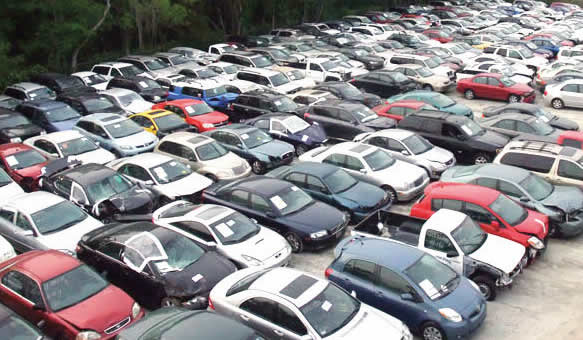
Nigeria’s vehicle import market has recorded a dramatic rebound in the first half of 2025, with volumes nearly doubling compared to the same period last year. Industry stakeholders attribute the surge to foreign exchange stability and recent reforms introduced by the Central Bank of Nigeria (CBN).
Exclusive figures from two of the country’s busiest vehicle terminals – Ports & Terminal Multipurpose Limited (PTML) and Five Star Logistics Terminal – as well as confirmations from freight forwarders, reveal that the number of cars shipped into Nigeria rose by close to 100 per cent between January and June 2025.
At PTML, an official disclosed that the terminal has already surpassed last year’s vessel traffic. “Over 40 vessels called at PTML in 2024, but in just half of 2025, we have already received more than 50 ships. This reflects the growing momentum in car importation,” the source said.
The data shows that around 18,000 vehicles were imported through PTML in the first half of 2024. By comparison, more than 34,000 units – both new and fairly used (Tokunbo) – had already been discharged at the terminal by June 2025, representing an almost 90 per cent increase.
The source linked the trend to exchange rate stability, which has allowed importers to plan with more confidence. “Unlike before, the exchange rate is now more predictable. Importers can plan ahead, inflation is slowing, and businesses are finding room to expand. This has encouraged more vehicle importation compared to the uncertainty that plagued the market in 2023 and 2024,” the source explained.
At Five Star Logistics Terminal, the pattern is similar. A source at the facility confirmed that imports have already exceeded last year’s totals. “In 2024, throughput was around 32,000 units. But by July 2025, we had already crossed 37,000 units. If this pace continues, the year could end with more than double last year’s total imports,” the official revealed.
The official further noted that the relative stability of the naira-dollar rate has encouraged long-term importation plans. “When the exchange rate fluctuates, it disrupts trade. Now that the naira is more stable, importers are confident enough to make commitments,” the source added.
This spike follows CBN’s interventions to boost liquidity in the forex market, including dollar injections and reforms that attracted higher foreign portfolio inflows. The naira has since strengthened, recently appreciating to around N1,500/$ at the official market.
Industry stakeholders confirm that the stronger naira has boosted trade confidence. The PTML Chapter Chairman of the National Association of Government Approved Freight Forwarders, Mr. Thomas Alor, acknowledged the surge. “There is a clear rise in vehicle importation this year compared to last year. While I cannot give an exact percentage, the volume of vehicles arriving at the ports has significantly grown,” he said.
Similarly, the Apapa Chapter Chairman of the National Council of Managing Directors of Licensed Customs Agents, Mr. Abayomi Duyile, credited part of the growth to changes in customs duty assessments. “Last year, clearance was slowed because duties were extremely high. But with the introduction of the 846 valuation method, duties were reviewed downward. Customs now factors in depreciation, mileage, and wear-and-tear for used cars. This has boosted clearance and encouraged more imports,” he explained.
At Tincan Island Port, the National Protocol Officer of the Association of Nigerian Licensed Customs Agents, Mr. Riwane Amuni, also confirmed the upswing. “Vehicle imports are definitely higher this year. PTML and Five Star Logistics handle the bulk of roll-on/roll-off traffic, and their numbers show volumes have risen considerably compared to 2024,” he said.
The surge suggests renewed confidence among traders and investors in Nigeria’s automotive sector. Analysts expect the increased supply of vehicles to expand consumer choices, ease market shortages, and potentially stabilise car prices.
Still, experts caution that sustaining the momentum will depend on maintaining forex stability and driving structural reforms. Factors such as global oil price volatility, Nigeria’s import dependency, and inflationary pressures could pose risks in the months ahead.
If current trends hold, 2025 could go down as one of the strongest years for vehicle imports in Nigeria’s recent history, with projections of a 100 per cent year-on-year increase by December.
For now, importers and freight forwarders say forex stability has been a game-changer. As one customs agent put it: “When businesses can predict tomorrow, they can plan today. That’s why we are seeing this surge. Stability is giving us hope, and the numbers at the ports prove it.”
The Federal Government has suspended the controversial four per cent Free on Board (FOB) levy recently introduced by the Nigeria Customs Service (NCS) on all imported goods. The suspension was confirmed in a letter dated Monday, September 15, 2025, addressed to the Comptroller-General of Customs and signed by the Permanent Secretary for Special Duties in the Ministry of Finance, Mr. Raymond Omachi.
The directive, issued by the Minister of Finance and Coordinating Minister of the Economy, Mr. Wale Edun, followed mounting concerns from importers, trade experts, and other stakeholders about the levy’s impact on the economy.
According to the letter, the decision came after extensive consultations with stakeholders and experts, whose feedback showed that the levy would impose additional burdens on trade and business operations. “It has become clear that the implementation of the levy poses significant challenges to trade facilitation, the business environment, and overall economic stability,” the letter stated.
Stakeholders had consistently warned that the levy would fuel inflation, increase the cost of goods, and weaken Nigeria’s trade competitiveness. They also argued that it ran counter to government efforts to ease the cost of doing business and attract investment.
The Ministry of Finance clarified that the suspension is not a cancellation but a pause to allow further engagement with stakeholders and a comprehensive review of the levy’s framework. The ministry stressed the need to strike a balance between revenue generation and economic growth.
In April 2025, the Comptroller-General of Customs, Adewale Adeniyi, announced plans to reintroduce the levy after consultations with stakeholders. However, the move immediately drew backlash from traders, shipping firms, and manufacturers, who maintained that the charge would erode investor confidence and diminish Nigeria’s role as a regional trading hub.
“The Ministry of Finance looks forward to working closely with the Nigeria Customs Service and relevant parties to develop a more equitable and efficient revenue structure—one that supports government income without undermining trade or economic stability,” the statement added.
The government is now expected to hold fresh discussions with trade groups, freight forwarders, and importers to design a fairer system. Analysts believe the review period presents an opportunity to align Customs policies with broader economic reforms aimed at stabilising the naira, curbing inflation, and improving Nigeria’s ease of doing business ranking.
For now, importers and business operators have welcomed the suspension as a relief in a difficult economic climate. But experts caution that any future revenue measures must be carefully designed to avoid disruptions in trade and investment flows.
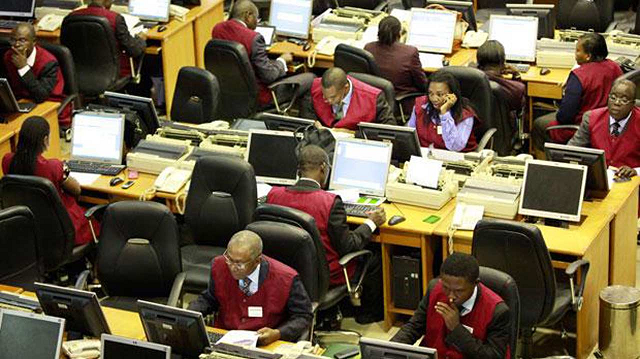
The Nigerian Exchange Limited (NGX) witnessed a strong rebound on Monday as renewed investor interest in blue-chip and mid-tier equities propelled the market upward, delivering ₦704 billion in fresh gains to shareholders.
The benchmark All-Share Index (ASI) appreciated by 0.82%, adding 1,155.32 basis points to settle at 141,701.01 points. This surge was largely attributed to bargain hunting in leading counters such as BUA Foods, GTCO, Unilever Nigeria, LivingTrust Mortgage Bank, and Chams.
The rally marked a reversal from the losses recorded in the previous trading session before the weekend. As a result, the market capitalization advanced from ₦88.93 trillion to ₦89.63 trillion.
Trading activity improved significantly, with total volume rising by 25.46% while value soared by 47.58%, reflecting increased participation across the bourse. Market data showed that 545.41 million units worth ₦23.86 billion exchanged hands in 31,293 transactions.
Market Activity Highlights
UACN Plc dominated the volume chart, contributing 12.11% of total deals, followed by Regency Alliance Insurance (10.32%), Access Holdings (6.80%), Lasaco Assurance (5.91%), and Chams (5.88%).
In terms of value, Geregu Power Plc led the pack, representing 42.69% of all trades.
Gainers and Losers
On the winners’ list, LivingTrust Mortgage Bank advanced by 9.96%, while Etranzact International rose 9.70%. Others such as Regency Alliance (9.64%), Northern Nigeria Flour Mills (8.62%), Unilever Nigeria (8.41%), and Multiverse Mining (7.83%) also recorded strong upticks.
Conversely, McNichols Plc topped the losers’ chart, shedding 9.90%. Honeywell Flour (-9.13%), Sterling Financial Holdings (-4.43%), First Bank Holdings (-2.53%), and Japaul Gold (-1.82%) were also among the laggards.
Sector Performance
The market closed with a slightly positive breadth, recording 31 gainers against 30 decliners.
Consumer Goods Index (+3.54%) was the best performer, buoyed by BUA Foods (+6.73%), Unilever (+8.41%), Cadbury (+7.48%), and Vitafoam (+4.39%).
Banking Index (+0.05%) edged higher on gains in GTCO (+1.29%), Access Holdings (+0.75%), and FCMB (+0.93%).
The Insurance Index (-0.23%) recorded the steepest decline, pressured by losses in NEM Insurance (-2.31%) and AIICO (-1.68%).
Oil & Gas (-0.09%) also slipped on profit-taking in Oando (-1.04%), while Industrial Goods and Commodities indices closed flat.
Analysts expect the positive momentum to continue if investors maintain buying pressure in fundamentally sound equities.
The Nigerian banking sector is navigating turbulent waters as the Central Bank of Nigeria’s (CBN) recapitalisation mandate tightens the pressure on listed lenders, leaving investors cautious ahead of delayed Q2 2025 financial disclosures.
Out of the thirteen banks listed on the Nigerian Exchange (NGX), only six — Access Bank, Zenith Bank, GTBank, Wema Bank, Jaiz Bank, and Stanbic IBTC — have so far met the apex bank’s new capital requirements. The remaining institutions are still racing against time to meet the compliance threshold.
The recapitalisation directive, which aligns with global Basel III standards, is designed to strengthen the sector against systemic risks. However, the accelerated enforcement timeline has rattled investors and created significant uncertainty in the capital market.
Investor Sentiment Dampened
The much-anticipated release of half-year 2025 financial results has been delayed, depriving investors of insights into the banks’ post-recapitalisation performance. Traditionally, this period triggers heightened trading activities driven by interim dividend announcements and portfolio restructuring. Instead, investor enthusiasm has been subdued this year.
While compliant banks such as Zenith, Access, and GTBank remain market favourites due to their resilience and solid capital positions, apprehension persists over the outlook for non-compliant banks. Many investors have shifted to a cautious stance, balancing profit-taking with the risk of potential valuation drag.
Strategic Moves Underway
Analysts note that the delays in financial reporting may reflect the complexity of ongoing internal adjustments, ranging from rights issues, private placements, asset reallocation, and balance sheet restructuring. These measures are essential for banks striving to meet the minimum capital buffers.
Meanwhile, the CBN has remained silent on whether extensions will be granted, further fuelling investor anxiety. The lack of a transitional framework has left shareholders and depositors uncertain about the immediate implications for non-compliant banks.
Compliance Advantage
The six compliant banks are already leveraging their regulatory status to position themselves for growth opportunities. Market analysts expect them to expand their digital infrastructure, deepen foreign investment partnerships, and strengthen their balance sheets.
However, the broader sector continues to face a delicate balancing act: meeting capital targets without undermining shareholder value. This dual pressure has kept investors on edge, with patience thinning as the year advances.
Economic Implications
The recapitalisation drive underscores the CBN’s determination to safeguard financial stability and boost investor confidence in Nigeria’s economy. Yet, prolonged delays in financial disclosures may trigger aggressive investor exits or rating downgrades if left unchecked.
With less than one quarter remaining in the year, all eyes remain on banks yet to meet the capital mandate. For now, the sector’s future hinges on swift compliance, transparent communication, and regulatory clarity.
Nigeria’s headline inflation slowed for the fifth straight month in August, easing to 20.12 per cent from 21.88 per cent in July. While the National Bureau of Statistics (NBS) described the decline as a sign of moderating price growth, households, small businesses, and industry leaders say the relief remains largely statistical, as prices remain high and demand continues to weaken.
According to the NBS Consumer Price Index report released on Monday, the slowdown represents a 1.76 percentage point drop month-on-month and a sharp fall from the 32.15 per cent recorded in August 2024. The CPI rose slightly to 126.8 points in August from 125.9 in July, while monthly inflation stood at 0.74 per cent compared to 1.99 per cent the previous month.
Urban inflation slowed to 19.75 per cent year-on-year from 34.58 per cent in August 2024, while rural inflation was 20.28 per cent compared to 29.95 per cent a year earlier. On a monthly basis, urban inflation rose 0.49 per cent, while rural inflation climbed by 1.38 per cent, showing sharper pressures in rural communities where insecurity, transport costs, and supply challenges remain high.
Food inflation, which carries the biggest weight in the basket, eased to 21.87 per cent year-on-year from 37.52 per cent in August 2024. On a monthly basis, it dropped to 1.65 per cent from 3.12 per cent in July, driven by falling prices of staples such as rice, maize flour, millet, semolina, and guinea corn. Still, food prices remain elevated, particularly in northern states grappling with insecurity and poor logistics.
Core inflation, which strips out food and energy, slowed to 20.33 per cent year-on-year from 27.58 per cent a year ago, though it rose month-on-month to 1.43 per cent from 0.97 per cent, reflecting cost pressures in housing, electricity, transport, education, and healthcare.
Inflation patterns varied across states: Ekiti posted the highest rate at 28.17 per cent, followed by Kano at 27.27 per cent. Zamfara recorded the lowest at 11.82 per cent. Food inflation was highest in Borno at 36.67 per cent, while Zamfara posted the lowest at 3.30 per cent.
Small businesses feel no relief For small businesses and households, the easing inflation figures have not translated into lower costs. President of the Association of Small Business Owners of Nigeria, Femi Egbesola, said, “Small businesses and households have little or nothing to do with the macroeconomy. They don’t care what the figures say; they care about what they can feel in their livelihood.”
He urged government to provide targeted support in food, transport, and credit, warning that without urgent interventions, the micro, small, and medium enterprise (MSME) sector — which employs over 80 per cent of Nigeria’s workforce — could be pushed closer to collapse.
Director-General of the Nigerian Association of Small and Medium Enterprises, Eke Ubiji, added, “From the perspective of SMEs, nothing is dropping. What is happening in the market does not correspond with the statistics. One could take ₦50,000 to the market and exhaust it without buying everything.”
He noted that many businesses are scaling back on inputs, raw materials, and equipment because of weak demand and high costs.
Private sector leaders urge caution Organised Private Sector leaders welcomed the disinflation trend but warned that it should not be mistaken for falling prices. President of the Lagos Chamber of Commerce and Industry, Gabriel Idahosa, explained, “Inflation dropping to 20.12 per cent does not mean that absolute prices of goods are falling. Falling prices will only come when supply increases significantly and post-harvest losses reduce.”
Segun Kuti-George, National Vice President of the National Association of Small-Scale Industrialists, added that prices in Nigeria are sticky. “When prices go up, they rarely come down because producers and sellers hold on unless competition forces them to adjust,” he said.
Director of the Centre for the Promotion of Private Enterprise, Muda Yusuf, described the slowdown as a sign of macroeconomic improvement and rising investor confidence but stressed that insecurity and food costs remain critical risks.
Experts weigh in Economic analysts also cautioned against over-celebrating. Charles Sanni, Chief Executive of Cowry Treasurers Limited, said the moderation reflects both macro stability and weak demand. “Consumer demand has shrunk, foreign reserves have improved, and the naira has been appreciating. These are positives, but prices are still high,” he explained.
Olatunde Amolegbe, CEO of Arthur Stevens Asset Management Limited, added that inflation must be understood as an aggregate. “Some items are up, others are down. Pre-harvest, food prices rise; post-harvest, they fall. But overall, prices may still be higher than last year,” he noted.
Looking ahead The data was released ahead of the Central Bank of Nigeria’s Monetary Policy Committee meeting scheduled for September 22–23. Analysts say while five consecutive months of disinflation could give the MPC room to ease policy, persistent food and core inflation may push it to hold interest rates at 27.5 per cent.
Nigeria’s inflation remains one of the highest in Africa despite recent improvements. The moderation offers a glimmer of stability but has yet to ease the burden on households and businesses. Private sector leaders and analysts insist government must go beyond statistical gains to address structural bottlenecks — insecurity, power shortages, poor logistics, and weak infrastructure.
Until then, the gap between official data and lived realities will remain. For many Nigerians, inflation may be slowing, but survival is still an uphill battle.
Fresh doubts have emerged over the Kaduna State Government’s claims of implementing the new N72,000 minimum wage, as teachers across the state continue to report receiving salaries far below the promised figure.
The Nigerian Guild of Investigative Journalists (NGIJ), in its ongoing governance assessment, revealed evidence showing that educators are still trapped in the old wage structure despite repeated assurances from state officials.
In Lere Local Government, for instance, a Kaduna SUBEB teacher on level 7 presented his August 2025 payslip, which reflected only N37,436 as salary — credited on September 3. Similarly, in Zaria, another teacher confirmed his August pay was just N42,000. Reports gathered across multiple local government areas consistently indicated that many teachers were still being paid under the N30,000 wage regime.
This reality directly contradicts statements by Kaduna NLC Chairman, Ayuba Suleiman, who had earlier announced that Governor Uba Sani had approved and commenced the implementation of the new wage for workers on levels 1–7. The State Commissioner for Information, Ahmed Maiyaki, had also reiterated this position when NGIJ investigators visited his office.
The controversy is not limited to primary and secondary school teachers. At Nuhu Bamili Polytechnic in Zaria, lecturers similarly disclosed that their earnings remain below the government’s stated benchmark. One lecturer, who spoke under anonymity, revealed his August salary stood at N64,800 — significantly below the declared minimum.
“There is no reflection of N72,000 in our salaries. What the government is saying is entirely different from what we are seeing in our accounts,” the lecturer lamented.
The findings highlight a troubling gap in communication, transparency, and accountability in the state’s wage administration. NGIJ President, Malam Abdulrahman Aliagan, explained that the Guild is still engaging stakeholders and collating evidence to provide a comprehensive picture of the situation.
He added that NGIJ’s full governance assessment report on Kaduna State will be unveiled in November at a press briefing in Abuja, shedding light on whether the wage policy is fact or fiction.
The Dangote Refinery has officially kicked off its nationwide free petrol distribution programme, a move it describes as a “game-changing step” in reshaping Nigeria’s energy landscape. The initiative comes amid sharp criticism from industry unions and petroleum marketers who argue that the plan is unrealistic and potentially disruptive.
Already, hundreds of Dangote-branded trucks have begun fuel deliveries across the country, with a strong presence observed along the Lekki-Epe Expressway in Lagos. According to company disclosures, Dangote Industries invested a staggering N720 billion to import 4,000 compressed natural gas (CNG) trucks, though only about 1,000 are currently operational.
The scheme is projected to cut retail fuel prices and save the nation an estimated N1.7 trillion annually in distribution costs. Under the new template, the refinery fixed its ex-depot price at N820 per litre, with retail pump prices ranging between N841 and N851 across states.
Despite these promises, reactions from stakeholders have been mixed. The Nigeria Union of Petroleum and Natural Gas Workers (NUPENG) dismissed the free fuel plan as a “Greek gift,” while the Depot and Petroleum Products Marketers Association of Nigeria (DAPPMAN) questioned the sustainability of Dangote’s pricing model.
In a swift rebuttal, the refinery accused its critics of orchestrating an economic sabotage campaign, suggesting their resistance is rooted in fear of losing grip over Nigeria’s fuel distribution chain. The company cited previous sector controversies, including a 2022 incident when a DAPPMAN member supplied petrol laced with methanol levels above 15%, causing widespread engine failures.
Energy experts remain divided. Professor Wumi Iledare, a petroleum economics specialist, described Dangote’s investment in CNG trucks as forward-thinking, with the potential to lower costs, promote natural gas usage, and reduce carbon emissions. However, he cautioned that unchecked dominance could destabilize the industry, calling for firm regulatory oversight to prevent monopolistic practices.
As the refinery continues rolling out its nationwide delivery network, its impact on pricing, competition, and energy security is expected to dominate conversations in Nigeria’s oil and gas sector.
Maritime – Nigeria’s Federal Government has called for support in its bid for a seat on the International Maritime Organisation (IMO) Council, highlighting the country’s ports as critical trade gateways for Central and West Africa.
Mr Adegboyega Oyetola, Minister of Marine and Blue Economy, stated this on Saturday in a release signed by his Special Adviser on Media and Communications, Dr Bolaji Akinola.
Oyetola, speaking at the 80th Session of the UN General Assembly, said Nigeria’s election into the IMO Council Category-C was essential to sustain global maritime engagement.
“Nigeria’s candidature is more than ambition; it is a solemn pledge of partnership with the international community,” he declared in his address. He cited Nigeria’s track record, particularly the transformative Deep Blue Project under NIMASA, which coordinated air, land, and sea assets to enhance maritime security.
“Our three consecutive years of zero piracy incidents have restored confidence among global shipping stakeholders and affirmed Nigeria’s role as guarantor of maritime safety,” Oyetola said.
He added that Nigerian ports remain critical gateways for West and Central Africa, with the shipping industry among the largest in sub-Saharan Africa.
Oyetola explained Nigeria’s campaign for a seat in the IMO Category-C Council was founded on reciprocity and solidarity with other member states.
According to him, the strategy prioritises bilateral and multilateral collaboration, with Nigeria sharing technical expertise and assistance with developing states, particularly within Africa.
He stressed that Nigeria envisions an IMO that is inclusive, representative, and forward-looking, pledging to remain both a regional maritime leader and a reliable partner.
Oyetola appealed for votes to ensure Nigeria drives responsible leadership, inclusivity, and collaborative progress in global maritime governance.
He noted that Nigeria, with a renewed focus on the blue economy and ongoing institutional reforms, has repositioned itself as a maritime powerhouse and dependable global partner.
“Nigeria has ratified and domesticated key IMO conventions and is working to accede to others, reinforcing its commitment to maritime development across Africa,” he said.
He reaffirmed Nigeria’s strong commitment to UN Sustainable Development Goal 14 on oceans, seas, and marine resources, and the Kunming-Montreal Global Biodiversity Framework.
“Nigeria has signed the Agreement on Biodiversity Beyond National Jurisdiction (BBNJ) and has already commenced its ratification process,” Oyetola added.
He emphasised that Nigeria continues to demonstrate regional leadership, championing and validating a roadmap for the maritime industry’s development in Africa.
Nigeria’s foreign reserves have continued their upward climb, rising to $41.698 billion, according to the latest data from the Central Bank of Nigeria (CBN). The steady increase comes as the apex bank maintains dollar sales to banks and authorised dealers to help stabilize the naira at the official market.
The current reserve level is the highest since May 2021, buoyed by sustained inflows from exporters, diaspora remittances, and portfolio investments. Analysts say the build-up offers a crucial cushion against external shocks, including volatile oil prices and currency market pressures.
The CBN’s ability to manage dollar demand has also strengthened investor confidence, with foreign portfolio inflows remaining steady. This confidence was reinforced earlier when the bank successfully handled dollar repatriation commitments in the first quarter of the year.
Analysts recall that global uncertainties, particularly former U.S. President Donald Trump’s tariff policy, had triggered significant capital outflows from Nigeria. However, the CBN’s intervention during that period demonstrated its ability to absorb unexpected shocks, further boosting investor sentiment.
Looking ahead, analysts expect Nigeria’s rising oil production to support stronger forex receipts from crude sales in 2025. Already, Bonny Light crude posted gains of 2.16%, closing at $68.56 per barrel, outperforming the broader global trend.
Globally, crude oil prices remain under pressure amid renewed concerns about slowing demand. The International Energy Agency (IEA) recently cut its 2025 growth forecast to 750,000 barrels per day, citing weak demand in emerging markets and a projected contraction across OECD economies.
Conversely, OPEC has projected a more optimistic outlook, with global oil demand expected to grow by 1.3 million barrels per day this year and 1.4 million barrels per day next year, largely driven by non-OECD countries.
Despite diverging forecasts, traders remain cautious about China’s capacity to maintain its rapid stockpiling, which has already reached 187 million barrels this year. Additional uncertainty surrounds the potential impact of new Western sanctions on Russian crude exports.
For Nigeria, however, the combination of stronger reserves, consistent inflows, and a modest rebound in oil prices signals resilience and growing capacity to withstand global market volatility.
The Nigerian naira crossed a significant psychological threshold in the foreign exchange market, trading below the N1,500 mark against the United States dollar at the Nigerian Foreign Exchange Market (NFEM). The development reflects growing dollar supply and improved liquidity in the official window.
On Monday, data from the Central Bank of Nigeria (CBN) showed that the official spot rate touched an intraday low of N1,493/$1, while some transactions were completed at highs of N1,502/$1.
The rally in the domestic currency was largely supported by inflows from exporters and foreign portfolio investors positioning ahead of an upcoming Open Market Operation (OMO) auction. Additionally, dollar supply from International Oil Companies (IOCs) further boosted market liquidity.
Last week, the naira recorded solid gains against the greenback, appreciating by 0.98% week-on-week to close at N1,501.50/$1 at the Nigerian Autonomous Foreign Exchange Market (NAFEM). The parallel market also saw mild improvement, appreciating by 0.33% to N1,535/$1. This left the official market rate at a N35.50 premium (2.23%) over the parallel market.
According to data from Coronation Merchant Bank, total FX inflows stood at $550.90 million, only slightly lower than the $567.20 million recorded in the prior week. Foreign portfolio investments accounted for the bulk of inflows, contributing $303.8 million (55.15%). Exporters followed with 17.61%, while non-bank corporates added $91.3 million (17.57%). Other contributors included corporates ($23.8 million or 4.32%), foreign direct investment ($18.7 million or 3.39%), the CBN ($13 million or 2.36%), and individuals ($3.3 million or 0.60%).
Meanwhile, Nigeria’s external reserves climbed by $357.84 million to reach $41.66 billion, supported by steady accretions during the week.
Market analysts project that the naira could trade within a stable band in the short term, buoyed by sustained portfolio inflows and strong reserve levels. However, they cautioned that renewed pressure could emerge if capital inflows weaken or if demand for foreign exchange surges ahead of year-end activities.
Interswitch, a leading African technology company focused on creating solutions that enable individuals and communities to prosper, has announced its sponsorship and participation as an exhibitor at the 21st AKWAABA African Travel Market, held in Lagos from September 14th to 16th, 2025.
Widely regarded as the premier gathering for West Africa’s travel, tourism, and hospitality industries, the AKWAABA African Travel Market attracts thousands of exhibitors, buyers, government representatives, and investors from across Africa and beyond. The 21st edition is expected to set new benchmarks for collaboration, knowledge exchange, and business growth within the sector.
At this year’s edition, Interswitch will unveil Quickteller Travel, a concierge service designed to address the evolving needs of the travel and tourism ecosystem and a suite of cutting-edge mobility solutions. These include tailored services for travel agencies, interstate travel booking platforms for both structured and unstructured operators, and a robust travel and mobility suite, designed to enable seamless, secure, and reliable transactions across the value chain.
Speaking ahead of the event, Nnenna Ajanwachuku, Vice President, Transport Ecosystem, Interswitch, said, “At Interswitch, we see travel not just as movement, but as an experience powered by technology. Our mission is to bridge the payment gaps that have long held back Africa’s travel ecosystem by making payments simpler, bookings smarter, and operations more connected.”
Through its participation, Interswitch reaffirms its commitment to digitising Africa’s travel economy. The company will leverage the event to foster industry-wide conversations through high-level panel sessions, unlock new partnerships, and demonstrate how its innovations are transforming operations, enhancing customer experiences, and driving growth in the travel and tourism sector.
“AKWAABA provides the perfect platform to showcase how our solutions are shaping the future of travel towards faster, more seamless, and more inclusive services for everyone. We are excited to engage with industry leaders, partners, and operators to unlock new possibilities for Africa’s tourism and hospitality sectors,” Ajanwachuku, who would be speaking on the panel session, added.
Over the years, the AKWAABA African Travel Market has evolved into a vital hub for collaboration, bridging markets and fostering cross-border partnerships. With Interswitch’s sponsorship and participation, the 2025 edition is poised to be a landmark event, underscoring the transformative role of technology in advancing Africa’s travel and tourism industry.
Nigeria’s sprint queen, Tobi Amusan, has once again demonstrated why she remains one of the most dominant hurdlers in world athletics after storming into the women’s 100m hurdles final at the World Athletics Championships in Tokyo on Monday.
Amusan, who currently holds the world record, delivered a powerful display in the semifinals, clocking 12.36 seconds (-0.2 m/s) to claim victory in her race. Her commanding run placed her ahead of the Netherlands’ Nadine Visser, who finished in 12.45s, and Poland’s Pia Skrzyszowska, who crossed the line in 12.51s.
The 27-year-old Nigerian athlete appeared in full control throughout the race, gliding smoothly over the hurdles and finishing with authority. This performance has reignited hopes of another golden moment for Amusan, who famously set the world record of 12.12s at the 2022 World Championships in Eugene.
With the final scheduled for 2:20 pm BST, anticipation is building as Amusan looks to reclaim her spot on the top of the podium. Fans and analysts alike believe her current form gives her a strong chance of securing another championship title.
Women’s 100m Hurdles Final Lineup:
Tobi Amusan (NGR) – 12.36s
Grace Stark (USA) – 12.37s
Masai Russell (USA) – 12.42s
Danielle Williams (JAM) – 12.44s
Ditaji Kambundji (SUI) – 12.44s
Nadine Visser (NED) – 12.45s
Devynne Charlton (BAH) – 12.51s
Pia Skrzyszowska (POL) – 12.53s
Amusan had earlier qualified for the semifinals after comfortably winning her opening heat on Sunday, setting the tone for her Tokyo campaign. With her focus now firmly on the final, Nigeria’s athletics fans are eagerly awaiting another history-making performance from their track heroine.
The wait is over as the UEFA Champions League makes its highly anticipated return on Tuesday, promising fans across the globe three nights of drama, passion, and world-class football. With an expanded league phase, every clash holds greater significance, whether it features seasoned giants or debutants eager to leave their mark.
Across Europe, from the Basque Country to Manchester, fans will be treated to 18 thrilling encounters, each packed with history, rivalries, and the promise of unforgettable storylines.
Some fixtures rekindle the spirit of iconic finals from the past — Juventus vs Borussia Dortmund revives memories of the 1997 final, Ajax vs Inter Milan recalls their 1972 decider, while Bayern Munich vs Chelsea takes supporters back to the unforgettable night in 2012 when Chelsea stunned Bayern in Munich.
Beyond nostalgia, milestones are also in sight: Real Madrid could celebrate their 200th Champions League victory, while Erling Haaland is chasing his 50th Champions League goal. Meanwhile, debutants such as Union Saint-Gilloise, Pafos, Bodø/Glimt, and Kairat Almaty are ready to write new chapters in their club histories.
For European powerhouses like Bayern Munich, Real Madrid, and Liverpool, Matchday One provides the chance to stamp early authority on the competition. For others — including Marseille, Sporting CP, and Galatasaray — it is an opportunity to reset their troubled European legacies.
From individual brilliance to collective storylines, Matchday One sets the tone for what could be another season of unforgettable Champions League drama.
Preview of Key Fixtures
Tuesday, 16 September
Athletic Club vs Arsenal (18:45 CET): Athletic return to the competition after nearly a decade, while Arsenal boast an unbeaten streak of eight straight opening games. A battle of fortress vs consistency.
PSV Eindhoven vs Union Saint-Gilloise (18:45 CET): PSV remain strong at home, while debutants Union SG are looking to shock Europe again.
Juventus vs Borussia Dortmund: A heavyweight clash loaded with history, firepower, and revenge narratives.
Real Madrid vs Marseille: Madrid chase their 200th UCL win, while Marseille fight to overturn years of poor European form.
Benfica vs Qarabağ: Benfica, playing their 45th UCL campaign, face an ambitious Qarabağ side representing Azerbaijan.
Tottenham vs Villarreal: Spurs’ unbeaten home record meets Villarreal’s hunger for revenge, featuring familiar faces against their former club.
Wednesday, 17 September
Olympiacos vs Pafos (18:45 CET): Greece’s giants take on Cyprus’s fearless debutants.
Slavia Praha vs Bodø/Glimt (18:45 CET): First-ever Czech vs Norwegian clash in the UCL.
Ajax vs Inter Milan: A revival of the 1972 final.
Bayern Munich vs Chelsea: A rematch of the dramatic 2012 final.
Liverpool vs Atlético Madrid: Anfield’s fortress meets Simeone’s resilient Atleti.
Paris Saint-Germain vs Atalanta: Goals are expected with two attack-minded teams.
Thursday, 18 September
Club Brugge vs Monaco (18:45 CET): Two teams built for goals and attacking flair.
Copenhagen vs Bayer Leverkusen (18:45 CET): Danish resilience faces German ruthlessness.
Frankfurt vs Galatasaray: Frankfurt aim to capitalize on Galatasaray’s recent struggles.
Manchester City vs Napoli: Haaland’s record chase meets De Bruyne’s emotional return to Manchester.
Newcastle vs Barcelona: A nostalgic throwback to the famous 1997 clash at St. James’ Park.
Sporting CP vs Kairat Almaty: Portuguese tradition meets Kazakh debutants.
With the anthem ready, the lights blazing, and 36 clubs primed for the ultimate European battle, the Champions League’s new season promises nothing short of football theatre.
The Nigerian Exchange (NGX) All-Share Index (ASI) posted a slight rally on Monday, reflecting renewed market optimism after last week’s strong performance despite profit-taking activities in some stocks.
The intraday gain was attributed largely to renewed investor confidence, with stockbrokers projecting that the index could surpass its next psychological resistance level once Tier-1 banks release their half-year earnings reports.
Market watchers, however, note that broader sentiment remains cautious ahead of the release of Nigeria’s August inflation figures. Analysts anticipate that the Consumer Price Index (CPI) will show a further slowdown, a factor expected to guide trading direction in the short term.
Trading updates from the NGX indicated that the rally was modest and could still reverse before close of trading. Banking stocks were identified as the primary drivers of Monday’s uptick, with several Tier-1 and mid-tier lenders attracting buying interest.
At midday, the NGX ASI edged higher by 0.07 percent, according to an investment note issued by Alpha Morgan Capital Limited. The firm described the upward move as a reflection of “mildly positive investor sentiment.”
Stockbrokers also noted that investor demand was concentrated in mid- to large-cap stocks. Early gainers on the trading floor included:
JAIZBANK, which appreciated by 2.41 percent.
TRANSCORP, up 1.95 percent.
GTCO, climbing 1.34 percent.
UCAP, gaining 1.32 percent.
FBNH, rising 0.95 percent.
FCMB, up 0.93 percent.
ACCESSCORP, advancing 0.75 percent.
Despite the slim rally, analysts advised investors to monitor macroeconomic indicators closely, particularly inflation data, which could determine the market’s trajectory in the coming weeks.
The Association of Resident Doctors (ARD) in the Federal Capital Territory Administration (FCTA) has officially commenced an indefinite strike action beginning Monday, September 15, 2025. The development was made public in a communiqué signed by the ARD-FCT President, Dr. George Ebong, and the General Secretary, Dr. Agbor Affiong.
This move follows the expiration of a seven-day warning strike, which concluded on Sunday after an emergency general meeting where doctors reviewed the situation.
The ARD-FCT, which represents medical practitioners across 14 district and general hospitals as well as the Department of Public Health under the FCTA, had downed tools last week to push for the resolution of long-standing issues with the administration.
In the communiqué, the association expressed dissatisfaction that none of the demands outlined in previous negotiations were met, accusing the government of showing chronic neglect toward the healthcare sector.
“This outcome has reinforced our fears of systemic abandonment of healthcare delivery, which continues to undermine the ability of medical doctors to provide care at the highest standard,” the statement read.
The striking doctors are pressing for the settlement of outstanding salary arrears owed to members employed since 2023, ranging from one to six months. They are also demanding immediate recruitment of additional staff, full payment of the 2025 Medical Residency Training Fund, and arrears arising from the 25–35 percent adjustment in the Consolidated Medical Salary Structure (CONMESS).
Furthermore, they are requesting specific timelines for completing promotion, skipping, and conversion processes, along with the clearance of accumulated arrears. The ARD-FCT also highlighted the need for the administration to correct persistent salary deductions and irregular payment patterns.
Other grievances include:
Conversion of post-Part II Fellows to Consultant cadre within six months of passing.
Documented schedules for promotion exercises with arrears fully paid.
Payment of outstanding wage awards and hazard allowances.
Upgrading and renovation of FCTA hospitals to meet global standards.
Settlement of salary arrears owed to newly employed external residents, currently behind by three to four months.
At the close of deliberations, members unanimously resolved to continue the strike until visible steps are taken to prioritize health in the FCT.
“After passionate discussions at our extraordinary Congress, we resolved to embark on an indefinite strike beginning 8:00 a.m., Monday, September 15, 2025, until the government demonstrates genuine commitment to addressing our demands. We urge the authorities to act swiftly in the interest of patients and the healthcare system at large,” the statement concluded.
Nigeria’s crude oil exports plunged by N3.18 trillion in the first six months of 2025, underscoring the country’s continued struggles with production output and global oil market shifts.
Data from the National Bureau of Statistics (NBS) revealed that crude oil exports fell to N24.92 trillion in H1 2025, compared to N28.10 trillion in H1 2024, representing an 11.3% year-on-year decline.
In Q1 2025, crude exports were valued at N12.96 trillion, but this declined further to N11.97 trillion in Q2. Oil’s share of total exports also weakened, falling to 52.6% in Q2 2025 from 71.2% in Q2 2024, signaling a reduced dominance of oil in Nigeria’s trade balance.
Rise of Non-Crude Exports
While crude struggled, non-crude exports surged significantly, more than doubling from N8.79 trillion in H1 2024 to N18.43 trillion in H1 2025.
Non-oil exports, including agricultural produce and solid minerals, maintained stability at just above N3 trillion across both quarters. The largest gains came from refined petroleum products and semi-processed goods, which boosted the share of non-crude exports to 41% of total exports in H1 2025, compared to 24% a year earlier.
Trade Surplus Strengthens Despite Oil Decline
Despite the downturn in crude oil performance, Nigeria posted a stronger trade surplus in the first half of 2025. Total exports amounted to N43.35 trillion, while imports stood at N30.71 trillion, leaving a surplus of N12.64 trillion — up 54.6% from N8.17 trillion recorded in H1 2024.
Exports as a share of total trade improved from 55.9% in Q2 2024 to 59.8% in Q2 2025, as non-crude exports offset oil’s weakness. Imports dipped slightly by 0.9% in Q2, after a 7% drop in Q1, further improving the trade balance.
Fuel Imports Still Rising
At the same time, Nigeria’s heavy reliance on fuel imports continued. According to the NBS, the country spent N4 trillion on fuel imports in the first six months of 2025 — N1.76 trillion in Q1 and N2.3 trillion in Q2.
For context, Nigeria’s full-year fuel import bill in 2024 reached N15.4 trillion, a figure that strained foreign reserves and contributed to exchange rate volatility.
External Trade Position in Q2 2025
The NBS data also highlighted an improved trade position in Q2 2025, with the trade surplus widening by 44.3% to N7.46 trillion, up from N5.17 trillion in Q1.
Total exports in Q2 reached N22.75 trillion, representing a 10.5% increase from Q1 and a 28.4% year-on-year rise. Imports, however, slipped marginally to N15.29 trillion, reinforcing Nigeria’s stronger external account.
Nigeria experienced a slowdown in new business formation in 2024 as fewer entrepreneurs launched fresh ventures across the country. According to the 2024 State of Entrepreneurship (SoE) Report by Fate Foundation, the business birth rate slipped to 24% in 2024, a sharp drop from 30% in 2023 and 32% in 2022.
The report revealed that most Nigerians are driven into entrepreneurship by necessity rather than opportunity, with income generation remaining the top motivation.
State-by-State Rankings
Anambra and Ebonyi states emerged as the leading performers in 2024, recording an entrepreneurship index score of 0.77, well above the national average of 0.46.
“Kogi, Kwara, and Oyo followed in third, fourth, and fifth place, respectively,” the report stated. Notably, of the top five states in 2023 — Kano, Kogi, Kaduna, Borno, and Bayelsa — only Kogi retained its spot in 2024.
At the lower end of the rankings, Niger, Cross River, and Zamfara were flagged as the weakest performers. Overall, 20 states recorded declines in performance, while 15 improved their positions. Plateau and Zamfara maintained the same ranking as the previous year.
Female Participation on the Rise
Despite the general slowdown, female entrepreneurship showed growth. Women accounted for 47% of new businesses in 2024, up from 42% in 2023. Bauchi, Niger, and Abia recorded the highest percentages of female-owned startups.
Over the last three years, women’s share of entrepreneurship has steadily increased from 43% in 2021 to 48% in 2024. However, female-led businesses continue to face heightened vulnerability to economic shocks.
The report found that 63% of female-owned firms recorded growth in 2024, compared to 74% in 2023, and slightly lower than the 64.3% for male-owned businesses. States such as Anambra, Ebonyi, and Ogun led in female entrepreneurship growth, driven by new market access, higher demand, and technology adoption. Yet, lack of access to finance remains a key barrier.
Key Challenges for Entrepreneurs
The report highlighted five major obstacles affecting Nigerian entrepreneurs in 2024:
Limited access to finance
Poor electricity supply
Rising insecurity
Foreign exchange instability
Weak infrastructure
These issues, particularly FX volatility and insecurity, were identified as the most pressing concerns for businesses in 2024.
Entrepreneurial Optimism and Expansion Plans
Despite these hurdles, optimism remains strong, with 87% of entrepreneurs expressing confidence in future business opportunities, compared to 86% in 2023.
However, expansion plans slowed, as only 68% of entrepreneurs planned to scale operations in 2024, down from 78% in 2023.
Policy Recommendations
The report called on the Nigerian government to:
Guarantee macroeconomic stability through investment-friendly policies.
Expand non-oil exports to stabilize FX inflows.
Establish incubator programmes for women and youth-led businesses.
Recapitalise development finance institutions for broader funding access.
Simplify business registration to encourage formalisation.
Create public-private dialogue platforms to improve state-level policy impact.
The exchange rate between the Naira and the US dollar, according to the data released on the FMDQ Security Exchange, the official forex trading portal, showed that the naira closed at 1510.00 per $1 on Thursday, September 11th , 2025. The naira traded as high as 1498.00 to the dollar at the investors and exporters (I&E) window on Tuesday.
Dollar to naira exchange rate today black market (Aboki dollar rate):
The exchange rate for a dollar to naira at Lagos Parallel Market (Black Market) players buy a dollar for ₦1522 and sell at ₦1506 on Sunday 14th September, 2025, according to sources at Bureau De Change (BDC).
Please note that the Central Bank of Nigeria (CBN) does not recognize the parallel market (black market), as it has directed individuals who want to engage in Forex to approach their respective banks.
Dollar to Naira Black Market Rate Today
Dollar to Naira (USD to NGN)
Black Market Exchange Rate Today
Buying Rate
₦1522
Selling Rate
₦1506
Dollar to Naira CBN Rate Today
Dollar to Naira (USD to NGN)
CBN Rate Today
Highest Rate
₦1503
Lowest Rate
₦1498
Please note that the rates you buy or sell forex may be different from what is captured in this article because prices vary.
Oil prices extended their rally on Monday after Ukraine launched fresh drone attacks on Russian refineries and ports, disrupting crude operations at key export hubs.
Brent crude rose to $65.72 per barrel, while U.S. West Texas Intermediate (WTI) settled at $61.68. Ukraine claimed its strikes hit Russia’s two main oil hubs in the Baltic Sea, including Primorsk, the country’s largest oil-loading port. Reports also indicated that three pumping stations supplying crude to Ust-Luga were targeted, leading to temporary disruptions.
Adding to the bullish sentiment, Chinese data showed refiners processed nearly 15 million barrels per day (bpd) of crude in August, up 7.6% year-on-year, supported by strong imports and higher domestic output. Apparent demand climbed to 14.53 million bpd, a 4.9% increase from a year earlier.
In the U.S., Baker Hughes data revealed that oil drilling activity expanded for a third consecutive week, with active rigs rising by two to 416—the highest since mid-July.
However, speculative positioning remained cautious. NYMEX WTI net longs fell by 14,630 lots to 12,657 in the week ending September 9, the weakest bullish stance since June 2006. Similarly, ICE Brent net longs declined by 41,476 lots to 209,578.
The pullback reflects concerns over OPEC+’s recent decision to boost output and the International Energy Agency’s forecast of a record oil surplus next year, which could weigh on prices despite current geopolitical risks.