The United States Mission in Nigeria has reiterated that visa application fees remain non-refundable, urging Nigerians to carefully prepare their applications to improve approval chances.
In a statement published on its official X handle and the U.S. Department of State website, the embassy explained that the fees are charged to cover processing costs, regardless of the outcome of an application.
“We hear your concerns regarding U.S. visa application fees. Like most countries, the U.S. visa fees cover the cost of processing the application, regardless of the outcome. While fees are non-refundable and non-transferable, each application is reviewed thoroughly and fairly. For best results, prepare your application carefully and use the resources on our website,” the notice read.
Earlier this year, the U.S. government revised its global visa fee schedule, raising charges across multiple categories, including student, business, work, and investment visas. For Nigerians, standard visitor visas (B-1/B-2) now cost $185, while temporary worker visas have increased to $205. Treaty trader and investor visas were adjusted upward to $315.
Additionally, new rules introduced in July mandate that most Nigerians applying for non-immigrant visas will only receive single-entry visas valid for three months. Applicants in student and exchange categories (F, M, J) are now also required to make their social media accounts publicly visible and disclose all usernames used in the past five years.
The U.S. State Department maintains that these measures are part of enhanced security vetting procedures.
Liquidity in Nigeria’s banking sector surged on Tuesday following the maturity of Open Market Operation (OMO) bills worth ₦204.87 billion, keeping interbank rates steady while investors anticipate further monetary easing.
Data from AIICO Capital Limited showed financial system liquidity rose to N2.455 trillion from N2.111 trillion the previous day. TrustBanc Financial Group reported a 10% decline in placements at the CBN’s Standing Deposit Facility, which stood at ₦1.75 trillion, reflecting reduced sterilisation pressures.
Banks avoided the borrowing window, signaling comfortable liquidity positions. Interbank rates remained stable, with overnight repo and lending rates closing at 26.50% and 26.92%, respectively. The Nigerian Interbank Borrowing Rate (NIBOR) also recorded modest declines across most tenors.
Meanwhile, the Nigerian Interbank Treasury Bills True Yield (NITTY) dropped across all maturities, with yields on 1-month, 3-month, 6-month, and 12-month papers falling by 21, 40, 63, and 37 basis points, respectively.
Analysts expect additional inflows from the ₦84.29 billion Federal Government bond coupon payment to sustain system liquidity ahead of the ₦290 billion Treasury Bills auction scheduled for midweek.
The Director-General of the Nigerian Airspace Management Agency (NAMA), Farouk Umar, says the current N11,000 charge per flight imposed on airlines is no longer sustainable, citing rising costs of maintaining aviation infrastructure.
Speaking in Abuja on Tuesday at a summit organised by the House of Representatives Committee on Aviation, Umar noted that the fee, unchanged since 2008, is charged per flight regardless of passenger numbers.
“In 2008, NAMA was collecting N11,000 per flight. Since then, airfares have surged, with economy tickets now between N150,000 and N200,000, yet we still charge the same amount,” Umar said. He stressed that NAMA is a cost-recovery organisation, not a charity, and must recoup investments in critical facilities such as landing systems, radar, and modern communication equipment.
Umar warned that inflation, exchange rate pressures, and global supply chain disruptions have significantly increased the cost of procuring and maintaining these systems. “We keep modernising to ensure Nigeria is not left behind in global aviation development. Yet, the airlines are still paying peanuts. We cannot continue this way,” he insisted.
Airlines Resist Review
Despite repeated engagements, Umar said airline operators continue to resist tariff adjustments. He argued that their stance is unfair since they frequently increase ticket fares to reflect rising operational costs.
“The airlines respond to economic realities by raising ticket prices, but they do not want to accept that we also operate in the same economy. Safety is at stake if we cannot recover costs,” he warned.
Airline operators, however, counter that higher charges would worsen their already fragile financial position. With surging fuel prices, foreign exchange shortages, and multiple taxes, carriers say they are struggling to survive. They fear that passing additional costs to passengers could push airfares even higher, burdening travelers who already pay some of the highest rates in Africa.
Parliament’s Position
Earlier, the Chairman of the House Committee on Aviation, Abdullahi Garba, was represented by his deputy, Festus Akingbaso, who stressed the need for collaboration to strengthen the aviation sector. He assured that parliament is willing to support NAMA and other agencies with funding, provided they demonstrate transparency and efficiency.
In contrast with global practice, where navigation fees are tied to aircraft size, distance, and other parameters, Nigeria still charges a flat N11,000 per flight, well below the actual cost of service delivery. Aviation analysts warn that unless reviewed, this gap could threaten safety by limiting NAMA’s ability to reinvest in critical infrastructure.
Industry stakeholders are calling for a balanced approach, one that ensures NAMA recovers costs without crippling airlines or pricing passengers out of the skies.
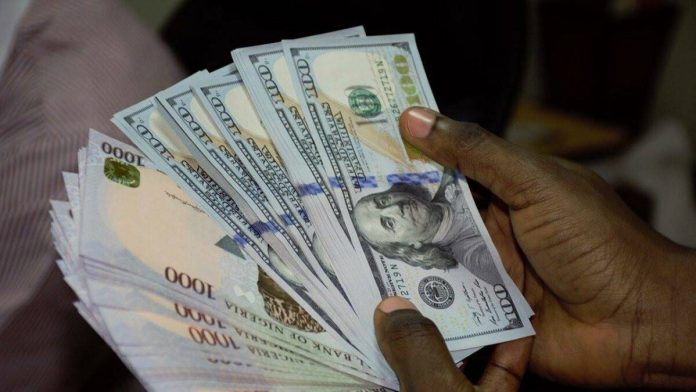
The naira strengthened against the U.S. dollar on Tuesday, trading at N1484 in the Nigerian foreign exchange market after testing intraday highs of N1479 per dollar, according to updates from the Central Bank of Nigeria (CBN).
This performance marks a significant improvement, with analysts pointing to rising foreign reserves and broader weakness in the U.S. dollar index as supportive factors. Nigeria’s external reserves climbed to $41.844 billion, up from $41.698 billion on Friday, reflecting successive foreign inflows.
Market observers say the currency’s appreciation is improving investor sentiment and fueling bullish forecasts for the FX market. They also noted that declining headline inflation has been supported by the naira’s recent stability.
Global factors also played a role, with crude oil prices surging amid renewed supply concerns linked to the ongoing Russia-Ukraine conflict. Light crude futures broke past the 200-day moving average at $63.32, sparking strong buying momentum that lifted prices above $64.
West Texas Intermediate (WTI) crude is now testing the $64.25 resistance level. Analysts believe a breakout could trigger further gains, setting the stage for a push toward $65.41 and possibly $66.03.
Guaranty Trust Holding Company (GTCO) Plc has recorded a notable increase in market value, rising by 85 basis points to N3.460 trillion, as significant block trade transactions boosted investor confidence despite its delayed earnings report.
The financial group’s share price advanced from N94.20 at the beginning of the week to N95, signaling resilience after recent sell-off pressures. Data from the Nigerian Exchange (NGX) showed GTCO as the most active stock by value, accounting for 7.96% of total market trade volume.
Anchoria Securities Limited confirmed that about 30 million shares were transacted off-market at ₦95 per share, representing a trade value of ₦2.5 billion. In total, 32.890 million GTCO shares worth N3.124 billion were exchanged on Tuesday, giving the company a commanding 24.18% share of the day’s market value.
Analysts attribute the rising investor interest to the company’s strong earnings outlook, minimal keyman risk, and the positive momentum from its recent listing on the London Stock Exchange. MarketForces Africa also reported sustained inflows from foreign portfolio investors seeking exposure to the bank’s growth prospects.
The Federal Government of Nigeria (FGN) bond market witnessed profit-taking on Tuesday as investors rebalanced their portfolios following the release of new inflation data, which showed a significant decline in consumer prices.
The National Bureau of Statistics reported that the inflation rate fell from 21.88% in July to 20.12% in August, pushing the real interest rate on government bonds to 7.38%. This development has made coupon payments on fixed-income instruments more rewarding in real terms.
Market analysts noted that the widening of real interest rates signals stronger returns after adjusting for inflation. However, the shift in monetary policy expectations has made investors cautious, with many re-evaluating their positions ahead of the September bond issuance.
Trading remained relatively calm in the secondary market, though there was moderate demand for bonds maturing in 2029, 2031, and 2033. The May 2033 bond was quoted at 16.50/16.20%, though wide bid-ask spreads kept transaction volumes limited, according to AIICO Capital Limited.
Cowry Asset Management highlighted that investors are closely assessing the broader implications of macroeconomic indicators on the bond market. As a result, profit-taking in medium- to long-dated bonds pushed the average yield higher by 17 basis points to 16.65%.
Meanwhile, Nigeria’s Eurobond market ended the session on a positive note, with the average yield dropping by 16 basis points to 7.76%, reflecting stronger investor confidence in the country’s external debt instruments.
Nigeria’s largest carrier, Air Peace, has announced plans to employ 1,000 fresh graduates under its 2025/2026 Graduate Trainee Programme. The airline said the initiative follows the Federal Government’s suspension of the 4% Free on Board (FOB) levy on imported goods, a policy reversal that had sparked relief across industries.
Finance Minister and Coordinating Minister for the Economy, Wale Edun, explained that the levy, earlier introduced by Customs, posed risks to trade facilitation, economic stability, and Nigeria’s competitiveness. Its suspension, he said, was in response to widespread concerns from manufacturers, importers, and clearing agents who warned it could worsen inflation and deter investment.
Air Peace Chairman, Allen Onyema, commended President Bola Tinubu and Minister Edun for what he described as responsive leadership. He noted that the suspension provided much-needed relief to the aviation sector.
“This suspension is a lifeline for the industry. It removes a heavy burden that could have crippled airlines and triggered massive job losses. In turn, Air Peace is reciprocating this gesture by creating 1,000 fresh graduate jobs for young Nigerians,” Onyema said.
He added that the move demonstrates how government–private sector collaboration can drive economic impact. “If further supportive measures like this come from the Federal Government, I can assure you that thousands more jobs will be created in the aviation sector. This is how partnerships can transform a nation.”
According to Onyema, the Graduate Trainee Programme will provide young Nigerians with mentorship, training, and hands-on experience in aviation and related industries, serving as a talent pipeline for the sector’s growth.
Eligibility Requirements Applicants must:
Be 30 years old or younger at the time of application
Hold at least a Second Class Lower (2:2) degree in any discipline from a recognised university
Present an NYSC discharge certificate, exemption, or exclusion letter
Demonstrate adaptability, passion, and willingness to learn
Nigeria’s Dangote Refinery has successfully exported its first consignment of petrol to the United States, marking a major breakthrough for the 650,000-barrel-per-day facility.
The shipment, carried on the tanker Gemini Pearl, was discharged at Sunoco’s Linden, New Jersey terminal, according to Reuters. The cargo, estimated at 320,000 barrels, was sold by trading firm Vitol, which purchased it from Mocoh Oil, Dangote’s export partner.
The delivery confirms the refinery’s capacity to produce gasoline that meets stringent U.S. fuel specifications, a milestone eagerly awaited by energy market players.
This achievement comes after initial startup delays, with the refinery now steadily ramping up production. Nigeria has already seen reduced dependence on imported fuel, while surplus volumes are being exported to global markets.
Additional shipments to the United States are expected this month, with Glencore arranging deliveries for Shell around September 19, and another Vitol cargo scheduled for September 22.
The refinery’s entry into the U.S. fuel market not only strengthens Nigeria’s position in global energy trade but also underscores its ability to meet international fuel standards, potentially reshaping regional supply dynamics.
The naira extended its gains against the U.S. dollar this week, breaking through key psychological levels at the official window, as the Central Bank of Nigeria (CBN) and increased foreign exchange inflows from Dangote Refinery supported market liquidity.
Checks by MarketForces Africa revealed that tier-1 banks priced the naira at ₦1,468 per dollar in the interbank market, while it settled at ₦1,484 per dollar at the close of trading. The improvement comes amid rising optimism among investors about the CBN’s interventions and growing oil product exports.
Since June, the Dangote Refinery has exported over 1.1 billion liters of refined crude oil, reducing reliance on imported fuel and easing pressure on FX demand. Analysts believe this development has been pivotal in stabilizing the naira.
The apex bank recently injected more than $38 million into the banking system, bolstering dollar supply and strengthening the currency. Supported by $41.84 billion in gross external reserves, traders expect the naira could test ₦1,450 per dollar in the near term if current liquidity conditions persist.
Meanwhile, global commodity prices shifted upward. Brent crude rose 1.5% to $68.45 per barrel, while U.S. WTI advanced 1.9% to $64.51. Gold prices also surged to a historic high above $3,700 per ounce, fueled by safe-haven demand and expectations of a U.S. Federal Reserve rate cut.
The Nigeria Employers’ Consultative Association (NECA) has commended the Federal Government on the side of the 4 percent FOB Customs charge. Speaking in Lagos, the DG of NECA, Mr. Adewale-Smatt Oyerinde stated that “we commend the Minister of Finance and Coordinating Minister of the Economy for the demonstration of Government’s commitment to grow the economy through the development of the organized private sector.
This action, including the withdrawal of the proposed 5 percent telecom tax further affirmed the current administration’s determination not only to promote enterprise sustainability and competitiveness, but also determination to enable job creation at scale. While we commend the Government on this timely action, we urge the immediate implementation of the directive by the Nigeria Customs Service”.
Speaking further, the NECA DG noted that “it is instructive and important that other Agencies and Departments of the Federal and State Governments align their actions with the Renewed Hope Agenda of the administration by reversing unnecessary and cumbersome charges and levies that do nothing but add to the burden of Organized businesses, thus sabotaging the current administration’s effort at growing the economy.
Notwithstanding the Presidential directives on the suspension of the FRC Levies, the Financial Reporting Council of Nigeria continues to disobey the unambiguous directive of the President. This is not only worrisome but also unacceptable”.
Concluding his remarks, Mr. Adewale averred that, organized businessesses will continue to play definitive roles in the rapid development of the Nigerian economy by promoting investments, trade, job creation and making sound economic recommendations to the Government at all levels.
A Nigerian man has been sentenced to more than eight years in a United States prison for orchestrating a multimillion-dollar inheritance scam that preyed on hundreds of elderly victims across the country.
The U.S. Attorney’s Office for the Southern District of Florida said 41-year-old Ehis Lawrence Akhimie was handed a 97-month sentence on 11 September after pleading guilty to conspiracy charges.
Prosecutors told the court that Akhimie and his accomplices defrauded more than $6 million from over 400 victims by sending letters falsely claiming to be from a bank in Spain. The correspondence informed recipients that they were heirs to large overseas estates, but required them to pay purported taxes and fees before receiving the funds.
Instead of inheritances, victims lost their savings. Many were elderly and vulnerable, while others who had already fallen prey were recruited as unwitting intermediaries to forward payments through the network.
“Schemes like this steal not only money but dignity from our seniors,” said U.S. Attorney Jason A. Reding Quiñones. “Our Office will relentlessly pursue those who prey on the most vulnerable.”
Assistant Attorney General Brett A. Shumate described the case as a model of cross-border law enforcement cooperation, crediting Europol and agencies in the U.K., Spain, and Portugal with supporting the investigation.
Akhimie is the eighth defendant sentenced in connection with the conspiracy. Earlier this year, District Judge Roy K. Altman imposed an identical 97-month term on Okezie Bonaventure Ogbata, who was extradited from Portugal. The judge condemned the scam as “an incredibly serious crime” that demanded tough punishment “to stand up for the least protected members of our society.”
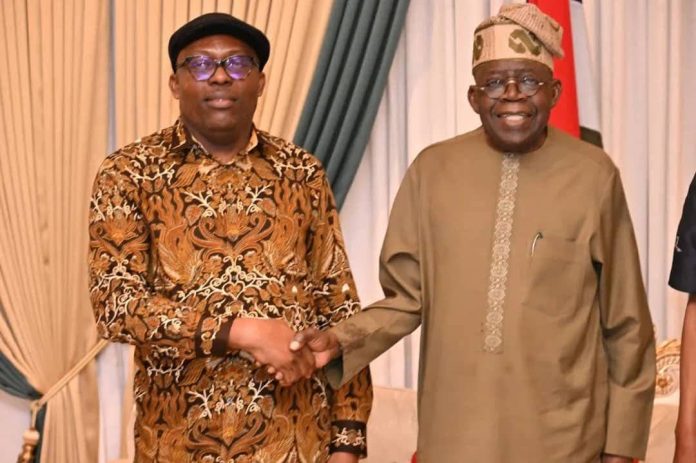
President Bola Tinubu and suspended Rivers State governor Siminalayi Fubara are due back in Nigeria on Tuesday, as the sole administrator, Vice-Admiral Ibok-Ete Ibas (retd.), stages a series of transition events ahead of the scheduled handover that will restore democratic rule to the state on Thursday.
Tinubu cut short his annual working vacation in France and the United Kingdom and will resume official duties in Abuja on arrival, his spokesman, Bayo Onanuga said. While in Paris the president met French President Emmanuel Macron for talks aimed at deepening bilateral cooperation, according to official accounts.
Fubara — who has been in London since the March emergency declaration — is also expected to return on Tuesday, aides told local media, ahead of his formal reinstatement on Thursday. The simultaneity of the returns has heightened political interest across the state as preparations for the restoration of civilian governance intensify.
Ibas began the transition with a thanksgiving service in Port Harcourt at the weekend and will be the special guest of honour at a public lecture on “Democracy and Good Governance” at the Banquet Hall, Government House, scheduled for Tuesday morning as part of the handover programme. State officials have asked invited guests to be seated by 9:30 a.m. for the lecture.
Background to the emergency
President Tinubu declared a six-month state of emergency in Rivers on 18 March, citing escalating political instability, constitutional breaches and security threats — including pipeline vandalism in the Niger Delta — and appointed retired Vice-Admiral Ibas as sole administrator. The move suspended the governor, deputy governor and the state assembly and placed day-to-day governance under a federal appointee. The declaration was widely reported and debated nationally.
The crisis followed months of intra-party conflict and institutional breakdown in the oil-producing state, including the demolition of the Rivers House of Assembly complex in late 2023 and disputes over the status of defecting lawmakers. The Supreme Court in February had criticised actions that effectively sidelined the legislature, and the ensuing stalemate contributed to the federal intervention.
Legal and electoral disputes
A Rivers State High Court in Port Harcourt recently struck out a suit challenging aspects of the August 30 local government elections and the federal appointment of election officials, with the presiding judge ruling that the court lacked jurisdiction in the context of an emergency proclamation and that the claimant lacked locus standi. The ruling leaves in place the state electoral commission’s conduct of the polls, for now, and may be subject to appeal.
What to watch
With the formal handover date approaching, political watchers will be looking for the logistics of Fubara’s reinstatement, the terms for the resumption of legislative functions, and any measures aimed at healing the political divisions that prompted federal intervention. Security officials will also be under scrutiny as the administration seeks to stabilise oil infrastructure and reassure investors that production disruptions will be checked.
Ireland Launches First Tentative Step To Lift COVID-19 Lockdown
Dreaming of studying in Europe without the heavy financial burden? The Government of Ireland has officially opened applications for the 2026 International Education Scholarships, and this time, it’s bigger, better, and more competitive than ever. Designed for outstanding students from across the globe, this fully funded programme gives international candidates the chance to pursue advanced degrees at some of Ireland’s most prestigious universities.
Let’s break it down. The scholarships are open to students from outside the EU/EEA, covering both Master’s and PhD levels. Here’s the structure:
Master’s by Research – funding for up to two years
Doctoral Degrees (PhD) – funding for up to four years
To qualify, you’ll need:
A Bachelor’s degree (if applying for a Master’s) or a Master’s degree (if applying for a PhD)
Proof of English language proficiency
A confirmed academic supervisor at an Irish university
And good news—if you’re waiting for final results, provisional certificates are accepted. There’s no age limit either, making it accessible for fresh graduates and seasoned researchers alike. The only catch? You’ll need to submit your online application before October 23, 2025.
This isn’t a one-university scheme. The scholarship covers nearly every major higher education institution in Ireland. Think of it as an academic buffet where you can pick the school that best fits your research goals. Some big names on the list include:
Trinity College Dublin
University College Dublin
University of Galway
University of Limerick
Dublin City University
University College Cork
And that’s not all—technological universities like Munster TU and Atlantic TU, along with specialist schools such as the Royal Irish Academy of Music and the RCSI University of Medicine and Health Sciences, are also in. Whether your dream lies in engineering, arts, medicine, or pure research, there’s a place for you.
What’s in the Package? (Financial Coverage Explained)
Now, let’s talk numbers—because that’s what makes this scholarship stand out. Each successful applicant receives funding worth over €33,000 per year, covering:
€25,000 annual stipend for living costs
Tuition fees (up to €5,750 per year, including non-EU rates)
€3,250 yearly research allowance for academic expenses
This isn’t just a small stipend—it’s one of the most generous funding packages offered by any European government. It ensures students can focus on research and academics without worrying about rent, groceries, or lab costs.
What Can You Study? (Fields and Research Areas)
Ireland’s scholarship programme casts a wide net, welcoming students from science, technology, arts, and social sciences. Key research areas highlighted include:
Humanities & Social Sciences – literature, history, economics
Ireland is actively positioning itself as a global hub for innovation and research collaboration, and this scholarship is central to that vision.
How Do You Apply? (Step-by-Step Guide)
Here’s a simple roadmap to getting started:
Check eligibility – Review the official call for applications.
Secure a supervisor – Connect with an Irish professor or researcher aligned with your field.
Prepare your documents – Academic transcripts, certificates, and proof of English proficiency.
Pass the eligibility quiz – A quick online test before you gain access to the application portal.
Submit your application – All online, no paper submissions, before October 23, 2025.
Pro tip: Don’t wait until the last minute. Irish institutions are competitive, and supervisors often select candidates early.
Why This Scholarship Matters
Studying abroad isn’t just about academics—it’s about cultural exchange, professional networks, and opening doors you didn’t even know existed. Ireland, with its rich history and growing global influence, has become one of the most attractive destinations for international students.
The Government of Ireland’s International Education Scholarships don’t just fund your studies; they invite you to be part of a community of innovators, thinkers, and global leaders in the making.
Where to Apply
All applications must be submitted through the official online portal managed by the Government of Ireland’s Higher Education Authority (HEA). You can find the full call for applications, eligibility quiz, and submission form on the HEA Scholarships Portal.
This portal is the only valid platform for submission—applications sent via email or post will not be accepted.
Final Thoughts
If you’ve been considering postgraduate studies abroad but money was the stumbling block, this could be your chance. The 2026 Government of Ireland Scholarships aren’t just about financial relief—they’re about creating opportunities for international collaboration, meaningful research, and personal growth.
So, what’s stopping you? Start your application journey today through the official portal and take the first step toward studying in Ireland.
Verve, Africa’s leading domestic payments card scheme and a subsidiary of The Interswitch Group, is delighted to welcome Google Play as a strategic partner for the eighth (8.0) edition of VerveLife, which has progressively gained acclaim as Africa’s largest and most celebrated fitness event series.This partnership from a lifestyle activation perspective further consolidates Verve’s evolving partnership with the Google Ecosystem, premised on a common goal of facilitating meaningful and rewarding consumer experiences that complement the aspirations of the Verve Life target audience towards healthier and more fulfilling lifestyles.
Launched eight (8) years ago, VerveLife has become Verve’s flagship lifestyle and active consumer engagement initiative, revolutionizing fitness and wellness in Nigeria and beyond, while promoting a healthy lifestyle among Verve’s cardholders and fitness enthusiasts.
Attracting over 14,000 participants annually across West and East Africa, The VerveLife movement has progressively grown into one of the continent’s most significant fitness platforms, featuring high-intensity workout sessions, dance routines, and fitness challenges led by expert instructors, culminating in a spectacular after party designed for fitness enthusiasts to unwind following the invigorating wellness sessions.
Cherry Eromosele, Executive Vice President, Marketing and Communications, Interswitch Group, expressed her optimism about the extension of Verve’s relationship with Google Pay into this strategic partnership to raise the bar on Verve Life in its 8t edition:
“We are thoroughly thrilled to take VerveLife to new heights this year, building on the success of our previous editions. Our latest collaboration on the lifestyle front with Google Play points to unwavering commitment to delivering exceptional experiences that resonate deeply with fitness enthusiasts across Africa.
This partnership not only enhances the quality of the events; it will also enrich the overall experience for our participants. With the value that Google brings on board, our Verve Life 8.0 participants should certainly look forward to exhilarating experiences, come November 1st, 2025, including exclusive complimentary merchandise and exciting rewards and incentives, courtesy Verve and Google Play. We are always excited to see our community come together annually, united by a shared passion for fitness and wellness.” Eromosele said.
Two years ago, in July 2023, Verve, the 1st and currently the largest domestic payment cards scheme out of Africa partnered with Google, to enable Nigerians to make purchases on key Google Platforms such as on the Google Playstore and YouTube with ease, thereby strengthening the digital ecosystem in Nigeria.
As a result, any Nigerian with an Android device and a Verve card now has a streamlined method for making purchases on the Google Play Store, as well as on YouTube.
Commenting on Google Play’s partnership with Verve, Anthea Crawford, head of retail and payment partnerships at Google Play, opined that the development simplifies the payment process for Google Play Store apps and services but also contributes significantly to a more inclusive digital environment for Nigerians.
For 2025, the VerveLife fitness train will travel across Nigeria stopping in cities such as Enugu, Ibadan and Abuja on August 30, September 13, and September 27, 2025, respectively before returning to Lagos for the highly anticipated grand finale in November. It will also make a stop at Uganda (Kampala) for the 2nd time and Kenya (Nairobi) for the 3rd time, before culminating in an exciting grand finale for the ultimate fitness extravaganza. The grand finale and after-party will be held on Saturday, November 1, 2025, at the prestigious and expansive Eko Convention Center in Victoria Island, Lagos.
As Verve continues to make good its commitment to championing fitness and wellness across Africa, fitness enthusiasts across Nigeria, Kenya and Uganda can look forward to yet another exciting edition of Africa’s biggest fitness party, VerveLife 8.0 themed ‘’Elev8’’.
Drug abuse among Nigerian youths is worsening, with one in seven Nigerians aged 15–64 — roughly 14.4 per cent — reported as having used drugs in the past year, a prevalence that is almost three times the global average, experts told a health forum in Lagos.
The finding, drawn from the 2018 National Drug Use Survey carried out by the United Nations Office on Drugs and Crime (UNODC) in partnership with the Federal Government, underpinned the discussion at the Redeemed Christian Church of God (RCCG), Zion Chapel, Lagos Province 57, in Ikeja.
The forum — themed “Drugs and Substance Abuse: Any Hope for the Youth?” — convened medical doctors, narcotics officers, and academics to diagnose the epidemic, outline its drivers and press for urgent, joined-up action. Speakers included Dr Charles Davies, Medical Director of Brafus Specialist Hospital (panel moderator); Dr Henrietta Igbokwe, head of Pharmaceutical Microbiology and Biotechnology at the College of Medicine, University of Lagos; retired NDLEA Assistant Commander Dr Wale Ige; and Dr Yinka Anifowoshe, an anaesthetist at Gbagada General Hospital.
Experts said the pattern of substance use has shifted and broadened. Cannabis remains widespread, but the non-medical use of pharmaceutical opioids — particularly tramadol and codeine-based cough syrups — has surged. Other substances named by the panel included rohypnol, cocaine and methamphetamine. The UNODC survey and subsequent national analyses identify opioids and cannabis as the most prevalent drugs among young people.
Panelists pointed to a cluster of structural and social drivers. Peer pressure, glamorisation on social media, and influence from entertainers normalise drug use for many young people, the doctors said. Economically, high youth unemployment and limited opportunities push some towards substances as an escape from hopelessness or as a short-term coping mechanism. Mental-health problems — often undiagnosed and untreated — were also flagged as an important factor.
Retired NDLEA officials at the event emphasised weak regulation and porous borders as critical supply-side issues. Despite bans and tighter controls, codeine and tramadol remain widely available in markets and online, experts warned, creating an environment where supply outpaces enforcement. The wider security ramifications were also discussed: speakers linked drug misuse to higher levels of cultism, robbery and other violent crime.
Health, social, and economic costs
Clinicians at the forum described the medical consequences of prolonged misuse: brain injury, organ damage, mental illness and a rising toll of overdose and premature death. They also highlighted the social costs — school drop-out, ruined careers and family breakdown — and the macroeconomic burden of lost productivity. “Drug abuse is a silent destroyer; if nothing is done, we can lose a generation,” Dr Anifowoshe warned.
What prompted the church forum
Speakers and local reporting place the RCCG event within a broader wave of community and state responses to rising substance use. The RCCG’s outreach programmes — including the LightUp Lagos initiative — and periodic Lagos State health campaigns have sought to combine awareness, prevention and rehabilitation activities in recent months. The church said the annual health talk, now in its ninth year, is intended to promote “total human welfare” and to support local outreach to vulnerable youths.
Experts’ prescription
Panelists called for a comprehensive, multi-sectoral response: strengthen regulation and border controls to reduce illicit supply; scale up evidence-based prevention in schools and communities; expand mental-health services and vocational training to tackle demand-side drivers; and prioritise rehabilitation and reintegration over punitive approaches for users, particularly young people. These prescriptions align with international guidance that stresses treatment, recovery, and social inclusion as more effective long-term strategies than incarceration alone.
Prevalence and data: The 2018 UNODC/Federal Government national drug use survey estimated past-year prevalence at c.14.4 per cent (about 14.3 million people aged 15–64). This figure is widely cited in academic and policy literature and contrasts with a 2016 global prevalence of approximately 5.6 percent.
Substances implicated: Cannabis and non-medical use of opioids (tramadol, codeine) are consistently reported as the most common drugs; stimulant and designer-drug use is also reported in specific surveys.
Drivers and responses: Peer pressure, unemployment, poverty, social media influence, weak regulation and mental-health gaps are repeatedly identified in UNODC, academic and local reporting as root causes; policy guidance emphasises evidence-based prevention, treatment and rehabilitation.
If by asking “research to know if anyone has own this record in the world before” you meant to ask whether a similar national prevalence or a formal “record” exists elsewhere: the UNODC data show Nigeria’s level is unusually high relative to the global average and is treated in reports as a national burden rather than a record to be held; there is no meaningful “record-holder” framing for prevalence figures. If you meant something different by “record,” tell me and I’ll follow up with targeted checks.
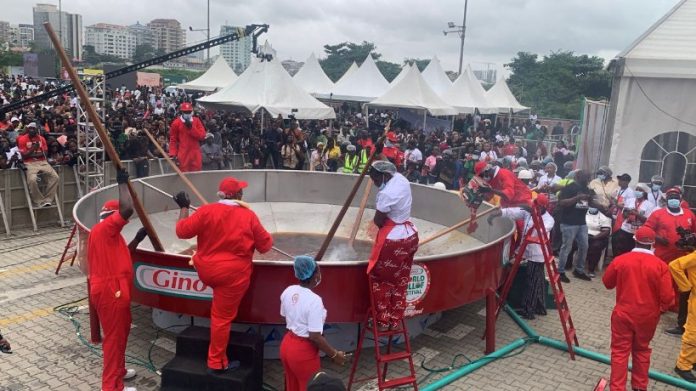
Nigerian celebrity chef Hilda Baci has been officially recognised by Guinness World Records (GWR) for cooking the largest serving of Nigerian-style jollof rice — a weighed total of 8,780 kg (19,356 lb 9 oz) in Lagos. The record was announced by GWR on Monday after the attempt, which took place in partnership with food brand Gino.
Guinness World Records
The mass cook was staged on Victoria Island as part of the Gino World Jollof Festival. Organisers say the attempt used 200 bags of basmati rice and drew thousands of spectators, food lovers, and celebrities to the venue. The partnership with Gino provided sponsorship and logistics for the specially fabricated cooking pot and festival staging.
Baci and her team prepared the dish in a custom-built, six-metre pot with a reported capacity of roughly 22,619 litres. Organisers originally planned a larger quantity but reduced raw rice to 200 bags — about 4,000 kg — because weighing constraints meant the crane and scale could not safely handle a heavier load. The operation reportedly produced more than 16,000 plates, took about nine hours of continuous cooking and consumed about 1,200 kg of gas.
What led to the attempt
The jollof-record bid followed months of planning. Baci and her partners commissioned engineers to design and fabricate the pot, mobilised suppliers for thousands of kilograms of rice, tomato paste, and other ingredients, and coordinated with event and safety crews to manage the crowd and weighing procedure. Punch reports that the pot and logistics required roughly two months of fabrication and careful measurement planning to meet Guinness documentation requirements.
Was this record previously held?
Guinness World Records described the achievement as a “New record: Largest serving of Nigerian style jollof rice”, and its public announcement did not name a previous holder for this exact category — meaning GWR recorded this as a fresh category/benchmark rather than a direct overturn of an earlier listed title. That framing, used by the record body, indicates there was no standing Guinness entry for this precise measure of “largest serving of Nigerian-style jollof rice” before Baci’s attempt.
A quick context check shows that while large-scale rice and stew events (for example, giant paellas and other communal dishes) have been staged worldwide, this particular GWR category for Nigerian-style jollof appears to be newly formalised by Guinness and is therefore being entered into the records for the first time.
Why it matters
The confirmation will amplify international attention on Nigerian food culture and on Baci’s profile as a culinary entrepreneur. The event’s organisers framed the festival both as a celebration of cuisine and as a high-visibility brand activation for Gino and partners; it is also the latest in a string of headline-making feats by Baci, who previously captured global attention with a high-profile cook-a-thon that drew Guinness scrutiny in 2023.
The World Bank has warned that Africa is losing an estimated $200 billion annually due to poor sanitation, a crisis it says is undermining public health, economic growth, and environmental sustainability across the continent.
In its latest report, The Global Sanitation Crisis: Pathways for Urgent Action, released on Tuesday, the Bank noted that inadequate sanitation continues to deprive Africa of up to five per cent of its Gross Domestic Product (GDP). It added that every $1 invested in water and sanitation yields up to $7 in returns, underscoring the economic and social benefits of improved sanitation systems.
Globally, the report revealed that nearly two in five people lack access to safe sanitation, with more than 3.5 billion people affected. The consequences, according to the World Health Organisation (WHO), include preventable diseases such as cholera, diarrhoea, and typhoid, which kill hundreds of thousands of people each year, particularly children under five.
In Africa, the challenge is compounded by rapid urbanisation, widespread poverty, and weak infrastructure. Informal settlements in major cities often lack proper sewage systems, forcing residents to rely on unsafe alternatives that contaminate water sources and fuel the spread of disease.
The World Bank stressed that the crisis also has severe economic implications. Poor sanitation keeps children out of school, reduces adult productivity, and places a heavy burden on healthcare systems. It further warned that escalating climate threats — including flooding, droughts, and rising sea levels — are stretching already fragile sanitation systems, worsening the economic toll.
“By investing in smart and resilient urban sanitation now, countries can turn this vicious cycle into a virtuous one — protecting human health, boosting growth, creating jobs, reducing pollution, and transforming cities,” the report stated.
The Bank highlighted education as another key area impacted by poor sanitation. It cited evidence from India, where sex-specific school latrines increased enrolment among adolescent girls, and from Brazil, where sanitation access correlated with higher years of schooling completed.
Beyond health and education, the report linked resilient sanitation to environmental protection, noting that stronger waste management could cut global methane emissions by up to 10 per cent while improving access to safe drinking water.
The World Bank urged governments, service providers, and communities to act urgently, recommending three priorities:
Policy and funding: Elevate sanitation as a national and local priority.
Infrastructure and resilience: Build inclusive urban sanitation systems capable of withstanding climate shocks.
Innovation and capacity: Invest in data, technology, and workforce development for sustainable service delivery.
It also encouraged circular economy approaches that transform faecal sludge and wastewater into valuable resources for energy, water reuse, and job creation.
“Achieving climate-resilient urban sanitation is possible — but action must start now. Together, governments, businesses, and communities can build sanitation systems that protect people, prosperity, and the planet,” the report concluded.
The Senior Staff Association of Nigerian Universities (SSANU) and the Non-Academic Staff Union of Universities and Allied Institutions (NASU) have issued a seven-day ultimatum to the Federal Government over unresolved welfare demands, threatening a nationwide strike if their grievances remain unaddressed.
In a joint letter signed by SSANU President, Muhammed Ibrahim, the unions faulted what they described as the “unjust disbursement” of earned allowances, the non-payment of withheld salaries, and the delay in implementing a 25/35 per cent salary increment. They also demanded the immediate renegotiation of the 2009 FGN/NASU/SSANU agreements.
The unions recalled that following a June 18, 2025 petition, government officials held talks with them on July 4, during which a Tripartite Committee involving the Ministry of Education, the National Universities Commission and the Joint Action Committee (JAC) was set up to review the distribution of ₦50 billion in earned allowances. According to them, non-teaching staff were largely shortchanged, while workers in Inter-University Centres were excluded entirely.
They added that despite reminders — including a letter dated August 18 — there has been no progress on withheld salaries, arrears of salary increments, or the renegotiation process. While the Federal Government has advanced discussions with the Academic Staff Union of Universities (ASUU), the unions alleged they had been sidelined.
“In light of the persistent unresolved issues and the lack of government responsiveness, we are compelled to serve a formal notice of seven days effective from Monday, September 15, 2025, failing which members of NASU and SSANU will embark on legitimate industrial actions, including strikes, to press home our demands,” the letter read.
SSANU President Ibrahim, in a separate warning last week, said the looming action could cripple the university system. “Ours will not be the ‘mother of all strikes’; it will be the grandfather of all strikes, because when SSANU or NASU strike, you know what it means,” he declared, lamenting the worsening financial and psychological conditions of university workers.
Both unions have long been at odds with the government over welfare and conditions of service, mirroring disputes with ASUU.
Tesla Inc. shares surged after Chief Executive Officer Elon Musk purchased approximately $1 billion worth of stock, a move seen as a strong signal of confidence in the electric vehicle maker’s long-term growth prospects despite market challenges.
According to a regulatory filing released on Monday, Musk acquired the shares on September 12 through a revocable trust. This marks his first open-market purchase of Tesla stock since February 2020, highlighting his renewed financial commitment to the company.
The purchase comes as Tesla’s board reviews an unprecedented compensation plan that could grant Musk stock options valued at around $1 trillion if the company achieves ambitious market capitalization and performance milestones.
Following the disclosure, Tesla’s stock rose 6.2% in early trading and closed at $417.89, pushing the automaker’s year-to-date gains to roughly 4%. The rebound follows a sharp decline earlier in 2025, when shares plunged by as much as 45% by April amid weaker vehicle sales and intensifying competition across the electric vehicle sector.
Musk, who sold more than $20 billion worth of Tesla stock in 2022 to finance his acquisition of Twitter, now X, appears to be reaffirming his commitment to Tesla shareholders at a time when investor sentiment has been under strain.
Tesla Faces Global Headwinds
Despite the positive market reaction, Tesla continues to confront several operational challenges. Global deliveries slipped by 13% in the first half of 2025, according to Cox Automotive, which also reported that the company’s share of the U.S. EV market dropped below 40% in August.
In Europe, Tesla’s sales have also slowed, while exports from its Shanghai plant declined through July and August. Adding further uncertainty, U.S. federal tax incentives for electric vehicle purchases are scheduled to end later this month. Musk has cautioned that the phase-out of subsidies could result in “a few rough quarters” before Tesla’s investments in autonomous driving and humanoid robots begin to yield meaningful revenue streams.
Board Maintains Support for Musk
Tesla’s board has remained steadfast in its support of Musk despite ongoing challenges. Chair Robyn Denholm described him as a “generational leader,” underscoring his role in steering Tesla’s evolution from a carmaker into a diversified technology company.
Denholm also dismissed concerns regarding Musk’s political activities, insisting that his personal views should not be conflated with Tesla’s corporate strategy.
Still, Musk’s recent appearance at a London rally hosted by far-right activist Tommy Robinson sparked criticism in the United Kingdom. His remarks predicting violence were labeled “inflammatory and dangerous” by a spokesperson for Prime Minister Keir Starmer.
Wealth and Market Impact
Musk remains the world’s wealthiest individual, with Bloomberg’s Billionaires Index estimating his net worth at $419 billion. His latest stock acquisition not only strengthens his personal stake in Tesla but also reassures investors that he remains committed to guiding the company through near-term turbulence.
By making a multibillion-dollar purchase, Musk has sent a clear signal of confidence in Tesla’s future within the increasingly competitive global electric vehicle market.
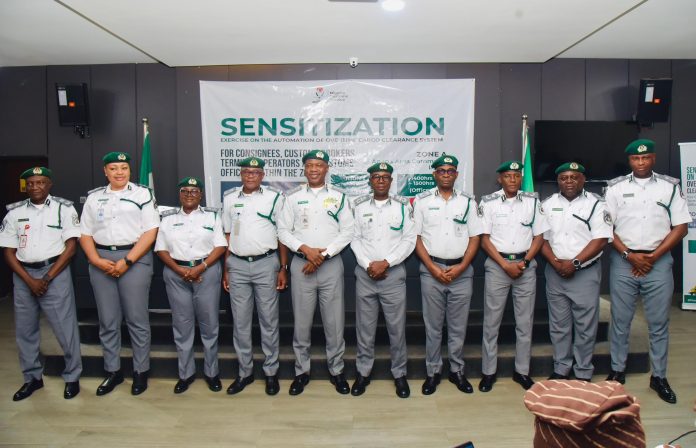
The Nigeria Customs Service (NCS) on Monday, 15 September 2025, introduced an automated system for managing overtime cargoes at Apapa Port. The “Overtime E-Clearance System” aims to reduce congestion, corruption, and speed up cargo releases.
Unveiling the System during a sensitisation exercise in Lagos, the Comptroller-General of Customs, Adewale Adeniyi, said the initiative was designed to exit cargoes the ports more efficiently, while freeing up space for fresh consignments.
According to him, the platform enables consignees to submit and track applications remotely, reducing repeated visits to headquarters and limiting manual interference in clearance processes.
“The system builds on an earlier policy adjustment that extended cargo dwelling periods from 30 to 120 days to give stakeholders more flexibility. The central focus is transparency, integrity, and adherence to the law. We urge stakeholders to test the system and provide feedback ahead of full deployment”, he said.
The Customs boss, however, cautioned against abuse of the new process. He cited a 15-year-old overtime cargo case still under investigation as a warning that loopholes must be closed.
He further warned that deliberate abandonment of cargo to evade duties will attract stricter sanctions and the service’s intelligence units will monitor attempts to hijack the process.
“Under the rollout plan, the zonal office will conduct further sensitisation sessions this week with terminal operators, shipping companies, and other stakeholders before expanding engagement to additional commands. Deployment will follow after feedback and legal queries are addressed”, he explained.
In his remarks, the Zonal Coordinator for Zone A, ACG Mohammed Babandede, praised the CGC for the initiative. “The automation demonstrates not only a commitment to efficiency but also to transparency, digital transformation, and the ease of doing business in Nigeria.”
He urged stakeholders to fully embrace the system, assuring them that Customs would sustain reforms that enhance trade facilitation while safeguarding national revenue.
While terminal operators and shipping lines expressed initial scepticism, they pledged to cooperate if the system delivers measurable reductions in congestion and improvements in turnaround times.