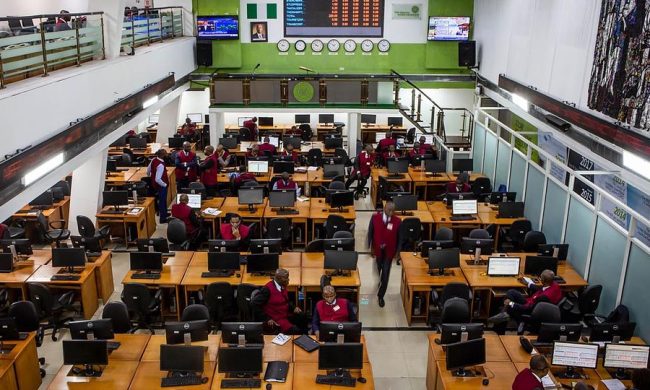
Equity investors on the Nigerian Exchange (NGX) closed Thursday’s trading session in profit territory, with market capitalisation rising by approximately ₦332 billion as financial and consumer stocks continued to anchor market activity ahead of the fourth-quarter earnings season.
The benchmark NGX All-Share Index maintained its upward trajectory, reflecting renewed positioning by investors amid sustained bargain hunting across selected equities. Market performance indicators ended the session higher, underscoring continued optimism among traders despite a notable slowdown in trading volumes.
Data from the exchange showed that the All-Share Index advanced by 520.23 points, representing a 0.35 per cent gain, to close at 150,363.05 points. In tandem, total market capitalisation climbed by ₦331.65 billion, also up 0.35 per cent, settling at ₦95.86 trillion.
Market analysts attributed the sustained rally to selective buying interest, particularly in fundamentally strong stocks that had previously traded at discounted levels. Shares of NESTLE, ELLAH LAKES, UACN, MECURE, and UBA recorded significant demand across multiple sectors of the market.
Despite the positive price movement, overall market activity moderated significantly. Trading statistics revealed a sharp contraction in transaction volumes and values as investor participation thinned compared with previous sessions.
A total of 839.77 million shares valued at ₦32.81 billion were exchanged in 23,211 deals during the session. This represented an 85.83 per cent decline in traded volume and an 84.83 per cent drop in transaction value, while the number of deals slipped by 7.91 per cent.
FIRSTHOLDCO dominated trading activity, accounting for 46.23 per cent of total market volume. It was followed by FCMB Holdings with 9.11 per cent, LASACO Assurance at 5.22 per cent, Access Holdings at 3.55 per cent, and CHAMS at 2.97 per cent.
In terms of value, FIRSTHOLDCO also emerged as the most traded stock, contributing 47.51 per cent of the total value of transactions executed on the exchange, reinforcing its position as the day’s most actively traded equity.
On the gainers’ chart, NESTLE led the rally with a 10.00 per cent price appreciation. GUINNESS followed closely with a 9.98 per cent gain, while ALEX, DAAR Communications, and MECURE rose by 9.76 per cent, 9.20 per cent, and 9.13 per cent respectively. NPF Microfinance Bank also recorded an 8.02 per cent increase, alongside 29 other advancing stocks.
Conversely, twenty-six equities closed in negative territory. STANBIC IBTC Holdings topped the losers’ table after shedding 9.33 per cent of its share price. LASACO Assurance declined by 9.09 per cent, while AFRIPRUD, AUSTINLAZ, STERLINGNG, and REDSTAREX recorded losses of 8.82 per cent, 8.33 per cent, 6.12 per cent, and 5.43 per cent respectively.
Overall market breadth remained positive, with 35 gainers outweighing 26 decliners, reflecting a moderately bullish sentiment.
Sectoral performance was mixed. The Consumer Goods sector posted the strongest advance with a 1.23 per cent gain, followed by the Banking index, which rose by 0.56 per cent. The Oil and Gas sector edged higher by 0.05 per cent. Meanwhile, the Insurance sector declined by 0.23 per cent, while the Industrial and Commodity indices closed flat.
PalmPay, Nigeria’s leading digital banking platform, has announced the launch of its ₦400 million festive rewards campaign, designed to reward users with cash prizes and fully sponsored international travel experiences for everyday transactions on the PalmPay app.
The campaign will run from December 17, 2025, to January 8, 2026. The campaign is designed to reward everyday transactions with extraordinary experiences. It runs alongside PalmPay’s Purple December brand campaign, which focuses on wrapping up the company’s key brand and community initiatives for the year.
At the centre of the rewards campaign is the PalmPay World Travel Carnival, an interactive card collection experience that allows users to earn city cards by completing transactions on the app. Users are required to collect five city cards – London, New York, Dubai, Sydney, and Cape Town and combine them into a World Card, which unlocks a share of the prize pool.
The more World Cards a user creates, the larger their share of the cash rewards. Any extra uncombined cards can be swapped with friends and other PalmPay users to help complete additional World Cards.
Beyond cash rewards, the Carnival also offers Free Global Trips. In each round, the top two users with the highest number of eligible transactions (₦100 and above) and at least one World Card will win an all-expense-paid international trip.
The travel grand prize covers:
Visa fees
Round-trip international airfare
5-day, 4-night hotel accommodation
Side attraction
Meal expenses
Airport pick-up and drop-off
All transportation for scheduled tour activities during the trip
Winners will be determined through a transparent leaderboard system, with prizes credited automatically at the end of each round on December 25, December 31, and January 8.
Participation is simple:
Complete tasks on the PalmPay app, such as Airtime, Data, Transfers, and other specific transactions listed in the app, to earn cards.
Collect all five city cards.
Swap cards with friends to complete your collection.
Combine cards to form a World Card and earn cash rewards.
Perform more transactions to climb the leaderboard for a chance at the global trip prize.
To ensure fairness, PalmPay has instituted strict rules: no cheating, bots, fake accounts, or manipulation. Any violations may lead to disqualification or account bans. Additionally, the Free Travel Prize is limited to one per user throughout the campaign.
Speaking on the launch, Femi Hanson, Head of Marketing & Communication, “This festive rewards campaign is about turning everyday banking into meaningful value for our users. With the World Travel Carnival as the headline activation, we are reinforcing PalmPay’s promise of being the smarter way to bank—where smart financial decisions unlock bigger opportunities.” For more information, download PalmPay
Welcome back, my people! Another Thursday, another reason to gather your mind, grab a seat, take a deep breath, and gist like we always do. As usual, we’re going straight into the matter, no long introduction, because Nigeria itself is already doing too much.
December is not just a month in Nigeria. December is a phenomenon. A full-blown experience. A season that arrives with loud music, louder expectations, and an attitude of “if you like, keep up.” The moment the calendar flips, the atmosphere changes. Even if your account balance is still stuck in survival mode, December does not ask questions. It simply enters.
Suddenly, everywhere is busy. Traffic that was already bad decides to become personal. Places you’ve never heard of are suddenly “fully booked till next year.” Weddings multiply like loaves and fishes. Office sign-outs turn into mini carnivals. Everybody is wearing matching outfits, taking pictures under fairy lights, and saying things like “December no be by force” while still forcing themselves to attend events they cannot afford.
December is joy with pressure on top.
It is the month where happiness is loud and stress is silent. People are laughing, hugging, spraying money, dancing in videos—while their minds are quietly doing calculations. Transport fare here. New clothes there. Gifts. Contributions. Fuel. Food. “Just small enjoyment.” By the time you add everything together, you begin to wonder if December came with hidden school fees.
And yet, Nigerians will still smile.
Because December also comes with reflection. This is the month that forces you to look back at January plans with honesty. Some goals were achieved. Some were adjusted. Some completely refused to cooperate. You start remembering the version of yourself that entered the year hopeful and ambitious, and you nod slowly like, “You tried.” Not everything worked out, but you survived—and in this country, survival is not a small achievement.
Social media, of course, does not help.
December timelines are not for the weak. Everybody is doing something. Trips. Engagements. New cars. Family photos. “God did.” “What God cannot do does not exist.” If you’re not careful, you’ll start asking unnecessary questions like, “Am I the only one still trying?” Meanwhile, you forget that social media is a highlight reel, not a full documentary. What you see is joy with editing. What you don’t see is effort, debt, exhaustion, and prayer behind the scenes.
Still, December is beautiful in its own chaotic way.
There is generosity in the air. Food moves faster. People share more. Someone always remembers to send something home, host people, or check in. Despite inflation, despite stress, despite everything, Nigerians still find a way to show up for each other. It might not be perfect, but it is heartfelt.
December also exposes life’s layers.
You can be grateful and tired. Excited and anxious. Celebrating and still healing. Ending the year strong in some areas and barely holding on in others. And all of it can exist at the same time. December reminds us that life is not one straight emotion; it’s a mix of laughter, lessons, disappointment, hope, and small wins that don’t always make it online.
Educationally speaking—yes, let’s be serious small—December teaches budgeting like no finance class ever could. You learn the importance of planning, prioritizing, and saying “I’ll pass” without shame. It teaches boundaries. It teaches contentment. It teaches that enjoyment is sweet, but peace of mind is sweeter.
And as the year winds down, maybe the goal isn’t to have everything figured out. Maybe the goal is to rest when you can, laugh when it comes naturally, spend wisely, and carry only what matters into the new year. Not every win needs noise. Not every loss needs explanation. Not every pressure needs your participation.
December will always come with its music, traffic, parties, reflections, and drama. Take what serves you. Leave what doesn’t. Celebrate within your capacity. Reflect without self-judgment. And remember, making it to December is already proof that you did something right.
Another Thursday, another truth. Same time next week, same seat, same vibe, same Chronicles.
You know, in a world where economic curves can throw even the sharpest business minds off balance—think FX swings and those stubborn interest rates—securing your retirement feels more like a strategic boardroom move than a distant dream. Nigeria’s pension scene in 2025?
It’s been a real standout, with the industry clocking an average return of 16.81% across all funds through September. That’s no small feat amid the volatility. For professionals like you, whether you’re calling shots in the C-suite or steering a mid-sized firm, picking the right Pension Fund Administrator (PFA) isn’t just smart; it’s essential for that long-game financial edge.
But here’s the thing: not all PFAs are created equal. Some are dialing up the growth in high-risk buckets, while others play it steady for those nearing retirement. We’re talking about the four main RSA funds here—Fund I for the bold risk-takers, Fund II as the all-rounder, Fund III for moderate plays, and Fund IV keeping things calm for retirees. Overall, Fund I led the pack at 21.52%, but the real story is in the PFAs that balanced it all. I’ve crunched the numbers from January to September 2025, ranking the top 10 by their average returns across these funds. Let’s break it down, starting from the solid contenders and building up to the champions. Who knows, this might spark that “aha” moment for your next portfolio tweak.
10. Veritas Glanvills Pensions Limited
Kicking off our list is Veritas Glanvills, with an average return of 16.79%—just a hair below the industry benchmark, but impressive nonetheless. They’ve shown real grit, especially in Fund I at 22.83% (unit price jumping from N2.4665 to N3.0297). Fund II wasn’t far behind at 16.90%, while Funds III and IV held firm at 14.98% and 12.43%. If you’re an executive eyeing consistent performance without wild swings, this one’s like that reliable advisor who always delivers on quarterly reports. Honestly, in a year marked by market jitters, their approach feels like a breath of fresh air—focused on bonds and equities that weather the storm.
9. OAK Pensions Limited
Tied closely at 16.95% average, OAK Pensions edges in with a nod to smart risk management. Their Fund I hit 22.69% (from N2.3054 to N2.8286), and Fund III surprised with 16.08%—higher than many peers. Funds II and IV? Solid at 16.78% and 12.25%. Picture this: it’s like navigating Lagos traffic during rainy season; you need that mix of patience and quick pivots. OAK’s data-driven bets on fixed income and select stocks paid off, making them a go-to for business owners who value analytics over hype. Ever wondered why some firms thrive while others stall? It’s often that quiet discipline.
8. Stanbic IBTC Pensions Managers Limited
Also at 16.95%, Stanbic IBTC brings banking pedigree to the table, averaging out with a boost from Fund II’s 19.55% (unit price soaring from N7.7191 to N9.2284). Fund I followed at 22.46%, while III and IV stayed conservative at 13.79% and 12.01%. As part of the Stanbic group, they leverage those deep market insights—think global trends filtering into local strategies. For C-suite folks juggling international deals, this PFA feels familiar, like extending your corporate banking relationship into retirement planning. A mild contradiction here: high returns don’t always mean high drama; sometimes it’s just solid execution.
7. Guaranty Trust Pension Managers
Stepping up to 17.06%, Guaranty Trust (now part of the GTCO family) delivers with Fund III leading their charge at 16.58% (from N2.27 to N2.6463). Fund II hit 18.01%, Fund I 20.52%, and Fund IV a respectable 13.13%. They’re the kind of performer that reminds you of a well-oiled supply chain—efficient, scalable in its own way, but without overpromising. If you’re a decision-maker in manufacturing or finance, their tie-ins with GTBank’s ecosystem could streamline things. You know what? In Nigeria’s evolving economy, with AfCFTA opening doors, PFAs like this one position you for cross-border growth without the headaches.
6. Access ARM
At 17.11% average, Access ARM shines with Fund II’s 20.01% (from N7.3445 to N8.8143) and Fund IV’s 14.00%—higher than the category average. Fund I added 19.05%, Fund III 15.40%. It’s a balanced act, much like merging banks in a merger-heavy year; they blend aggression in growth funds with caution elsewhere. For executives in mergers and acquisitions, this mirrors your world—calculated risks yielding rewards. A quick tangent: with Nigeria’s tech boom echoing Silicon Valley vibes, PFAs investing in emerging sectors like fintech could be the next big play, and Access ARM seems tuned in.
5. Leadway Pensure PFA Limited
Hitting 17.17%, Leadway stands out with Fund I at 21.15% (N2.406 to N2.9149) and Fund II at 20.11%. Funds III and IV? 14.82% and 12.60%, keeping the retirees happy. They’re like that insurance giant extending its reach—Leadway’s roots in assurance translate to pension confidence. Business owners, if you’re dealing with employee retention amid talent wars, a strong PFA like this boosts your HR pitch. Rhetorically speaking, isn’t it refreshing when a firm exceeds expectations without fanfare? Their portfolio management screams quiet competence.
4. FCMB Pensions Limited
Now we’re talking serious momentum at 18.81% average. FCMB crushed Fund I with 24.39% (N2.1443 to N2.6672) and Fund II at 21.39%. Fund III added 16.22%, Fund IV 13.23%. It’s the kind of performance that evokes a bull market rally, even in cautious times. For those in retail banking or consumer goods, FCMB’s group synergies—think Lagos’ bustling markets—fuel this edge. Ever feel like the economy’s headwinds are just opportunities in disguise? FCMB’s results suggest yes, especially with their growth-oriented bets paying dividends.
3. Crusader Sterling Pensions Limited
Bronze goes to Crusader Sterling at 19.00%, driven by Fund II’s 20.68% (N9.9250 to N11.9774) and Fund I’s 23.85%. Fund III hit 16.93%, Fund IV 14.56%—one of the best for retirees. They’re like a sterling engine, efficient and enduring, with exposure to assets that outpace inflation. Executives in energy or infrastructure might appreciate their resilience, akin to Nigeria’s push for sustainable power. A subtle digression: as oil prices fluctuate with global shifts, diversifying into pensions like this hedges your personal bets too.
2. Trustfund Pensions Plc
Silver medal for Trustfund at 19.38%, boasting the industry’s highest Fund I return at 28.88% (N2.2506 to N2.9006). Fund II followed at 20.21%, with III and IV at 14.56% and 13.86%. It’s a masterclass in optimizing risk, like a fund manager spotting gems in emerging markets. For corporate strategists, this PFA’s stability in conservative funds while going big on growth is gold. Honestly, in a season where elections loom and policies shift, their adaptability stands out—much like pivoting business models mid-year.
1. Pensions Alliance Limited
Top spot? Pensions Alliance takes it with a whopping 20.83% average—the highest overall. Fund II led at 23.63% (N8.2954 to N10.2555), Fund I close at 28.71%, Fund III 17.56%, and Fund IV 13.41%. They’re the pinnacle, reflecting sharp asset allocation in a tricky landscape. Think of them as the CEO who turns challenges into triumphs. For high-net-worth business owners, this is your match—reliable, high-yield, and aligned with long-term visions. What if your pension could mirror your career highs? Pensions Alliance makes that possible.
Beyond the overall rankings, let’s touch on category standouts, because tailoring to your risk profile matters. In Fund I, Trustfund and Pensions Alliance dominated at 28.88% and 28.71%. Fund II saw Pensions Alliance at 23.63%, FCMB at 21.39%. For Fund III, Pensions Alliance again at 17.56%, Crusader at 16.93%. And retirees, check Nigerian Police Force Pensions at 15.09% in Fund IV—though not in our top 10 overall, it’s a niche winner.
Wrapping this up, these figures underscore why reviewing your PFA annually is crucial, especially with tools like PenCom’s portal for switches. Match your age and tolerance—younger pros might lean Fund I, while veterans stick to IV. In Nigeria’s dynamic economy, with trends like digital banking and green energy rising, the right PFA isn’t just about returns; it’s about peace of mind. Curious about your own setup? It might be time to chat with a financial advisor. After all, your future self will thank you.
The Economic and Financial Crimes Commission (EFCC) has arrested five suspects over the alleged possession of $3.43 million and €280,000 in counterfeit foreign currency in Osun and Lagos States.
The arrests were carried out by operatives of the EFCC’s Ibadan Zonal Directorate during intelligence-led operations at locations described as shrines, the commission disclosed in a statement posted on its official X handle on Wednesday.
The suspects are also being investigated for their alleged involvement in the defrauding of a victim, Halima Sanni, of N26.55 million.
According to the EFCC, the arrests followed weeks of surveillance and actionable intelligence on the suspects’ activities. Those arrested were identified as Akingbola Omotayo, Adeola Funsho Ogunrinde, Yahaya Amodu, Kubratu Babalola Olaitan, and Familola Sunday Olaitan, all described as herbalists.
They were apprehended on December 7 and 8, 2025, at their respective shrines in Osun and Lagos States.
Preliminary investigations revealed that the suspects allegedly specialised in defrauding unsuspecting victims under the guise of offering spiritual cleansing and remedies for various ailments. The commission said the syndicate claimed the counterfeit foreign notes required spiritual purification before they could be used.
“Operatives of the Ibadan Zonal Directorate of the Economic and Financial Crimes Commission, EFCC, have uncovered huge counterfeit foreign notes to the tune of $3,430,000 (Three Million, Four Hundred and Thirty Thousand United States Dollars) and €280,000 (Two Hundred and Eighty Thousand Euros) in possession of a five-member syndicate arrested for allegedly swindling one Halima Sanni the sum of N26,550,000 (Twenty-Six Million, Five Hundred and Fifty Thousand Naira),” the EFCC said.
In addition to the counterfeit currency, operatives recovered two exotic vehicles and several mobile phones from the suspects.
The commission said investigations were ongoing and that the suspects would be charged to court upon conclusion of the probe.
The EFCC is one of Nigeria’s leading anti-graft agencies. In its one-year performance report released in October 2025, the commission said it recovered N364.5 billion, $326.5 million and other foreign currencies and assets, while securing 4,111 convictions—representing a 53.7 per cent increase from the previous year.
The report also showed that the agency received 15,724 petitions, investigated 12,928 cases and filed 5,081 matters in court, alongside the seizure of properties, vehicles, cryptocurrency wallets and other assets linked to economic and financial crimes.
Crude oil prices remained capped below the $60-per-barrel threshold in global markets as investors weighed persistent supply-side strength against signs of fragile demand, despite simmering geopolitical tensions involving major oil-producing nations.
Although prices staged a modest rebound from recent lows, the recovery lacked momentum after crude briefly slid to the $58 level earlier in the week, triggered largely by renewed diplomatic and trade frictions between the United States and Venezuela.
Market participants continued to lock in profits while reassessing the broader outlook for energy markets, amid mounting evidence that global supply remains ample and consumption growth is losing steam. These dynamics have blunted the impact of geopolitical flashpoints that would typically inject a stronger risk premium into prices.
As of the latest trading session, Brent crude futures were priced at $59.87 per barrel, marking a decline of approximately 0.5% from the previous close of $60.17. Meanwhile, the US benchmark West Texas Intermediate (WTI) crude also slipped by about 0.5%, trading at $56.24 per barrel, down from $56.52 in the prior session.
Fresh data from the US Energy Information Administration (EIA) reinforced concerns around demand softness in the world’s largest oil-consuming economy. According to the agency, commercial crude oil inventories declined by roughly 1.3 million barrels during the most recent reporting week. However, the drawdown fell short of market expectations, which had anticipated a steeper decline of around 2.4 million barrels.
At the same time, gasoline inventories surged by approximately 4.8 million barrels, a development that raised questions about downstream demand strength. Average daily crude oil production in the United States also edged higher, increasing by around 10,000 barrels per day.
The combination of rising refined fuel stockpiles, steady-to-higher US output, and the absence of immediate supply disruptions from key producing regions has reinforced the perception that global oil markets remain well supplied.
Even the ongoing war between Russia and Ukraine, along with the continuation of Western sanctions on Russian energy exports, has failed to significantly influence price direction. Markets appear to be operating under the assumption that Russian crude flows will continue largely uninterrupted, limiting any meaningful geopolitical risk premium.
Similarly, escalating tensions between Washington and Caracas have not translated into sustained price gains. So far, there has been no concrete evidence of major supply disruptions stemming from US actions against Venezuela’s oil trade.
US President Donald Trump on Wednesday defended his administration’s decision to enforce a naval blockade targeting Venezuela, framing the move as a necessary measure to safeguard American interests and curb unauthorized maritime activity.
“We’re not gonna let anybody going through that shouldn’t be going through. They took all of our energy rights—they took all of our oil from not that long ago … they illegally took it,” Trump said while addressing reporters.
His comments followed an earlier announcement declaring a “total and complete blockade” of all sanctioned oil tankers entering or leaving Venezuela. Trump also described the government of President Nicolas Maduro as a “foreign terrorist organization,” intensifying diplomatic rhetoric.
The US president characterized the blockade as a response to what he called the unlawful seizure of American energy assets, reiterating long-standing grievances related to Venezuela’s oil industry.
In response to the escalating situation, President Nicolas Maduro issued an urgent appeal to neighboring Colombia, calling for military solidarity amid what he described as growing external pressure.
According to estimates from Rystad Energy, Venezuela currently produces approximately 1.1 million barrels of crude oil per day. While any major disruption could tighten supplies, analysts note that Venezuela’s output represents a relatively modest share of the global oil market. However, more than 67% of the country’s production consists of heavy crude, which is more difficult to replace in the short term.
For now, investor attention remains firmly fixed on demand indicators and inventory data, with geopolitical uncertainty continuing to take a back seat in shaping near-term price movements.
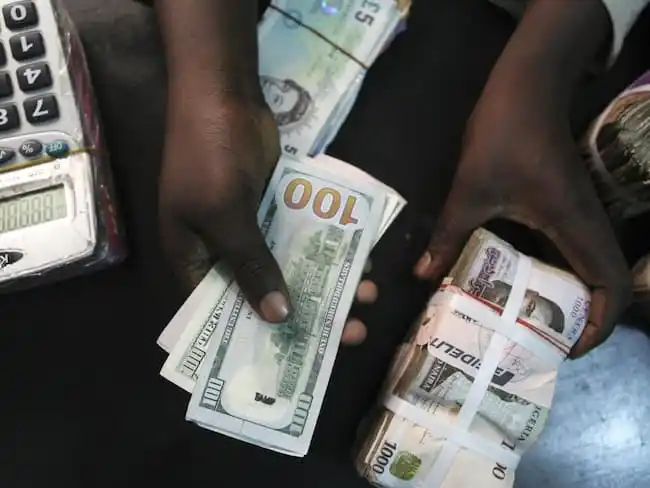
The exchange rate between the Naira and the US dollar, according to the data released on the FMDQ Security Exchange, the official forex trading portal, showed that the naira closed at 1480.00 per $1 on Thursday, December 18th , 2025. The naira traded as high as 1453.00 to the dollar at the investors and exporters (I&E) window on Wednesday.
Dollar to naira exchange rate today black market (Aboki dollar rate):
The exchange rate for a dollar to naira at Lagos Parallel Market (Black Market) players sell a dollar for ₦1487 and buy at ₦1480 on Wednesday 17th December, 2025, according to sources at Bureau De Change (BDC).
Please note that the Central Bank of Nigeria (CBN) does not recognize the parallel market (black market), as it has directed individuals who want to engage in Forex to approach their respective banks.
Dollar to Naira Black Market Rate Today
Dollar to Naira (USD to NGN)
Black Market Exchange Rate Today
Selling Rate
₦1487
Buying Rate
₦1480
Dollar to Naira CBN Rate Today
Dollar to Naira (USD to NGN)
CBN Rate Today
Highest Rate
₦1460
Lowest Rate
₦1453
Please note that the rates you buy or sell forex may be different from what is captured in this article because prices vary.
Nigeria’s fiscal position came under renewed scrutiny on Wednesday following revelations that debt servicing and personnel costs alone exceeded the Federal Government’s total revenue between January and July 2025.
Details contained in the 2026–2028 Medium-Term Expenditure Framework and Fiscal Strategy Paper (MTEF-FSP), published by the Budget Office of the Federation, show that the Federal Government generated N13.67 trillion in aggregate revenue during the seven-month period. This figure fell significantly short of the pro rata revenue benchmark of N23.85 trillion, leaving a deficit of N10.19 trillion, or 42.7 per cent.
The data contrasts sharply with earlier public assurances by President Bola Tinubu, who in September declared that Nigeria had met its 2025 revenue target ahead of schedule and would no longer need to rely on borrowing to finance its budget.
While addressing members of The Buhari Organisation at the Presidential Villa, Abuja, the President attributed the claimed improvement to gains from non-oil revenue reforms. “Nigeria is not borrowing. We met our revenue target for the year by August,” Tinubu told the delegation, which included prominent figures of the ruling All Progressives Congress.
However, figures contained in the MTEF report paint a different picture, with the revenue shortfall largely driven by underperformance in the oil sector. Oil receipts for the period stood at N4.64 trillion, far below the N12.25 trillion pro rata target, representing a shortfall of N7.62 trillion or 62.2 per cent.
Dividends from government-linked entities such as Nigeria Liquefied Natural Gas and development finance institutions also missed expectations, generating N104.64 billion against a projected N428.71 billion.
Some non-oil revenue lines, however, showed relative strength. Company Income Tax collections reached N2.54 trillion, marginally exceeding the pro rata estimate of N2.49 trillion. Value Added Tax also outperformed projections, with the Federal Government’s share rising to N630.10 billion compared with a target of N567.54 billion.
Despite these gains, customs revenues declined sharply to N988.29 billion, falling 39.1 per cent below the expected N1.62 trillion. Federation Account levies dropped by more than 70 per cent, while inflows from oil price royalties and the Nigeria Police Trust Fund levy were either negligible or absent.
The MTEF report noted that while VAT and electronic money transfer levies provided limited relief, they were insufficient to counteract the deep revenue losses from oil and other underperforming streams. It warned that Nigeria remains highly exposed to oil-sector volatility despite gradual improvements in non-oil revenue mobilisation.
On the expenditure side, the Federal Government spent N9.81 trillion servicing domestic and external debts within the seven-month period. When combined with personnel costs of N4.51 trillion across ministries, departments, agencies, and government-owned enterprises, total spending on debt and wages reached N14.32 trillion.
This figure exceeded total revenue for the period, meaning that debt servicing and salaries alone accounted for approximately 105 per cent of government income. Debt servicing by itself consumed nearly 72 per cent of aggregate revenue, underscoring the strain repayments are placing on public finances.
While total expenditure of N20.40 trillion fell below the pro rata target of N32.08 trillion, recurrent spending largely remained on track. Actual recurrent expenditure was only 3.7 per cent below projections, whereas capital expenditure experienced severe cuts.
Capital spending for the period amounted to N3.60 trillion, compared with a prorated target of N13.67 trillion, representing a shortfall of nearly 74 per cent. Ministries, departments, and agencies received just N834.80 billion out of a projected N10.81 trillion for capital projects.
The Budget Office attributed the weak capital outturn partly to the extension of the 2024 budget, which remains in force until December 2025 following approval by the National Assembly. As a result, a portion of last year’s capital vote—estimated at N2.23 trillion—is still being implemented in 2025, limiting fresh releases under the current budget.
The report also recalled that Nigeria spent N13.12 trillion on debt servicing in 2024 alone, equivalent to 77.5 per cent of revenue, warning that high debt obligations continue to crowd out investment in critical sectors such as health, education, and infrastructure.
In a related development, President Tinubu has asked the National Assembly to pass the Appropriation Repeal and Re-enactment Bill 2 of 2024, proposing a total expenditure of N43.56 trillion for the 2025 fiscal year. According to the President, the move is aimed at ending the practice of running overlapping budgets and improving capital budget performance.
The Joint Admissions and Matriculation Board (JAMB) has commenced a nationwide accreditation exercise that will determine which Computer-Based Test (CBT) centres will be cleared to conduct the 2026 Unified Tertiary Matriculation Examination (UTME), with a total of 1,039 centres expected to be approved.
The Registrar of the examination body, Professor Is’haq Oloyede, disclosed this development on Wednesday during an inspection tour of CBT facilities in Ilorin, Kwara State. According to him, the exercise forms part of JAMB’s annual quality assurance process aimed at preserving the integrity of the country’s tertiary admission examinations.
Professor Oloyede explained that no fewer than 52 accreditation teams had been deployed across the federation to either revalidate existing CBT centres or withdraw approval from facilities that no longer meet the board’s operational and ethical benchmarks.
He stressed that accreditation is not permanent and that centres approved in previous years must undergo fresh evaluations to retain their status. “Approval is not transferable from one year to another. A centre that qualified last year must still prove it is fit this year,” the registrar stated.
Providing an update on the exercise, Oloyede described the process as largely successful so far, noting that only a handful of previously sanctioned centres had attempted to re-enter the system under different identities.
He revealed that some centres penalised for examination malpractice in previous UTME exercises had attempted to rebrand or relocate. However, he assured that strengthened inter-agency collaboration had significantly reduced such risks.
According to him, JAMB has intensified its partnership with the Corporate Affairs Commission (CAC) to block individuals associated with blacklisted CBT centres from resurfacing elsewhere. “Once you are listed as a director of a failed or delisted centre, you cannot simply open another one elsewhere. We now have access to detailed records, including National Identification Numbers, to enforce this,” he said.
The registrar further disclosed that invigilators, supervisors, and technical staff previously implicated in examination malpractice have also been permanently barred from participating in future UTME exercises.
“All such individuals have their NINs flagged in our system. Any centre that attempts to engage them automatically disqualifies itself,” Oloyede warned.
In a further clampdown, JAMB has also permanently disabled computer systems previously used by centres removed from its approved list. Oloyede explained that such devices remain barred from accessing JAMB’s examination platform, even if resold to other operators.
“Once a system is linked to a delisted centre, it is blacklisted permanently. It cannot be recycled into another centre under any circumstances,” he said.
He added that the board had uncovered a few compliance breaches during the ongoing exercise and had invited security agencies to investigate. According to him, such violations constitute not only infractions against JAMB regulations but also breaches of Nigerian law.
Speaking on the technical requirements for accreditation, the Chief Technical Adviser to the Kwara State accreditation team, Professor Veronica Mejabi, explained that centres are assessed based on both infrastructural and operational standards.
She noted that the most critical requirement is adherence to JAMB’s prescribed network architecture, which ensures seamless connectivity and rapid fault resolution during examinations.
Other mandatory provisions include reliable alternative power sources such as generators and inverters, while soft requirements cover candidate waiting areas, sufficient toilet facilities, and functional CCTV surveillance systems.
Also speaking during the inspection, the Vice-Chancellor of the University of Ilorin, Professor Wahab Egbewole (SAN), who headed one of the validation teams, issued a stern warning to prospective UTME candidates.
“Examination malpractice is no longer worth the risk. If you cheat, you will be detected, and the consequences are final,” he cautioned.
On December 16, the Central Bank of Nigeria (CBN) revoked the operating licences of Aso Savings and Loans Plc and Union Homes Savings and Loans Plc, bringing to an abrupt end the operations of two mortgage institutions it said had failed to meet minimum regulatory requirements.
In a circular announcing the decision, the apex bank stated that both lenders were critically undercapitalised and had fallen short of the minimum paid-up share capital required to retain their licenses. Their capital adequacy ratios, the CBN added, were far below the prescribed threshold.
In a report by BusinessDay, for Aso Savings, the timing of the collapse stunned many investors. Only weeks earlier, the bank’s stock had delivered one of the strongest rallies on the Nigerian Exchange this year. Between October 21 and November 3, the share price jumped by 114 per cent, rising from 50 kobo to N1.07, placing the lender among the few triple-digit gainers on a year-to-date basis.
That surge has now been completely erased. With the revocation of its licence, the bank’s shares have been permanently suspended from trading, effectively wiping out its estimated N15.8 billion market capitalisation.
A balance sheet already broken
A closer look at Aso Savings’ unaudited nine-month results for 2025 shows that the collapse had long been in the making.
In the first nine months of 2025, the bank reported a net loss of N400 million, reversing a profit of N230.5 million recorded in the same period of 2024. But the income statement masked a far deeper crisis evident on the balance sheet.
By September 2025, customer deposits stood at N23.9 billion, almost equal to the bank’s gross loan book of N23.6 billion. More alarming was the quality of those loans. The lender had set aside N13.9 billion as provisions for credit losses, a figure that points to widespread impairment across its loan portfolio.
Liquidity was virtually non-existent. Cash at hand amounted to just N3.3 million, while net cash and bank balances were negative, reflecting overdrafts and obligations to other financial institutions. In effect, the bank had no meaningful liquidity buffer.
Although management reduced negative net assets from N62.8 billion at the start of the year to N51.6 billion by September, the improvement offered little reassurance. Shareholders’ funds remained deeply in deficit at N51.6 billion, underscoring the extent to which accumulated losses had eroded equity.
The CBN’s action raises a stark question for Aso Savings’ roughly 8,500 shareholders.
In bank liquidations, the hierarchy of claims is clear and unforgiving. Depositors are prioritised, followed by other creditors. Shareholders rank last and only receive any value if assets exceed liabilities.
As of September 30, 2025, total assets stood at N26.6 billion, against total liabilities of N78.2 billion, leaving a negative net asset position of N51.6 billion. Even if all assets were sold at book value, proceeds would still fall tens of billions of naira short of what the bank owed.
In practical terms, shareholders will receive nothing. Equity has been completely wiped out.
There may also be further regulatory scrutiny of major investors. Under the BOFIA and NDIC Acts, regulators can pursue controlling shareholders if their actions are found to have contributed to a bank’s failure. Aso Savings’ largest shareholder, Olatunde Ayeni, who owns approximately 24.8 percent of the bank, could face claims depending on the outcome of regulatory investigations.
For depositors, protection is clearer but limited. The Nigeria Deposit Insurance Corporation (NDIC) is expected to step in to pay insured deposits of up to N2 million per depositor.
Amounts above that threshold will depend on recoveries from the liquidation of the bank’s assets. With depositor claims nearing N24 billion and assets far below liabilities, full recovery is unlikely. Many depositors should brace for significant losses on balances exceeding the insured limit.
The fall of Aso Savings is a sobering reminder that sharp stock market rallies can mask deep structural weaknesses—and that when a bank’s fundamentals finally give way, the destruction of value can be swift and total.
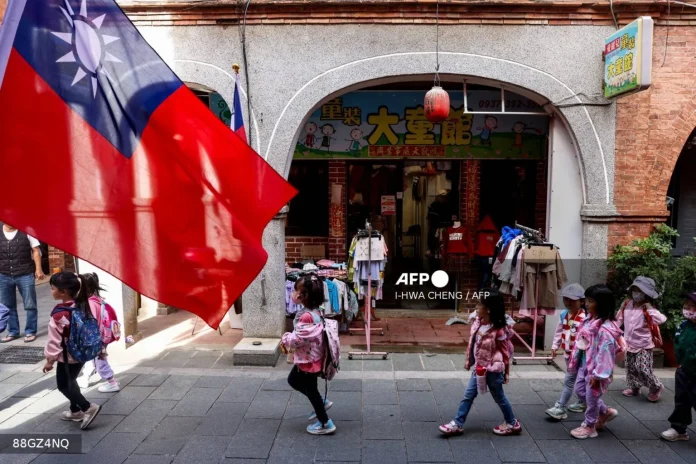
The United States has approved an arms sale worth $11 billion to Taiwan, Taipei announced on Thursday, in one of the largest weapons packages ever offered to the self-governed island—a move that has triggered a strong backlash from China.
Although Washington remains Taiwan’s principal arms supplier, recent remarks by US President Donald Trump had raised questions over America’s long-term commitment to the island’s defence. Nonetheless, the latest approval signals a continued security partnership at a time of heightened regional tension.
The proposed sale, which still requires approval from the US Congress, would be the second arms package authorised since Trump returned to office in January, following a $330 million sale of spare parts approved in November.
According to Taiwan’s Ministry of Foreign Affairs, the package includes High Mobility Artillery Rocket Systems (HIMARS), howitzers, anti-tank missiles, drones and other military equipment.
“This is the second arms sale to Taiwan announced during President Trump’s second term, once again demonstrating the United States’ firm commitment to Taiwan’s security,” the ministry said in a statement.
Beijing reacted swiftly, condemning the sale and warning of consequences.
“China urges the United States to abide by the one-China principle and immediately stop the dangerous actions of arming Taiwan,” Chinese Foreign Ministry spokesman Guo Jiakun told reporters. He added that Beijing would take “resolute and forceful measures” to safeguard its sovereignty and territorial integrity.
China considers Taiwan part of its territory under the one-China policy and has repeatedly threatened to use force to bring the island under its control if necessary.
If completed, the deal would rank among the largest US arms sales to Taiwan, comparable to the $18 billion package authorised under former president George W. Bush in 2001, which was later reduced after negotiations. Over his eight years in office, Bush approved weapons sales to Taiwan worth $15.6 billion.
During Trump’s first term, Washington approved about $10 billion in arms sales to Taipei, including an $8 billion deal for fighter jets.
The latest package is widely expected to receive Congressional approval, given strong bipartisan support in the US for Taiwan’s defence.
While Taiwan maintains a domestic defence industry, it remains heavily reliant on US military support and would be significantly outmatched in any direct conflict with China.
In a statement, Taiwan’s Ministry of National Defence said the sale underscored Washington’s continued support in helping the island “rapidly build robust deterrence capabilities”.
President Lai Ching-te’s administration has pledged to increase defence spending to more than three per cent of gross domestic product next year, with a target of five per cent by 2030, amid mounting pressure from Washington.
The government is also seeking up to NT$1 trillion in special funding to strengthen air defence systems and boost ammunition production and storage, proposals that must still be approved by Taiwan’s opposition-controlled parliament.
China has intensified military activities around Taiwan in recent years, deploying aircraft and naval vessels near the island almost daily in what analysts describe as “grey-zone” operations—coercive actions that fall short of open warfare.
Taiwan’s defence ministry said 40 Chinese military aircraft, including fighter jets, helicopters and drones, along with eight naval vessels, were detected around the island within a 24-hour period ending early Thursday.
Earlier in the week, Taipei also reported that China’s newest aircraft carrier, the Fujian, sailed through the Taiwan Strait, further heightening tensions in the region.
The Joint Admissions and Matriculation Board (JAMB) has announced plans to accredit 1,039 Computer-Based Test (CBT) centres nationwide for the 2026 Unified Tertiary Matriculation Examination (UTME).
The Registrar of JAMB, Prof. Is’haq Oloyede, disclosed this on Wednesday in Ilorin, Kwara State, during an ongoing accreditation tour of CBT centres. He said 52 examination teams had been deployed across the country to re-accredit centres and disqualify those that fail to meet the board’s standards.
Oloyede explained that the annual accreditation exercise was critical to ensuring strict compliance with established requirements, stressing that previous approval did not guarantee continued eligibility.
“The fact that you qualified last year does not mean you qualify this year,” he said.
Describing the process as “so far so good,” the registrar noted that only a few centres previously implicated in examination malpractice had attempted to resurface under new guises.
“Some centres that were implicated in examination malpractice last year—not in Kwara State, though—have repackaged themselves this year, moving from one centre to another,” he said.
He disclosed that JAMB had strengthened collaboration with the Corporate Affairs Commission (CAC) to prevent operators of blacklisted centres from re-entering the system.
“We have liaised with the CAC so that once you are a director of a failed CBT centre, you cannot resurrect anywhere in the country. We now have access to directors’ details, including their National Identification Numbers (NIN), to prevent abuse,” Oloyede said.
He added that staff and proctors previously implicated in malpractice had also been barred from participating in future examinations.
“All individuals involved have their NINs flagged. If they move elsewhere, they will destroy that centre because we will not approve it,” he said.
According to the registrar, computers used in delisted centres have also been permanently barred from the JAMB system.
“Once a computer set is found to belong to a centre we have delisted, it can never return to our system, even if sold to another CBT centre,” he added.
Oloyede further disclosed that a few breaches had been detected during the ongoing exercise, prompting the invitation of security agencies to investigate, noting that such actions constituted violations of both JAMB regulations and Nigerian law.
Speaking on the accreditation requirements, the Chief Technical Adviser to the accreditation team in Kwara State, Prof. Veronica Mejabi, said centres must meet clearly defined hard and soft criteria.
“The most important hard criterion is the implementation of a specified network topology to ensure quick troubleshooting during examinations,” she said.
Mejabi added that centres must also provide alternative power sources such as inverters and generators, while soft requirements include holding areas for candidates, adequate toilet facilities and the installation of CCTV cameras for effective monitoring.
Also speaking, the Vice-Chancellor of the University of Ilorin, Prof. Wahab Egbewole (SAN), who led one of the validation teams, warned candidates against engaging in examination malpractice.
“If you cheat, you will be caught, and when you are caught, that is the end,” he cautioned.
The Director-General of the Nigerian Building and Road Research Institute (NBRRI), Samson Duna, has urged state governments to invest in construction material testing laboratories to improve public safety and infrastructure durability.
Duna made the call in Enugu during a one-day stakeholders workshop on quality assurance of construction materials, organised by the Enugu State Ministry of Works.
He said NBRRI’s assessment of over 80 collapsed buildings nationwide showed that between 38 and 40 per cent of the incidents were linked to the use of substandard materials, including poor-quality concrete and steel.
According to him, supervision alone is not enough to guarantee compliance on construction sites. He noted that contractors often cut corners once regulators are absent, stressing the need for independent verification through standard laboratories.
Duna urged states to conduct periodic quality assurance tests rather than waiting for building failures before acting. He said regular testing helps determine the lifespan and safety of infrastructure projects and ensures materials used in both public and private developments meet approved standards.
He also advised state governments to issue certificates of compliance only to reputable dealers of construction materials.
Speaking at the event, the Secretary to the Enugu State Government, Chidiebere Onyia, said the administration of Governor Peter Mbah is focused on delivering durable and globally competitive infrastructure. He added that the state is already committing resources towards establishing a construction material testing laboratory.
The Commissioner for Works in Enugu State, Ben Okoh, said the workshop reflects the government’s resolve to strengthen standards and improve the quality of materials used in ongoing infrastructure projects across the state.
The National Pension Commission (PenCom) says the Federal Government has disbursed over ₦577 billion to clear outstanding pension liabilities under the contributory pension scheme (CPS).
The Director-General of PenCom, Omolola Oloworaran, disclosed this on Tuesday at the 2025 Pension Revolution Summit held in Abuja.
According to her, the disbursement is part of the ₦758 billion approved by President Bola Tinubu in February to settle long-standing pension obligations owed to federal workers, retirees and contributors.
Oloworaran said the funds covered pension increases, contribution shortfalls and other legacy liabilities. She disclosed that ₦387 billion was earmarked for pension increases, out of which ₦362.7 billion has been paid to more than 9.1 million retirees, while the balance of about ₦24.7 billion is still being processed.
She added that ₦107 billion was remitted to address a 2.5 per cent pension contribution shortfall by the Federal Government between 2017 and 2021, benefiting over 750,000 retirement savings account holders.
According to the PenCom DG, a total of ₦577.5 billion has already been credited to the retirement savings accounts of retirees and contributors, impacting over 1.05 million accounts nationwide.
Oloworaran said the intervention has helped restore confidence in the pension system and reflects the government’s commitment to meeting its obligations to workers and retirees.
She said PenCom’s Pension Reform 2.0 agenda has delivered improved compliance, better pension payments, digital transformation and stronger retiree welfare, adding that Pension Boost 2.0 has increased monthly pension payments by ₦2.68 billion since June.
Oloworaran said the commission will continue to strengthen compliance, expand coverage and protect the rights of retirees and contributors.
The Nigeria Customs Service has intercepted undeclared foreign currencies valued at about ₦2.28 billion from an Austrian national at the Murtala Muhammed International Airport in Lagos.
The suspect, identified as Kavlak Onal, was arrested while attempting to board an Emirates Airlines flight to Dubai. The seizure was disclosed on Tuesday by the Customs Area Controller of the MMIA Command, Comptroller Chidi Nwokorie.
Nwokorie said officers of the Anti-Money Laundering Unit arrested the passenger on Saturday, December 13, after he failed to declare the cash in his possession. According to him, customs officials asked the traveller about currency declaration, to which he responded in the negative.
A search of his luggage revealed 651,505 euros and 800,575 dollars concealed in his travel bag. The combined amount exceeded the legal declaration threshold of $10,000 or its equivalent, bringing the total value to about ₦2.28 billion.
The controller said the seizure was carried out in line with existing laws regulating foreign exchange and money laundering. He cited provisions of the Foreign Exchange (Monitoring and Miscellaneous Provisions) Act, the Money Laundering (Prevention and Prohibition) Act 2022, and the Nigeria Customs Service Act 2023.
Nwokorie noted that carrying large sums of money is not an offence, but failure to declare amounts above the approved threshold constitutes a violation. He urged travellers to make honest declarations at designated airport desks to avoid legal consequences.
The Assistant Commander of the Economic and Financial Crimes Commission, Richard Adejumo, commended Customs for effective inter-agency collaboration and said the EFCC would continue the investigation.
Authorities have intensified enforcement against illicit financial flows at airports and border points as part of broader anti-money laundering efforts.
The Nigeria Civil Aviation Authority (NCAA) has approved the resumption of scheduled flight operations at the Samuel Ladoke Akintola Airport in Ibadan.
The approval was disclosed in a statement issued on Wednesday by the Special Adviser on Media to Oyo State Governor, Seyi Makinde, Suleimon Olanrewaju.
According to the statement, the approval is contained in a letter dated December 16 and addressed to the Managing Director of the Federal Airports Authority of Nigeria (FAAN). The NCAA granted a provisional interim operational permit for the commencement of scheduled flights at the airport.
The regulator said the decision followed a review of safety-critical facilities, operational arrangements and mitigation measures. This came after recent developments at the aerodrome and additional information provided by FAAN.
Olanrewaju said the approval reflects efforts by the Oyo State Government to upgrade the airport to international standards. Projects carried out include the extension and widening of the runway, improvement of airfield lighting, construction of a 500,000-litre aviation fuel storage facility, and a new protocol lounge.
In February, the NCAA shut down the airport for six months to allow maintenance and upgrade works. The closure followed concerns over infrastructure gaps identified by regulators.
In September, the Oyo State Government flagged off a ₦41 billion upgrade of the airport as part of plans to achieve full international status.
The Federal Government has inspected facilities at the Victor Attah International Airport in Uyo as part of efforts to upgrade the airport to full international operations.
The Minister of Aviation and Aerospace Development, Festus Keyamo, led the inspection alongside members of a Federal Government technical committee. The exercise focused on assessing infrastructure and operational readiness at the airport.
In a statement, the minister’s Special Adviser on Media and Communications, Tunde Moshood, said the delegation was divided into three technical groups to speed up the process. Each group inspected key areas including the terminal building, the aerodrome and control tower, and the runway and airside facilities.
Moshood noted that Akwa Ibom State Governor, Umo Eno, ensured a smooth and well-coordinated visit throughout the inspection.
According to the statement, members of the delegation expressed satisfaction with the quality and pace of work at the airport. The team commended the airport’s design, which allows seamless movement of passengers between domestic and international flights.
The delegation included the Permanent Secretary of the Ministry of Aviation and Aerospace Development, Yakubu Kofarmata, Director General of the Nigerian Civil Aviation Authority, Chris Najomo, and other senior aviation officials.
Keyamo disclosed that a technical committee has been set up to drive the upgrade process. He directed committee members to mobilise to site from the first week of January 2026 to fast-track outstanding work required for full international operations.
Ethereum, the world’s second-largest cryptocurrency by market capitalisation, extended its decline, falling by nearly 5 percent within 24 hours as institutional investors reduced exposure amid sustained exchange-traded fund (ETF) outflows.
The digital asset traded around $2,809, pressured by negative investor sentiment and continued withdrawals from US-listed spot Ethereum ETFs. The pullback has contributed to broader weakness across the cryptocurrency market, which has seen widespread selling across major tokens.
Overall, the global crypto market shed approximately 3 percent, bringing total market capitalisation down to $2.88 trillion. The decline was exacerbated by investors unwinding leveraged positions ahead of anticipated interest rate tightening by the Bank of Japan later this week.
Ethereum underperformed the broader market, falling 4.74 percent over the past 24 hours. During the same period, more than $200 million worth of ETH positions were liquidated, intensifying sell pressure and dragging down valuations across the digital asset space.
Trading activity also softened, with Ethereum’s 24-hour trading volume easing to $24.25 billion. As a result, the cryptocurrency’s market capitalisation declined to approximately $339 billion as of Wednesday’s session.
Data from CoinMarketCap showed that US spot Ethereum ETFs recorded more than $224 million in net outflows in a single day, signalling a notable retreat by institutional investors.
Market intelligence reports indicate that BlackRock’s ETHA fund accounted for a significant portion of the withdrawals, contributing to a reduction of nearly $3 billion in total ETF assets since mid-December.
On 17 December, BlackRock transferred 74,973 ETH to custody wallets as part of weekly ETF outflows estimated at $400 million. The asset manager currently holds around 412,000 ETH, valued at over $1.17 billion, across its Ethereum-related investment products.
Crypto market analysts warned that sustained selling pressure could push Ethereum below the $2,800 level, a key psychological support zone. However, some technical indicators suggest that oversold conditions may attract short-term bargain hunting.
Ethereum’s recent weakness reflects a combination of forced liquidations, institutional repositioning, and broader macroeconomic uncertainty. While short-term stabilisation remains possible, analysts note that macro headwinds continue to dominate market direction.
Despite the current downturn, Ethereum remains central to institutional blockchain adoption. The network recently hosted JPMorgan’s first tokenised money market fund, highlighting the growing use of public blockchains for regulated financial products.
The $100 million tokenised fund, launched by JPMorgan on Ethereum’s public blockchain, demonstrates enhanced transparency, interoperability, and the expanding role of blockchain technology within traditional finance.
The naira recorded a mild depreciation against the US dollar at the official foreign exchange window, reflecting continued tightness in dollar liquidity despite ongoing intervention by the Central Bank of Nigeria (CBN).
Data from the CBN’s daily foreign exchange update showed that the local currency softened by three basis points as limited inflows from foreign portfolio investors, exporters, and non-bank corporates continued to weigh on supply conditions in the regulated market.
At the close of trading, the naira settled at ₦1,455.50 per dollar at the official FX window. In contrast, the parallel market recorded a modest appreciation, with the exchange rate strengthening by 0.14 percent to ₦1,471 per dollar, highlighting the divergent dynamics between the formal and informal currency segments.
As a result, the exchange rate spread between both markets narrowed further to ₦16, reinforcing market expectations of gradual convergence as remittance inflows continue to support dollar availability in the parallel market.
Despite the official market pressure, international payments volumes exceeded dollar inflows, even as the apex bank maintained its intervention strategy aimed at stabilising the currency and preserving confidence in the FX framework.
Nigeria’s external reserves were last reported at $45.4 billion, reflecting a decline of 0.30 percent or $148.41 million. Analysts at Anchoria Securities Limited noted that although reserves have edged lower, the current level remains relatively robust and is expected to remain stable in the near term.
According to the analysts, this outlook is underpinned by improved foreign inflows from oil exports, increased participation by foreign portfolio investors, and continued FX management by the CBN.
In the global commodities market, crude oil prices fell sharply, dropping below the $60-per-barrel threshold for the first time since May. The decline followed renewed optimism around a potential peace agreement between Russia and Ukraine, which has raised expectations that some sanctions on Russian oil exports could be eased.
Brent crude fell by $1.51, or 2.49 percent, to $59.05 per barrel, while US West Texas Intermediate declined by $1.28, or 2.26 percent, to $55.39 per barrel.
Meanwhile, gold prices edged higher as a softer US labour market report showed an increase in unemployment, reinforcing expectations that the US Federal Reserve could begin cutting interest rates. The data weakened the dollar index, providing support for bullion. Spot gold rose by 0.08 percent to $4,306.22 per ounce, while US gold futures inched up by 0.01 percent to $4,335.45 per ounce.
Market analysts expect cautious to bearish sentiment to persist across global markets in the near term, with oil prices remaining sensitive to geopolitical developments, while gold continues to attract safe-haven demand.
The Nigerian equities market extended its upward momentum midweek, with investors recording an estimated ₦245 billion gain as renewed demand for banking and insurance stocks lifted overall market performance.
Trading on the Nigerian Exchange (NGX) closed in positive territory on Wednesday, with the market’s key indicators advancing by 0.26 percent. The rally was supported by increased accumulation of select mid-cap and large-cap stocks across multiple sectors, particularly within financial services, where investor confidence appeared to strengthen.
Market analysts observed heightened activity in banking and insurance counters, with stocks such as First HoldCo, Access Holdings, Okomu Oil, Vitafoam, and CAP emerging as some of the notable beneficiaries of the renewed buying pressure during the session.
At the close of trading, the NGX All-Share Index rose by 383.71 points to settle at 149,842.82, reflecting the day’s 0.26 percent appreciation. In tandem, total market capitalisation climbed by ₦244.62 billion to close at ₦95.53 trillion, underscoring the improved investor sentiment.
Trading activity also surged sharply, according to market data from the Exchange. Total transaction volume expanded by 477.38 percent, while the value of trades executed jumped by 890.52 percent, pointing to strong institutional and retail participation. In aggregate, approximately 5.93 billion shares valued at ₦216.19 billion were exchanged across 25,205 deals during the session.
First HoldCo emerged as the most actively traded stock by volume, accounting for 16.65 percent of total shares exchanged. It was followed by Sterling Financial Holdings Company with 13.44 percent, FCMB Group at 11.43 percent, Access Holdings at 6.39 percent, and Zenith Bank at 4.96 percent.
The holding company also dominated the value chart, contributing 22.20 percent of the total value of all transactions recorded on the Exchange, making it the most valuable stock traded during the session.
On the gainers’ table, First HoldCo, Lasaco Assurance, Prestige Assurance, and Veritas Kapital all recorded the maximum daily gain of 10 percent. They were followed by Mecure Industries, which rose by 9.92 percent, and Linkage Assurance, which added 9.70 percent, alongside 31 other advancing stocks.
Access Holdings closed the session with a 4 percent increase, while Ecobank Transnational Incorporated ended the day flat. In contrast, 23 equities closed in negative territory.
LivingTrust Mortgage Bank led the decliners after shedding 10 percent, while International Energy Insurance fell by 9.92 percent. Other laggards included McNichols (-6.90%), Omatek Ventures (-6.84%), Chams Holding Company (-6.41%), and Legend Internet (-5.27%).
Overall market breadth closed positive, with 37 gainers outnumbering 23 losers, reinforcing the day’s bullish tone.
Sectoral indices largely reflected the positive sentiment, as four major sectors ended higher. The Insurance Index emerged as the top performer, rising by 2.02 percent on the back of price appreciations in Cornerstone Insurance and AIICO Insurance.
The Banking Index followed closely, gaining 1.48 percent, supported by strong rallies in First HoldCo and Access Holdings. The Commodity Index advanced by 0.48 percent, driven by Okomu Oil, while the Consumer Goods Index edged up by 0.03 percent following gains in Champion Breweries.
However, the Industrial Goods Index declined by 0.63 percent, weighed down by losses in Lafarge Africa, while the Oil and Gas Index dipped marginally by 0.05 percent due to sell pressure in Oando.