The Nigeria Customs Service, NCS, has recorded 467 seizures worth N2.7 billion in an intense battle against smugglers.
Also, no fewer than 316 suspects have been arrested by the Zone C in connection with smuggling of contraband into Nigeria.
Besides Imo State capital, Owerri, which serves as its operational headquarters, Enugu, Abia, Delta and Edo States are also in Zone C.
The Customs Area Controller (CAC), Federal Operation Unit (FOU), Owerri, Imo State, Comptroller Victor David Dimka, who disclosed this in a statement said the featwas in line with its responsibility of nipping all forms of smuggling activities both in the South-East and South-South zones of the federation in the bud.
According to him, the 467 seizures of illegally imported items have an overall Duty Paid Value (DPV) of N2.7 billion in year 2015.
The CAC revealed that while 316 suspects were arrested in connection with the smuggling while one suspect was successfully convicted in court. He added that not less than 23 cases are now in court for the same purpose of which no fewer than seven cases were won by NCS.
Dimka revealed that underpayment recovered for some items stood at N130 million. According to the Customs chief, an analysis of the seizures made within the year involved 343 vehicles; 378 bales of bags/suitcases with 466 pieces; 6,472 pieces of imported used tyres; 8,855 cartons of foreign frozen poultry products; and 2,758 bales of imported textile materials.
Others were 10 cartons of foreign beverages/juice; 2,584 bags of 50kg imported rice; 6,747 pairs of foot wears; 45 cartons of electrical/electronic equipment; 108 cartons of foreign vegetable oil; 1,387 packages of foreign furniture with 126 pieces; and 412 cartons of foreign soaps and detergents.
The immediate past President Goodluck Ebele Jonathan was on Thursday, January 14, honored by the Southern Christian Leadership Conference in Atlanta, Georgia.
He was awarded with the Presidential Award in recognition of his leadership in advancing human rights, social justice and the fight for universal freedom.
The SCLC, founded by the late American Civil Right leader, Dr. Martin Luther King Jr, in January 1957 is currently led by Dr. Charles Steele Jr.
The event is part of the activities leading up to the celebration of Dr. Martin Luther King Jr Day on Monday, January 18th, 2016.
Before his remarks at the event, Dr. Jonathan met privately with the president of the SCLC.
The president of the SCLC, Dr. Charles Steele Jr proposed to work with the Goodluck Jonathan Foundation to advance the cause of peace around the world and to bridge the gap between people of color in the Diaspora and Africa.
Former President Jonathan responded that his vision is to help stabilize and promote democracy and peace in Africa. He went on to say that without peace you can not have economic progress.
JonathanLutherHe revealed that this was the reason he pushed for Nigeria’s intervention to ensure peace in various African nations such as Côte d’Ivoire while he was in office.
Dr. Goodluck Jonathan and President Steele then agreed to collaborate along the lines suggested by the former Nigerian President.
The Chief Executive Officer of the Nigerian Stock Exchange, NSE, Oscar Onyema on Friday, January 15 advised investors to take a portfolio approach to investing in the market.
The Nigerian stock market has lost about N1.2 trillion in capitalisation since the beginning of the 2016 to headwinds resulting from declining oil prices at the international market and foreign exchange challenge in the country.
However, presenting the NSE 2015 market recap and 2016 outlook in Lagos, Onyema said the current state of the market creates both challenges and opportunities for investors.
“We believe that taking a portfolio approach to investing provides the best risk adjusted alternative for participating in the capital market. As such, we want to ensure that the NSE provides a repertoire of products that will allow investors to create well diversified portfolios of uncorrelated asset classes,” he said.
According to the NSE, the negative performance of the stock market is a reflection of the domestic economy and to some extent, international economic performance. He said assured investors not to panic, saying once there is recovery in economy, the stock market will equally bounce back.
“It would have been more worrisome if the economy is going down and the stock market is going up. But what is currently happening is a reflection of the heath of the nation’s economy,” he said.
Looking ahead, Onyema said while the anticipate 2016 to be a challenging year for the market and the domestic economy, “We intend to continue our collaborative efforts with the new administration and other private sector players to create a framework for financing the Nation’s infrastructure and capital requirements. Additionally, we plan to work with the FGN to ensure that the appropriate messaging is conveyed to the investor community.”
The NSE boss said the exchange will in 2016 will focus on executing its strategy in order to continue to provide a credible platform for financing the economy.
Executive Secretary, Electricity Consumers Association of Nigeria, ECAN, Goodluck Enyinna, has tasked Distribution Companies (DISCO) to pay more attention to ministries, departments and agencies (MDAs) in its debts recovery.
He gave the advice in an interview with the News Agency of Nigeria (NAN) in Abuja.
“I am advocating that DISCOs should pay more attention to MDAs to collect their debts because these are the organisations owing DISCOs huge sums in debt” he said.
According to him, if MDAs, Army and Navy will pay all the debts they owe DISCOs, consumers will not need to pay more tariff.
He said that the new tariff which would be introduced in Feb. 1 by Nigerian Electricity Commission (NERC), would run for 10 years. He said that no new tariff would be introduced until the end of the 10 years. Enyinna listed credible tariff for Nigerians, revenue short falls for DISCOs and good revenue to enable DISCOs to get their upstream market obligations as reasons for the new energy tariff.
According to him, an energy consumer will pay, on the average, about N8,000 every month when the new tariff becomes operational.
Enyinna called on consumers to go to the nearest distribution company and pay N25,000 for their prepaid meter through the Credit Advance Payment for Metering Implementation (CAPMI) programme introduced by NERC.
According to him, if the meter is not installed within 60 days of payment for the meter, DISCOs have no right to disconnect such a customer.
He said the money a consumer paid for installation of his meter would be repaid to him in two years and this would be done by capturing it in his tariff. Enyinna said that the consumer would also be given 14 per cent interest on the amount he paid for the meter.
He listed challenges of the association to include funding which, according to him, is not the case overseas,” he said. He explained that due to lack of funds, NGOs could not effectively carry out their duties. Enyinna said ECAN went to court in 2011 to challenge DISCOs on charging maintenance fees on consumers and the association was able to stop them from collecting the fee from customers.
The Africa Development Bank said it had approved the sum of $12.5m equity investment in Alitheia Identity Fund to invest in Small and Medium Enterprises being driven by women.
AIF is a private equity fund managed by Alitheia Identity Managers, a joint venture between two established women-owned fund management companies, Alitheia Capital Limited of Nigeria and Identity Development Fund Managers of South Africa.
According to a statement by AfDB, AIF intends to raise $100m in two closings to make equity investments in high-growth established SMEs, with emphasis on women-managed SMEs in 10 African countries.
The countries are Malawi, Lesotho, Swaziland, Botswana, Namibia, South Africa, Zambia, Zimbabwe, Ghana and Nigeria.
Diamond Bank Plc has been named and awarded the Best SME Bank in West Africa by the famous Banker Magazine in the 2015 West Africa Awards. The Bank also emerged as the Best Microfinance Bank in West Africa.
According to the awarding institution, the awards are in recognition of the Bank’s high value addition to the growth of micro businesses in West African and its leading role in stimulating the productive capacity of the Small and Medium Enterprises (SME) as the engine that drives industrialization and sustainable economic growth and development.
A message from the awarding institution as reflected in the award certificates signed by Robin Amiot, Chief Executive Officer and Georgina Gongs, Managing Editor, stated that Diamond Bank’s success in the fiercely contested award categories by a lot of nominated banks in West Africa, is in recognition and reward for the quality of its financial products purely tailor-made to stimulate the productive strength of the SME sector and the unrivalled excellence in services to customers.
“The publishers of Banker Africa understand the importance of best-in-class benchmarks and growing a dynamic and successful regional finance industry. Your institutions success in the Banker Africa – West African Awards as category winners for Best SME Bank West Africa and Best Microfinance Bank West Africa,” reflects Diamond Bank’s superior creative vigour that has stamped her as a dominant financial house in the region.
Winners in each of the award categories emerged after nominated financial institutions were subjected to a rigorous and transparent voting process by registered website users across Africa.
According to Uzoma Dozie, Diamond Bank’s CEO, the investment and focus on the MSME segment is strategic and predictive. In his view, the future of sustainable banking in Nigeria is retail, therefore it is necessary to grow and consolidate its strength in the segment.
Commenting on the success of the Bank in growing the SME sector, Ayona Trimnell, Head, Corporate Communications Division stated that the award is a huge testament of Diamond Bank’s strategic growth plan to see the SME as the hub of economic activity in the country, noting that an area in which the Bank has moved ahead of the pack is in the designing, management and delivery of SME stakeholder-orientated banking products and services.
“This award to Diamond Bank as the Best SME Bank is a strong testament of our focus, commitment and conviction that SMEs represent and remain the main driving engine for sustainable economic growth and development. We recognize that the SME segment is a critical arm of the private sector and holds the key to addressing the perennial problem of youth and adult unemployment, and subsequently created a compelling value proposition comprising financial and nonfinancial solutions to address MSME needs. Today, our Bank is the model in the industry, and in the last four years has groomed and developed a pool of SME stakeholders into a strong productive force in the economy. We cherish this award,” she stated.
With a firm footprint in SMEs financing in the last five years combined with vigorous retail business, Diamond Bank has gone from being Nigeria’s 10th largest bank by assets in 2012, to the sixth largest by the end of 2014 with over NGN1.8trn in assets.
Although the Bank’s business focus consists of corporate, retail and public sector businesses, the Bank’s SMEs footprints has become a model for the industry. Particularly interesting are the many financial products that SME operators could easily access without encumbrances.
To deepen its SME thrust and penetration, Diamond Bank has also embarked on the continuous development of women-friendly propositions and services aimed at empowering women economically. This includes the Diamond Woman Proposition, a fully-fledged business support initiative designed to empower its female customers by building their capacity in managing their finances, family life, career and businesses through platforms such as seminars, conferences, networking events and an active online community.”
The bank has remained the key driver of entrepreneurship across Nigeria, the effects of which include the creation of jobs for millions of people, particularly at the grassroots. The success recorded in this area has led to numerous invitations for strategic partnerships by multilateral international agencies including the IFC, USAID, Women’s World of Banking, Shore Cap Exchange and DFID.
Diamond Bank currently has over 250 branches in Nigeria in addition to subsidiaries in Benin Republic, Senegal, Côte d’Ivoire, Togo and the UK. The Bank was first listed on the Nigerian Stock Exchange in 2005 and in January 2008, its global depositary receipt was listed on the Professional Securities Market of the London Stock Exchange. Diamond Bank was the first bank in Africa to record this feat.
Lagos, Nigeria, 2016. In recognition of its strict adherence to global best practices, Red Star Express Plc., a foremost logistics company in Nigeria, has been re-certified by the Standard Organization of Nigeria adjudging them as being compliant to quality management, as a result of their conformity to the requirements of NIS ISO 9001:2008 standard.
The re-certification came after a successful audit carried out by Standards Organisation of Nigeria (SON) to certify the company’s conformed to the requirements of NIS ISO 9001:2008 standard.
The Managing Director, Red Star Express Plc., Sule Bichi, reiterated that, the certification was a giant stride in Red Star’s pursuit of excellence in logistics industry by evolving and marketing a range of technology-driven services designed towards quality delivery to its teeming customers. “We are glad that SON deemed it fit to re-certify our company after the successful audit and we hope to keep giving our best in quality delivery”.
Speaking also on the re-certification by SON, Quality Assurance Manager, Red Star Express Plc., Toyin Owolabi, stated “that the successful audit of the company’s Quality Management System was an attestation of Red Star’s commitment to continually adhere to global best practices and standards in all of its operations and processes. It is a privilege to be re-certified by SON, this highlights our constant desire in maintaining excellence since the last accreditation in 2013. We hope to keep up with the standard in order to ensure quality service to our customers.”
Red Star Express Plc., is a premium logistics solution provider in Nigeria in area of revenue, network coverage and market share in the domestic and international market. It enjoys a domestic strength of 169 offices in Nigeria, deliveries to additional 1,500 communities, over 1400 highly trained personnel and over 500 vehicle fleet. It prides itself of automatic proof of delivery and advanced technology with all operations done online and real-time. It operates as the Nigerian licensee of FedEx, which is the world’s largest express transportation company, providing fast and reliable delivery to more than 220 countries and territories around the world.
Leading financial services provider, First City Monument Bank (FCMB) Limited, has introduced the first tracking and reconciliation solution with electronic invoicing capabilities in the Nigerian banking industry.
Known as ‘’FCMB E-invoicing, the solution is a unique payment offering, designed to help SMEs keep track of their cashflow, especially as it affects payments, receivables, reconciliation and other financial transactions, through internet banking, cards and other channels.
In addition, this value added offering from FCMB combines basic inventory management and accounting (with electronic payment) services. This provides SME customers with tripartite advantages of; convenience of receiving payments regardless of the bank’s card used, the ease of generating and sending invoices to their customers and the means to be competitive in their business space.
In a statement, FCMB’s Retail Banking Divisional Head, Mr. Olu Akanmu, said that “This offering is to demonstrate the Bank’s value as a helpful financial institution and further amplify our commitment to enhance the operations and fast-track the growth of SMEs. We understand that one of the best ways to grow SMEs is to offer products and services that are simple, convenient, secure and at the same time add significant value to their businesses”.
“We are excited to pioneer this initiative. It is another testimony of our unequalled commitment in offering exceptional offerings. We always want to go the extra mile to satisfy our customers and this is sustained by investing in initiatives that enhance customer experience and best practices as an inclusive lender’’.
Mr. Akanmu further stated that “FCMB supports its SME customers with collections and payments platforms that are convenient, easy to use and that help to manage their receivables and collections effectively with their customers, ensuring that our SME customers maximize the full potential of their business opportunities”.
Also speaking, the Group Head, SME Banking, Mr. George Ogbonnaya said,
“With the introduction of the FCMB E-invoicing solution, we have taken our alternate channels to another height’’.
He explained that apart from the flexible nature of the platform, it has other features such as instant invoice generation, the ability to bill clients instantly, track and monitor payments, reconcile receivables and allows businesses make payments conveniently to their suppliers. The Group Head disclosed that signing up to FCMB e-invoicing is at no extra cost to SMEs.
Mr. Ogbonnaya added that FCMB E-invoicing solution provides various benefits to users including enabling customers keep tab on their daily sales and cash flow, reconcile daily receivables, including those by cash, card or credit sales, customers who need to electronically present invoices to their clients as well as to those who are comfortable to receive payments via alternate channels, among other transactions.
FCMB has continued to make giant strides in the Nigerian banking industry since it successfully transformed into a retail and commercial banking-led group. The impact of the bank in the SMEs space is significant going by its financial, advisory, skill acquisition and other forms of support to operators. As one of the banks appointed by the Central Bank of Nigeria for the disbursement of the N220billion Micro, Small and Medium Scale Enterprises (MSMEs) Development Fund, FCMB has so far disbursed about N2billion to SMEs. This is among the highest so far disbursed by any bank under the Fund.
Moreover, the Bank has enhanced its lending strategy to SMEs by introducing a new and separate SME credit policy tailored to suit the needs of the various businesses and value chains in the MSMEs space. FCMB equally has dedicated lending officers in its branches in order to bring services closer to SMEs.
Following these developments and other initiatives, FCMB has been rated by KPMG, a leading international consulting firm, as the 4th most customer-focused bank in the SMEs sector with a score of 74.94 percent following a survey conducted by the firm among bank customers nationwide. The rating, as contained in the 2015 report of the KPMG Banking Industry Customer Satisfaction Survey (BICSS), was on the basis of Customer Satisfaction Index (CSI), which took into account convenience, product/service offering, executional excellence, value for money and customer care.
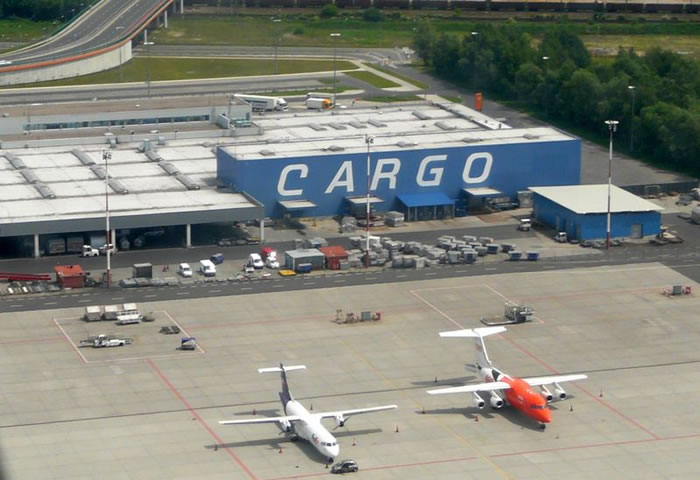
Imo State Governor Rochas Okorocha, former Permanent Secretary Ministry of Aviation Hajiya Binta Bello and some officials of the ministry have inspected the Sam Mbakwe International Cargo Airport (SMICA) Owerri, in a bid to quicken the completion of the facility.
During the inspection, Governor Okorocha said the state was interested in partnering with the ministry to complete the project and commence cargo operations which he said would boost economic activities in the state and open it up to the business world.
Okorocha pointed out that the development of the airport with the support of the federal government would fulfil President Buhari’s promise of making SMICA Owerri a functional cargo airport which has always been the dream of the people of the South East Zone who are predominantly businessmen.
Speaking on the occasion The Managing Director of Federal Airports Authority of Nigeria (FAAN), Saleh Dunoma noted the problem of manpower shortage at the airport, especially in the Fire and Security department. Saleh assured the governor that measures have been put in place to address the shortage, as basic trainings are already being done to ensure that the recently recruited staffs of Fire and Security are completely ready, before their postings to airports.
The National Working Committee of the Peoples Democratic Party, PDP rose from a meeting on Thursday charging the National Assembly to commence impeachment of President Muhammadu Buhari for the various constitutional breaches especially the submission of two version of the 2016 budget.
The party said the National Assembly should thoroughly investigate the shameful act, including the distortion and banding of figures to accommodate their personal interest and ensure that appropriate sanctions is meted to whoever has a hand in the dubious action that has brought embarrassment to the legislative body.
The party also asked the Ministers of Finance, Budget and National Planning to resign having failed to provide the much needed capacity in the management of the nation’s economy resulting in the embarrassing crashing of the nation’s currency to as low as N305 to a dollar.
Also the party asked the Governor of Central Bank of Nigeria CBN to resign for plunging the country’s currency policy into chaos an action that thrown investors into total confusion.
The party admonished the government to stop pretending that it knows what to do when feelers from the seat of power shows clearly that Nigerians by voting for APC have just discovered they boarded a once chance bus.
The Federal Government has commended moves by the Nasarawa State government to construct an airport in Lafia.
The director of projects in Aviation, Dr Ibrahim Idris gave the commendation when he led a delegation of the ministry on talks with the Nasarawa state Governor Al Makura towards the take off of the airport project.
The director who was accompanied by some officials of the ministry and agencies under it, including the Managing Director of the Federal Airports Authority of Nigerian, Mr Saleh Dunoma assured the state government of the readiness of the federal government to partner with the state.
Governor Tanko Al-Makura, stated that “the proposed airport in Nasarawa State will serve as alternate airport for the Nnmadi Azikwe International Airport, Abuja. It will also serve as cargo airport for agricultural produce and serve neighbouring states of Benue, Kogi,Kaduna, Plateau and Taraba.”
The FAAN boss in his remarks thanked the state government for its foresight in proposing the construction of the airport. He also said that the airport would open up the state to the rest of the world, stimulate economic activities, and create more jobs
The Nigerian Senate has summoned the Governor of the Central Bank of Nigeria, CBN Mr. Godwin Emefiele to appear before it next Tuesday and explain the continued high exchange rate and the measures being put in place to control it.
Senate President, Bukola Saraki who announced the invitation at yesterday’s plenary stated that the Central Bank Governor should make himself available at 10.30 on Tuesday, added that the matter does not need any debate by senators.
This is coming on the heels of point of order raised by the Senate Majority Leader, Senator Ali Ndume as a matter of urgent national importance.
According to Senator Ndume, the matter was discussed with the Senate President, Bukola Saraki as required by the standing rules of the Senate.
The World Bank Group has invested a total US$12.6 billion in ICT in the last 10 years the World Development Report released in Washington on Thursday, January 14 has disclosed.
According to the report, while the internet, mobile phones and other digital technologies were spreading rapidly throughout the developing world, the anticipated digital dividends of higher growth, more jobs, and better public services had fallen short of expectations, and 60 percent of the world’s population remains excluded from the ever-expanding digital economy.
The report stated: “Digital technologies can transform our economies, societies and public institutions, but these changes are neither assured nor automatic. Countries that are investing in both digital technology and its analog complements will reap significant dividends, while others are likely to fall behind.
“Technology without a strong foundation risks creating divergent economic fortunes, higher inequality and an intrusive state. Over the last decade, the World Bank Group has invested a total US$12.6 billion in ICTs” Authored by Co-Directors, Deepak Mishra and Uwe Deichmann and team, the new ‘World Development Report 2016: Digital Dividends,’ noted that the benefits of rapid digital expansion have been skewed towards the wealthy, skilled, and influential around the world, who are better positioned to take advantage of the new technologies.
In addition, though the number of internet users worldwide has more than tripled since 2005, four billion people still lack access to the internet. In his remarks, Jim Yong Kim, President of the World Bank Group, noted that “digital technologies are transforming the worlds of business, work, and government.
A Chinese truck manufacturing company, SINO Truck, has unveiled plans to establish an auto assembly plant in Calabar, Cross River State.
The plan was disclosed by the company’s Head of African Division, John Wang, during a courtesy call to the state governor, Ben Ayade, at his office.
Wang assured that upon the setting up of the assembly plant that the establishments of service centres would commence all over the state to enhance efficient after-sales and customer care delivery for its range of products in the country.
He noted that the peaceful investment climate in the state was one of the motivating factors that led to the establishment of the assembly plant in Calabar.
Wang said: “SINO Truck is a state-owned company and the number one heavy duty truck manufacturing company in China with over 56 years ex- Chinese firm plans auto assembly plant in Calabar perience, and a good record in truck manufacturing and assembly”.
In his response, Governor Ayade urged the company to expedite actions for the auto plant to commence operations as all the enabling infrastructural environment have been put in place.
Olam Nigeria has unveiled plans to produce wheat and pasta in Nigeria with an investment about $275 million.
The Singapore-based holding company, Olam International Limited has acquired Amber Foods Limited, which through its 100 per cent owned subsidiary, Quintessential Foods Nigeria Limited, owns the wheat milling and pasta manufacturing assets of the BUA Group in Nigeria, for a total enterprise value of $275 million.
According to the firm, the new enterprise is estimated at $275 million and hopes to leverage on BUA Group, a diversified foods and infrastructure business group in Nigerian, to actualise the ambition.
The group is among the top five wheat millers in the country with wheat milling and pasta manufacturing capacities of 3,760 and 700 metric tonnes per day (TPD) respectively.
The assets to be acquired include two wheat mills and a pasta manufacturing facility in Lagos, a mill in Kano, and a wheat mill and a pasta manufacturing plant under construction in Port Harcourt.
The company said the wheat milling sector in sub-Saharan Africa has been an area of investment focus for Olam since 2010 when it acquired Crown Flour Mills (CFM) in Nigeria.
The Super Eagles B team featuring at the 2016 African Nations Championship scheduled to kick off on Saturday, January 16 will receive the sum of $2,000 for a win at the tournament.
A source in the team currently preparing for the championship in South Africa disclosed that the team would not earn similar amount as the A team.
The team would earn $1,000 for a draw as the technical crew will earn $4,000 for a win, and $2,000 for a draw.
Nigeria will face Niger Republic in their opening game on Monday before tackling Tunisia and Guinea in Group C.
The World Development Report 2016 has revealed that about four billion people around the world don’t have any internet access and nearly two billion do not have a mobile phone.
The World Bank report which focused on the digital dividends says, the digital divides persist across income, age, geography, and gender both in access and in capability, adding that six billion people do not have high-speed broadband internet.
“In Africa, the richest 60 per cent are almost three times more likely to have internet access than the bottom 40 per cent and the young and urban have more than twice the access of older rural citizens.
Among those connected, digital capabilities vary greatly. In the European Union, three times more citizens use online services in the richest countries than in the poorest, with a similar gap between the rich and the poor within each country,” the report said.
A new report says that while the internet, mobile phones and other digital technologies are spreading rapidly throughout the developing world, the anticipated digital dividends of higher growth, more jobs and better public services have fallen short of expectations and 60 per cent of the world’s population remains excluded from the ever-expanding digital economy.
According to the new ‘World Development Report 2016: Digital Dividends,’ authored by Co-Directors, Deepak Mishra and Uwe Deichmann and team, the benefits of rapid digital expansion have been skewed towards the wealthy, skilled and influential around the world, who are better positioned to take advantage of the new technologies.
Oil prices rebounded on Thursday, January 14, halting an eight-day rout, after crude prices plunged new 12-year low amid concerns over Iran adding to a global glut faster than expected.
Brent, the global crude benchmark, earlier broke below $30 a barrel for a second day in a row before rebounding, as a U.N. nuclear watchdog appeared likely to confirm by Friday that Iran has curtailed its nuclear program as agreed with world powers, paving the way for sanctions to be lifted against its oil.
With options for U.S. crude’s front-month contract expiring at Thursday’s settlement, many players were covering positions, said traders.
“Natural covering interest is buoying the market as many had $30 as an objective,” said Pete Donovan, broker at Liquidity Energy in New York. “With today being Feb WTI options expiration, I can’t help but notice that the $30 put has easily the largest open interest of any of the nearby strikes.”
Brent crude was up 45 cents, or 1.5 per cent, at $30.76 a barrel by 11:28 a.m. EST (1628 GMT), hitting an intraday high of $31.10.
It fell earlier to $29.73, the weakest since February 2004. Brent had lost about $7 a barrel, almost 20 per cent of its value, over the past eight sessions.
U.S. crude’s West Texas Intermediate (WTI) was up 55 cents at $31.03 a barrel, after a session high of $31.77.
It hit a 12-year low of $29.93 earlier in the week. Barclays said it had raised its estimates of Iranian oil supply on Western sanctions being lifted sooner than expected. Analysts at the U.K.-based bank said they now assume Iran will produce almost 700,000 barrels a day more in the fourth quarter of 2016 than over the same period in 2015.
Strong indications have emerged that local power firms comprising Generation companies (Gencos) and Distribution companies (Discos) are facing difficulties hard accessing funds from banks to expand their investments two years after they took over the assets from government.
According to sources, almost all the Discos and some Gencos were having difficulties accessing funding to meet their investment obligations, despite making efforts to secure more loans from the banks but to no avail.
The delay in sourcing funding has affected the expansion of electricity projects, the sources said.
Many of the firms used loans from local banks to purchase the assets of the defunct Power Holding Company of Nigeria (PHCN) but defaulted along the way, which led to intervention by the Central Bank of Nigeria (CBN).
CBN Governor Godwin Emefiele said recently that the bank has suspended the disbursement of the N213 billion loan initiated early last year to finance the sector due to some documentation issues with the electricity regulators. Before the suspension, some companies benefited from the bailout.
The CBN disbursed N57.8 billion to 11 of the companies.
The Bureau of Public Enterprises (BPE) was reported in the media to have said the embargo on the funds would be lifted when the crises surrounding tariff adjustments are resolved.
Beside failure to invest further, the power firms also failed to meet obligations of their monthly payment for electricity delivered.
The Discos had paid less than 60 per cent of their monthly payment between February and April last year. This was contrary to the rule of 100 per cent payment in the activated Transitional Electricity Market (TEM).
Experts said the shortfalls had caused accumulated debts for gas-to-power supply, which affected the supply volume to the Gencos.
Transactions on the floor of the Nigerian Stock Exchange, NSE, continued its southward movement on Thursday, January 14 as the All Share Index lost 3.44% to 24,239.98 points, compared with the depreciation of 3.58% recorded on Wednesday, January 13.
Year-to-date (YTD), the Index depreciated by 15.37%.
Likewise, the Market Capitalization slid by 3.44% to close at N8.34trn, compared with the depreciation of 3.58% recorded yesterday to close at N8.63trn.
The losses recorded in the share prices of GT Bank, Nigerian Breweries, Guinness, FBN Holdings and Dangote Cement were mainly responsible for the depreciation in the Index
The total value of stocks traded on the floors of The NSE today was N2.41bn, up by 42.62% from N1.69bn traded yesterday. The total volume of stocks traded was 262.52mn in 2,579 deals.
The three most actively traded stocks were: FBN Holdings (76.44mn), GT Bank (42.51mn) and Zenith Bank (42.22mn). The most actively traded sectors were: Financial Services (232.67mn), Consumer Goods (16.26mn) and Conglomerates (6.96mn).