









Home Blog Page 157

Social Media Image Sizes Cheat Sheet 2025: The Only Guide You’ll Need

WhatsApp, Facebook, Instagram Experience Outage

Let’s be honest—trying to keep up with social media image specs is like trying to catch confetti in a hurricane. One day it’s 1:1, the next it’s 4:5. Suddenly, your perfectly planned carousel looks like it went through a shredder. If you’ve ever spent hours designing a campaign banner only for Instagram to crop it awkwardly or for LinkedIn to make it look like it was shot through a potato, you’re not alone.

In this feature, we’re cutting through the noise to give you something concrete—a complete, updated cheat sheet of image sizes for every major social platform in 2025. Whether you’re a digital marketer juggling multiple client accounts, a content creator finessing your personal brand, or an SEO analyst looking to boost CTRs with sharp visuals, this is your playbook.

So, shall we?

Why Social Media Image Sizes Still Matter in 2025

You might be wondering—do image dimensions really make that much of a difference anymore?

Short answer: Absolutely. Long answer: Compression algorithms, automatic cropping, and platform-specific layout shifts can murder your visuals if you’re not careful.

A blurry cover photo on Facebook? That’s your brand’s first impression gone. A stretched-out Reel preview on Instagram? Engagement down. A misaligned LinkedIn ad image? Budget wasted.

And let’s not forget the mobile-first reality of today’s social universe. What looks perfect on desktop might end up looking like a bad meme on mobile. That’s why understanding exact specs—down to the last pixel—still gives you a competitive edge.

Let’s get into it.

Facebook Image Sizes – The Crowd Favorite

With almost 3 billion monthly users, Facebook remains a titan for both B2C and B2B marketers. If you’re targeting anything from grandma’s hobby shop to a Fortune 500 CEO’s feed, Facebook’s your playground.

Essentials for 2025:

  • Profile Picture: 180 x 180 px
  • Cover Photo: 851 x 315 px
  • Feed Image: 1200 x 630 px
  • Stories: 1080 x 1920 px
  • Event Banner: 1920 x 1005 px
  • Fundraiser: 800 x 300 px
  • Ads: 1080 x 1080 px (1:1 or 1.91:1)

Quick Tip: Use PNGs for sharper profile photos and JPGs for faster-loading feed images.

Twitter (X) Image Sizes – For Real-Time Rebels

Twitter (or should we say “X” now?) has become less about just tweeting and more about building mini-communities. Whether you’re reacting to trends or riding hashtags, visuals still play a key role in engagement.

Essentials for 2025:

  • Profile Photo: 400 x 400 px
  • Header: 1500 x 500 px
  • In-Stream Photo: 1600 x 900 px
  • Card Image: 120 x 120 px
  • Ads (Standard): 1200 x 1200 or 1200 x 628 px
  • App/Website Buttons: 800 x 418 / 800 x 800 px

Hot Take: Twitter might be the most overlooked ad platform visually. Bold, clean images often outperform flashy ones. Think “headline first,” then image.

Instagram Image Sizes – The Aesthetic Arena

Instagram has long been the golden child of visual-first content. But here’s the twist: square grids aren’t the only players anymore. With vertical content reigning supreme, knowing your ratios is half the game.

Essentials for 2025:

  • Profile Picture: 320 x 320 px
  • Portrait Post (RECOMMENDED): 1080 x 1350 px
  • Square Post: 1080 x 1080 px
  • Landscape: 1080 x 566 px
  • Stories/Reels: 1080 x 1920 px
  • Carousel: Same as posts (portrait, square, landscape)
  • Ads: Same as respective post formats

Real Talk: Instagram compresses aggressively. Upload at the highest possible resolution to avoid losing sharpness—especially in Stories.

LinkedIn Image Sizes – The Suit-and-Tie Feed

LinkedIn isn’t all stuffy suits anymore. With more creators hopping on and brands investing in community storytelling, visual polish is your best friend.

Essentials for 2025:

  • Profile Picture (Personal): 400 x 400 px
  • Cover Photo (Personal): 1584 x 396 px
  • Company Logo: 300 x 300 px
  • Company Cover: 1128 x 191 px
  • Post Image/Link Preview: 1200 x 627 px
  • Ad Formats:
    • Horizontal: 1200 x 628 px
    • Square: 1200 x 1200 px
    • Vertical: 628 x 1200 px / 600 x 900 px / 720 x 900 px

Power Move: Want to stand out on the feed? Try color-contrasted border designs on carousel posts. It’s subtle, but scroll-stopping.

Pinterest Image Sizes – Where Visuals Sell

Pinterest users come to shop—not scroll. That makes your visual size and clarity absolutely crucial. And with vertical pins getting the most visibility, you don’t want to mess this up.

Essentials for 2025:

  • Profile Picture: 165 x 165 px
  • Cover Photo: 1920 x 1080 px
  • Standard Pin: 1000 x 1500 px (2:3 ratio)
  • Square Pin: 1000 x 1000 px
  • Story Pin / Idea Pin: 1080 x 1920 px
  • Ad Formats: Same as standard pins +
    • Carousel: 1080 x 1080 or 1000 x 1500 px
    • Video Ads: Various formats (1080 x 1080, 720 x 1080, etc.)

Quick Hack: Longer pins (with a 2:3 or even 1:2.1 ratio) tend to perform better because they occupy more screen real estate in the feed.

YouTube Image Sizes – For the Long Haul

Even though YouTube’s primarily a video platform, every image counts—especially when it comes to thumbnails and banners. A bad thumbnail can tank your CTR faster than you can say “skip ad.”

Essentials for 2025:

  • Profile Picture: 800 x 800 px
  • Banner Image: 2048 x 1152 px
  • Video Size (HD): 1920 x 1080 px
  • Shorts / Stories: 1080 x 1920 px
  • Thumbnail: 1280 x 720 px
  • Ad Formats:
    • In-Stream: 1920 x 1080 px
    • In-Feed: 1280 x 720 px
    • Overlay/Display: 300 x 60 px or custom

Pro Tip: Think of your thumbnails as mini billboards. Use clear facial expressions, contrasting colors, and big, bold text. That’s how you get the click.

TikTok Image Sizes – Short, Fast, Visual

If Instagram’s a runway, TikTok’s a rave. It’s chaotic, loud, and incredibly addictive. And while it’s video-first, your profile image and carousel visuals still need to be razor-sharp.

Essentials for 2025:

  • Profile Picture: 200 x 200 px
  • Videos / Stories / Reels: 1080 x 1920 px (9:16)
  • Carousel Images: 1080 x 1920 px
  • Ads: 1080 x 1920 px

Fun Fact: TikTok users are 1.7x more likely to act on the content they see versus other platforms. So yes, your image specs matter here—big time.

Google Business Profile – Your Digital Front Door

Let’s not ignore the silent powerhouse—Google Business Profile. When people Google your brand, what they see here shapes their decision before they ever hit your site.

Essentials for 2025:

  • Logo: 720 x 720 px
  • Cover Photo: 1024 x 576 px
  • Image Post: 720 x 720 px
  • Video Post: 1280 x 720 px (max 30 sec)

Little Detail, Big Impact: Crisp logos here can influence your local SEO impressions. Think of it as your brand handshake—make it firm and clean.

So, What Now?

Here’s the kicker—platforms update specs all the time. Sometimes it’s subtle. Sometimes it’s a full-blown layout redesign that breaks your entire content calendar. That’s why having a cheat sheet like this isn’t just convenient. It’s survival.

Pro Moves for Busy Creators:

  • Bookmark this article
  • Use tools like Canva, Adobe Express, or Figma with preset templates
  • Batch resize with apps like Image Resizer or Kapwing
  • Use Hootsuite or Buffer to preview post formatting across platforms
  • Recheck specs quarterly—platforms don’t always announce changes loudly

Final Thoughts

You can write the best copy, film the slickest video, and drop the most genius hashtag… but if your image gets cropped wrong or looks low-res? People scroll. Attention is the currency now. And visuals are your first transaction. Make them count. You don’t need to chase perfection—but you do need precision. So save this cheat sheet. Stick to the pixels. And post with confidence.

The Code Of Instagram Video Sizes: A Smart Guide For Marketers

Facebook Halts Development Of Kids Version Of Instagram After Criticism

You ever posted a stunning video on Instagram—maybe a product demo, a crisp testimonial, or a behind-the-scenes moment—and it looked all… wrong? Cropped weirdly. Pixelated. Or worse, Instagram just refused to upload it. Yeah, it’s frustrating. Especially when you’re juggling a million things as a digital marketer, SEO analyst, or content strategist.

But let’s cut to the chase: knowing your Instagram video sizes isn’t optional anymore—it’s survival.

Why Video Size Even Matters

Sure, you want your brand to “look good”—but this isn’t just vanity. It’s ROI. Bad formatting messes with your engagement rates, and that’s a hard pill to swallow when you’re spending time (and budget) on content production.

Think of it this way: uploading the wrong video size is like printing your billboard on a napkin. Technically, the message is there, but no one’s stopping to squint at it.

And with Instagram favoring video content—especially Reels—in the algorithm game, your video specs are the difference between getting buried or going viral.

Let me explain how to never get that “this video can’t be uploaded” error again.

Reel Talk: The Instagram Video Types You Should Know

Before we talk numbers, let’s quickly cover the three main formats you’re likely working with:

  1. Reels – Instagram’s answer to TikTok. These are vertical, fast-paced, and getting algorithmic love.
  2. Feed Videos – Classic in-feed content. Often square, sometimes landscape.
  3. Stories – Ephemeral but impactful. 24-hour shelf life, but the right story can boost DMs and conversions.
  4. IGTV – Okay, technically still around, but it’s kind of faded into the background. Instagram now merges longer videos into the feed and Explore section.

Each of these has different requirements—and yes, even a few hidden “gotchas.”

The Specs Sheet (That You Should Probably Bookmark)

Reels & Stories:

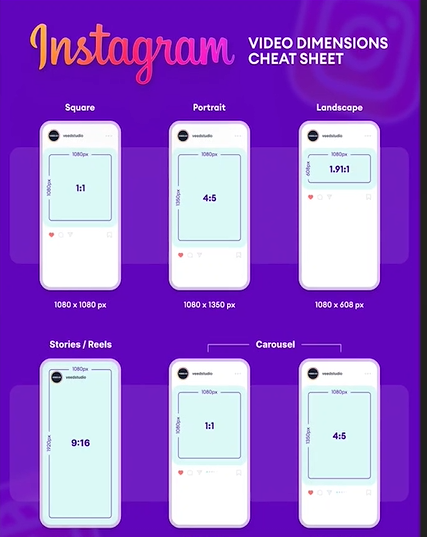
  • Aspect Ratio: 9:16 (aka full-screen vertical—think how you hold your phone)
  • Resolution: 1080 x 1920 pixels
  • File Size: Max 4GB
  • Length:
    • Reels: Up to 90 seconds
    • Stories: Up to 15 seconds per clip (but you can stitch up to 4 into a minute)

Feed Videos:

  • Square (1:1): 1080 x 1080 px
  • Portrait (4:5): 1080 x 1350 px – most engagement-friendly for mobile
  • Landscape (16:9): 1080 x 608 px
  • Length: Up to 10 minutes for regular accounts (60 minutes for verified/large accounts)

Format Tips:

  • Use .MP4 (H.264 codec, AAC audio) for smoother playback.
  • Don’t forget the thumbnail—Instagram lets you choose, but an off-center frame can ruin the first impression.

Hidden Pitfalls Nobody Warned You About

Here’s where things get tricky. Instagram compresses your videos. A lot. That 4K masterpiece you spent two hours editing? Instagram will squash it into something that sometimes looks like it was filmed on a flip phone from 2006.

So, what’s the workaround? Export at the highest quality possible within Instagram’s specs. If you’re editing in Adobe Premiere Pro or Final Cut, keep the bit rate close to 5,500 kbps for HD. It won’t be perfect, but it’ll survive the Instagram squeeze.

Also: always shoot with your final platform in mind. Shooting wide landscape for YouTube and trying to crop it into vertical for Reels? You’ll lose half the action—and maybe your patience.

Format Isn’t Just Technical—It’s Psychological

Let’s talk human behavior for a second. Vertical video (like Reels and Stories) feels intimate—it’s how people naturally hold their phones. It’s personal, like FaceTiming a friend. That’s why vertical formats tend to feel more authentic and get better engagement.

Horizontal video? Still works—especially for cinematic or wide-angle content—but on Instagram, it looks a little… formal. You’ve got to pick your battles. Selling emotion? Go vertical. Selling precision? Maybe lean horizontal.

But What About Captions, Tags, and Thumbnails?

Ah, the holy trinity of Instagram optimization. You could have the most beautifully formatted video in the world, but if the caption is dry, or the thumbnail is blurry, you’re toast.

Here’s what smart marketers do:

  • Add burned-in captions. 80% of people watch videos on mute—so subtitles aren’t a nice-to-have, they’re essential.
  • Use eye-catching thumbnails. Especially for Reels that show up on the profile grid.
  • Include 3–5 relevant hashtags (don’t overdo it), and remember: hashtags in the caption > hashtags in the comments now.
  • Keep text away from the edges—Instagram’s UI overlaps buttons there.

The Tools That Make Life Easier (Because You’re Busy)

Honestly, no one has time to memorize pixel sizes. Use these:

  • Canva – for quick, pre-sized video templates
  • InShot – for on-the-go video resizing
  • CapCut – for editing Reels with TikTok-style effects

Automation isn’t lazy—it’s smart. Especially when juggling multiple campaigns and clients.

Final Thoughts: It’s Not Just About the Pixels—It’s the Experience

Look, nailing the right Instagram video size isn’t just a box to tick. It’s part of how you show up online. It’s about respecting the platform, the viewer, and—let’s be honest—your own creative hustle.

So next time you’re prepping content for that campaign, remember: a perfectly sized video is like a tailored suit. It just fits better. And people notice.You’ve got the story, the style, and the message. Now, just make sure the dimensions match the vision.

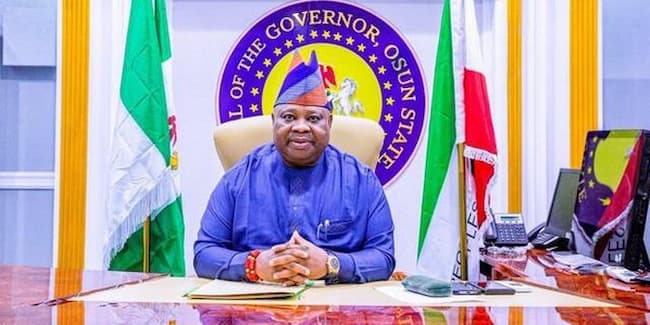
Adeleke’s Alleged APC Defection Stirs Tension In Osun Politics

Osun Poly Riot: Adeleke Urges Protesters To Stay Calm

A wave of uncertainty is sweeping through political circles in Osun State following reports that Governor Ademola Adeleke may be on the verge of dumping the Peoples Democratic Party (PDP) for the ruling All Progressives Congress (APC).

Close allies of the governor, including some appointees said that the defection plan was “nearly perfected,” sparking tension in both PDP and APC camps. However, Governor Adeleke has dismissed the claim as false, saying he remains committed to the PDP. “The governor has no plan to defect to the APC,” Adeleke’s spokesperson, Olawale Rasheed, said in a statement issued Thursday. “I assure the good people of Osun that I remain part and parcel of the PDP family. I am not defecting to any party.”

The defection speculation began in June after Adeleke visited President Bola Tinubu at his Bourdillon residence in Lagos. He was accompanied by his brother, billionaire businessman Adedeji Adeleke, and his nephew, popular Afrobeat star David Adeleke, known as Davido. The meeting was made public via a post by Tinubu’s aide, sparking widespread debate online.Sources within Adeleke’s administration, including a commissioner and two special advisers, confirmed that the governor had informed close cabinet members and some state lawmakers of his intention to defect.

“Mr Governor will join the APC, but the official declaration will not be now,” one commissioner revealed anonymously. “The move is due to political threats, the withholding of local government funds by the Federal Government, and fears over his brother’s business interests.”An APC chieftain also confirmed that Adeleke had opened consultations with senior party figures but noted that his acceptance depends on President Tinubu’s influence on party stalwarts like Bisi Akande and former Governor Gboyega Oyetola.

Within the Osun APC, the governor’s potential entry has triggered protests and opposition. On Friday, a group led by Taofeek Afolabi staged a demonstration at the party’s secretariat in Osogbo. While welcoming Adeleke’s interest in the APC, they insisted he must not be handed the 2026 governorship ticket on a silver platter. “If he wants to re-contest, he should face other aspirants in a fair primary. We won’t accept an automatic ticket,” Afolabi said during the protest.

Fueling the speculation further, several of Adeleke’s aides have made cryptic social media posts. One of them, Oladele Bamiji, a PDP media director and Senior Special Assistant to the governor, posted “On Your Mandate!” on Facebook—Tinubu’s well-known political slogan. Another aide, Olalekan Badmus, wrote on X, “Governor Adeleke is currently consulting and evaluating all options on the table.” Party insiders also said that Tinubu’s Chief of Staff, Femi Gbajabiamila, and some members of the President’s inner circle may be involved in brokering Adeleke’s crossover.

However, official APC and PDP spokespersons continue to dismiss the reports. Osun APC’s publicity secretary, Kola Olabisi, said, “It is still in the realm of speculation. The leadership of the APC in Osun is not aware of the governor’s defection plan.” Similarly, National Secretary of the APC, Ajibola Basiru, said he had no knowledge of such plans. “All other things are hypothetical for now. I cannot be reacting based on social media frenzy,” he stated.

Despite the denials, anxiety persists within both parties. Some APC members fear Adeleke’s defection could disrupt the ambitions of their preferred candidate, Bola Oyebamiji. On the PDP side, concerns are growing that the party could suffer electoral losses without the support of the Adeleke dynasty, considered the party’s main financier in the state.

Former Oyetola aide, Jamiu Olawumi, posted on Facebook: “If, as a governor, you have delivered, is it not shameful trying to run away from your own party?” In response to growing backlash, some APC governorship hopefuls downplayed the possible impact of Adeleke joining their party. Dotun Babayemi, speaking through his media aide, said, “We are not worried. In fact, Adeleke joining us only strengthens our numbers ahead of 2026.”

Akin Ogunbiyi, another aspirant, shared a similar view. “I am not surprised that he wants to come to APC. Our party is a winning team, and people are joining from all corners,”.Meanwhile, two PDP senators from Osun—Adenigba Fadahunsi and Olubiyi Ajagunla—are also reportedly set to leave the party after a closed-door meeting with President Tinubu. A senior aide to Ajagunla said the lawmaker is dissatisfied with the current administration’s neglect of his Ila-Orangun constituency.

Within the PDP, opinion remains divided. Some members back Adeleke’s potential realignment as a tactical political move. Former PDP deputy publicity secretary, Diran Odeyemi, said, “Politics is dynamic. Realignment is part of the game and can help win elections.”But others, like Olawumi of the APC, insisted that mere party membership is not enough. “Joining a party is a right, but acceptance is a different matter. Let’s not give attention to mere rumours,” he warned.

As the 2026 Osun governorship election draws closer, the rumour mill continues to spin, leaving both parties scrambling to maintain control of a rapidly shifting political landscape.

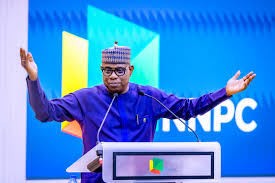
NNPC Considers Selling Refineries Amid Doubts Over Viability

The Nigerian National Petroleum Company Limited (NNPC) may be looking to sell off its ailing refineries in Port Harcourt, Warri, and Kaduna as doubts mount over their capacity to function, despite years of rehabilitation efforts and billions of dollars in investments.

Speaking with Bloomberg on Thursday during the 9th OPEC International Seminar in Vienna, Austria, the Group Chief Executive Officer of NNPC, Bayo Ojulari, confirmed that a full strategic review of the company’s refinery operations is underway, and all options including sale are being considered.

“We’re reviewing all our refinery strategies now. We hope before the end of the year, we’ll be able to conclude that review,” Ojulari said. “That review may lead to us doing things slightly differently.” When asked directly if that could include selling off the refineries, Ojulari responded, “Sale is not out of the question. All the options are on the table, to be frank, but that decision will be based on the outcome of the reviews we’re doing now.”

Ojulari’s remarks followed a blunt assessment from Africa’s richest man, Alhaji Aliko Dangote, who declared earlier on Thursday that the refineries “may never work again” despite swallowing over $18 billion in public funds. Speaking during a meeting with members of Global CEO Africa from the Lagos Business School at the Dangote Refinery complex in Lekki, Lagos, the industrialist said, “As of today, they have spent about $18 billion on those refineries, and they are still not working. And I don’t think, and I doubt very much, if they will work.”

Dangote, who runs the 650,000 barrels-per-day privately owned Dangote Refinery, recalled how he and his team returned the state-owned refineries they had acquired in 2007 after the late President Umaru Musa Yar’Adua reversed their privatisation, allegedly under pressure from NNPC officials who claimed the facilities could be fixed. “They said they just gave them to us as a parting gift or so,” Dangote stated. “The refineries that we bought before were doing about 22 per cent of PMS. Now, our refinery is doing over 50 per cent of its output as PMS.”

He compared the ongoing turnaround maintenance to “modernising a car that was built 40 years ago,” stressing that new technology would not fit outdated structures. “Even if you change the engine, the body will not be able to take the shock of that new technology engine,” Ojulari also echoed similar sentiments, acknowledging that previous rehabilitation efforts had failed to produce results. “We made quite a lot of investment over the last several years and brought in a lot of technologies, but we’ve been challenged. Some of those technologies have not worked as we expected,” he said.

According to him, the age and deterioration of the refineries made rehabilitation more complicated than initially projected. “When you’re refining a very old refinery that has been abandoned for some time, what we’re finding is that it’s becoming a little bit more complicated; They had once been declared operational by former NNPC boss Mele Kyari in late 2024,  but since the shut down again, questions over the viability of the facilities and the integrity of past claims have been raised.

Former President Olusegun Obasanjo, who had overseen the initial sale of the refineries to Dangote and his associates, also criticized the decision to revoke the sale, stating that the NNPC had always known it could not run the refineries. “I told my successor that the refineries, from what I heard and know, will not work. And when you want to sell them, you will not get anybody to buy them at $200 million as scrap,” Furthermore,“NNPC knew that they could not do it, but they knew they could eat and carry on with the corruption.”

Obasanjo added that Shell once declined an offer to run the refineries, stating that even international oil companies were unwilling to touch the assets. His remarks were backed up with a Yoruba proverb: “They say that after he has harvested 100 heaps of yams, he will also have 100 heaps of lies. You know what that means.”

Critics, including the Manufacturers Association of Nigeria, have since called on the Federal Government to privatise or scrap the refineries entirely, describing them as a financial drain. Some stakeholders have urged the government to redirect the proceeds toward building modular refineries.

Data shows that despite allocating $1.4 billion to Port Harcourt refinery in 2021, $897 million to Warri, and $586 million to Kaduna, the facilities remain moribund. Over N100 billion was spent on rehabilitation in 2021 alone, including N8.33 billion in monthly expenditures, while $396.33 million went into turnaround maintenance between 2013 and 2017.

As the review continues, many industry watchers believe that the time for difficult decisions has come and selling off the state-owned refineries may be the only viable path forward.

OPEC Sees Oil Retaining Lead In Global Energy Mix Through 2050

Oil is projected to remain the world’s dominant energy source by 2050, holding a 29.8% share of the global energy mix, according to OPEC’s latest World Oil Outlook 2050 report. The report highlights that rising population, economic growth, energy policy shifts, and technological advancements continue to drive global energy demand, despite record renewable energy additions of nearly 600 gigawatts last year.

However, the expansion of renewables has not fully offset rising energy needs, leading to continued strong demand for oil, natural gas, coal, and nuclear energy. By 2050, global primary energy demand is expected to rise by 23% compared to last year, reaching 378 million barrels of oil equivalent per day (boepd), with nearly all growth coming from non-OECD countries.

During this period, demand for all primary energy sources except coal is set to increase. Renewable energy demand is projected to rise by 52 million boepd to 99.4 million boepd, driven by policy incentives and falling production costs, while nuclear energy is expected to grow by 10 million boepd to 24.9 million boepd.

Oil demand is forecast to rise by 18.2 million boepd to 112.4 million boepd by 2050, while natural gas demand is projected to increase by 19.7 million boepd to 89.7 million boepd. In contrast, coal demand is expected to decline by 30.4 million boepd to 51.4 million boepd due to climate policies and the growth of cleaner alternatives.

By 2050, oil is expected to retain the largest share of the energy mix at 29.8%, followed by renewables (including hydropower and biomass) at 26.3%, natural gas at 23.7%, coal at 13.6%, and nuclear at 6.6%.

OPEC notes that despite rapid growth in renewables, oil and natural gas will continue to provide over half of the world’s energy needs for decades, reflecting the continued importance of fossil fuels in meeting global energy demand while transitioning to lower-carbon sources.

Sanwo-Olu, Wife Cast Votes In Lagos LG Election

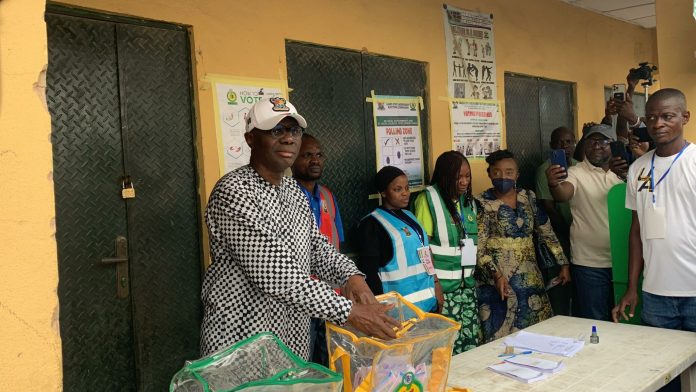
Lagos State Governor Babajide Sanwo-Olu and his wife, Dr. Ibijoke Sanwo-Olu, cast their votes on Saturday at Polling Unit 006, Ward E, St. Stephens Nursery and Primary School, Adeniji Adele, Lagos Island.

The governor and his wife arrived at the polling unit around 11 a.m. to participate in the local government elections, which began at 8 a.m. for the Lagos Island Local Government Area.

Sanwo-Olu’s media aide, Jubril Gawat, also voted earlier at the same polling unit.

The elections are being conducted across the 20 local government areas and 37 local council development areas in Lagos State to elect chairmen and councillors.

Oil Prices Tick Up As Weaker Dollar Boosts Demand

Crude Oil Sees Gains As NNPC Faces More Financial Pressure

Oil prices closed higher for the week in the global commodity market, supported by a softer US dollar, firm US fuel demand, and renewed geopolitical tensions, even as rising inventories and trade concerns weighed on the market earlier.

Brent crude, the global benchmark, rose around 1.01% week-on-week to $68.61 per barrel on Friday, up from $67.92 the previous week. West Texas Intermediate (WTI), the US benchmark, gained 0.8% to $66.19 per barrel from $65.65.

Prices came under pressure earlier in the week after OPEC+ announced a larger-than-expected production increase of 548,000 barrels per day for August, fueling oversupply concerns. Trade tensions also resurfaced as US President Donald Trump threatened new tariffs on multiple countries from August 1, raising worries about potential demand weakness. Additionally, a 7.1 million barrel rise in US crude inventories reported midweek weighed on sentiment, defying expectations of a draw despite robust July 4 travel activity.

However, the market rebounded as the US Energy Information Administration reported a 2.7 million barrel drop in gasoline inventories, signaling strong fuel consumption during the holiday period. A weaker US dollar further lifted oil prices, making crude cheaper for buyers using other currencies, while expectations of potential interest rate cuts by the Federal Reserve added to the bullish sentiment.

On Friday, prices edged higher after Trump announced he would deliver a major statement on Russia the following week, raising prospects of new sanctions on a key oil producer. Comments from Fed officials suggesting openness to near-term rate cuts also supported the market.

Despite the gains, traders remained cautious about the potential drag on global growth from Trump’s proposed tariffs, including plans for a 20% blanket tariff on most trading partners and a 35% tariff on Canadian goods, which could dampen industrial activity and energy demand.

Overall, oil managed to post a weekly gain, underpinned by geopolitical risks, solid US demand indicators, and a weaker dollar, even as concerns over oversupply and trade tensions limited stronger advances.

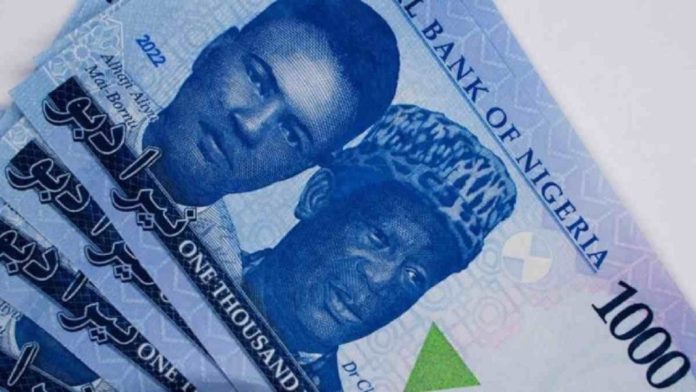
Naira Slides To ₦1,530 As CBN Intervenes To Ease FX Pressure

Rising demand for foreign payments at the Nigerian Foreign Exchange Market (NFEM) has pushed the naira lower against the US dollar, prompting fresh intervention from the Central Bank of Nigeria (CBN) to ease pressure.

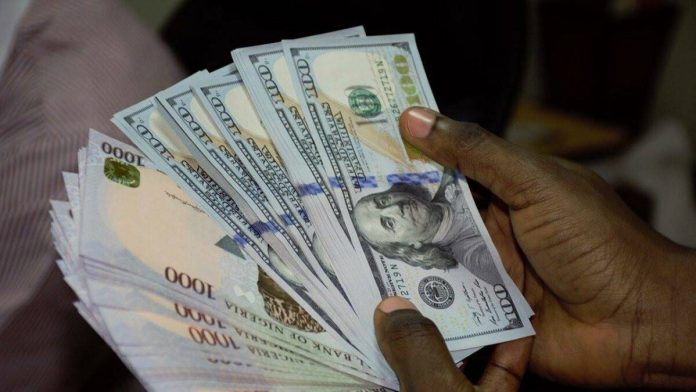
The latest update from the CBN showed the naira’s official rate weakening to ₦1,530.26 per dollar, down from ₦1,525 the previous day, marking a ₦10 decline over two days as dollar demand for foreign payments increased. Analysts noted that the CBN injected $50 million into the market to stabilise the currency.

At the parallel market, the naira closed at ₦1,535 per dollar, maintaining Thursday’s level as dollar demand remained steady.

FX data from the CBN platform revealed the naira traded at an intraday high of ₦1,535 and a low of ₦1,516 before settling at ₦1,532. The NFEM rate, derived from the Volume Weighted Average Price, serves as the official closing rate for the day, according to CBN guidance.

Despite market pressures, Nigeria’s external reserves continued their upward trend, rising to $37.355 billion, supported by foreign inflows and recent open market operations, even as FX interventions remained limited.

Meanwhile, the global oil market faces a precarious balance in the second half of 2025, with the International Energy Agency (IEA) revising demand growth projections downward to 741,000 barrels per day, well below pre-trade war estimates. Non-OECD countries are expected to drive 86% of this growth, while OECD demand is projected to decline by 120,000 barrels per day due to energy transition policies and economic stagnation.

Zedcrest Research noted that Nigeria’s oil and gas sector outlook for H2 2025 will be shaped by global market headwinds, shifting supply-demand dynamics, and ongoing domestic reforms.

Analysts warn that the reactivation of naira debit cards for offshore transactions could increase FX outflows in the second half of the year, requiring the CBN to strengthen external reserves to defend the naira.

Nigeria’s FX earnings remain exposed to volatility, as oil markets may face moderate oversupply with OPEC+ seeking to regain market share while non-OPEC supply, led by the US and Brazil, continues to expand. This, combined with subdued global GDP growth and a plateauing Chinese economy, creates a challenging environment for price stability.

NNPCL Plans Stock Exchange Listing By 2028 – GCEO

The Nigerian National Petroleum Company Limited (NNPCL) has announced plans to list on the stock exchange by 2028 as part of its strategic transformation into a commercially viable, globally competitive energy company. Group Chief Executive Officer Bayo Ojulari disclosed this during the 9th Organisation of the Petroleum Exporting Countries (OPEC) International Seminar in Vienna, Austria, a confirmation later shared on the company’s official X handle.

“As I mentioned earlier, we have a roadmap to be listed by 2028,” Ojulari told an audience of global energy leaders, OPEC ministers, investors, and stakeholders, explaining that the planned listing is part of a broader transformation enabled by the Petroleum Industry Act (PIA).

He described the PIA as a bold legislative milestone that has stabilised Nigeria’s energy sector, attracting new investors, strengthening partnerships, and providing clarity across the oil and gas value chain.

“Nigeria has been undergoing a transformational journey since the enactment of the PIA, which has reset and stabilised the energy industry, giving us a clear roadmap to monitor our progress,” he said.

Ojulari noted that the reconstituted NNPCL board, composed of experienced professionals from global and private sector backgrounds, reflects President Bola Tinubu’s vision to reposition the company as a globally competitive national oil firm.

“With the collaboration of industry players, we will transform NNPCL into a limited liability company that can compete globally,” he added.

The GCEO also highlighted reforms aimed at boosting investor confidence, including improved security, operational stability, transparency, and adherence to global best practices.

“We have done quite a lot to ensure that when you do business in Nigeria, your business is secured,” Ojulari said, adding that the company aims to become “a national oil company to be reckoned with internationally.”

Last week, NNPCL’s Chief Financial Officer, Adedapo Segun, confirmed at the Nigerian Oil and Gas Energy Week that a corporate governance restructuring is underway to prepare the company for its initial public offering (IPO). Segun noted that aligning NNPCL’s structure, culture, and processes with global best practices is essential for the listing.

“We have management that is IPO ready. We need to build an organisation that is IPO ready,” Segun said.

NNPCL became a limited liability company in July 2022 following the implementation of the PIA, shifting from a government parastatal to a commercially driven entity seeking profitability and operational autonomy.

While industry stakeholders have long anticipated the company’s listing, previous attempts in 2018 and 2023 did not materialise. Analysts note that the IPO may face challenges, including the need to clean up its books and publish its 2024 audited accounts after years of petrol subsidies and interventions in other sectors.

On the energy transition, Ojulari said Nigeria and other sub-Saharan African countries are investing in refining, pipelines, and gas infrastructure to tackle energy poverty and boost energy security, presenting significant investment opportunities.

He also reaffirmed Nigeria’s ambitious production targets of at least three million barrels of crude oil per day and 12 billion cubic feet of gas per day, backed by clear policy roadmaps.

Concluding his address, Ojulari invited global investors to re-engage with Nigeria’s oil and gas sector:

“I would like to invite you to the new NNPC Ltd. and the new Nigeria. We will show you with action, not words, that Nigeria and NNPC Ltd. are truly ready for business.”

NNPCL May Sell Refineries As Strategic Review Underway – CEO

The Nigerian National Petroleum Company Limited (NNPCL) is considering selling some of its refineries as it faces challenges in their rehabilitation efforts, the Group Chief Executive Officer, Bayo Ojulari, has said.

Speaking with Bloomberg on Thursday at the 9th OPEC International Seminar in Vienna, Austria, Ojulari revealed that a comprehensive review of NNPCL’s refinery operations is ongoing and expected to conclude before the end of the year.

“We’re reviewing all our refinery strategies now. We hope before the end of the year, we’ll be able to conclude that review. That review may lead to us doing things slightly differently,” Ojulari said.

When asked if the review could result in putting the refineries up for sale, he responded, “Sale is not out of the question. All the options are on the table, to be frank, but that decision will be based on the outcome of the reviews we’re doing now.”

Nigeria has long sought to revive its state-owned refineries in Port Harcourt, Warri, and Kaduna, which have struggled to operate efficiently for years. Although the Port Harcourt refinery briefly resumed operations in November 2023, it was shut down again in May for maintenance.

Ojulari cited outdated infrastructure and underperforming technologies as major challenges, noting, “We’ve made quite a lot of investment over the last several years and brought in a lot of technologies. Some of those technologies have not worked as we expected. When you’re refining in a very old refinery that has been abandoned for some time, it becomes more complicated.”

On the broader industry challenges, Ojulari addressed Nigeria’s high crude oil production costs, which he said are currently between $25 and $30 per barrel, partly due to heavy spending on pipeline security.

“The operating cost in Nigeria is hovering over $20 per barrel, which is quite high. Part of that is because of the investment we’ve made to secure our pipelines, which now have 100% availability. That came out of significant investment,” he explained.

Ojulari added that with time and continued stability, production costs are expected to decline.

Despite these challenges, NNPCL is targeting an increase in Nigeria’s oil output to 1.9 million barrels per day by the end of the year.

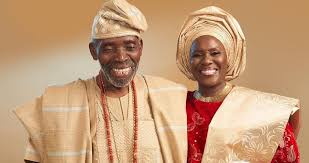
“Your Wrinkles Are Proof Of A Life Well Lived” – Joke Silva Celebrates Olu Jacobs At 83

Veteran actress Joke Silva has paid a heartfelt tribute to her husband, legendary actor Olu Jacobs, as he turns 83 today.

In an emotional Instagram post on Friday, Silva reflected on their decades-long journey, recalling that they met when Jacobs was 38. She thanked God for sustaining them through seasons of joy and challenges, describing the lines on her husband’s face as “a testament to a life embraced.”

“The one and only Sir J… we met when you were 38, and today, by God’s wonderful grace, you are 83. God be praised! For all the joy, laughter, tears, and sorrow you have experienced along the way, we bless the Lord Almighty for guiding you through each day,” she wrote.

Silva prayed for peace in his twilight years, asking God to keep his spirit strong and free from fear. “May He hold you close within His care. Happy birthday, my darling,” she added.

Olu Jacobs is widely regarded as one of the finest actors to grace the Nigerian stage and screen, celebrated for his commanding performances and enduring contributions to the film industry.

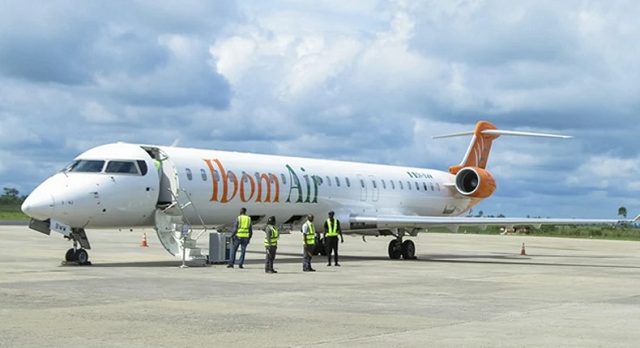
Ibom Air Sets ₦150bn Revenue Target For 2025

Ibom Air Orders 10 Aircraft From Airbus

Ibom Air is aiming for a ₦150 billion profit in 2025, up from the ₦96 billion it recorded in 2024, as it positions to transform Nigeria’s airline business and expand across Africa. The airline’s CEO, George Uriesi, disclosed this during the Ibom Air Travel Agents Forum held on Friday in Lagos, noting that travel agents contributed six percent of the airline’s 2024 profit.

Uriesi said Ibom Air plans to join the Global Distribution System before the end of 2025 to enhance global visibility and enable travel agents to access its services from anywhere in the world.

On operational challenges, he explained that the airline has dedicated an aircraft to manage flight disruptions and cancellations, although this approach is not profitable. However, it is part of broader efforts to improve customer service.

Ibom Air has also concluded plans to expand its network to Malabo (Equatorial Guinea), Douala (Cameroon), and São Tomé and Príncipe from its Uyo terminal, which is set to operate as a regional hub upon completion.

“We are about to expand all over Africa. Very soon, we will start operating our new terminal, which was designed to support our strategy,” Uriesi said.

He also addressed concerns raised by travel agents, including issues around pricing, online discounts, paystack charges, and refund processes.

The forum, attended by members of the National Association of Nigerian Travel Agents, the Federation of Tourism Associations of Nigeria, and other industry stakeholders, also saw the presentation of certificates to travel agents who had actively engaged with the airline over the past six months.

Foreign Investors Eye Nigeria Eurobonds As U.S. Yields Shift

The average yield on Nigerian sovereign Eurobonds declined in the global market as foreign portfolio investors expanded their positions, reflecting a shift in sentiment towards risk assets.

Renewed interest from foreign investors has driven down yields on Nigerian Eurobonds, coinciding with changes in U.S. Treasury yields that have encouraged appetite for emerging market debt. This wave of bargain hunting marks a reversal from previous cautious trading patterns, underscoring the evolving global market dynamics and the growing appeal of Nigerian assets.

MarketForces Africa reported sell pressures on U.S. Treasury notes, with the 2-year yield rising by 1 basis point to 3.874%, the 10-year yield gaining nearly 2 basis points to 4.363%, and the 30-year yield climbing 2.5 basis points to 4.885%. Despite a successful 30-year bond auction, the upward pressure on yields reflected continued caution among investors.

Elsewhere, the UK’s 10-year gilt yield edged down to 4.59% as markets increasingly priced in a potential rate cut by the Bank of England in August, despite inflation remaining above 3%. Recent UK economic data pointed to further weakness, with GDP shrinking 0.1% in May after a 0.3% contraction in April.

On Thursday, the Nigerian Eurobond market closed on a bullish note, supported by strong investor demand across the yield curve. Notably, significant buying interest in the FEB-2032 bond contributed to market performance, leading to an 8-basis-point drop in average yields to 8.50%, according to a note from Cowry Asset Limited.

Broader African Eurobonds also advanced as U.S. jobless claims fell to 227,000, signaling a resilient labor market even as Fed rate cut expectations for July moderated. Meanwhile, investors continue to monitor developments around potential U.S. trade agreements with the EU, India, and Canada, although uncertainties persist following new tariff threats on BRICS nations.

Nigerian Bond Yields Dip To 16.88% Amid Strong Buying Interest

FGN Bond For Jan. 2021 Oversubscribed

The average yield on Nigerian government bonds declined in the secondary market as bullish sentiment drove strong demand for naira assets ahead of the Debt Management Office’s July auction.

Investors are positioning in local bonds on expectations of reduced supply in the third quarter, with lower spot rates at recent primary auctions reinforcing optimism. Demand has remained concentrated at the mid-to-long end of the curve.

With inflation on a consistent downward trend and the naira stabilising against the US dollar, some analysts are anticipating potential monetary policy easing despite the risk of capital outflows.

On Thursday, yields fell across key maturities, leading to a 26-basis-point drop in the average yield to 16.88%. Trading was focused on mid-term bonds, with limited transactions across the curve. Bonds maturing in May 2033 traded at 16.40%, extending their recent downward movement.

Fixed-income analysts expect cautious sentiment to persist this week, with subdued trading activity and selective interest across key tenors.

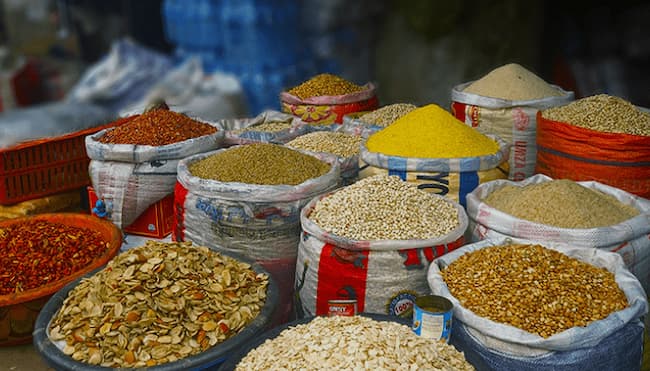
FG Raises Alarm As 161 Million Nigerians Face Food Insecurity

FCCPC To Examine, Tackle Erratic Hike In Food Prices

The Federal Government has raised alarm over a worsening food and nutrition crisis, revealing that about 161 million Nigerians are currently food insecure.

Director of the Nutrition and Food Safety Department at the Federal Ministry of Agriculture and Food Security, Alhaji Nuhu Kilishi, disclosed this on Friday during a stakeholders’ consultative meeting in Abuja focused on developing a Food and Nutrition Security Crisis Preparedness Plan (FNSCPP). The plan, he explained, stems from the Accelerating Nutrition Results in Nigeria (ANRiN) project — a state-led, World Bank-funded initiative aimed at reducing malnutrition by expanding access to cost-effective nutrition services for vulnerable populations.

“Only 20 per cent of Nigerians are currently food secure, meaning they are certain of their next meal,” Kilishi said. “Food insecurity has climbed sharply from 35 per cent in 2014 to around 74 per cent in recent years.” He also ttributed the rise in hunger and malnutrition to worsening insecurity, including banditry and kidnappings, which have disrupted farming activities and driven many away from agricultural production.

Kilishi said the government had initiated targeted responses to mitigate the crisis, including the distribution of seeds and inputs for homestead gardening across the country’s 774 local government areas. “Inflation and rising prices of food inputs and commodities have also made it difficult for households to afford healthy diets,”

“We have now secured World Bank funding to implement this plan in 21 states, while the remaining 15 states will be supported through federal resources,” While, Dr Ritgak Tilley-Gyado, Senior Health Specialist at the World Bank, noted that the ANRiN project, launched in 2018, had now entered a new phase with a focus on building long-term resilience.

“With additional crisis response window financing made available, the aim now is to strengthen Nigeria’s systems to prevent future food and nutrition crises,” she said. “This phase moves away from reactive measures to a more preventive and forward-looking strategy.”In her remarks, Mrs Ladidi Bako-Aiyegbusi, Director of Nutrition at the Federal Ministry of Health and Social Welfare, referenced data from the 2021 National Food Consumption and Micronutrient Survey, which showed that over 40 per cent of households in Nigeria are unable to afford nutritious meals.

She stressed that the lack of access to healthy food contributes significantly to Nigeria’s high maternal and child mortality rates and widespread clinical malnutrition. “We do not want to wait for a crisis before responding. Food and nutrition security is not the responsibility of the health sector alone — it is multisectoral,” she said. “Agriculture, education, water resources, information, security, and development partners all have critical roles to play.”

Mrs Ojuolape Solanke, National Project Manager for ANRiN 2.0, said the new plan would ensure delivery of essential nutrition services to children and pregnant women at the primary healthcare level. “We are working to ensure that within the next six months, a comprehensive plan is in place to guide Nigeria’s response to any future food and nutrition emergencies,” she said.

The proposed preparedness plan forms part of broader efforts to shield the country from a deepening food and nutrition crisis, as millions remain vulnerable to hunger and malnutrition.

Naira Reforms Shift Wealth To Government, Squeeze Others

Naira devaluation is often presented as a necessary economic adjustment, but for a country with Nigeria’s distorted structure, it ends up transferring wealth to the government while impoverishing the people and squeezing the private sector.

It is easier to discuss naira devaluation in a country with a wide gap between the rich and the poor than to attempt currency redenomination. Meanwhile, the lowest naira denominations have become practically useless, erased by inflation without an official announcement ending their legal tender status, yet the monetary authorities continue producing them.

The nation’s economic balance sheet has ballooned with rising foreign and local debts, while local companies with foreign exchange exposures struggle to survive. How is a policy that destroys corporate balance sheets considered sound economic management?

Yet, international institutions like the IMF, World Bank, and global ratings agencies continue to endorse these reforms as the best Nigeria can do, even as they widen inequality.

For the federal government, however, the naira’s weakness has been a windfall. Oil royalties and related earnings reportedly jumped from about N4 trillion to N12 trillion after the naira was floated, representing a 200 percent increase. This surge followed the June 2023 decision to float the naira, which saw it plunge from N473/$ to around N800/$ and close the year near N1,000/$. In 2024, it weakened further to an average of N1,600/$.

But for everyday Nigerians, this is far from good news. While government revenues swell, ordinary people see their purchasing power eroded, and businesses face mounting costs. The argument that government spending on infrastructure will eventually offset these pains often fails to resonate with millions who see no direct benefit.

Many businesses have yet to recover from the initial shock of devaluation, with some scaling back operations due to the harsh economic environment it triggered.

In reality, naira devaluation is not stopping imports; it is simply preventing poorer Nigerians from accessing dollars, while imports continue for those who can afford them. This challenges the notion that devaluation alone will fix Nigeria’s trade imbalance.

Devaluation typically supports economies with diversified exports seeking competitiveness in global markets. But Nigeria’s exports remain largely raw commodities, primarily hydrocarbons, with little value addition or diversification. When last did Nigeria export textiles or processed cocoa products at scale?

Meanwhile, when you hear figures like a N55 trillion budget, it helps to convert it to dollar terms and consider the population it is meant to serve. It becomes clear how little there is to go around—and how far the average Nigerian is from the prosperity such figures suggest.

-MarketforcesAfrica

Treasury Bills Market Surges Following N1tn Unallotted Auction Bids

Average yields on Nigerian Treasury bills declined by 27 basis points as strong buying momentum continued in the secondary market following the latest auction by the Central Bank of Nigeria (CBN).

The CBN had offered N250 billion in Treasury bills for subscription, attracting over N1.3 trillion in bids. With the excess bids of more than N1 trillion rejected, investors turned to the secondary market on Thursday, driving up demand across short, mid, and long tenors.

Cordros Capital Limited noted that the increased demand pushed average Treasury bill yields down to 19.1% as prices climbed.

Specifically, yields at the short end of the curve fell by 19 basis points, while mid-tenor bills saw yields decline by 37 basis points. Long-dated bills recorded a 25-basis-point drop in yields.

Analysts attributed the yield drop at the short end to strong demand for the 91-day bill, which saw a sharp decline of 145 basis points. Similarly, the 147-day bill drove the yield drop at the mid-segment, falling by 154 basis points, while the 245-day bill led the decline at the long end, shedding 292 basis points.

In the Open Market Operations (OMO) segment, average yields also contracted by 66 basis points to 24.4%, with renewed interest in short-term bills, particularly the October/November Treasury bills and the new 1-year bill maturing on July 9, which cleared at 15.45%. Demand also picked up for January and March OMO papers.

Analysts expect yields to continue declining amid strong liquidity conditions in the money market, sustaining investor interest in short-term fixed-income instruments.

Ethiopian Airlines Begins Flights Between Addis Ababa And Porto

Ethiopian Airlines
Stakeholders Resist Ethiopian Airlines Plan to Operate Local Flights

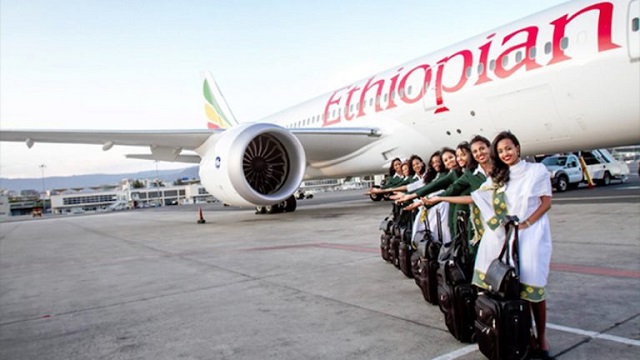
Ethiopian Airlines Group has officially commenced a new passenger service linking Addis Ababa, Ethiopia, to Porto, Portugal, marking another major expansion in the airline’s global network.

The inaugural flight departed from Addis Ababa Bole International Airport on July 2, 2025, after a launch ceremony attended by dignitaries, invited guests, and senior executives of the airline. The new route underscores its commitment to expanding connectivity between Africa and Europe and further strengthens the growing socio-economic ties between Ethiopia and Portugal.

“We are truly delighted to launch a new flight to Porto, Portugal, reinforcing yet another link between Africa and Europe,” said Mesfin Tasew, Chief Executive Officer of Ethiopian Airlines Group. “We are dedicated to enhancing our passengers’ convenience in traveling across the globe in a seamless connection and delivering our renowned award-winning services. This new route is beyond a connection between Addis Ababa and Porto. It is a bridge between Africa and Europe.”

Tasew also reaffirmed the airline’s commitment to service excellence, stating, “As we expand our global network, we remain committed to delivering our signature Ethiopian hospitality and reliable service to every corner of the world we fly to.”

The new service will operate four times weekly using the Boeing 787 Dreamliner and will include a stopover in Madrid, Spain. With this addition, Ethiopian Airlines continues to solidify its reputation as Africa’s premier carrier and a major player in global aviation.

Air Peace Suspends Lagos Flights For Local Government Elections

Air Peace has announced the temporary suspension of all flight operations into and out of Lagos on Saturday, July 12, 2025, between 3 a.m. and 3 p.m., in response to movement restrictions imposed for the local government elections.

In a statement released on Thursday, the airline cited directives from the Lagos State Police Command, which will restrict movement across all roads and waterways in the state during the election period.

“The movement restrictions across all roads and waterways in Lagos State by the Lagos State Police Command necessitated the flight suspension,” the airline said.

Air Peace added that normal flight services to and from Lagos will resume at 4 p.m. on the same day, in line with its scheduled operations.

“We apologise for any inconvenience this may cause our valued passengers whose travel plans are affected,” the statement read.

Passengers are advised to adjust their travel plans accordingly and stay updated through the airline’s official communication channels.

EFCC Flags Politicians Using Cryptocurrency To Hide Illicit Wealth

The Chairman of the Economic and Financial Crimes Commission (EFCC), Ola Olukoyede, has revealed that some corrupt Nigerian politicians are increasingly using cryptocurrencies to conceal stolen public funds and evade detection by anti-graft agencies.

He made this disclosure on Thursday during an event commemorating Africa Anti-Corruption Day. The event, which was monitored took place simultaneously in Abuja, Lagos, and Ibadan. Virtual asset fraud is on the rise,” Olukoyede said. “Our findings show that fraudulent politicians are already perfecting schemes and hiding their loot in cryptocurrencies to beat the investigative blackness of anti-corruption agencies. Stolen funds and unexplained wealth are being warehoused in wallets, and payment for services are being done through this window.”

He warned that while virtual assets have revolutionised global financial transactions, they have also opened new avenues for money laundering and other financial crimes. “Technology is moving at a supersonic speed around the world,” he said. “The advent of virtual assets is a response to one of the qualities of money as a store of value like it is known in our elementary economies. However, as with every progressive innovation, fraudsters evolve ways of perverting their genuine purposes.”

Despite these challenges, Olukoyede assured the public that the EFCC is not powerless. “Virtual asset fraud and investment scams are not hard nuts to crack,” he said. “Proactive and broad-based training and intelligence are bringing fraudulent schemes to the fore.” Speaking in Lagos through his representative, Chief of Staff and Lagos Zonal Director, C. E. Michael Nzekwe, Olukoyede noted that virtual assets have become a dangerous tool in the hands of fraudsters and dishonest public officials. He stressed that the anonymity and borderless nature of blockchain-based platforms are being exploited across Africa.

In Ibadan, the EFCC chairman was represented by Hauwa Ringin, Acting Zonal Director of the Ibadan Directorate. She warned that investment scams, including those involving virtual assets, are spreading rapidly across the continent. Also speaking at the Abuja event, the Deputy Governor of Economic Policy at the Central Bank of Nigeria (CBN), Muhammad Abdullahi, representing CBN Governor Yemi Cardoso, revealed that Nigeria recorded over $56 billion in crypto-related transactions between July 2022 and June 2023.

“In Nigeria, over $56bn in crypto-related transactions were recorded between July 2022 and June 2023, making the country Africa’s digital transaction leader,” Abdullahi said. However, he cautioned that this growth has not come without consequences. According to him, the CBN’s 2024 Financial Stability Report shows a 45 percent rise in financial fraud cases, with 70 percent of losses tied to digital platforms and unregulated virtual asset services. He added, “Furthermore, over 30 Ponzi-style investment schemes exploiting digital currency narratives have been flagged by the SEC and other agencies.” Abdullahi warned that these developments pose major risks, including the loss of consumer confidence and damage to Nigeria’s financial integrity and global reputation.

To address these challenges, the CBN and the Securities and Exchange Commission (SEC) have established a joint committee to regulate the virtual asset space, with support from the EFCC and the Nigerian Financial Intelligence Unit. “We have intensified our regulatory and supervisory responses,” Abdullahi said. “We uncovered systemic weaknesses, including poor KYC practices and insufficient transaction monitoring.” He also revealed that the CBN is in discussions with the EFCC to develop a National Virtual Asset Wallet to store seized digital assets and emphasized the importance of public education, especially for young people.

In Lagos, anti-fraud expert Kaina Garba explained the nature of virtual assets and their misuse. “Criminals now exploit virtual assets to defraud unsuspecting investors,” he said. “Many disappear with people’s hard-earned money after marketing fictitious tokens or projects.” He noted that although cryptocurrencies were previously unregulated, the recently passed Investment and Securities Act 2025 now provides a legal framework. Garba said the EFCC has responded by strengthening its cybercrime units, investing in digital forensics, and expanding both local and international collaborations.

Representing the SEC, Divisional Head of Legal and Enforcement, John Achile, affirmed the commission’s commitment to investor protection under the 2025 Act. “The SEC has a dual responsibility: investor protection and market development,” he said. “With digital assets now legally recognised, we are regulating this space through structured incubation programmes and licensing procedures.” Achile also explained that the SEC had created a Digital Asset Division and adopted a two-stream incubation model—accelerated and managed—to scrutinise business models before issuing licences.

In Ibadan, Professor of Criminology Oludayo Tade delivered a lecture titled “Understanding Virtual Asset and Investment Fraud.” He cautioned Nigerians against get-rich-quick schemes, saying, “Anything too good to be true is a red flag. Even if you invest in a bank, the returns cannot be 50 percent in a week.” Tade added that fraudsters often use the images and reputations of credible individuals and organisations to legitimise their scams. “To prevent virtual fraud, we must increase awareness,” he said. “People who fell victim to CBEX are likely to fall again if awareness isn’t raised.”

In a goodwill message at the Ibadan event, Oyo State Sector Commander of the Federal Road Safety Corps, Rosemary Alo—represented by DCC OPS Olugbesan—highlighted the role of joint enforcement operations in disrupting illicit financial flows, especially through monitoring unregistered or fake vehicle number plates.

The event underscored the urgent need for stronger regulations, public awareness, and inter-agency collaboration in combating the growing threat of virtual asset-based fraud in Nigeria and across Africa.

BizWatchNigeria.Ng
Privacy Overview

This website uses cookies so that we can provide you with the best user experience possible. Cookie information is stored in your browser and performs functions such as recognising you when you return to our website and helping our team to understand which sections of the website you find most interesting and useful.