More than one billion Africans are exposed to toxic smoke from cooking on open fires or using hazardous fuels, posing severe health and environmental risks, the International Energy Agency (IEA) has warned. The agency’s latest report describes the crisis as “one of the greatest injustices of our time,” with devastating consequences for public health and climate.
According to the IEA, four out of five households in Africa rely on wood, charcoal, agricultural waste, or manure for cooking. This practice not only fills homes with dangerous fine particles that trigger respiratory and cardiovascular diseases but also accelerates deforestation, removing vital carbon sinks that combat global warming. The toll is staggering: 815,000 Africans die prematurely each year from household air pollution linked to dirty cooking methods.
Globally, nearly two billion people still depend on open fires or rudimentary stoves, but the problem is most acute in sub-Saharan Africa, where progress has stalled despite gains in Asia and Latin America. Women and children bear the brunt of this crisis, spending hours daily searching for firewood instead of pursuing education or paid work, the report noted.
The IEA says the solution is clear and affordable. An annual investment of $2 billion—just 0.1 percent of global energy spending—could eradicate this problem for good, saving an estimated 4.7 million lives in Africa by 2040 while cutting greenhouse gas emissions by 540 million tons a year, equivalent to the entire aviation sector’s output.
Efforts are underway. A landmark summit in Paris last year secured $2.2 billion in pledges, with $470 million already disbursed to kick-start projects like stove manufacturing in Malawi and affordable clean cooking programs in Uganda and Ivory Coast. But Birol insists more urgency is needed: “For once and for all, this problem can be solved. The time for action is now.”
A N323.4bn negotiated cross in First HoldCo shares has set the market abuzz with speculation that chairman Femi Otedola may have lifted his stake after one of the largest off market deals seen recently on the Nigerian Exchange. The bulk transaction, executed in 17 negotiated trades at N31 per share on Wednesday July 16 2025, moved more than 10 billion shares across multiple brokerage houses while investors await formal regulatory disclosure.
Market trade data show heavy selling from entities linked to long time shareholders Oba Otudeko and Tunde Hassan Odukale. Otudeko related accounts offloaded about 7.79 billion shares, including 5.87 billion units routed through Barbican Capital, 1.52 billion via Peace Account GASL Nominee, and 392.9 million through RAML MEF9. Odukale related holdings accounted for roughly 2.28 billion shares across pension, insurance, and investment vehicles, led by 1.03 billion from Leadway Holdings, 432.3 million from Leadway Assurance, and 392.3 million from UBAPC Leadway Pensure PFA T, with additional volumes from other Leadway structures.
The crosses were handled through a broker roster that included CardinalStone Securities, Meristem Stockbrokers, Rencap Securities, United Capital Securities, Stanbic IBTC Stockbrokers, Regency Asset Management, and First Securities which appeared on the buy side. The sheer size and concentration of the prints have driven chatter that Otedola consolidated control, though some analysts note that his last disclosed stake in the 2024 full year report stood at 11.8 per cent.
Commenting on the flows, Tunde Amolegbe, chief executive at Arthur Stevens Asset Management, said the market had long anticipated an exit by one of the large legacy shareholders, adding that disputes with the bank may have accelerated negotiations to sell and clear the path for governance stability. He cautioned that documentation has not yet surfaced.
Economist and investment specialist Vicent Nwani said strategic reshuffles are not new at First HoldCo, a franchise that has seen periodic shifts in influence as billionaire investors build and unwind positions over time. He added that the Central Bank of Nigeria must ensure minority investors are protected if a change in control emerges.
Not all observers see a straight accumulation by Otedola. One market source suggested the unusually large trade block was driven by internal restructuring to comply with the Central Bank Single Obligor Limit rather than a fresh outright purchase. The CBN updated the rule on June 13 2025 and instructed banks benefiting from forbearance to curb dividends, defer senior bonuses, and pause offshore investments, prompting capital and ownership adjustments across the sector.
Despite the scale of the crossing, First HoldCo had not filed any notice with the Nigerian Exchange as of press time. NGX rules require disclosure when a holding crosses the five per cent threshold, and investors are watching for a regulatory filing to clarify who now owns what.
More Nigerians are exploring alternative destinations for education, work, and relocation as the United States, Canada, and the United Arab Emirates implement stricter visa restrictions, limiting access to these traditionally popular migration routes.
In recent months, the United States Embassy in Nigeria reduced visa validity for many categories, including visitor, student, and exchange visas, to single-entry permits valid for three months, citing high overstay rates among Nigerian applicants.
Canada has also increased the required proof-of-funds under its Express Entry and study pathways, raising the threshold for single applicants from CAD 14,690 to CAD 15,263, equivalent to about ₦17 million. This adjustment is part of measures to manage rising demand and ensure that new migrants have adequate financial stability.
Meanwhile, the UAE continues to enforce visa restrictions for Nigerian travellers, including a ban on transit visas and new requirements for visitors to show proof of substantial financial standing. Nigerians aged 18 to 45 can no longer apply for tourist visas unless travelling with family or in groups.
These restrictions have triggered a shift in migration plans, with many Nigerians now considering the United Kingdom, Germany, Australia, Eastern Europe, and select Asian countries for education and skilled migration opportunities.
Migration consultants report increased inquiries for countries with more structured skilled migration pathways and favourable visa policies. The UK’s digital visa system, Germany’s skilled worker routes, and Australia’s points-based migration framework are now drawing interest from Nigerian professionals and students seeking clearer and more stable relocation pathways.
In addition to Europe and Asia, some Nigerians are also exploring African destinations offering residency and business opportunities as they navigate the tightening global mobility landscape.
The Ministry of Foreign Affairs has confirmed that it is engaging with affected countries, including the US and UAE, to address visa policy concerns and ease travel challenges. President Bola Tinubu has stated the government’s commitment to preserving fair travel access for Nigerians under its “4-D Foreign Policy Agenda.”
Businesses and families impacted by the new restrictions are being advised to prepare robust documentation, apply early, and avoid unaccredited visa agents, as embassies tighten screening processes and extend processing times for applications.
Despite these hurdles, Nigerian professionals and students continue to pursue global opportunities, demonstrating resilience and adaptability as they adjust plans in search of education, employment, and business prospects abroad.
The Federal Government has announced plans to host Nigeria’s first International Air Show in Abuja in December 2025, aiming to position the country as a hub for aviation business and attract global industry stakeholders.
The Permanent Secretary of the Federal Ministry of Aviation, Ibrahim Kana, disclosed the plans in a statement, emphasising the need for close collaboration with the Ministry of Interior to ensure the event’s success. The air show is expected to attract wide international participation, with invitations to be extended to civil aviation authorities, investors, and marketers worldwide.
Kana highlighted the importance of seamless visa and security operations due to the expected influx of international visitors, noting that agencies under the Ministry of Interior, including the Nigeria Immigration Service, Nigeria Security and Civil Defence Corps, and the Federal Road Safety Corps, will play key roles in facilitating the event.
Abuja was chosen for the air show due to its strategic location and accessibility, with Kana hinting that President Bola Tinubu may attend, underscoring the government’s commitment to delivering a world-class event to promote Nigeria’s aviation sector.
The Ministry of Interior has assured full support, with the Permanent Secretary, Magdalena Ajani, stating that the online visa application system will be optimised to ease entry for visitors attending the air show. Comptroller-General of Immigration, Kemi Nandap, also highlighted the need for data-sharing to project visitor numbers, ensuring efficient visa issuance and streamlined arrivals.
The Nigerian Air Force has pledged its support, with a technical subcommittee already addressing operational plans, while the Nigerian Civil Aviation Authority has confirmed it will provide necessary authorisations and regulatory guidance to ensure a smooth event.
The International Air Show will feature participation from aircraft manufacturers, service providers, and aviation stakeholders globally, with the event expected to include aircraft displays, exhibitions, and networking sessions to drive investment and showcase opportunities in Nigeria’s aviation and aerospace sectors.
The event marks a significant milestone for the country’s aviation industry, with the Federal Government reaffirming its commitment to creating a platform that will advance the sector’s growth and establish Nigeria as a key player in the global aviation space.
Following two consecutive declines in the inflation rate and relative stability in the foreign exchange market, expectations are rising that the Monetary Policy Committee may consider a rate cut at its next meeting.
Ahead of the MPC’s 301st meeting scheduled for July 21-22 in Abuja, the National Bureau of Statistics reported that headline inflation eased for a second consecutive month, moderating to 22.22% in June from 22.97% in May. This follows a series of declines since the NBS rebased the Consumer Price Index earlier in the year, which saw inflation drop from 34.80% in December 2024 to 24.48% in January 2025.
The moderation in inflation and naira stability have led some analysts to predict that the MPC could adjust the Monetary Policy Rate downward, marking a potential shift away from its prolonged tightening stance. However, others believe the committee may maintain the current rate to consolidate recent gains and ensure sustained price and exchange rate stability.
At its May meeting, the MPC held the benchmark interest rate at 27.5%, citing cautious optimism amid improving macroeconomic indicators, including a narrowing gap between official and parallel exchange rates, declining petrol prices, and a favourable trade balance. The committee emphasised that while inflationary pressures were easing, risks of reinflation remained, warning that premature rate cuts could undermine naira stability.
Despite these concerns, the continued slowdown in inflation has strengthened arguments for a modest rate cut to support economic activity and reduce borrowing costs, particularly for businesses in the real sector.
Afrinvest Securities expects the MPC to maintain its current stance, citing external risks, food supply shocks from insecurity and flooding, and uncertainty surrounding the delayed release of Nigeria’s rebased GDP figures for Q1 2025. The firm projected inflation could drop to 22.2% by June, driven by naira appreciation and a high base year effect.
Conversely, the Financial Derivatives Company has advocated a 25-basis-point cut, arguing that lower rates would ease borrowing costs and stimulate the productive sector. The firm noted that the moderation in inflation was supported by a reduction in petrol prices, relative naira stability, and a slowdown in money supply growth.
Cordros Securities noted that with easing inflation and stable exchange rates, the MPC may gradually consider a pivot toward monetary easing in the second half of the year, though it is likely to proceed cautiously given global financial tightening and geopolitical uncertainties.
Central Bank of Nigeria Governor, Olayemi Cardoso, has maintained that the apex bank will continue to pursue stability in the foreign exchange and financial markets while consolidating recent gains. He reiterated the goal of reducing inflation from double digits to single digits in the medium to long term, stressing that the bank will remain vigilant while collaborating with fiscal authorities to drive economic growth.
The naira has strengthened by 7.27% this year, appreciating from N1,650/$ in January to N1,530/$ in July, supported by sustained CBN interventions and improved investor confidence.
The MPC has highlighted that Nigeria’s medium-term growth prospects remain positive, underpinned by the strong performance of the non-oil sector and rising domestic crude oil production, which reached 1.74 million barrels per day, strengthening the current account balance and supporting forex reserves.
The committee has also noted the positive impact of the naira’s appreciation, improved forex liquidity, and initiatives such as the rollout of the Electronic Foreign Exchange System and the Nigerian FX Market Code, which are designed to enhance transparency and boost investor confidence.
Despite global uncertainties, including geopolitical tensions and trade risks, the MPC expects continued moderation in inflation supported by stable exchange rates and lower petrol prices.
While some analysts argue that Nigeria may have reached the limits of its monetary tightening, with interest rates above 35% for many businesses and the cash reserve ratio at 50%, others caution that the central bank must maintain a careful balance between supporting economic growth and ensuring price stability.
The upcoming MPC meeting is set against a backdrop of easing inflation, a stronger naira, and renewed investor confidence, creating conditions that may favour a modest rate cut to stimulate the economy while safeguarding recent macroeconomic gains.
The exchange rate between the Naira and the US dollar, according to the data released on the FMDQ Security Exchange, the official forex trading portal, showed that the naira closed at 1545.00 per $1 on Friday, July 118th, 2025. The naira traded as high as 1520.00 to the dollar at the investors and exporters (I&E) window on Thursday.
Dollar to naira exchange rate today black market (Aboki dollar rate):
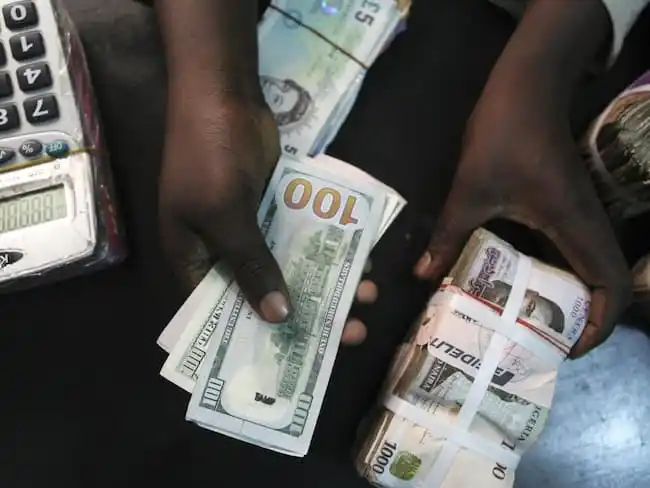
The exchange rate for a dollar to naira at Lagos Parallel Market (Black Market) players buy a dollar for ₦1540 and sell at ₦1545 on Thursday 17th July, 2025, according to sources at Bureau De Change (BDC).
Please note that the Central Bank of Nigeria (CBN) does not recognize the parallel market (black market), as it has directed individuals who want to engage in Forex to approach their respective banks.
Dollar to Naira Black Market Rate Today
Dollar to Naira (USD to NGN)
Black Market Exchange Rate Today
Buying Rate
₦1540
Selling Rate
₦1545
Dollar to Naira CBN Rate Today
Dollar to Naira (USD to NGN)
CBN Rate Today
Highest Rate
₦1538
Lowest Rate
₦1520
Please note that the rates you buy or sell forex may be different from what is captured in this article because prices vary.
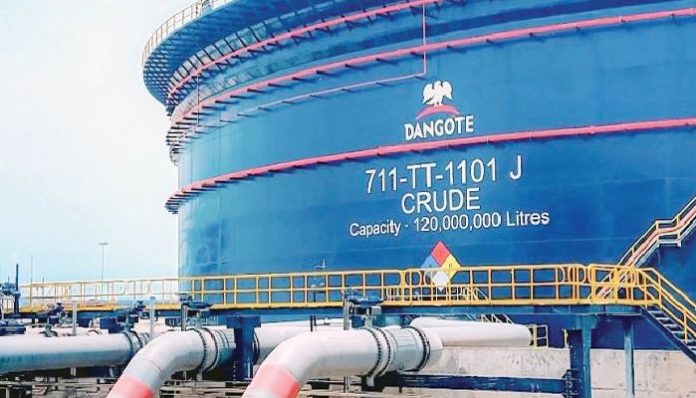
The Dangote Petroleum Refinery and Petrochemicals has suspended its discounted fuel supply scheme following the discovery of a racket involving some affiliate marketers and strategic partners who have been diverting subsidised petroleum products for profit.
Investigations revealed that certain marketers granted access to discounted products, meant to ensure affordability and stable supply across retail outlets, had been redirecting loaded trucks to unregistered third-party marketers. The scheme was originally introduced to help registered partners maintain stable profit margins amid price competition from importers while guaranteeing nationwide availability of Dangote products.
However, the marketers were found to be bypassing the distribution chain by allowing unregistered marketers to use their Authority To Collect (ATC) loading tickets, enabling them to profit from the price differential without incurring legitimate operational costs. The diverted products were often resold at market rates significantly higher than the agreed subsidised prices, undermining the objectives of the scheme and distorting the downstream market.
In response, the refinery has suspended the discounted pricing scheme effective July 13, 2025, as disclosed in a letter to strategic partners signed by the Group Executive Director, Commercial Operations, Fatima Dangote.
The management noted that some marketers were reselling products directly from the refinery tarmac below official gantry prices, threatening the long-term sustainability of operations. Despite several engagements with partners, the abuse of the discount scheme reportedly became widespread.
The letter stated, “In our drive to ensure the distribution and retail sale of DPRP refined petroleum products across your service stations nationwide, DPRP commenced the strategic partnership scheme with the sole aim of ensuring consumers nationwide have access to affordable and clean petroleum products. Unfortunately, over the last few months, DPRP has been receiving unprecedented complaints of Strategic Partners selling their ATCs at the refinery below the prevailing PMS gantry product price.”
The company clarified that all outstanding Product Release Notes (PRNs) issued at the discounted rate would remain valid for loading, and payments completed before the suspension date would be honoured at the agreed discounted rate. It further stressed that all retail stations must continue to adhere to recommended pump prices to maintain uniformity and prevent further market distortion.
Despite the suspension, the Dangote Refinery emphasised that the strategic partnership scheme would not be scrapped entirely, adding that it is exploring new incentive and reward structures for its partners.
Providing further context, oil and gas analyst Olatide Jeremiah explained that affiliate marketers with loading access had been reselling products to non-registered marketers for quick profits. According to him, some marketers exploited the discounted price structure, reselling products below gantry prices but above the discounted rates, bypassing retail distribution while maintaining profitable margins.
Market checks show that non-affiliated marketers who rely on imported fuel continue to sell at similar price ranges as Dangote’s registered marketers despite not benefitting from the subsidised scheme. Recently, several depots aligned their ex-depot prices with the refinery’s latest adjustments, offering prices around N820 per litre, down from N835 earlier in the week.
While the refinery did not disclose the names of defaulting marketers, its current list of strategic partners includes MRS Oil, Heyden Petroleum, Ardova Plc, Hyde Energy, Optima Energy, Techno Oil, TotalEnergies, Garima Petroleum, Sunbeth Energies, Sobaz Nigeria Ltd, Virgin Forest Energy, Sixxco Oil Ltd, NU Synergy Ltd, and Soroman Nigeria Ltd.
The Dangote Refinery maintained that it is committed to ensuring transparent and sustainable supply of petroleum products nationwide and will provide further updates on the restructuring of the discounted pricing scheme in due course.
The Nigerian naira weakened significantly against the U.S. dollar on Thursday, causing the spread between the official and black-market exchange rates to shrink to less than ₦2—a rare convergence that’s drawn market attention
Data released by the Central Bank of Nigeria (CBN) indicated that the official exchange rate depreciated to ₦1,533.11 per dollar, with intraday fluctuations ranging from a low of ₦1,520 to a high of ₦1,538. The official rate has now declined for two consecutive trading sessions.
Despite this depreciation, Nigeria’s foreign reserves saw an uptick, rising to $37.78 billion midweek. Market watchers noted that the increase occurred without direct intervention through open market operations, pointing to alternative sources of foreign inflow likely responsible for the reserve accretion.
Simultaneously, the parallel market rate appreciated slightly to ₦1,535 per dollar, tightening the gap between the two markets to just about ₦2. Analysts suggest this narrowing could signal short-term stability in Nigeria’s currency outlook.
On the global front, geopolitical instability sent oil prices higher. Brent crude gained $1 to trade at $69.52 per barrel, while U.S. West Texas Intermediate rose by $1.16 to close at $67.54, following four straight days of drone attacks on oil infrastructure in Iraqi Kurdistan.
Gold prices, on the other hand, retreated due to a strengthening U.S. dollar and positive American economic data. Spot gold slipped 0.3% to $3,337.43 per ounce after dipping to an intraday low of $3,309.59. Investors remain cautious as tariff uncertainties loom over global markets, keeping volatility elevated.
The near convergence of Nigeria’s dual exchange rates, coupled with foreign reserve growth and positive oil pricing, could have implications for fiscal planning and investor confidence in the short term.
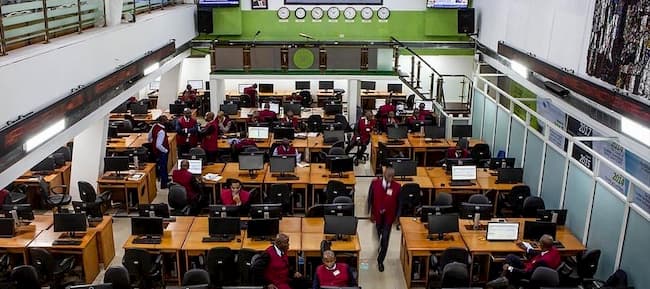
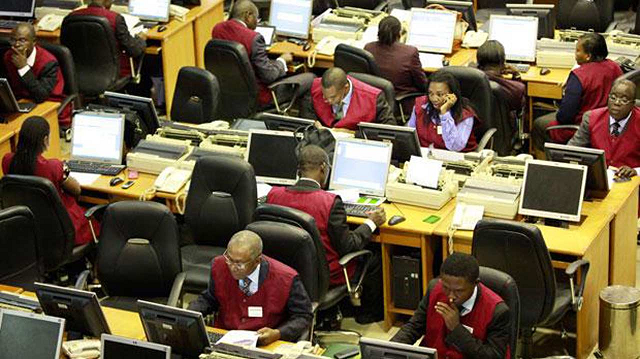
The Nigerian Exchange (NGX) experienced a strong bullish rally during Thursday’s intraday session, driven by aggressive investor interest in heavyweight stocks such as FirstHoldco, Access Holdings, and BUA Cement.
As anticipation builds over the upcoming second-quarter financial results, investor appetite has remained resilient, particularly for dividend-paying equities often referred to as dividend aristocrats. This momentum has continued to push the NGX All-Share Index to fresh all-time highs.
Market analysts observed significant block trades in FirstHoldco, coinciding with reports of previous board executives divesting their stakes—a move seen as fostering corporate stability. Meanwhile, other tier-one banking equities are seeing notable repricing ahead of Q2 releases.
At the mid-session mark, Alpha Morgan Limited’s update to clients indicated a 0.38% uptick in the benchmark index, signaling a firm bullish outlook. The broader equities rally was underpinned by renewed capital flow into mid- and large-cap stocks.
Leading Thursday’s list of top gainers were FIRSTHOLDCO with a 9.94% gain, BUACEMENT up by 7.35%, ACCESSCORP gaining 4.29%, NASCON rising 4.14%, and DANGSUGAR increasing 4.00%. Other upward movers included INTBREW (2.62%), PZ (1.98%), FIDELITYBK (0.93%), STERLINGNG (0.78%), ZENITHBANK (0.39%), WEMABANK (0.31%), STANBIC (0.30%), and DANGCEM (0.05%).
The session reflects a continued bullish sentiment, as institutional and retail investors seek to capitalize on value stocks ahead of earnings declarations.
Nigeria’s equity market soared to a fresh milestone on Thursday, with the Nigerian Exchange (NGX) crossing a market capitalization of ₦82 trillion, propelled by a strong showing in cement giants like Dangote Cement and BUA Cement
This upward movement followed renewed optimism around Nigeria’s slowing inflation trend, as investors channeled funds into blue-chip stocks. Despite a wider market breadth showing more losers than gainers due to profit-taking activities, the surge in demand for high-value stocks helped extend the NGX’s winning streak to its 11th consecutive session.
The NGX All-Share Index closed at a historic high of 130,147.57 points, advancing by 1,180.49 basis points, equivalent to a 0.92% gain. However, market participation weakened, with total trade volume and value plunging by 89.89% and 88.36%, respectively.
Atlass Portfolio Limited reported that investors traded about 1.18 billion units valued at ₦42.30 billion across 37,094 transactions during the day.
ACCESSCORP topped the trading volume chart, contributing 14.13% of total trades, followed by FIRSTHOLDCO (7.26%), ZENITHBANK (7.00%), Nigeria Breweries (5.76%), and AIICO (5.48%).
In terms of transaction value, ZENITHBANK emerged as the top performer, accounting for 14.73% of total trade value.
Leading the gainers’ chart, BUACEMENT recorded a 10% price increase, followed closely by DANGCEM (9.99%), CHAMS (9.96%), FIRSTHOLDCO (9.94%), ABCTRANS (9.85%), and EUNISELL (9.76%). In total, 29 stocks recorded gains during the session.
However, 46 equities closed lower, reflecting a bearish undertone in broader market sentiment. HMCALL, MECURE, BERGER, JOHNHOLT, MAYBAKER, and RTBRISCOE each saw their share prices tumble by 10%. Additional decliners included FTNCOCOA (-9.97%), NEIMETH (-9.90%), CONHALLPLC (-9.76%), UBA (-8.91%), and GTCO (-7.87%).
Sector-wise performance revealed a mixed picture. While the industrial and consumer goods sectors rose by 9.08% and 0.54% respectively, the banking sector lost 2.34%, insurance declined 0.89%, and oil & gas dropped 0.61%.
Despite the broad decline in trade activity and sectoral weakness, the market capitalization surged by ₦746.78 billion, closing at ₦82.33 trillion, signaling continued investor confidence in Nigeria’s blue-chip equities.
Oil futures ticked up on Thursday as fresh drone strikes on oil facilities in Iraqi Kurdistan and expanded Israeli strikes in Syria deepened supply risk in the Middle East while a sharper than expected draw in United States crude inventories pointed to resilient demand.
International benchmark Brent crude was last up to 68.05 dollars per barrel from 68.03 dollars at the previous settle. United States benchmark West Texas Intermediate rose to 65.50 dollars per barrel from 65.44 dollars.
Regional security jitters drove much of the tone. The Counter Terrorism Unit of the Kurdish Regional Government reported that three oil fields in Duhok were hit by drones early Wednesday and that the Hunt field was also targeted later in the day.
No casualties or major damage were reported but Washington condemned the attacks and warned they threaten Iraqs economy and long term energy investment. Separately Israeli strikes hit targets in Syria including the presidential compound and General Staff headquarters in Damascus as well as reported positions in Latakia province. Israeli military sources signaled that cross border clashes could extend for days. The escalation reinforced fears around supply from a region that hosts a significant share of global reserves.
Demand signals from the United States added support. Energy Information Administration data showed commercial crude stocks fell by about 3.9 million barrels to 422.2 million in the week ended July 11 well above expectations for a draw of roughly 1.8 million. Strategic petroleum reserves slipped by three hundred thousand barrels to 402.7 million.
Gasoline inventories climbed by 3.4 million barrels to 232.9 million suggesting refiners are running to meet transport demand. United States crude production eased by ten thousand barrels per day to about 13.37 million while imports rose by 366 thousand barrels per day to 6.38 million and exports increased by 761 thousand barrels per day to 3.52 million over the same period.
In its Short Term Energy Outlook dated July 8 the EIA projected United States crude output will average 13.37 million barrels per day in 2025. The combination of falling stocks and a slight dip in production against steady demand helped reinforce the modest price lift.
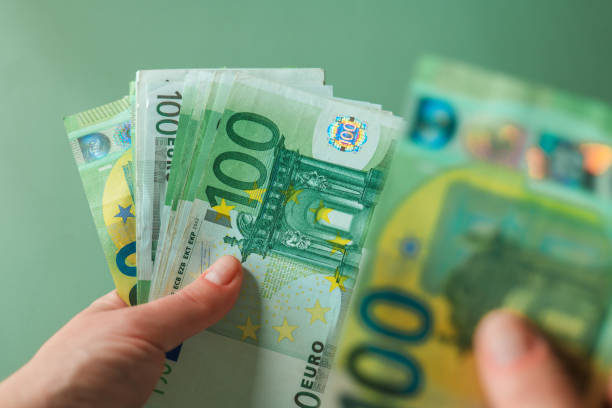
salary of a woman. euro banknotes in hands on a green background. Income of women in European countries
The euro slipped to $1.16 on Thursday, its weakest level in about a month, as a firmer United States dollar drew fresh demand and traders watched Brussels race to secure a trade agreement with Washington before a new round of tariffs takes effect.
Dollar strength followed fading expectations for United States Federal Reserve rate cuts this year after recent inflation readings came in sticky. Risk appetite also steadied after President Donald Trump signaled he would not remove Federal Reserve Chair Jerome Powell despite earlier criticism over the pace of policy easing, helping unwind hedges and lifting greenback positions across currency markets.
The dollar index rebounded to a three week high as companies closed out protection trades and speculative accounts rebuilt long dollar exposure. Market strategist Sean Callow of InTouch Capital Markets said any White House move to oust Powell would likely rattle investors by dragging down yields at the short end while forcing risk and inflation premiums higher on longer dated United States debt.
Trade politics remain in focus. Trump has announced a thirty percent tariff on European Union imports beginning next month but has since opened the door to talks. European officials responded by reaffirming their commitment to strike a deal, and currency desks say even a partial accord ahead of August 1 could temper downside in the euro. On policy, investors broadly expect the European Central Bank to hold rates at next week’s meeting, though pricing still reflects the chance of one additional twenty five basis point cut before year end. Euro area inflation was confirmed at 2 percent year on year in June, with core at 2.3 percent.
Elsewhere in foreign exchange, the Australian dollar slipped below $0.650 after labor data disappointed. Unemployment rose to 4.3 percent in June from 4.1 percent and net employment increased by only two thousand jobs versus expectations for twenty thousand, reinforcing forecasts for a Reserve Bank of Australia rate cut in August. Market odds now imply an eighty nine percent probability of a quarter point move as policymakers weigh rising joblessness against contained inflation.
Adding to the greenback bid, United States Treasury yields firmed, drawing safety and return seeking flows into dollar assets even as investors continued to debate the boundaries of Federal Reserve independence under political pressure.
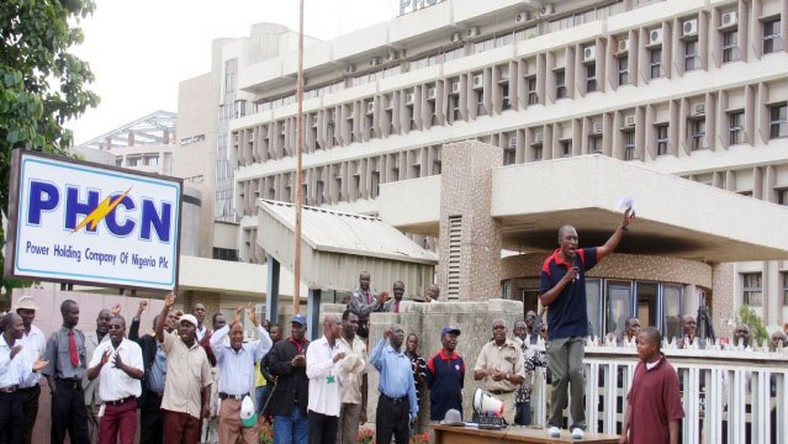
The Forum of Commissioners of Power and Energy has raised strong objections to the proposed 2025 amendment of the Electricity Act, warning that it could derail recent reforms in the nation’s power sector and trigger constitutional conflicts between the Federal Government and state authorities.
In a statement jointly signed by the forum’s chairperson, Eka Williams (Commissioner for Power and Renewable Energy, Cross River State), and secretary, Omale Omale (Commissioner for Power, Benue State), the commissioners expressed concern that the bill, if passed into law, would undermine state control over electricity distribution, contradict the principle of cooperative federalism, and increase financial burdens on already struggling consumers.
“The amendment bill, if passed, will create a constitutional conflict between the Federal Government and states, as well as legal and regulatory conflicts between federal and state regulators,” the statement read. “It threatens to dismantle the progress and positive reforms initiated by the Electricity Act 2023.”
The forum warned that the proposed amendment could roll back gains made under the 2023 Electricity Act, which granted states greater authority to regulate electricity distribution within their borders—an achievement viewed as a turning point in Nigeria’s drive toward decentralised and sustainable energy governance.
According to the commissioners, the bill introduces mandatory contributions from consumers and market participants to fund the Power Consumer Assistance Fund (PCAF), a move they say would worsen the financial strain on electricity users, particularly those under Band A, who already pay higher tariffs for improved service.
“The imposition of additional financial burden on electricity customers already struggling with high electricity tariffs is unacceptable,” the forum said, adding that the bill also risks exacerbating the financial responsibilities of both the Federal Government and states.
They also noted that states are currently working toward cost-reflective tariffs tied to improved service quality, and warned that the amendment could derail this progress.
The commissioners further cautioned that the bill could trigger legal disputes, given that it encroaches on areas now constitutionally reserved for state governments. The forum emphasised the likelihood of regulatory overlap and judicial challenges if the amendment proceeds without broad-based stakeholder consultation.
“This untimely amendment risks undermining President Bola Ahmed Tinubu’s key policy achievements in the energy sector,” the statement added.
The forum called for a halt to the legislative process on the proposed amendment and urged the National Assembly to engage in broader consultations with state governments, regulators, and other sector stakeholders to ensure alignment with the spirit and objectives of the 2023 Act.
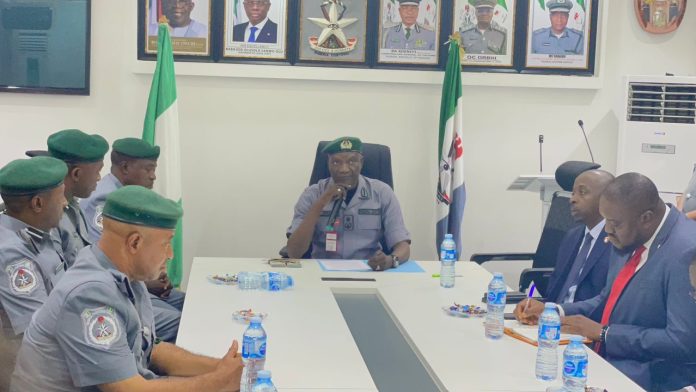
The Nigeria Customs Service (NCS) has again been spotlighted for excellence in public service and strategic communication. The National Public Relations Officer, Assistant Comptroller of Customs (AC) Abdullahi Maiwada, has been named among Nigeria’s top 50 PR and communications professionals in the prestigious 2025 PR Power List.
GLG Communications, in partnership with the Guardian Newspaper, published the recognition on Wednesday, July 16, 2025.
The PR Power List is an annual ranking that honours PR professionals who have shaped narratives and driven impactful change within the communication space, both in Nigeria and the diaspora.
AC Abdullahi Maiwada was named in the Changemakers Category, which celebrates professionals who actively challenge the norm and introduce innovative communication practices with measurable results.
Reacting to the recognition, AC Maiwada described the listing as a humbling milestone and a testament to the progress made in institutional communication within the Nigeria Customs Service.
“This recognition is deeply humbling. It speaks to the commitment of the Service to modernise public engagement, enhance transparency, and build trust through effective storytelling and timely dissemination of accurate information,” he said.
“While I am honoured to be listed, I believe the greater credit goes to the team I work with and the visionary leadership of the Comptroller-General of Customs, Bashir Adewale Adeniyi, whose reforms have empowered us to think differently, act boldly, and represent the Service with dignity and professionalism.”
The Power List, signed by Oreani Ogbe, Managing Partner at GLG Communications, classifies honourees into four distinct categories: Rising Voices, Community Impact, Changemakers, and Fourth Estate. Each category showcases different influence dimensions, from innovative storytelling and ethical standards to media power and strategic leadership.
The 2025 edition specifically praised individuals like AC Maiwada for “shaping the future of public relations through bold moves, long-term experience, and impact-driven communication.”
This honour reflects the growing credibility of the Nigeria Customs Service in the public communication landscape, driven by consistent professional excellence and a commitment to service.
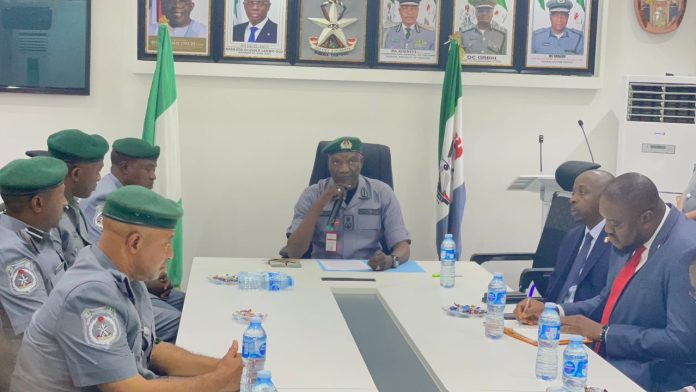
The Nigeria Customs Service (NCS), Federal Operations Unit, Zone A, has reaffirmed its commitment to curbing illicit financial flows, following the seizure of undeclared foreign currency valued at ₦30.86 million near the Seme border.
The seized funds were formally handed over to the Economic and Financial Crimes Commission (EFCC) on Wednesday, 16 July 2025.
Speaking during the handover, the Unit head, Comptroller Mohammed Shuaibu, explained that the interception occurred on Sunday, 13 July 2025, when officers on routine patrol along the Babapupa bush path flagged down a suspicious Nissan Almera.
According to him, the driver abandoned the vehicle and fled into the nearby bush, evading arrest. “Upon inspection, officers discovered undeclared foreign currency, $20,000 in U.S. dollars and 110,000 in West African CFA francs carefully stashed in the vehicle.”
“The seized currency contravenes Section 3 of the Money Laundering (Prevention and Prohibition) Act 2022, which mandates the declaration of any amount exceeding $10,000 or its equivalent at Nigeria’s borders”, he noted.
Comptroller Shuaibu highlighted the importance of inter-agency collaboration in tackling transnational crimes while reiterating the Unit’s commitment to protecting the Nigerian economy from economic sabotage. “We will remain vigilant and ensure our borders are not used as conduits for criminal activities.”
After receiving the seized currency, the Head of Investigation, Lagos Directorate of the EFCC, Shehu Muhammed-Allah, commended the Service for its professionalism and timely intervention.
“This handover reinforces the synergy between both agencies. It is a strong message to criminals that the law is watching, and there will be consequences”, he warned.
He affirmed that the EFCC will investigate to trace the ownership of the abandoned vehicle and will pursue legal proceedings in accordance with the law.
In a renewed nationwide crackdown on insecurity, Nigerian troops have turned down a ₦13.7 million bribe from terrorists in Plateau State, neutralised two bandits during a gun battle, and arrested several criminal elements, including suspected arms couriers linked to terrorist networks.
Major General Markus Kangye, Director of Defence Media Operations, disclosed this during a press briefing at Defence Headquarters, Abuja, on Thursday. He provided an overview of military operations conducted between July 9 and 16, 2025, across multiple theatres of operation.
According to Kangye, troops of Operation Safe Haven intercepted a suspicious vehicle riddled with bullet holes along the Jos–Sanga Road in Plateau State following a distress call. During the encounter, two suspects attempted to bribe their way out with ₦13,742,000 — an offer the troops flatly rejected.
“The suspects were arrested, and the troops recovered weapons, ammunition, a vehicle, and the cash. Investigation is ongoing,” he said.
In a separate operation based on credible intelligence, troops ambushed and neutralised two bandits in Nteng, Qua’an Pan Local Government Area of Plateau State. Military spokesman for the Special Task Force, Maj. Samson Zhakom confirmed that the bandits engaged troops in a firefight, resulting in their deaths, while others escaped with injuries.
Zhakom noted that troops recovered arms and ammunition from the scene and had intensified efforts to track the fleeing suspects.
Elsewhere in Plateau and neighbouring Kaduna and Nasarawa States, troops responded to multiple distress calls and launched offensive patrols in Bassa, Barkin Ladi, South Wase, Riyom, Jos East, Kaura, and Sanga local government areas.
These operations led to the arrest of 12 suspected criminals, the rescue of three kidnapped victims, and the recovery of various weapons, motorcycles, and illicit drugs.
In the Northeast, troops arrested two members of the National Union of Road Transport Workers (NURTW) in Biu, Borno State — Isah Abdullahi and Abdullahi Mohammed — who were caught receiving a suspicious consignment of 13 military uniforms and high-voltage batteries from a truck driver.
Another suspect, identified as Shaibu Bulama, a 65-year-old logistics supplier for terrorists, was arrested at Damasak Motor Park, Yobe State. Troops recovered arms, ammunition, and improvised explosive devices (IEDs), while ₦17.15 million in cash was also seized.
In a related development, 16 family members of terrorists, including four women and 12 children, surrendered to troops in Bama LGA, Borno State. Preliminary investigation revealed they had fled from Bakura Jega village, likely due to intensified military pressure.
Oil Theft, Cultism, and Criminality Face Clampdown in South
Troops under Operation Delta Safe continued their clampdown on oil theft in the Niger Delta, arresting 42 suspects and recovering over 201,000 litres of stolen crude oil, 29,730 litres of illegally refined diesel, and 1,759 litres of kerosene.
In addition to destroying 19 illegal refining sites, troops also impounded 16 boats, 21 storage tanks, 18 crude oil ovens, and other equipment including pumping and drilling machines.
In Rivers and Delta States, a notorious cult leader, Prince Johnson Ishirim (alias Commander Junior), was arrested alongside 13 other suspected kidnappers and criminals. Weapons, vehicles, and motorcycles were recovered during the raid.
Troops also stormed a criminal hideout in Southern Ijaw LGA, Bayelsa State, on July 10, arresting 28 oil thieves and drug dealers.
Meanwhile, in the Southeast, troops arrested a suspected tax collector allegedly working for the Indigenous People of Biafra (IPOB) and its armed affiliate, the Eastern Security Network (ESN). The suspect was nabbed in Ihiala LGA, Anambra State, with ₦1.5 million reportedly collected as illegal levies from residents.
General Kangye emphasised that the military remains committed to safeguarding Nigeria’s territorial integrity, rejecting inducements, and maintaining the momentum in its fight against criminal elements threatening national peace and security.
“These successes are a result of timely intelligence, commitment to duty, and zero tolerance for compromise. The Armed Forces will continue to act decisively against all forms of terrorism, banditry, and criminality,” he stated.
If you’ve ever walked the winding path of university life in Nigeria, missed lectures, crashed systems, group work, departmental politics, random strikes, and those mysterious 8 a.m. classes with lecturers who think attendance equals affection, you’ll understand why Final Year Week (FYB Week) isn’t just a social event. It’s a rite of passage.
I’ve dreamed of it. Visualised it. Romanticised it. And now that it’s here? Best believe I’m showing up and showing out. Not because I love loud gatherings (I don’t), or because I live for the spotlight (I don’t), but because I say this with my chest, I deserve this celebration.
Eight semesters of non-stop hard work. Dozens of courses that made no sense until after the exams. Group members who brought vibes instead of value. GPA pressure. Family expectations. Life. And through it all, I stayed. I stood. I showed up.
And so yes, I’m going to wear that matching outfit. Yes, I’m going to take all the pictures. Yes, I’m going to eat like it’s my birthday and dance like no one’s watching. Because this is more than just a week of parties. It’s closure. It’s a reflection. It’s a full-circle moment.
I get it. Some of us are tired to the bone, emotionally, mentally, financially. For others, the school has been more of a battlefield than a campus. You want to leave and never look back. But if there’s even a little spark left in you, a little energy, let me say this: don’t skip your victory lap.
You’re not celebrating because you graduated with a First Class (congrats if you did, sha). You’re celebrating because you didn’t quit. That alone is a flex. In a country where education keeps getting harder, and systems often feel like traps instead of tools, you made it through.
Even if your degree was your parents’ dream, you were the one who stayed up reading, you wrote those CATs, you walked in the rain for 7 a.m. lectures that never held. So please, eat that cake. Wear those colours. Take those pictures. Own your moment.
For the Love of the Moments
Personally? I’m excited. I’ve helped organise FYB Weeks before, so I’ve seen firsthand the energy, the joy, the madness. The planning chaos. The last-minute “who will perform?” panic. The outfit drama. And the love. FYB Week has magic. It’s the one time we all collectively agree to exhale. And you don’t want to miss that.
I even have a secret plan: I might recruit a “cosplay boyfriend” just for the week so we can rock coordinated fits. I saw a couple do that last year, and honestly, I haven’t recovered from the cuteness. I already have my colour palette picked out. I’m also looking forward to meeting those School of Science and Technology (SST) guys who’ve been hiding inside labs like they’re in Squid Game. Come outside, please. The world is waiting.
But beyond the aesthetics and romance, it’s about the bond. The way my girls and I will hype each other. The loud shouts of “you ate!”
FYB Week is the big full stop at the end of the longest paragraph. It’s not just an event. It’s a narrative of struggle, perseverance, sisterhood, last-minute project submissions, and blurry slides that somehow became test questions.
So, when I attend that Thanksgiving service, when I dance in the sign-out shirt soaked in marker ink, when I wear my gele with pride, know this: I’m not showing off. I’m showing gratitude.
The Nigerian Maritime Administration and Safety Agency (NIMASA) has shut down ShellPlux and TMDK Terminals in the Ijegun-Egba axis of Lagos for violating the International Ship and Port Facility Security (ISPS) Code, the global standard for maritime security.
In a statement on Thursday, NIMASA’s Head of Public Relations, Osagie Edward, said the closures followed persistent non-compliance by both terminals despite multiple warnings. The agency invoked Section 79(f) of the ISPS Code Implementation Regulations (2014), which mandates the shutdown of any facility that fails to comply for more than three months.
The ISPS Code, adopted under the SOLAS Convention by the International Maritime Organisation, is designed to secure maritime facilities handling international trade against security risks.
NIMASA Director-General, Dr. Dayo Mobereola, defended the enforcement action as a necessary step to protect Nigeria’s maritime domain and maintain global confidence in its ports. “In wielding the big stick, we acted only as a last resort. At a time when we are working with the United States Coast Guard to remove conditions of entry on vessels from Nigeria, we cannot afford lapses that put our progress at risk,” Mobereola said.
He assured stakeholders that the terminals will be reopened once they meet all compliance requirements, stressing that security and trade facilitation must go hand in hand. “The Honourable Minister of Marine and Blue Economy, Adegboyega Oyetola, is committed to ensuring sustainable trade in a safe and secure environment,” Mobereola added.
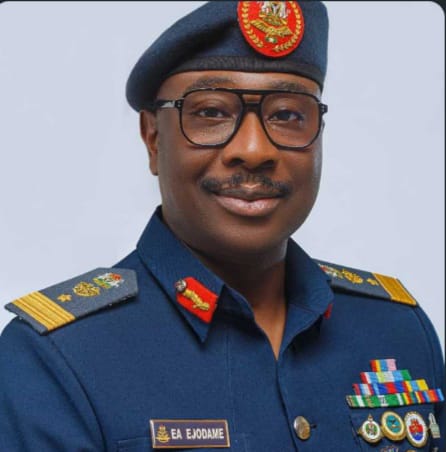
The Nigerian Air Force (NAF) has dismissed a viral message claiming it has commenced recruitment for the 2025/2026 Basic Military Training Course (BMTC) and Direct Short Service Commission (DSSC), describing the advert as fake and misleading.
In a statement on Thursday, the Director of Public Relations and Information, Air Commodore Ehimen Ejodame, urged Nigerians to ignore the circulating messages, stressing that no recruitment exercise is currently ongoing. “The attention of the Nigerian Air Force has been drawn to fraudulent messages circulating online, falsely claiming that the NAF has commenced recruitment for the 2025/2026 BMTC and DSSC. The Nigerian Air Force wishes to state that no such recruitment exercise is currently ongoing. The public is therefore advised to disregard these messages in their entirety,” the statement read.
Ejodame reiterated that the NAF recruitment process is free, transparent, and strictly merit-based, warning that the Force does not charge applicants or work with intermediaries. He emphasized that any legitimate recruitment would be officially announced through national newspapers, the NAF website, and verified social media platforms.
“We urge members of the public to be vigilant and avoid falling victim to online scams by verifying recruitment information through official NAF channels,” Ejodame added.
The British pound hovered around $1.339 on Thursday, near an eight-week low, as renewed strength in the U.S. dollar weighed on the currency following reassurance from Washington that Fed Chair Jerome Powell would remain in his role.
The dollar index (DXY) climbed to a three-week high, driven by increased demand as investors unwound hedges against the greenback and repositioned in favour of dollar-denominated assets. The move followed comments by former President Donald Trump, who stated he had no plans to dismiss Powell, despite criticizing the Federal Reserve for moving too slowly on interest rate cuts.
“The removal of Fed Chair Powell would have been damaging for the dollar,” noted Sean Callow, market strategist at InTouch Capital Markets. Such a scenario could have driven down short-term yields in anticipation of a more dovish Fed leadership while adding risk and inflation premiums to longer-term U.S. debt, he explained.
Meanwhile, in the UK, investors are assessing mixed economic signals to gauge the Bank of England’s next steps on monetary policy. The labour market continues to soften, with payroll employment declining again, although revised tax data indicates the drop may be less severe than previously estimated. Unemployment edged up to 4.7%, while wage growth, although historically high, showed signs of moderating.
On the inflation front, June’s reading surprised to the upside at 3.6%, above the 3.4% forecast, adding further complexity to the Bank of England’s policy outlook. While slowing wage growth could support the case for rate cuts, persistently high inflation may delay any easing cycle. Markets continue to price in two rate cuts in 2025 but have slightly scaled back expectations amid the mixed data.