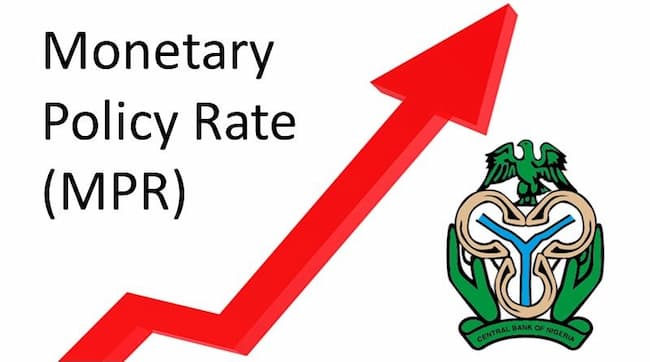
The Central Bank of Nigeria (CBN) has decided to maintain the benchmark interest rate at 27.5%, following the conclusion of its 301st Monetary Policy Committee (MPC) meeting held in Abuja on Tuesday.
CBN Governor Olayemi Cardoso disclosed the committee’s resolution, noting that it marks the third time in 2025 that the Monetary Policy Rate (MPR) remains unchanged. The MPR serves as a key indicator for lending rates in the Nigerian economy.
In addition to holding the MPR steady, the apex bank also retained the asymmetric corridor at +500/-100 basis points. The Cash Reserve Ratio (CRR) for Deposit Money Banks was maintained at 50%, while Merchant Banks will continue with a CRR of 16%. The Liquidity Ratio also remains unchanged at 30%.
Governor Cardoso explained that the decision is aimed at maintaining stability in the financial system while sustaining efforts to curb inflation. “The MPC agreed that tightening policy further at this point would not significantly improve the inflation trajectory,” he said.
He further praised recent efforts by the federal government in improving national security, which, according to the committee, has had a positive impact on food availability and overall price moderation.
In another key update, the governor revealed that eight Nigerian banks have so far met the new capital requirements set by the CBN. However, Cardoso declined to reveal the identities of the compliant institutions.
The recapitalization drive, which began on April 1, 2024, mandates that banks with international licenses maintain a minimum capital of ₦500 billion, national banks ₦200 billion, and regional banks ₦50 billion by the March 31, 2026 deadline.
The CBN emphasized that this monetary stance is essential to avoid derailing macroeconomic stability and to provide the right environment for continued reforms in the banking sector.
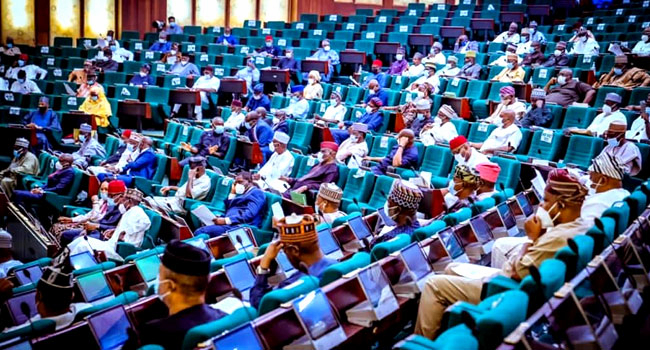
A new legislative proposal aimed at reshaping the conduct of public service in Nigeria is gaining attention following its introduction in the House of Representatives. The bill, sponsored by Rep. Amobi Ogah (Labour Party – Abia), seeks to bar all public and civil servants, along with their immediate families, from utilizing private healthcare and educational institutions.
The proposed law, presented during Tuesday’s plenary for first reading, marks what Ogah described as a “historic turning point” in efforts to realign governance with national development objectives.
Ogah argued that Nigeria’s early leaders, including Ahmadu Bello, Nnamdi Azikiwe, Obafemi Awolowo, and Tafawa Balewa, were educated in public institutions—a standard he believes today’s public officials have abandoned to the detriment of the country.
The legislator condemned the growing preference among officials for private services, labeling it a conflict of interest that erodes public trust and contributes to the decline of government institutions.
“In 2024, the Nigerian government budgeted ₦1.33 trillion for healthcare, yet Nigerians spent over $1 billion on medical tourism annually,” Ogah stated. “Between 2015 and 2023 alone, an estimated $29.29 billion was spent abroad on healthcare during the previous administration.”
Turning to education, Ogah revealed that Nigerians spent $38.17 million on foreign education in the first quarter of 2024 and over $218 million in the previous year. He urged lawmakers and citizens alike to support the bill as a moral imperative for restoring confidence in public infrastructure.
“This practice of fleeing abroad for basic health and education services is damaging our national image. In some tragic cases, officials even die overseas,” he lamented.
If passed, the bill would effectively end both medical and educational tourism for government workers, forcing them to rely on and thus help rebuild public institutions.
Ogah called on the Nigerian media and civil society to champion the bill and support a shift toward patriotic service and accountability.
Abuja, Nigeria – Thousands of N-Power beneficiaries may soon heave a sigh of relief as the Nigerian Senate has brokered a high-level resolution paving the way for the payment of ₦81 billion in outstanding stipends owed since 2022.
The long-awaited breakthrough followed a crucial tripartite meeting convened by the Deputy Senate President, Senator Barau Jibrin, at the National Assembly. The closed-door dialogue brought together federal government officials, legal representatives of the affected beneficiaries, and stakeholders from the relevant ministries and agencies.
At the heart of the meeting was the prolonged non-payment of allowances under the N-Power programme — a key federal initiative aimed at reducing youth unemployment through skills development and monthly stipends. The delays, which spanned the 2022 and 2023 fiscal years, had prompted legal action by disgruntled beneficiaries.
However, in a show of renewed governmental commitment, parties agreed to suspend litigation following firm assurances that payment processes were underway.
Speaking after the over two-hour session, Senator Barau described the outcome as a positive step in line with President Bola Ahmed Tinubu’s Renewed Hope agenda.
“The beneficiaries came to the Senate seeking my intervention. I immediately reached out to the relevant minister, who responded swiftly. The discussions were fruitful, and the parties were convinced of the government’s willingness to address the matter,” Barau stated.
“With that assurance, the beneficiaries agreed to withdraw their legal action. This government remains committed to the welfare of its citizens.”
Representing the Federal Government at the meeting, the Minister of State for Housing and Urban Development explained that while the arrears were captured in the 2022 and 2023 budgets, payment was stalled due to recurrent budget rollovers and the absence of dedicated provisions in subsequent budgets.
“There was no allocation for these arrears in the 2024 and 2025 budgets. However, we secured approval through the service-wide vote, albeit late. We are now working to activate this year’s budget implementation to facilitate disbursement,” the Minister affirmed.
“As a responsible government, we acknowledge the debt and are committed to ensuring its clearance before the end of 2025.”
Legal counsel to the beneficiaries, Barrister Abba Hikima, corroborated the federal government’s pledge and confirmed the suspension of the court case.
“The government owes my clients ₦81 billion. Based on the assurances received today, we’ve agreed to stay legal action. I commend the Deputy Senate President and the Ministers involved for their proactive engagement,” Hikima said.
Kehinde James, Chairman of the N-Power Beneficiaries Association, expressed appreciation to the Senate and federal officials, stating that the dialogue had restored faith among thousands of youths whose livelihoods had been disrupted.
“This intervention rekindles hope and trust in the system. Many young Nigerians who rely on this programme now see light at the end of the tunnel,” James remarked.
Launched in 2016, the N-Power scheme remains a flagship social investment programme of the Nigerian government. While it has empowered hundreds of thousands of youth with skills and temporary employment, recent administrative lapses had cast doubts over its sustainability — concerns now partially addressed with the Senate-led resolution.
The payment of the ₦81 billion arrears is expected to begin as soon as the 2025 budget implementation commences.
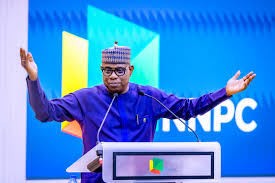
For the fourth consecutive time, Bayo Ojulari, the Group Chief Executive Officer (GCEO) of the Nigerian National Petroleum Company Limited (NNPCL), has failed to honour an invitation from the Senate Committee on Public Accounts, intensifying legislative tensions over unresolved financial discrepancies.
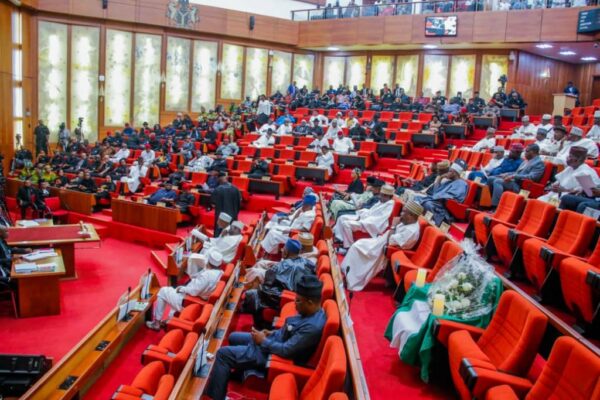
Ojulari’s consistent absence has stirred discontent among committee members, led by Senator Aliyu Wadada, who expressed their growing impatience during Tuesday’s session. The lawmakers have now issued a final ultimatum, warning the NNPC boss to appear before the committee by 3 p.m. on Wednesday or face potential sanctions.
The GCEO’s repeated no-shows relate to an audit inquiry involving a staggering ₦210 trillion in unexplained expenditures flagged in the Auditor-General’s reports covering 2017 to 2023. Despite three prior invitations, Ojulari’s non-appearance at Tuesday’s hearing once again stalled proceedings.
Responding to inquiries by the committee chair, the Clerk, Mohammed Abdullahi, announced that Ojulari had communicated his inability to attend. In a letter dated July 22, read aloud at the hearing, Ojulari cited an emergency summons from President Bola Tinubu at around 1 p.m. as the reason for his absence.
However, senators were unimpressed with the explanation. Senator Victor Umeh acknowledged the weight of a presidential directive but criticized what he called a growing trend of using the President’s office as a shield from legislative scrutiny.
Another member, Senator Joel Thomas Onowakpo, accused the NNPC head of undermining the committee’s authority. “The GCEO clearly believes he is above this body. It’s evident he won’t honour our calls unless we assert our powers more aggressively,” he declared.
Senator Aminu Abbas echoed similar concerns, stating that Ojulari must appear before the committee on Wednesday without fail, emphasizing that no individual, regardless of rank, is beyond the jurisdiction of the National Assembly.
As tensions rise between the legislature and Nigeria’s state oil corporation, the committee appears poised to escalate the matter if their summons continues to be ignored.
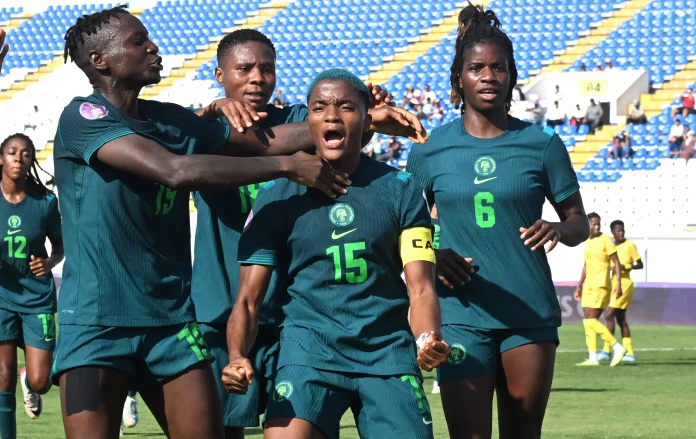
In a dramatic semi-final encounter on Tuesday, Nigeria’s Super Falcons emerged victorious with a 2-1 win over South Africa’s Banyana Banyana, securing their place in the final of the 2025 Women’s Africa Cup of Nations (WAFCON).
The high-stakes clash, marked by intensity and physicality, unfolded with Nigeria asserting early control. Rasheedat Ajibade gave the Falcons the lead just before halftime, confidently slotting home a penalty in the 45th minute. Her clinical finish sent the Nigerian side into the break with a 1-0 advantage.
South Africa encountered an early setback when star forward Hildah Magaia suffered an injury and had to be replaced in the 26th minute by Thubelihle Makhubela. Despite the blow, Banyana Banyana regrouped and returned in the second half with renewed energy.
Their efforts paid off in the 60th minute when Linda Motlhalo leveled the scoreline with a well-taken penalty, restoring parity and shifting the momentum of the game.
As both teams pushed for a late winner, it appeared the match was destined for extra time. However, in a dramatic turn of events, Nigeria struck a decisive blow deep into added time. Michelle Alozie capitalized on a well-placed assist from Esther Okoronkwo to score in the 94th minute, sending the Nigerian fans into raptures.
Substitutions from both benches heightened the tempo, but it was Nigeria’s composure and tactical execution in the dying minutes that sealed their passage to the final.
The result reinforces the Super Falcons’ longstanding dominance in African women’s football, positioning them for yet another continental title as they head into the WAFCON final.
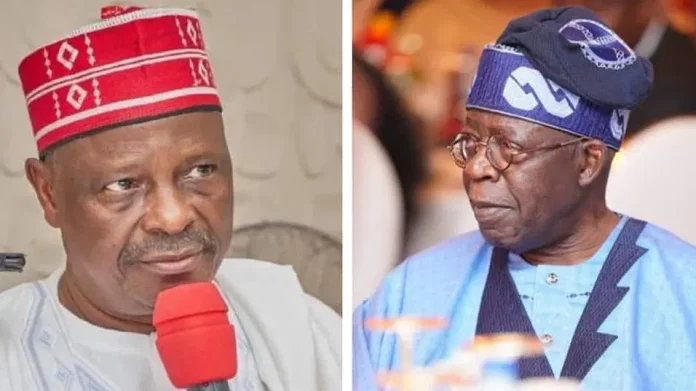
Former Kano State Governor and influential political leader Rabiu Musa Kwankwaso on Monday held a private meeting with President Bola Ahmed Tinubu at the president’s official residence in Abuja. The meeting has drawn attention across political circles as it comes at a time when opposition parties are working to form a united front ahead of the 2027 general elections.
The meeting followed Kwankwaso’s appearance at the Nigeria Forest Economy Summit 2025, which was held earlier at the State House Conference Centre. This marks the second known meeting between Tinubu and Kwankwaso since the president assumed office in May 2023. Their first recorded encounter took place on June 9, 2023, when Kwankwaso became the first presidential candidate to visit Tinubu after his inauguration. At the time, the former Kano governor said their discussions focused on politics and governance, hinting at possible collaboration without revealing details.
Monday’s closed-door engagement comes just weeks after the opposition African Democratic Congress (ADC) announced a broad coalition aimed at challenging the ruling All Progressives Congress (APC) in the 2027 elections. Although Kwankwaso’s New Nigeria Peoples Party (NNPP) is not formally part of this alliance, several opposition figures have been courting him, recognizing his strong grassroots influence in northern Nigeria.
Kwankwaso, 67, remains a towering figure in Nigerian politics. He served two non-consecutive terms as Kano governor (1999–2003 and 2011–2015), was Nigeria’s Defence Minister under President Olusegun Obasanjo, and ran for the presidency in 2023 under the NNPP, where he finished fourth but delivered a decisive victory in Kano State. The NNPP currently controls the governorship and the majority of seats in the state assembly, further consolidating Kwankwaso’s dominance in the region.
While details of the latest meeting were not made public, a presidency source noted that the engagement, held at the president’s residence, was off limits to most aides and no official briefing was released.
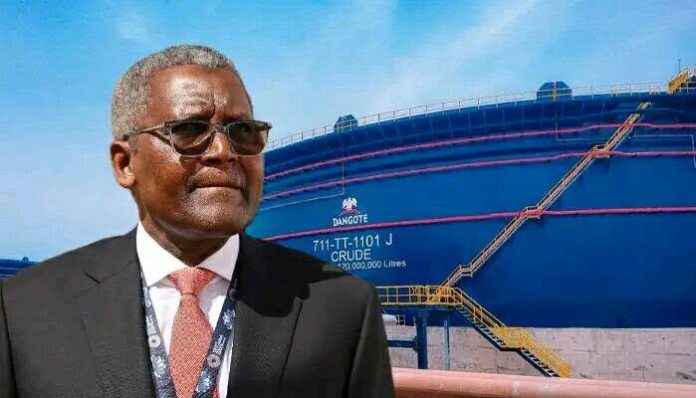
The Dangote Petroleum Refinery has officially commenced the export of Premium Motor Spirit (PMS), positioning Nigeria as a net exporter of refined petroleum products for the first time in decades. This development marks a significant milestone in the nation’s oil and gas sector, which has historically relied heavily on imports despite being a major crude oil producer.
President of the Dangote Group, Alhaji Aliko Dangote, disclosed this achievement on Tuesday during the Global Commodity Insights Conference on West African Refined Fuel Markets. The conference was organized by the Nigerian Midstream and Downstream Petroleum Regulatory Authority (NMDPRA) in partnership with S&P Global Insights.
Speaking at the event, Dangote revealed that between June and July 2025, the refinery successfully exported up to 1 million tonnes of petrol.
“Today, Nigeria has actually become a net exporter of refined products. Before I came on the podium, I asked my people how many tonnes of PMS we have actually exported. From June beginning to date, we have exported about 1 million tonnes of PMS, within the last 50 days,” Dangote stated.
His comments come amid ongoing discussions about the refinery’s ability to meet domestic petrol needs. While the Dangote facility has made strides in production and exports, other petroleum marketers continue to import PMS into the country to satisfy local demand.
Beyond petrol exports, the refinery has expanded its footprint by shipping aviation fuel to Europe and Saudi Arabia, underscoring its growing influence in global energy markets. Dangote emphasized that this is just the beginning of a broader strategy to leverage the refinery’s capacity for large-scale exports while supporting Nigeria’s economic diversification.
In the cement industry, the Dangote Group has set an ambitious target of exporting $500 million worth of cement and clinker by 2027. Dangote noted that similar growth dynamics are already being observed in the petroleum refining business, as the refinery ramps up operations and strengthens its export capacity.
The $20 billion refinery, which is one of the largest in the world, is expected to not only reduce Nigeria’s dependency on imported refined products but also generate substantial foreign exchange earnings through exports. Industry stakeholders have hailed the refinery’s performance as a step toward positioning Nigeria as a key hub for refined petroleum products in Africa and beyond.
Hollywood icon Bruce Willis continues to face the challenges of frontotemporal dementia, a neurodegenerative condition that has gradually worsened since his initial aphasia diagnosis in 2022.Reports from 2023 and 2024 indicated that Willis had become largely non-verbal and no longer reads, with some motor difficulties also noted.
However, in April 2025, his family issued an update confirming that while the disease remains progressive, his condition is considered stable. They expressed gratitude for the overwhelming love and support from fans, stressing the importance of their close family bond during this difficult time.
There has been no official confirmation of any further decline in Willis’ health beyond previous reports. His family continues to be transparent about his journey while advocating for greater understanding of frontotemporal dementia, a rare brain disorder that affects behavior, personality, and language, and is distinct from Alzheimer’s disease.
Fans around the world continue to send their thoughts, prayers, and unwavering support to Willis and his loved ones as they navigate this challenging chapter.
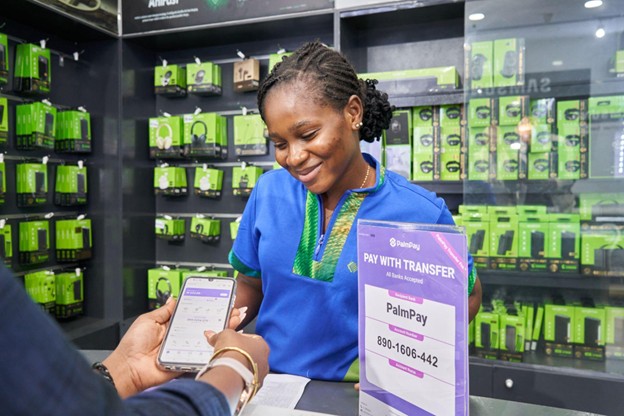
PalmPay, a leading neobank and fintech platform focused on emerging markets, has been recognised in CNBC and Statista’s 2025 Top 300 Fintech Companies in the World list. This marks the second year in a row that PalmPay has earned a place among the world’s most innovative and impactful financial technology firms.
The selection is based on a rigorous evaluation of thousands of companies globally, assessing growth, innovation, market penetration, and impact. This year’s list includes a mix of global leaders – including Revolut, Nubank and Ant Group – alongside rising stars from high-growth markets, underscoring the growing influence of emerging-market fintechs like PalmPay.
PalmPay’s inclusion reflects its continued momentum as one of Africa’s leading fintech platforms. With over 35 million registered users and up to 15 million transactions processed daily, the company offers a comprehensive suite of digital financial services tailored to the needs of underserved communities.
In its main market, Nigeria, PalmPay operates as a full-service neobank, offering consumer financial services such as transfers, bill payments, credit, savings, and insurance – all accessible through its user-friendly app and supported by a nationwide network of over 1 million agents and merchant partners. The company also provides POS and API-driven B2B solutions tailored to the needs of merchants and enterprise clients.
“To be recognised as one of the world’s top fintech companies by CNBC and Statista is a powerful affirmation of our mission to build a more inclusive financial system,” said Sofia Zab, Founding Chief Marketing Officer at PalmPay. “Through cutting-edge technology, deep local distribution, and a customer-first mindset, we’ve built Nigeria’s leading neobank. As we scale PalmPay to more emerging markets, including Tanzania and Bangladesh, our focus remains on closing financial access gaps for everyday consumers and businesses, while expanding the partner ecosystem that fuels our reach and impact.”
As part of its broader expansion strategy, PalmPay recently launched in Tanzania and Bangladesh through a smartphone device financing model that serves as an entry point to digital financial services.
“PalmPay is building a neobanking platform tailored to the realities of emerging markets,” said Jiapei Yan, Group Chief Commercial Officer at PalmPay. “We are creating the infrastructure for a connected digital economy – where people and businesses can thrive through reliable, inclusive financial tools. This recognition from CNBC and Statista affirms our progress and also the scale of the opportunity ahead. As we expand across more emerging markets, we are committed to creating lasting value for our users, partners, and the communities we serve.”
PalmPay’s inclusion follows another major recognition earlier this year: the company ranked #2 overall and #1 in the financial services sector on the Financial Times – Africa’s Fastest-Growing Companies 2025 list. The ranking, based on revenue growth between 2020 and 2023, highlighted PalmPay’s rapid scale and market traction across Africa.
PalmPay currently operates in Nigeria, Ghana, Tanzania, and Bangladesh, and is expanding its presence across Africa and Asia through device financing, digital banking, and B2B payment services. Backed by a robust neobanking platform and a partnership-led approach, the company is committed to shaping the next chapter of inclusive financial growth.
The sun has only just risen when my phone’s alarm pierces the silence of my room in Abuja. It’s 7:00 a.m., the first of six alarms I’ve set: 7:10, 7:30, 8:00, 8:10, 8:30, to ensure I don’t sleep through my morning. I’m the kind of person who could sleep for 24 hours straight, especially when nestling in the quiet of my own space.
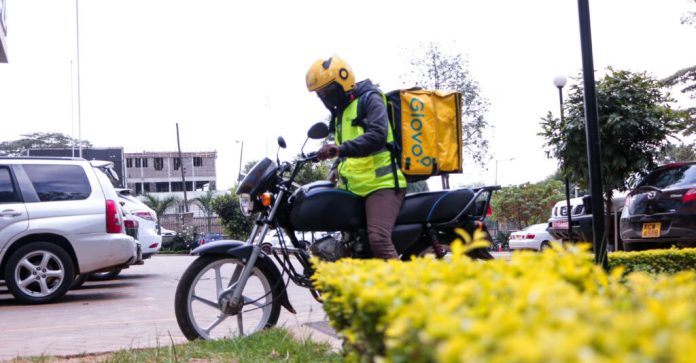
But the rhythm of my life as a Glovo delivery rider demands otherwise. Time is money in this job, and time waits for no one. So I roll out of bed, shake off the grogginess, and prepare to claim my slot for the day: a 13-hour stretch from 10 a.m. to 11 p.m., during which I’ll drive through Abuja’s streets, delivering food and parcels to customers who place orders on the Glovo app.
My name is Christian Ogbu, and I’m a Lagosian by birth, though Abuja has been my home since late 2020. I spent my first two decades in Lagos. Like any man born to a low-income family, I had to quickly try my hand at informal trade. As an Igbo man, I took up an apprenticeship in a pharmacy. When that didn’t work out after four or five years, I returned to my father’s village in Nsukka, Enugu, where I hoped to recalibrate and find opportunities to settle. But that was short-lived. I’m not a village boy; I’m wired for movement, for the bustle of a city. So, towards the end of 2020, I left for Anambra State, where I chased work that never materialised. I didn’t want to return to Lagos, where I would have to rely on my mum. Instead, I left Anambra for Abuja, where an uncle offered me a place to stay. It was a chance to start over, to find my own “greener pasture”, as I told myself.
Abuja was unkind at first. I took a job as a security guard, arranged by my uncle, but the pay was meagre: hand-to-mouth, barely enough to keep me afloat. Frustration gnawed at me. I wasn’t raised to live in someone else’s shadow, least of all my mother’s, so I refused to return to Lagos. Instead, I struck out on my own, submitting CVs to companies, hoping for something better. My uncle’s refusal to support my job search, denying me his signature and his ID, left me feeling stranded. I was sleeping in someone’s house, but I had no one to lean on. I often took to the streets looking tattered and hungry in search of a job. That’s when I stumbled into dispatch work.
It was a chance encounter with a deliveryman that changed everything. I was hungry, looking rough, but too proud to beg for food. “I just want to work like you,” I told him. He took me to a restaurant called Ants in Mama, which, like many popular restaurants that were adjusting to pandemic restrictions, ran an in-house delivery fleet where they purchased motorcycles and placed drivers on salaries. This was where I got my first taste of food delivery. I didn’t know Abuja then, so I relied on Google Maps to navigate, my phone guiding me through unfamiliar streets. That first job was a trial by fire. The roads were unforgiving, especially where untarred paths and potholes tested my resolve. One day, I spilled a drink in my delivery box, and while rushing to replace it, I crashed into a parked motorcycle. The accident cost me my pay; the company used it to repair the bike. I was sad, but I didn’t give up.
Another courier took pity on me, leading me to somewhere I was hired again. This time, I used the work to learn Abuja’s streets. I’m quick to pick up patterns, a skill honed in Lagos, where I mastered shortcuts that others overlooked. Within months, I knew Abuja like the back of my hand. I started applying to logistics companies and landed a job with a franchise under Speedaf. In my first month, I shattered their delivery record, completing 50 to 60 orders a day when the highest before me was 20. My hard work earned me respect, even if it came with loose ends. There were moments of temptation: demanding extra cash from customers, a practice I later learned was common among delivery riders. When a customer recorded me and reported it, I faced suspension, but my manager, recognising my potential, fought to keep me.
Then I heard about Glovo. It was 2022, and the platform was different: riders worked independently, not under franchises. This means that their earnings were not capped to a monthly salary; instead, one could earn as much as they worked. I scraped together my savings, bought my own motorcycle, and signed up. A mentor told me, “Focus on this work, and you’ll see your earnings.” So I did. I left the other side hustles behind. Glovo requires that drivers book slots to confirm they are available for delivery. If a driver booked a slot, he had to be committed to it. Punctuality became my creed. If I booked a slot, I was there, no excuses. Even when thieves broke into my house, stealing my phone, which was my most important work tool, and money, I didn’t quit. I worked my way back, bought new gear, and kept going.
From scraping by to earning almost a million monthly as a Glovo rider
Glovo’s structure suited me. Unlike franchises, where you’re bound by rigid protocols, Glovo gave me freedom. I could reject deliveries to unsafe areas, like parts of Jahi or Kuje, where rough roads or security risks made riding perilous. Franchises didn’t care about rider safety. If a customer ordered to a dangerous spot, you went or face penalties. I once narrowly escaped a pit while being chased by dogs at night. With Glovo, I could say no, cancel the order, and move on. This autonomy made all the difference. I knew Abuja’s boundaries: where Glovo operated, where it didn’t, and I thrived within them. The app’s clear addresses meant I rarely needed Google Maps; I’d glance at the location, pocket my phone, and ride.
My consistency paid off. Glovo set daily targets: 25 to 30 deliveries to earn a “quest” bonus, and I hit them religiously. Other platforms, like Chowdeck or Mano, cap their targets at 10 to 15 orders a day, I think, but Glovo pushed me. It wasn’t just about the money, though I earn between ₦800,000 and ₦900,000 a month, more than most salaried jobs. After expenses, ₦36,000 for fuel, ₦5,000 for oil changes every seven days, and about ₦7,000 daily for food, I earn enough to live well. But the real reward is the peace of mind, the sense of purpose. Glovo’s challenges became my own; if I fell short of 25 deliveries, it felt like failure. The next day, I’d push harder, determined to meet the mark.
The work is gruelling: 13 hours on the road, six days a week. I take Saturdays off now, a lesson learned after my eyes started twitching from stress and too much caffeine last year. I cut out energy drinks, relying on my own stamina and the occasional biscuit or mineral water to keep me going. Breakfast is a must, but lunch is a luxury; I might not eat until I’m home, late at night, with takeaway in hand. Abuja’s cold nights demand a jumper, something Glovo doesn’t provide, so I layer up to stay warm.
The job has its highs and lows. Customers shape the experience. Some are demanding, insisting I deliver to their doorstep in estates where bikes aren’t allowed, leaving my motorcycle vulnerable to theft or tampering. Others are a joy, especially when they are foreigners, as they are often more polite and appreciative than locals. For example, foreigners who live at high-end hotels, which do not allow couriers to drive in, are often ready to meet me at the gate. “White customers,” as I call them, often stand out for their courtesy, waiting at the gate, thanking me for my effort. Nigerian customers can be hit or miss: some warm, others dismissive, a few outright rude. I once climbed to the fifth floor to deliver to a customer in a wheelchair, moved by their courteous note on the app. The word ‘please’ seems so inconsequential, but it means a lot and can influence how we respond to additional requests of customers. Respect, I’ve learned, is reciprocal. When customers treat me with dignity, I go the extra mile.
Then there are the surveys Glovo sends out, asking about our satisfaction or experiences. They’re alien to many riders, unaccustomed to forms or feedback. But I use them to learn, sometimes Googling terms or asking AI for clarity. These small moments of education, interacting with customers, navigating the app, and engaging with the world, make the job more than just deliveries. It’s exposure, a window into lives I’d never otherwise encounter.
In June 2025, Glovo recognised my efforts. At their summit in Lagos, I was awarded for delivering over 14,000 orders since joining in 2022. They called me a “punctuality champion,” a nod to my unwavering commitment to my slots. It has been a great relationship so far. I do have some crucial improvements, particularly regarding deliveries to estates and hotels where motorcycles are restricted. It would be great if the company implements a clear policy or in-app note for customers in these areas, mandating a mutual understanding with riders for doorstep deliveries. This change would not only address rider safety concerns—reducing the risk of theft from parked bikes or food tampering—but also ensure riders aren’t unfairly blamed for issues outside their control, fostering a more respectful and efficient delivery experience for everyone.
This job has been transformative, but I do believe it is still a means to an end. In five years, I don’t see myself still working as an app-based courier. I want an adventure: maybe a business. I want to settle down, marry, and build something of my own. God has blessed me through this gig work, and I believe He’ll keep opening doors.
For now, though, I’m content. Abuja is in my hands, its streets etched into my memory. And as long as I’m on my bike using Glovo to connect to customers, I’m not just delivering food; I’m delivering myself to a future I’m still building.
Nigerian banks are grappling with steep short-term borrowing costs as liquidity constraints continue to squeeze the financial system, pushing key money market rates into double-digit territory.
Data from the interbank segment reveal sustained pressure, with borrowing rates remaining elevated due to limited funding access across the banking sector. This has forced several deposit money banks to resort to the Central Bank of Nigeria’s (CBN) Standing Lending Facility (SLF) to secure operational funds.
Despite the absence of major auctions, the financial system’s liquidity shortage deepened, exacerbated by the recent Asset Management Corporation of Nigeria (AMCON) levy and settlements for foreign exchange sales by the CBN. These outflows intensified the scramble for scarce capital at the central bank’s SLF rate.
The financial system saw some relief at the start of the week, with a decline in the liquidity deficit from ₦659.92 billion to ₦499.69 billion. This marginal improvement followed federal government bond coupon payments totalling ₦90.59 billion. However, the cash injection proved insufficient to ease the liquidity tightness, keeping overnight interbank rates anchored at 32.5%.
Nigerian Interbank Offer Rates (NIBOR) displayed a mixed pattern across different tenors. The overnight and one-month NIBOR rates edged up by 4 and 22 basis points respectively, while three-month and six-month rates dipped by 7 basis points each, according to analysts at Cowry Asset Management.
Parallel to this, money market lending rates surged, with the Open Buy Back (OBR) rate increasing by 9 basis points to settle at 32.42%, and the overnight lending rate climbing 16 basis points to 32.83%, reflecting the ongoing liquidity stress, as noted in separate financial analysts’ briefings.
Investment analysts at AIICO Capital suggested that the current 32.5% rate levels may persist until the financial system sees additional coupon inflows and statutory revenue allocations, which could ease the liquidity strain and potentially lower the rates towards the 26.5% benchmark.
Yields on Nigerian Treasury Bills (NTBs) declined to 17.76% ahead of the Central Bank of Nigeria’s (CBN) highly anticipated interest rate decision and a ₦290 billion primary market auction scheduled midweek.
Investor sentiment in the fixed-income market remained cautious, with trading activities muted early in the week as traders awaited fresh policy direction from the CBN’s Monetary Policy Committee (MPC). Market watchers say spot rate expectations are now firmly tied to the outcome of this critical policy meeting.
Despite subdued activity, the Treasury Bills yield curve saw a downward shift, driven by modest demand across key maturities. The average secondary market yield dropped 6 basis points, settling at 17.76%, according to Cordros Capital. Yield contractions were seen across the short (-2bps), mid (-3bps), and long (-9bps) segments of the curve.
In particular, demand was concentrated on bills maturing in 66 days (-3bps), 171 days (-6bps), and 248 days (-33bps), reflecting cautious optimism among investors. The Open Market Operation (OMO) bills segment mirrored this trend, with average yields dipping by 6 basis points to 24.6%.
Last week’s market trend showed a mixed tone at the start, with liquidity tightness dampening buying interest. However, improved system liquidity later in the week triggered a buying spree that pushed yields lower across several tenors. Afrinvest Limited, in its weekly commentary, reported a 22 basis point drop in average benchmark yields.
Bullish momentum was most evident on short- and mid-term instruments. Treasury bills maturing on 4-Dec-2025 and 8-Jan-2026 recorded the most notable repricing, while 7-Aug-2025 and 6-Nov-2025 bills also drew significant investor interest.
Meanwhile, longer-dated maturities remained relatively subdued, as investors remained cautious due to uncertain liquidity dynamics and impending monetary policy signals.
Crude oil prices slipped below the $68 mark as global markets braced for heightened trade tensions triggered by impending US tariffs. The looming tariffs, set to take effect August 1, have cast a shadow on global economic prospects, with several ratings agencies now projecting a downside risk to global growth.
On Monday, Brent crude dipped by 0.5% to $67.99 per barrel, down from $68.35 at the previous session close. The US benchmark, West Texas Intermediate (WTI), also shed 0.6%, dropping to $65.26 per barrel from its prior close of $65.65.
Market analysts attribute the downturn to a cocktail of factors including weak demand signals from China, ongoing geopolitical instability, and concerns about the US Federal Reserve’s policy trajectory. With President Donald Trump pushing forward with his tariff agenda, investors are increasingly wary of escalated trade frictions.
Adding to market uncertainty, Trump intensified criticism of Fed Chair Jerome Powell, asserting he knows “what’s good for the Market and the US” better than the central bank. Treasury Secretary Scott Bessent added fuel to the fire, questioning the Fed’s credibility and hinting at potential institutional overhauls.
Tensions in the Middle East also played a role in sustaining risk premiums. Trump defended last month’s targeted strikes on three Iranian nuclear sites, reaffirming Washington’s readiness to repeat such action if provoked. Responding to Iranian Foreign Minister Abbas Araghchi’s statement that the facilities had been “seriously damaged,” Trump posted on Truth Social: “Of course they are, just like I said.”
Meanwhile, the United Kingdom unveiled a sweeping new sanctions package targeting Russia’s energy sector. The UK Foreign Office announced 137 new sanctions focused on oil revenues and the so-called Russian “shadow fleet.” Among those targeted were 135 vessels implicated in the covert transport of approximately $24 billion in crude oil and refined products since early 2024.
Two maritime firms were also sanctioned in connection with this network, part of a broader effort to dismantle Russia’s global shadow oil trade and reinforce Western economic pressure.
Despite the drop in prices, analysts say geopolitical tensions are preventing a steeper decline, with potential supply disruptions keeping a floor under the market.
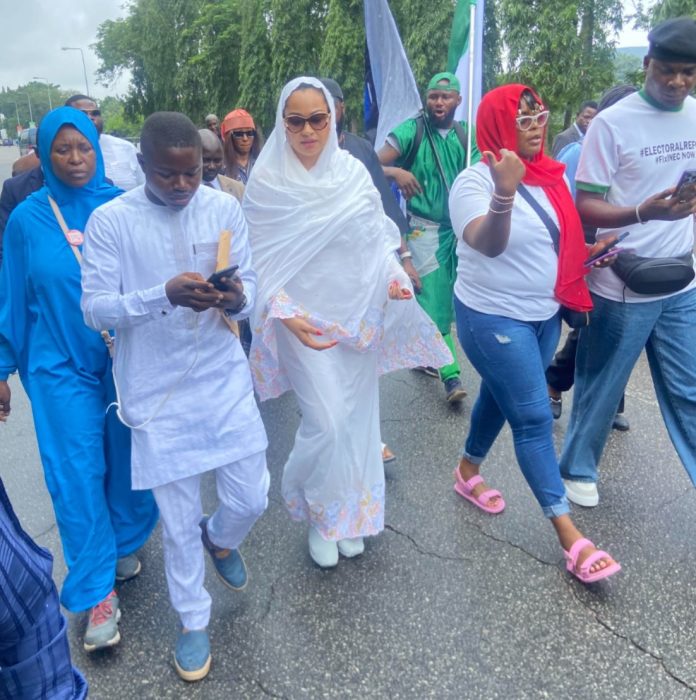
In a bold show of defiance, Senator Natasha Akpoti-Uduaghan of Kogi Central made a dramatic appearance at the National Assembly complex in Abuja on Tuesday, challenging the upper chamber’s ongoing suspension against her.
The embattled senator, who arrived in a black SUV, was met with resistance from security personnel stationed at the first gate of the National Assembly. Her vehicle, along with that of prominent activist Aisha Yesufu, was denied entry into the premises.
Undeterred by the restriction, Senator Natasha stepped out of her vehicle and proceeded on foot, accompanied by a small crowd of loyal supporters, determined to gain access to the legislative complex.
Her journey was again interrupted at the second gate, where security officers attempted to stop her and advised her to retreat. But rather than comply, the senator and her entourage pressed forward, only to be confronted by a locked final gate that blocked their access further into the building.
This latest development follows the senator’s vow last week to resume her legislative duties despite her six-month suspension by the Senate. The lawmaker had earlier cited a court ruling that directed the Senate to reinstate her, a judgment she has insisted validates her return.
Senator Akpoti-Uduaghan’s defiant move has now heightened tensions between her and the Senate leadership, setting the stage for what may become a heated legal and political standoff in the days ahead.
Nigeria has significantly reduced its debt servicing burden, now spending less than 50 per cent of its revenue on debt obligations, down from a staggering 97 per cent before recent fiscal reforms. This was disclosed by the Chairman of the Presidential Fiscal Policy and Tax Reforms Committee (FPTRC), Mr. Taiwo Oyedele, during the PwC Executive Summit on Tax Reform in Lagos on Monday.
Delivering a keynote address at the event themed “The New Tax Era: What Nigeria’s Tax Reform Means to Individuals and Businesses”, Oyedele credited ongoing reforms for improving fiscal stability, boosting external reserves, and enhancing the country’s infrastructure spending.
“We’ve cleared over $7 billion in unmet forex forwards, grown external reserves from under $4 billion to over $20 billion, and reduced budget deficits. Our tax-to-GDP ratio has risen from below 10 per cent to 13.5 per cent within two years,” Oyedele said.
He stressed that without the reforms, Nigeria’s economy was heading down a dangerous path similar to Zimbabwe and Venezuela, where hyperinflation and economic collapse left currencies virtually worthless.
“I carry with me a 100 trillion Zimbabwean dollar note. At the time, it could barely buy a loaf of bread. That could have been Nigeria’s story if we didn’t act,” he warned.
Missed Opportunities and the Cost of Delay
According to Oyedele, had these reforms been implemented a decade ago, Nigeria’s economy could have reached a $1 trillion valuation, with a more stable exchange rate and significantly lower petrol prices.
“If we had acted ten years ago, PMS would cost under ₦300 per litre, and the naira would exchange at under ₦300 to the dollar,” he asserted.
He noted that Nigeria lost valuable economic ground compared to peers like Kenya and South Africa, with the naira depreciating six times more than their respective currencies in the past decade.
Subsidy Regime and Fiscal Recklessness
Oyedele criticised past administrations for printing over ₦30 trillion to fund a bloated subsidy regime, which failed to deliver basic infrastructure.
“We were not building roads or improving electricity. We were paying salaries and subsidising PMS at all costs—even diverting taxes collected by NNPC and other operators. Yet, it wasn’t enough,” he said.
He added that without removing subsidies, Nigerians would have struggled to access fuel even with ₦100,000 in hand due to fiscal unsustainability.
Tax Reforms Targeting Equity and Simplicity
Oyedele also announced significant progress in tax reforms aimed at creating a fairer, more transparent system. He revealed that the bottom 97 per cent of informal sector operators—those with limited capacity to pay—have now been legally exempted from taxation.
“Let them breathe. When they grow, they’ll pay. But for now, it’s only the top 3 per cent of the informal sector who can contribute meaningfully,” he said, adding that mechanisms are in place to detect under-declaration and tax evasion.
He further disclosed that all major taxes have now become progressive, ensuring those with greater income contribute more, and that the gazette of the newly signed tax laws is being finalised for public release.
President Bola Tinubu had earlier signed four tax-related bills into law on June 26, 2025, with implementation scheduled for January 1, 2026.
Business Community Urged to Partner on Reforms
Speaking at the summit, PwC West Market Area Regional Senior Partner, Sam Abu, emphasised that real change requires collective action and not just government policy.
“Policy alone won’t deliver results. Everyone—government, business leaders, and private sector actors—must collaborate to shape the future we want,” he said.
He affirmed PwC’s commitment to simplifying tax and helping businesses navigate reforms efficiently, so leaders can focus on growth and innovation.
Meanwhile, PwC Partner and Tax Leader, Chijioke Uwaegbute, explained that under the new law, foreign entities with effective control or management in Nigeria will be fully taxed in the country.
“Also, indirect transfers of foreign shares resulting in changes in Nigerian company ownership will now be considered taxable events,” he added, aligning Nigeria’s tax practices with global standards to reduce avoidance and enhance revenue.
Key Highlights of the New Tax Law
Income Tax Exemption: Employees earning below ₦800,000 annually are exempt from personal income tax.
Tax Harmonisation: Federal taxes are now harmonised, with the FIRS designated as the sole collector.
Progressive Tax System: New structure ensures higher earners pay more.
Global Tax Compliance: Foreign entities effectively managed from Nigeria are now subject to Nigerian tax laws.
Indirect Share Transfer Taxation: Foreign sales that alter Nigerian company ownership are now taxable.
The reforms, according to Oyedele and other stakeholders, signal a new era of fiscal responsibility and economic potential—if sustained through transparency, accountability, and inclusive participation.
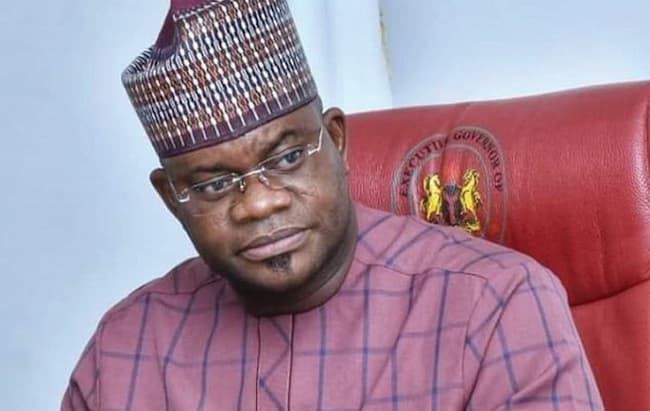
The Federal High Court in Abuja has dismissed an application by former Kogi State Governor, Yahaya Bello, seeking the release of his international passport to enable him to travel abroad for medical treatment.
Ruling on the motion on Monday, Justice Emeka Nwite held that the medical documents tendered in support of the request lacked credibility, particularly noting that the key medical report was unsigned and therefore inadmissible in law.
Bello is currently facing trial over alleged money laundering to the tune of ₦80.2 billion, brought against him by the Economic and Financial Crimes Commission (EFCC). The charges are before both the Federal High Court in Abuja and the Federal Capital Territory High Court in Maitama.
His legal counsel, Joseph Daudu (SAN), had argued that the former governor was suffering from hypertension and required urgent medical attention in the United Kingdom. Two documents—Exhibits A and B—were presented as expert reports to support the claim.
However, Justice Nwite ruled that Exhibit B, which formed the crux of the application, carried no legal weight as it was not signed by a medical professional.
“A document not signed by its maker has no legal weight. Exhibit B is devoid of probative value and cannot be relied upon by this court,” the judge stated, concluding that Bello had failed to provide sufficient justification for the release of his passport.
The court also addressed the EFCC’s argument that the application was an abuse of process and should have included Bello’s sureties. Justice Nwite dismissed this, noting that the case was strictly between Bello and the Federal Republic of Nigeria, and that there was no legal basis—local or international—for making the sureties parties to the application.
He further clarified that the request to travel did not violate the directive of the FCT High Court, which required the defendant to seek permission before leaving the country. The application, he said, was appropriately filed and did not constitute an abuse of court process.
“Consequently, this application is hereby refused,” the judge ruled.
The trial has been adjourned to October 7 and 10, and November 10 and 11, 2025.
Despite undergoing a major rebasing of its Gross Domestic Product (GDP), Nigeria has retained its position as the fourth-largest economy in Africa, according to the National Bureau of Statistics (NBS).
The rebasing, which updated the base year from 2010 to 2019, expanded Nigeria’s GDP to ₦372.8 trillion (approximately $243 billion) for the year 2024—up from ₦314.02 trillion in the previous year. The exercise, covering the period from 2019 to 2023, incorporated structural changes, improved sectoral data, and a broader coverage of the informal economy.
While the revised figures reflect a 30 percent growth above the International Monetary Fund (IMF)’s earlier projection of $188 billion, Nigeria still falls short of reclaiming its former top spot on the continent.
South Africa currently leads as Africa’s largest economy with a GDP of $410.34 billion, despite having a significantly smaller population. Egypt ranks second with $347 billion, followed by Algeria at $268.9 billion.
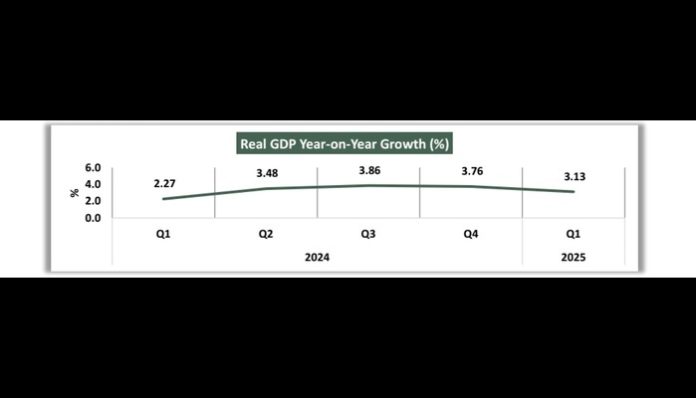
In a related development, Nigeria’s economy recorded a 3.13 percent growth rate in the first quarter of 2025, an improvement from the 2.27 percent growth recorded in the same period last year. This growth was largely driven by the services sector, which contributed 57.5 percent to the country’s aggregate GDP. The industry and agriculture sectors followed, with growth rates of 3.42 percent and 0.07 percent, respectively.
According to the NBS, the country’s aggregate GDP at basic prices stood at ₦94 trillion in nominal terms in Q1 2025—an 18.3 percent year-on-year increase compared to ₦79 trillion recorded in the first quarter of 2024.
The rebasing exercise aligns Nigeria’s GDP measurement with international standards, offering a more accurate reflection of the economy’s current structure and sectoral contributions.
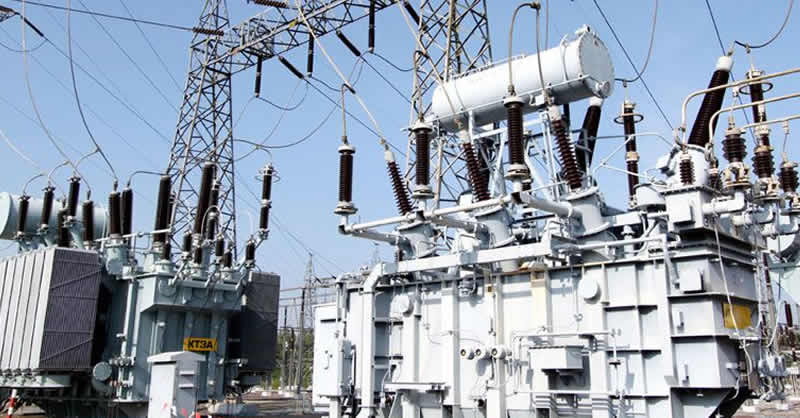
Amid mounting financial pressures and sectoral disagreements, several Nigerian states have initiated reductions in electricity tariffs, sparking a backlash from power generation and distribution stakeholders.
The moves follow a new pricing directive issued by the Enugu Electricity Regulatory Commission (EERC) to MainPower Electricity Distribution Limited, which slashed the Band A electricity rate from ₦209 per kilowatt-hour to ₦160/kWh, effective August 1, 2025.
This development, which has ignited wider adoption by other sub-national governments, has drawn strong objections from both generation companies (GenCos) and distribution companies (DisCos), who argue that such measures may jeopardize the sustainability of Nigeria’s already fragile electricity market. The GenCos assert that the industry is grappling with debts exceeding ₦5 trillion—debts which they claim are yet to be addressed comprehensively by the federal government or market regulators.
In a statement issued on Monday, Joy Ogaji, Chief Executive Officer of the Association of Power Generation Companies, criticized the EERC directive as an unrealistic deviation from the actual cost of electricity production. “The decision in Enugu has laid a dangerous precedent,” Ogaji remarked. “It only captures ₦45 out of ₦112 for generation costs, assuming that the federal government will absorb the shortfall through subsidies that have neither been formally approved nor financially backed.”
Despite these concerns, more states are aligning with Enugu’s policy direction. The Nigerian Electricity Regulatory Commission (NERC) recently confirmed that seven states—Enugu, Ondo, Ekiti, Imo, Oyo, Edo, and Kogi—now wield autonomous control over their electricity markets under the Electricity Act of 2023. Additional states, including Lagos, Ogun, Niger, and Plateau, are in advanced stages of transitioning regulatory authority from federal to state control, expected to conclude by September.
The justification from these states is largely socioeconomic. In separate statements to the press, officials from Plateau and Ondo States reaffirmed their commitment to easing the financial burden of electricity on citizens. Lagos, Nigeria’s most populous state, indicated it is evaluating Enugu’s model and plans to unveil its own tariff strategy soon.
Ekiti State, however, has opted to retain the prevailing Multi-Year Tariff Order (MYTO) issued by NERC. Professor Bolaji Aluko, the state’s Commissioner for Infrastructure and Public Utilities, emphasized the need for financial sustainability in any reform. “While it’s commendable to consider reducing tariffs, we must ensure it won’t compromise consistent electricity delivery,” Aluko stated.
In Enugu, regulatory authorities maintain that the revised rate is a result of a data-backed, cost-reflective process that leveraged federal subsidies. EERC Chairman, Chijioke Okonkwo, stated during a media briefing that the commission undertook a comprehensive six-month review of MainPower’s tariff and licensing applications before arriving at the ₦160/kWh figure.
“Our tariff structure is based on a transparent cost model that accounts for inflation, infrastructure costs, energy losses, and federal subsidies,” Okonkwo said. He noted that the average cost of electricity delivery within MainPower’s network currently hovers just above ₦94/kWh, thanks to federal generation subsidies. However, he warned that should those subsidies be withdrawn, the cost could spike to over ₦112/kWh—pushing tariffs well beyond the current ₦160/kWh rate.
Still, power sector stakeholders are unconvinced. Ogaji pointed out that the federal government’s 2025 budget allocates only ₦900 billion for electricity sector support—an amount that falls significantly short of the annual ₦3 trillion needed to stabilize power generation. “The average monthly invoice for electricity generation alone stands at ₦250 billion,” she said. “There are no concrete plans involving debt swaps, financial instruments, or direct payments to close this gap.”
The situation remains tense as DisCos operating within these reform-minded states argue that tariff cuts without immediate compensation will undercut investor confidence. An anonymous official from a major Disco warned that if states fail to cover the resulting revenue shortfalls, it could lead to service degradation and regulatory challenges.
“Electricity, like any commodity, must be paid for,” the official stressed. “With Band A already unsubsidized at the federal level, if states choose to underprice it, they must fund the difference. Otherwise, it becomes an unsustainable drain on the system.”
This concern is further complicated by constitutional questions, with some stakeholders suggesting that any state-level regulation conflicting with federal mandates could be legally challenged and potentially nullified.
Plateau State Electricity Commission Chairman, Bagudu Hirse, said the commission would initiate its own tariff reduction plan in line with Governor Caleb Mutfwang’s energy reform agenda. Hirse emphasized that this policy direction was meant to align with the state’s goals of economic relief for citizens.
Meanwhile, Lagos State’s Commissioner for Energy and Mineral Resources, Biodun Ogunleye, said the state is reviewing Enugu’s tariff framework with caution due to the unique energy demands of the metropolis. “Lagos accounts for 50 percent of national electricity consumption,” he said. “Any drastic action without due diligence could threaten stability.”
In Ondo State, Commissioner Johnson Alabi revealed that the government was already implementing similar cost-control mechanisms but had yet to publicize them. He said the state has begun determining its own tariffs through direct energy procurement from the Transmission Company of Nigeria (TCN), a move uncommon among states.
Industry experts have also weighed in. Power sector analyst Tayo Adegbenle questioned the accuracy of EERC’s calculations, especially the assumption that federal subsidies would remain consistent. “Enugu wants autonomy but cannot ignore the liabilities that come with independence,” he said.
Another expert, Bode Fadipe, noted that the EERC’s move, though bold, may be strategic. “The broader impact remains to be seen. It’s possible this was a calculated push to trigger a national conversation on sub-national autonomy in electricity pricing,” he said.
As the debate unfolds, the future of Nigeria’s power sector hangs in the balance, with implications for consumers, investors, and regulators alike. Whether the state-led tariff reductions will prove to be a lifeline for citizens or a misstep in power sector reform remains to be seen.
The United States Citizenship and Immigration Services (USCIS) has officially introduced a revised fee structure for certain immigration-related applications, with the changes coming into force beginning July 22, 2025, under provisions outlined in the H.R. 1 Reconciliation Bill.
This development was detailed in a Federal Register Notice published on July 18, 2025. The notice indicates that any applications postmarked from July 22 onwards must include the updated fees, and any submissions received after August 21, 2025, that do not comply with the revised amounts will be automatically rejected.
Key among the revisions is the introduction of a new $100 fee for filing Form I-589, which is used for Asylum and Withholding of Removal applications. Additionally, applicants with pending asylum claims will now be required to pay an annual fee of $100—referred to as the Annual Asylum Fee (AAF)—for each calendar year that their case remains unresolved.
The fee adjustments also impact the Employment Authorization Document (EAD), Form I-765. The new structure outlines that:
First-time EAD applications will now cost $550
Renewals or extensions will require a payment of $275
Applicants filing after receiving re-parole through Form I-131 will also be subject to a $275 fee
Further changes include a new $250 Special Immigrant Juvenile fee associated with Form I-360, and a significant increase in Temporary Protected Status (TPS) registration fees via Form I-821—from $50 to $500.
USCIS emphasized that the newly implemented H.R. 1-related fees are supplemental to the existing charges and are not eligible for waiver or reduction—even for applicants who typically qualify for fee exemptions under regular USCIS guidelines.
The notice also introduced new conditions regarding work permit validity. For parolees, work permits will now be issued for a period not exceeding one year or the designated duration of parole—whichever is shorter. Similarly, individuals granted Temporary Protected Status will receive EADs valid only up to one year or the end date of their TPS coverage.
USCIS clarified in the statement: “Any alien who filed or files a Form I-589 after October 1, 2024, that remains pending for 365 days must pay the Annual Asylum Fee on the one-year anniversary of the application date and for each subsequent year the case remains active on that date.”
USCIS also signaled that additional fee revisions are forthcoming for other immigration forms, including Form I-131 (used for Travel Documents) and Form I-102 (Nonimmigrant Arrival-Departure Record Replacement), with official announcements expected in the coming months.
These fee adjustments come as part of a broader effort by USCIS to address administrative costs and streamline the processing of high-demand immigration services. However, the changes are expected to impact thousands of applicants who are already navigating complex immigration processes.
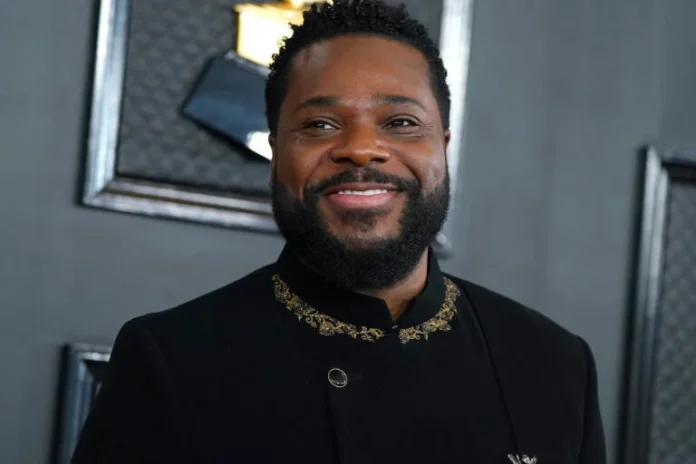
Malcolm-Jamal Warner, the acclaimed actor famously known for his portrayal of Theo Huxtable on the iconic sitcom The Cosby Show, has passed away at the age of 54, according to local officials in Costa Rica.
Warner reportedly drowned while swimming off the coast of Playa Grande near the town of Cocles in the Limón Province. Authorities with Costa Rica’s Judicial Investigation Agency stated that Warner was caught in a powerful riptide around 2:00 PM local time on Sunday (8:00 PM GMT) and was dragged out to sea.
Emergency responders said bystanders were able to pull him back to shore, and the Costa Rican Red Cross attempted resuscitation. Sadly, despite their efforts, Warner was pronounced dead at the scene. He is survived by his wife and daughter.
Warner, who rose to fame as the son of Cliff Huxtable on The Cosby Show from 1984 to 1992, received an Emmy nomination in 1986 for Outstanding Supporting Actor in a Comedy Series. His role helped redefine Black family portrayals on television, presenting a middle-class household that many viewers had never seen represented before.
Reflecting on the groundbreaking nature of the show in a 2013 interview, Warner said: “When the show first aired, some people doubted the authenticity of the Huxtables, saying Black families don’t live like that. Yet, we were flooded with fan letters thanking us for reflecting their lives.”
Warner secured his breakout role after being chosen by Bill Cosby himself during the final day of a national casting search. “I was literally the last person they auditioned,” Warner recalled during an interview last year.
Following The Cosby Show, Warner appeared in various television series, including Malcolm & Eddie with comedian Eddie Griffin. After the news of Warner’s death, Griffin paid tribute on social media, writing: “R.I.P. King. My big little brother.”
Warner also made guest appearances on beloved shows such as The Fresh Prince of Bel-Air and Sesame Street. More recently, he had a recurring role as cardiothoracic surgeon AJ Austin on Fox’s medical drama The Resident.
Beyond television, Warner showcased his musical talents, winning a Grammy Award in 2015 for Best Traditional R&B Performance alongside Robert Glasper and Lalah Hathaway. The award-winning trio collaborated on a cover of Stevie Wonder’s Jesus Children of America.
He received another Grammy nomination in 2023 for his spoken word album, Hiding In Plain View, a reflective and deeply personal project. In the same year, Warner launched a podcast titled Not All Hood, which tackled mental health challenges within the Black community.
Tributes have poured in from across the entertainment industry and beyond. Music legend Questlove, actors Jennifer Hudson, Taraji P. Henson, and Vivica A. Fox, and former NBA superstar Magic Johnson shared heartfelt messages.
Johnson, who once worked with Warner on an AIDS awareness video, said: “My wife and I were longtime fans of The Cosby Show and admired his work over the years. Every time we met, we had rich conversations about life, basketball, and business. He will truly be missed.”
Actress Tracee Ellis Ross, who starred with Warner on Reed Between the Lines, mourned the actor in an emotional post: “Warm, thoughtful, hilarious, and kind… you brightened every room you entered.”
Taraji P. Henson added: “Malcolm, we grew up with you. Your art, your grace, your wisdom — you left this world better than you found it. Rest easy, king.”
Senator Raphael Warnock of Georgia also weighed in, reflecting on Warner’s role in shaping a generation: “Malcolm-Jamal Warner was part of our upbringing. To many of us, Theo felt like family. May peace be upon him and comfort be granted to his loved ones.”