







Home Blog Page 144

Dollar Mutual Funds In Nigeria Record Strong NAV Growth In H1 2025

Dollar

Dollar mutual funds operating within Nigeria’s financial ecosystem saw robust asset expansion in the first half of 2025, with total Net Asset Value (NAV) climbing by 12.4% to reach ₦1.92 trillion by the end of June, new figures from the Securities and Exchange Commission (SEC) reveal.

These investment vehicles, primarily composed of Eurobonds and other dollar-denominated fixed income assets, remain attractive for investors seeking to shield their portfolios from naira volatility. Dollar mutual funds are structured to deliver steady returns while offering a hedge against the weakening local currency, making them particularly appealing to both institutional and retail investors.

According to SEC data, Nigeria currently hosts 34 registered dollar mutual funds. Collectively, these funds recorded an average yield of 6.73% year-to-date (YTD) by the end of June 2025. This is slightly below the 7.63% average posted at the close of 2024, a change largely attributed to the global downturn in bond yields.

Central banks across the globe, including the U.S. Federal Reserve, have embarked on a rate-cutting trajectory as part of a broader monetary easing cycle. This shift has led to a downward repricing of yields on fixed income securities worldwide—Eurobonds in particular, which constitute a major share of the portfolios managed by dollar fund managers in Nigeria.

The Debt Management Office (DMO) also reports that average Eurobond yields have fallen from 9.525% at the start of the year to 8.534% as of June 30, 2025. This dip has tempered the returns investors have come to expect from dollar-denominated assets.

Nonetheless, the stability offered by these funds amid exchange rate uncertainties remains a key draw. In response to global rate movements, many fund managers have fine-tuned their strategies, diversifying across premium sovereign and corporate Eurobonds to preserve yields and ensure long-term sustainability.

Here is a snapshot of the dollar mutual funds that have delivered the most attractive yields so far in 2025:

Top Performing Dollar Mutual Funds in Nigeria – H1 2025

Fund NameFund ManagerYTD YieldNAV (₦)Unit Holders
Comercio Partners Dollar FundComercio Partners Asset Management Ltd13.7%₦800.57 million31
Futureview Dollar FundFutureview Asset Management Ltd13.02%₦251.8 million9
AVA GAM Fixed Income Dollar FundAVA Global Asset Managers Ltd12.59%₦1.88 billion23
Cowry Eurobond FundCowry Treasurers Ltd11.67%₦453.8 million46
United Capital Nigerian Eurobond FundUnited Capital Asset Mgt. Ltd9.70%₦177.53 billion3,772
Meristem Dollar FundMeristem Wealth Management Ltd9.67%₦5.31 billion134
Norrenberger Dollar FundNorrenberger Asset Management Ltd9.56%₦31.12 billion673
Lead Dollar Fixed Income FundLead Asset Management Ltd9.23%₦1.57 billion53
United Capital Global Fixed Income FundUnited Capital Asset Mgt. Ltd9.19%₦183.64 billion735
FSL Eurobond FundFSL Asset Management Ltd8.70%₦1 billion8

Outlook: Demand for Dollar Mutual Funds Remains Resilient

Despite the global yield compression, Nigerian investors continue to favour dollar mutual funds as a strategic hedge against local economic pressures, including persistent inflation and foreign exchange instability.

With increasing sophistication in fund strategy and a growing appetite for foreign currency exposure, dollar mutual funds are likely to remain a cornerstone for wealth preservation in Nigeria’s dynamic financial landscape. As market dynamics shift in the second half of 2025, fund managers are expected to maintain tactical asset allocations to navigate global headwinds while sustaining investor confidence.
Canal Takes Full Control Of DStv, GOtv In MultiChoice Acquisition

MultiChoice Nigeria Increased Price Of GOtv, DStv

In a transformative development for Africa’s media industry, French entertainment powerhouse Canal+ has secured full control of South African pay-TV giant MultiChoice Group in a $3 billion (approx. 55 billion rand) deal, following formal approval from South Africa’s Competition Tribunal.

The long-anticipated acquisition, finalized on Wednesday, grants Canal+ ownership of MultiChoice’s flagship platforms, DStv and GOtv, which serve nearly 50 million subscribers across the continent. Canal+, which previously held a 45.2% stake, launched the full buyout bid after investing €1.2 billion ($1.3 billion) since 2020.

Pending final clearance from the Independent Communications Authority of South Africa (ICASA), the transaction is expected to close by October 8, 2025.

“The approval by South Africa’s Competition Tribunal marks the final stage in the South African competition process and clears the way for us to conclude the transaction in line with our previously communicated timeline,” said Maxime Saada, CEO of Canal+, in a statement issued via the Johannesburg Stock Exchange. “This acquisition represents a significant step in expanding our presence across Africa, particularly in English-speaking markets.”

The deal also includes regulatory commitments to support local content production and promote South African audiovisual works in new global markets—conditions set forth by the Competition Commission to protect domestic industry interests.

MultiChoice, a cornerstone of African broadcasting since its separation from Naspers in 2019, has built a reputation on rich local programming and exclusive sports content. Chairman Elias Masilela welcomed the acquisition, calling it “a vote of confidence in MultiChoice’s 40-year track record and compelling continental growth strategy.”

To comply with South Africa’s 20% cap on foreign ownership of broadcasting licenses, MultiChoice will establish a separate, locally controlled entity, LicenceCo to hold its domestic broadcasting rights.

The move significantly strengthens Canal+’s footprint in Africa, aligning with its broader expansion strategy amid intensifying competition in global streaming and broadcast markets.

Tinubu Meets APC Governors Ahead Of Key NEC Meeting

Tinubu Authorizes Appointment Of New CEOs

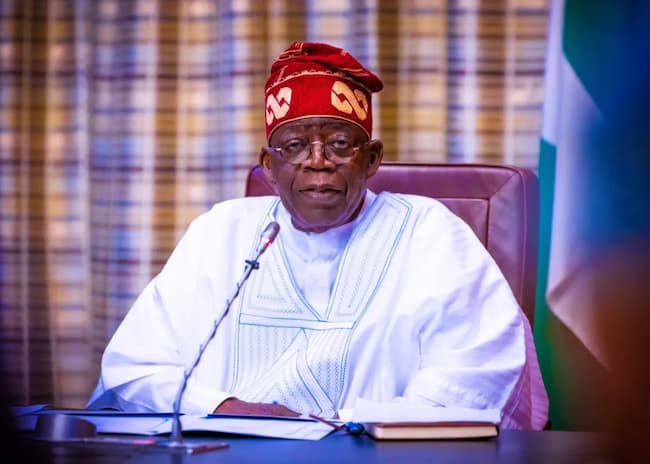
President Bola Tinubu on Wednesday evening held a closed-door meeting with governors elected on the platform of the All Progressives Congress (APC), ahead of the party’s National Executive Council (NEC) meeting scheduled for Thursday.

The meeting, which took place at the presidential banquet hall in Aso Rock Villa, saw early arrivals from key figures including the Chairman of the Progressive Governors’ Forum, Governor Hope Uzodimma of Imo State; Governor Babajide Sanwo‑Olu of Lagos; Governor Biodun Oyebanji of Ekiti; and Governor Dapo Abiodun of Ogun.

Tinubu used the session to brief the APC governors on key matters ahead of the NEC meeting, originally slated to hold at the party’s national secretariat but later shifted to the State House Conference Centre. The NEC gathering is scheduled for 2 pm on Thursday.

Top of the agenda is the selection of a substantive National Chairman to replace Dr. Abdullahi Ganduje, who resigned last month due to health concerns. Deputy National Chairman, Ali Dalori, has been serving in an acting capacity. However, some party stakeholders favour retaining Dalori until a full elective convention is held to constitute a new National Working Committee.

The North Central zone, which has voiced concerns over marginalisation, may reclaim the chairmanship seat. Leading contenders from the region include former Nasarawa State Governor, Tanko Al-Makura, and the current Minister of Humanitarian Affairs and Poverty Reduction, Professor Nentawe Yilwatda.

The NEC is also expected to deliberate on other pressing issues including the party’s financial report, preparations for the 2027 general elections, outcomes from the Constitution Review Committee, and future party congresses.

Dr. Ganduje’s resignation continues the succession of APC chairmen since the party’s founding, including Chief Bisi Akande, Chief John Oyegun, Adams Oshiomhole, Mai Mala Buni, and Abdullahi Adamu. Article 13.3 of the APC Constitution (amended 2022) empowers the NEC to appoint a new National Chairman or establish a Caretaker Committee.

Naira Dips Slightly As FX Demand Rises, But Market Remains Stable

Federation Account Amasses Over ₦5trn In 6months- RMAFC

The naira depreciated slightly against the dollar at the Nigerian Foreign Exchange Market (NFEM), dropping by 38 kobo to close at ₦1,535.61 per dollar, amid moderate pressure from corporate FX demand.

According to the Central Bank of Nigeria (CBN), the naira traded within a narrow range of ₦1,530.00 to ₦1,537.00, signaling relative market stability despite an uptick in demand. Analysts noted that daily intraday movement has remained limited, reflecting growing confidence in the FX market’s liquidity.

At the parallel market, the naira also settled at ₦1,535 per dollar, narrowing the gap between official and unofficial exchange rates. Analysts predict the exchange rate will remain between ₦1,500 and ₦1,600 through 2025, provided the CBN sustains its FX intervention strategy and avoids external economic shocks.

Nigeria’s foreign reserves rose to $38.37 billion, with a daily increase of $121.12 million, providing the CBN with a stronger buffer to manage currency stability.

Globally, oil and gold prices continued to dip. Brent crude fell to $68.44 per barrel and gold slipped over 1%, as markets reacted to the U.S.-Japan tariff deal ahead of upcoming EU-U.S. trade talks.

States, DisCos In Showdown Over Tariff Cuts As Power Sector Faces Tensions

Commissioners of energy across the 36 states have expressed readiness to engage power distribution companies in negotiations over electricity tariffs to ensure rates are reflective but not burdensome on residents.

This move follows the reduction in Band A electricity tariff from N209/kWh to N160/kWh by the Enugu Electricity Regulatory Commission (EERC), a development that has faced resistance from both generation and distribution companies.

However, distribution companies have rejected the idea of negotiating tariffs with state governments, warning that such interventions could harm the power sector.

Despite this, the EERC has continued to defend its decision, while the states maintain they are empowered by the Electricity Act 2023 to regulate the sector within their jurisdictions. Already, seven states — Enugu, Ondo, Ekiti, Imo, Oyo, Edo, and Kogi — now control their electricity markets under the Act, with more states like Lagos, Ogun, Niger, and Plateau set to join by September.

Chairman of the Forum of Commissioners of Power and Energy in Nigeria and Cross River State’s Commissioner for Power and Renewable Energy, Prince Eka Williams, reiterated that state electricity regulators are empowered to determine tariffs that reflect local market realities and customer needs.

He noted that while some states may subsidise electricity for their residents, the broader goal is to ensure sufficient power supply. “States operate differently. Any governor who feels inclined can decide to shoulder the responsibility of subsidies,” Williams said.

The forum also clarified that the reduced tariff by EERC was based on a thorough assessment of the capital and operational costs of MainPower Electricity Distribution Company in Enugu. It stressed that the new rate was still cost-reflective, contrary to claims from power generation companies that it could distort the market.

The forum emphasized that states are not acting arbitrarily and are committed to removing opaque federal subsidies in favour of truly cost-reflective state-level electricity markets.

The EERC added that the Band A rate reduction did not affect the cost of generation and transmission from the national grid, which remains covered in full. The commission maintained that the revised tariff allows MainPower to recover its costs and make reasonable returns.

Reuben Okoye, EERC Commissioner for Electricity Market Operations, said the decision followed detailed analysis and that the commission is open to reviewing any evidence disputing its methodology. “There is no justification to keep Band A at N209/kWh in Enugu State. The new tariff reflects the state’s market reality,” he said.

In Lagos, however, tensions remain high. The State Commissioner for Energy and Mineral Resources, Biodun Ogunleye, expressed frustration, stating that electricity distributors in the state are resisting state-level reforms and are reportedly behind a proposed amendment bill in the Senate aimed at limiting state control.

He noted that although negotiations are proving difficult, Lagos will unveil its tariff plan in the coming week.

Nigeria Completes First AfCFTA Review, Reaffirms Trade Integration Commitment

The Federal Government has concluded its first five-year implementation review of the African Continental Free Trade Area (AfCFTA), marking a key milestone in Nigeria’s effort to boost intra-African trade and solidify its role as a regional economic leader.

Coordinated by the Ministry of Industry, Trade and Investment, with support from the UNDP Regional Bureau for Africa, the review assessed Nigeria’s compliance with the AfCFTA Agreement, as mandated under Article 28.

Minister of Industry, Trade and Investment, Dr Jumoke Oduwole, who initiated the process, described the assessment as vital to tracking progress, closing gaps, and strengthening Nigeria’s institutional capacity for deeper trade integration.

“Our commitment to AfCFTA stems from the belief that Africa’s prosperity must be trade-driven,” Oduwole said. “Nigeria is well-positioned to be a hub for innovation, production, and commerce across the continent.”

The review follows the creation of the AfCFTA Central Coordination Committee in March 2025, bringing together over 20 government agencies and private sector representatives to steer national implementation and negotiations.

The assessment focused on Nigeria’s progress with the Framework Agreement and Phase I Protocols: Trade in Goods, Trade in Services, and Dispute Settlement. MDAs reviewed their capacity, institutional alignment, and performance, producing actionable policy recommendations.

Oduwole highlighted that the process revealed three key takeaways, starting with the need for a strong, coordinated, multistakeholder approach due to the scale and complexity of the AfCFTA.

INEC Urges Political Parties To Promote Peace Ahead Of Jigawa By-Election

Guber Election: INEC Unveils Candidate List For Kogi, Bayelsa, Imo


The Independent National Electoral Commission (INEC) in Jigawa State has called on political parties to sensitise their supporters to ensure a peaceful and orderly by-election in the state.

This appeal was made by the INEC Resident Electoral Commissioner (REC), Professor Mahammad Lawan, on Wednesday during a stakeholder meeting held at the Commission’s conference hall in Dutse, the state capital.

The by-election for the Garki/Babura federal constituency is scheduled for August 16, 2025, following the death of the former House of Representatives member, Hon. Isa Dogon Yaro, who passed away on May 9, 2024.

Professor Lawan said the commission is working hard to ensure a successful poll, revealing that over 30 percent of preparations have already been completed. He highlighted the completion of the upgrade of the Voter Verification System (VIVAS) as a major milestone.

He, however, noted that voter education and sensitisation remain crucial, urging political parties, community leaders, and the media to intensify awareness campaigns to guarantee voter participation and a peaceful process.

The REC assured stakeholders that all sensitive and non-sensitive materials required for the election will be made available ahead of time.

He also called for the continued cooperation of security agencies and other partners in ensuring a peaceful atmosphere before, during, and after the election. According to him, the success of the by-election hinges on the collective responsibility of all parties involved — INEC, political parties, security personnel, and voters.

During the meeting, stakeholders shared their opinions and provided suggestions to enhance the conduct of the by-election. They commended INEC for the progress made so far and pledged full support for a free, fair, and violence-free exercise.

A major highlight of the engagement was the shared emphasis on the need for peaceful participation and transparency throughout the electoral process.

Reps Approve Tinubu’s $347m Loan For Highway, Telecom Projects

The House of Representatives on Wednesday approved President Bola Tinubu’s request to borrow $347 million under the 2025–2026 borrowing plan submitted to the National Assembly.

The request, presented by Speaker Tajudeen Abbas during plenary, seeks to support critical infrastructure projects, including an additional $47 million for the Lagos-Calabar Coastal Highway and $300 million for a national telecommunications initiative.

President Tinubu explained in his letter that the original $700 million loan arrangement for the highway project fell short by $47 million, a gap now covered through export credit agencies. The total project cost has risen to $747 million.

The remaining $300 million is earmarked for the Nigerian Universal Communications Access Project, which aims to bridge the digital divide by deploying 7,000 telecom towers to underserved rural communities.

Recall that in May, the President had requested approval for a $21.54 billion borrowing plan, alongside €2.19 billion, ¥15 billion, and a €65 million grant. With the new additions, the borrowing plan now totals $21.89 billion.

During Wednesday’s session, the House adopted the report of the Committee on Aids, Loans and Debt Management, presented by its chairman, Abubakar Nalaraba of Nasarawa. He reassured the chamber that Nigeria’s debt profile remains within acceptable limits.

According to Nalaraba, Nigeria’s debt-to-GDP ratio stands at about 50 percent, well within the international benchmark of 56 percent. He also noted a reduction in the debt service-to-revenue ratio from over 90 percent to under 70 percent.

He added that anticipated gains from the Nigerian Tax Act 2025, which is expected to boost revenue by over 18 percent annually from 2026, will further strengthen the country’s ability to service the new debt.

Deputy Speaker Benjamin Kalu, who presided over the latter part of the session, gave the final approval for the request.

Meta Rolls Out New Safety Features To Protect Teens Amid Growing Scrutiny

Meta, the parent company of Instagram, has unveiled a series of enhanced safety features aimed at protecting teenage users on its platforms. The move comes amid rising pressure on social media companies to prioritize the mental health and online safety of younger audiences.

Announcing the changes on Wednesday, Meta revealed it had taken down thousands of adult-run accounts that were either posting sexualized comments or soliciting explicit images from children under 13. According to the company, 135,000 accounts were flagged for inappropriate comments, while another 500,000 were identified for engaging in harmful interactions with minors.

Among the new features is a simplified option for teens to block and report accounts with just one tap. Meta also introduced in-message safety notices that remind teens to remain cautious in private chats and to report anything that makes them uncomfortable. The company noted that over one million accounts were blocked and another million reported by teens after seeing these alerts.

Meta’s safety push also includes the use of artificial intelligence to detect when users misrepresent their age. The system flags accounts suspected of being underage and automatically converts them into teen accounts, which come with stricter safety settings. Teen profiles are set to private by default, and direct messaging is restricted to people they already follow or have mutual connections with.

These latest safeguards follow actions taken in 2024, when Meta made all new teen accounts private by default as part of its broader child protection strategy.

Despite the improvements, Meta remains under intense legal scrutiny. The company is currently facing lawsuits from dozens of US states, which accuse it of deliberately designing addictive features on Facebook and Instagram that negatively affect children’s mental health.

US Appeals Court Rules Trump’s Birthright Citizenship Order Unconstitutional

A United States appeals court on Wednesday ruled that former President Donald Trump’s executive order seeking to restrict birthright citizenship is unconstitutional, upholding a lower court’s decision to block its implementation nationwide.

The Ninth Circuit Court of Appeals found that the executive order violated the 14th Amendment of the US Constitution, which guarantees that anyone born on American soil is automatically a US citizen, regardless of their parents’ immigration status.

Judge Ronald Gould, delivering the opinion of the court, stated that the district judge in Seattle did not overstep by issuing a universal injunction. He noted that a limited injunction would have been ineffective, given the legal complications that would arise from varying rules across different states.

“We conclude that the district court did not abuse its discretion in issuing a universal injunction in order to give the states complete relief,” Gould wrote. He added, “The district court correctly concluded that the Executive Order’s proposed interpretation, denying citizenship to many persons born in the United States, is unconstitutional. We fully agree.”

Trump’s executive order had declared that children born in the US to undocumented immigrants or individuals on temporary visas would not be granted automatic citizenship — a controversial reinterpretation of the Constitution’s 14th Amendment.

The case has faced a prolonged legal battle, with multiple district courts previously halting the enforcement of the order. The Supreme Court, which currently holds a 6-3 conservative majority, recently refrained from ruling on the constitutional merit of the order, focusing instead on the broader issue of nationwide injunctions issued by lower courts.

Despite this, the Supreme Court left the door open for executive orders to be challenged through class-action lawsuits. A federal judge earlier this month granted class-action status to potentially affected children and issued a preliminary halt to the executive order while litigation continues.

Tesla Reports Sharp Earnings Drop Amid Falling Sales And Growing Challenges

Tesla reported a 23% drop in adjusted earnings for Q2, with net income falling to $1.4 billion down $419 million from a year ago. This follows a 13.5% dip in sales, marking another tough quarter for the EV giant.

Core auto revenue slid 16%, and the average revenue per vehicle dropped by $500 to $42,231. Sales of Tesla’s Model Y and Model 3 declined 12%, while sales of higher-end models, including the Cybertruck, plunged 52%.

The earnings miss sent Tesla shares down 2% in after-hours trading. Analysts attribute the slump to growing global EV competition, especially from China’s BYD, and backlash tied to CEO Elon Musk’s political controversies.

Tesla also faces major financial threats ahead. The expiration of a $7,500 US EV tax credit in October could impact sales, and a new US law eliminating penalties for emissions violations will likely end the company’s lucrative regulatory credit sales — a key revenue stream since 2019.

Musk avoided addressing the earnings drop directly during the investor call, instead focusing on future ambitions like a US-wide robotaxi rollout and mass production of its humanoid robot, Optimus. However, Tesla’s robotaxi pilot remains limited, while rivals like Waymo lead with hundreds of thousands of paid rides weekly.

Interbank Lending Rates Remain High Amid Systemic Liquidity Shortfall

Short-term interbank lending rates in Nigeria continued their upward trajectory, remaining above the 32% mark as a persistent liquidity shortfall gripped the banking sector, just days before the Central Bank of Nigeria (CBN) conducts its midweek Nigerian Treasury Bills (NTB) auction.

Although the apex bank scaled back on liquidity mop-up operations, the financial system remains significantly tightened—pressured by cash reserve requirements, foreign exchange market dynamics, and the Asset Management Corporation of Nigeria (AMCON) levy settlements.

This tightening trend has led to increased returns on money market instruments, benefiting liquidity-rich banks and fund managers who are able to channel excess cash into profitable short-term placements.

The CBN is set to offer N290 billion in Treasury bills at its primary market auction on Wednesday, a move anticipated to refinance maturing bills. Analysts suggest the auction could be oversubscribed due to the lack of recent monetary interventions.

Despite the injection of N74.34 billion in coupon payments on Tuesday, liquidity remained in deficit at N400.70 billion, according to a market report by AIICO Capital Limited. Banks continued to rely on the CBN’s standing lending facility to bridge funding gaps.

The money market showed mixed trends: the open repo rate (OPR) climbed by 8 basis points to 32.50%, while the overnight lending rate slipped by 8 basis points to 32.75%. Analysts believe that this reflects the market’s anticipation of higher borrowing costs, especially as banks with surplus funds demand premium rates for interbank lending.

Further coupon inflows worth N29.58 billion are expected to provide temporary relief. However, interest rates are likely to stay elevated as market participants remain fixated on upcoming Monetary Policy Committee (MPC) decisions concerning future liquidity control.

Meanwhile, the Nigerian Treasury Bills Yield Curve (NITTY) displayed marginal yield declines across several maturities. Trading in the secondary market remained subdued, as average yield dropped 5 basis points to 17.72%.

Treasury Bill Yields Dip As Investors Brace For Midweek Auction

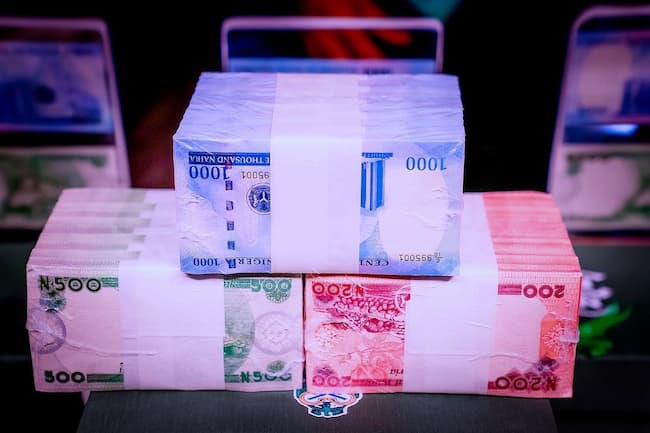
LBS Discloses FG's Targets With Naira Redesigning

The Nigerian Treasury bills market experienced a slight drop in yields as investors maintained a cautious stance ahead of the CBN’s N290 billion primary market auction set for Wednesday.

In the secondary market, trading activity reflected investor conservatism, as monetary policy rates were left unchanged by the apex bank. Despite divergent projections from analysts, the CBN’s steady policy stance has kept real returns on naira-denominated assets above the 5% mark, providing a supportive environment for rate repricing.

These favorable conditions—coupled with improved macroeconomic indicators—have pushed discount rates on naira assets lower. Government borrowing costs are also adjusting to these realities. With domestic bond issuance scaled back by the Debt Management Office, the government is increasingly looking abroad to finance fiscal gaps.

Cordros Capital Limited noted a bullish close in the Treasury bills market on Tuesday, as average yields contracted by 17.1%. Yield compression was recorded across all segments of the yield curve: short (-1 bp), mid (-5 bps), and long-term maturities (-6 bps). The repositioning trend suggests heightened interest ahead of the midweek auction.

Investor demand surged for NTBs maturing in 79 days, driving a -1 bp decline in their yield. Strong buying pressure also emerged for bills maturing in 170 and 184 days, with respective yield contractions of -15 bps and -48 bps.

In the Open Market Operations (OMO) segment, investor sentiment remained mildly positive, with average yield dropping by 1 basis point to 24.6%.

Analysts from various investment firms foresee muted activity in the secondary market in the near term, as investor attention remains firmly fixed on the upcoming NTB auction.

Nigeria’s Eurobonds Attract Global Investors As Yields Drop

DMO Set To Auction N150bn Bond On FG's Behalf

Yields on Nigeria’s sovereign Eurobonds edged lower this week, driven by increasing foreign investor interest amidst improving macroeconomic fundamentals. The bullish sentiment follows a string of positive indicators, including a declining inflation trend, a 3.13% GDP growth rate in Q1 2025, and Nigeria’s continued high interest rate stance.

President Bola Tinubu’s administration has secured legislative backing to raise $21 billion in foreign loans, a development that complements efforts to tighten domestic bond supply. Consequently, the demand for foreign-denominated debt has strengthened, particularly among offshore portfolio investors.

Foreign investment sentiment has also been buoyed by global ratings agencies’ upgrades of Nigeria’s credit profile, citing the administration’s reform-focused economic strategy. These endorsements have contributed to increased dollar inflows and stabilized investor outlook on Nigeria’s sovereign debt.

On Tuesday, the Eurobond market saw robust activity, particularly in the FEB-2032 issuance, which contributed significantly to a 3 basis point decline in average yield to 8.50%, according to Cowry Asset Management.

Across African debt markets, investor sentiment remained largely upbeat. A notable geopolitical factor was U.S. President Donald Trump’s sharp remarks about the Federal Reserve chair, coupled with signals that his term may be winding down. The uncertain U.S. policy outlook appears to be fueling mild risk-on behavior in emerging market Eurobonds.

Nigerian Eurobonds saw mixed price actions, with a subtle buying tilt indicating cautious optimism. AIICO Capital Limited noted that the Fed’s neutral monetary stance and the lack of aggressive tightening signals have helped support the positive outlook on Nigeria’s foreign debt instruments.

Crude Oil Prices Slide On U.S. Trade Policy Concerns

Oil markets experienced fresh downward pressure as global trade tensions weighed on investor sentiment, counterbalancing a moderate decline in U.S. crude inventories.

Brent crude, the global benchmark, slipped by roughly 0.5% to trade at $68 per barrel—down slightly from its previous session’s close. West Texas Intermediate (WTI), the U.S. benchmark, also dropped 0.9%, settling at $65.25 per barrel.

The price retreat follows market anxiety over the United States’ impending trade measures. President Donald Trump’s announcement of a finalized trade agreement with Japan—entailing a 15% export tariff and $550 billion investment pledge—has stoked uncertainty about upcoming tariff implementations, particularly the planned 25% sector-specific tariff effective August 1.

Trump, promoting the deal as the largest trade agreement in U.S. history via his Truth Social platform, stated that 90% of the profit from Japanese investments would benefit U.S. interests, potentially creating hundreds of thousands of new jobs.

These trade dynamics are causing jitters across global markets, especially with unresolved issues between the U.S. and other trading partners like China and the EU. U.S. Treasury Secretary Scott Bessent is expected to meet Chinese counterparts in Stockholm next week to negotiate an extension of tariff deferrals.

Meanwhile, data from the American Petroleum Institute (API) indicated a 577,000-barrel draw in U.S. crude inventories last week, suggesting improving demand. Official data from the Energy Information Administration (EIA) is awaited for confirmation.

In the broader energy landscape, Türkiye has entered into discussions with Iraq on a strategic cooperation deal involving the transportation of Iraqi oil. The prospective agreement would encompass joint crude and gas projects, refinery expansion, and enhanced electricity trading. With the current Crude Oil Pipeline Agreement set to expire on July 27, 2026, both sides aim to draft a modern framework aligned with current geopolitical and energy realities.

Lagos Unveils ₦500 Billion Food Guarantee Fund To Bolster Agricultural Resilience

Full List: Sanwo-Olu Swears In 37 New Commissioners, Special Advisers

Governor Babajide Sanwo-Olu of Lagos State has launched a ₦500 billion Uptake Guarantee Fund, a major policy intervention designed to fortify the state’s agricultural framework, combat hunger, and stimulate inclusive economic growth.

At the unveiling event, Sanwo-Olu stressed the necessity of rethinking Lagos’ food systems in light of recent global challenges—including the COVID-19 pandemic, climate disruptions, and international supply chain instability.

“This initiative is about building a future-ready food economy that delivers dignity, jobs, and sustainability,” the governor declared. He pointed out that Lagos consumes more than 50% of the food produced across the Southwest, making internal efficiency and self-reliance a critical goal.

He added that the government’s recent restructuring of the Ministry of Agriculture—now renamed the Ministry of Agriculture and Food Systems—reflects the strategic shift toward a comprehensive food security model.

“It’s no longer just farming. It’s about feeding a growing population, ensuring stability, and creating opportunity,” Sanwo-Olu emphasized. He also applauded the alignment of the fund with President Bola Tinubu’s Renewed Hope Agenda.

State Commissioner for Agriculture and Food Systems, Ms. Abisola Olusanya, elaborated on the fund’s function as a catalyst for market linkages, logistics development, and agro-sector investment.

“This fund guarantees that farmers have ready markets, financiers feel secure investing, and Lagosians have steady access to affordable, quality food,” she said. Olusanya highlighted strategic infrastructure projects like the Lagos Fresh Hub, designed to reduce post-harvest losses and control food price volatility.

She also mentioned flagship programmes such as the Agri-Preneurship Programme, the Lagos Food Festival, and the Agri-Innovation Club—each aimed at integrating technology and youth empowerment into the agricultural value chain.

Minister of State for Finance, Dr. Doris Uzoka-Anite, praised the initiative, calling it a scalable model for national food resilience. “This kind of intervention promotes long-term economic growth, social equity, and food sovereignty,” she said.

Chief of Defence Staff, Gen. Christopher Musa, added that food security plays a critical role in national stability, asserting that “a well-fed population is less prone to crime and conflict.”

Business mogul and philanthropist Tony Elumelu committed ₦25 billion from Heirs Holdings to support the initiative. “We are proud to back a bold plan that tackles unemployment through smart agricultural investments,” he said.

Several dignitaries, including governors, ministers, and diplomatic representatives, attended the launch to endorse what many described as a transformative model for regional development and national food security.

Major Cryptocurrencies Stall As Global Digital Asset Market Faces Downturn

The total market capitalization of cryptocurrencies saw a slight dip of 0.14% on Wednesday, falling to $3.92 trillion amid renewed sell-offs affecting the top-tier digital assets. The decline was led by major players like Bitcoin (BTC), Ethereum (ETH), and XRP, as traders reacted to broader economic pressures and uncertainties around global trade flows.

Bitcoin, the leading cryptocurrency by market capitalization, dropped to around $118,000 after experiencing an impressive upward run in recent weeks. The previous rally had been buoyed by optimistic sentiment surrounding potential regulatory clarity in the United States.

Altcoins mirrored this retreat. Ethereum fell by 0.93%, Ripple’s XRP tumbled by 1.81%, and Solana slipped by 0.54%. Dogecoin, a favorite among meme coin enthusiasts, registered a steeper drop of 4.3%.

Despite the daily correction, Ethereum traded at $3,674—a 16.65% increase over the past week. XRP, which recently surged to $3.45, remains up by 17% over the same period, with its value having jumped 55% over the last month.

Ethereum appears to be in a consolidation phase, trading within a range of $3,600 to $3,850 following a remarkable 80% rally since late June. This pause in upward momentum could offer a healthy correction, potentially setting the stage for another breakout. XRP’s rally to $3.6 was halted at resistance, prompting a retracement. Analysts anticipate support around $3.4 or $3, depending on the extent of selling pressure.

On the technical front, XRP’s weekly MACD suggests continued long-term bullish momentum, having recently completed a bullish crossover. Bitcoin, while posting a 10% gain this month and hitting a record $123,153, now faces formidable resistance between $123,000 and $125,000.

IG analyst Tony Sycamore noted in a research memo that approximately $11 billion in Bitcoin was offloaded by three major wallets in the past week—posing potential headwinds for further upside. With Bitcoin’s rally slowing, analysts suggest a possible shift in capital flow toward alternative digital assets as traders look for fresh momentum.

Russia-Ukraine Peace Talks Resume In Istanbul Amid Ongoing Conflict

Ukraine Crisis: First Batch Of Evacuees To Arrive In Nigeria

Diplomatic representatives from Russia and Ukraine are meeting in Istanbul this week for their third round of negotiations since May, as efforts to end the war between the two nations reach a delicate juncture.

Despite renewed dialogue, the conflict remains active. A recent artillery strike by Russian forces on the southern Ukrainian city of Kherson claimed the life of a 66-year-old woman, according to local governor Oleksandr Prokudin. Additionally, three civilians—including two teenagers—suffered injuries in the overnight assault.

The Ukrainian Air Force reported that Russia launched 71 drones and decoy UAVs across various regions including Dnipropetrovsk, Sumy, Kharkiv, and Cherkasy, with 45 successfully intercepted or neutralized through electronic countermeasures.

Although there is cautious optimism surrounding the Istanbul discussions, expectations for an immediate ceasefire remain low. Ukrainian President Volodymyr Zelensky emphasized that the current agenda centers on prisoner exchanges and the return of Ukrainian children forcibly taken to Russia, rather than direct ceasefire negotiations.

“We need more progress to truly end this war,” Zelensky said, underscoring his call for a direct meeting with Russian President Vladimir Putin. The Kremlin acknowledged that previously exchanged documents outlining peace proposals will be reviewed during the talks.

However, Kremlin spokesperson Dmitry Peskov warned that significant diplomatic groundwork would be essential before any viable agreement can emerge. Ukraine insists on an unconditional ceasefire as a prerequisite for broader peace negotiations, while Russia continues to demand Ukrainian withdrawal from territories it annexed during the conflict.

The dialogue between the two nations marks the first direct engagement since hostilities reignited three years ago. The talks have so far yielded several prisoner exchanges, notably involving severely wounded soldiers and younger combatants.

Russia’s delegation will again be headed by presidential aide and former culture minister Vladimir Medinsky, while Ukraine will be represented by former defense minister Rustem Umerov, who now serves as head of the National Security and Defence Council.

Naira Dips at Official Window As Nigeria’s Foreign Reserves Rise Above $38bn

Federation Account Amasses Over ₦5trn In 6months- RMAFC

The Central Bank of Nigeria’s (CBN) official exchange rate for the naira experienced a slight depreciation on Wednesday, slipping to N1535.61 per US dollar as FX market intervention by the apex bank moderated. This movement came as Nigeria’s external reserves breached the $38 billion mark, offering a stronger buffer for the national economy.

Data from the CBN showed that the foreign exchange spot rate at the official window moved closer to that of the parallel market, where the naira ended the day at N1536 per dollar. With a marginal difference of less than N1, analysts noted that speculative arbitrage opportunities were largely curtailed.

The rise in reserves to $38.366 billion, recorded on Tuesday, signals stronger foreign inflows and reduced pressure on Nigeria’s external balance sheet. The build-up is attributed to fresh capital from global investors, oil receipts, and lower FX outflows due to reduced central bank intervention.

Despite the improved reserve levels, oil prices remained volatile and below Nigeria’s benchmark price in the 2025 budget. Although crude output has improved marginally, the market is being affected by global disruptions beyond the control of OPEC+ producers, including Nigeria.

Analysts say that with the Central Bank currently refraining from aggressive open market operations, the foreign exchange market is likely to see more organic inflows in the coming weeks, potentially offering relief to the naira.

According to Coronation Research, foreign inflows last week surged to $1.31 billion, a notable increase from the $750 million recorded the week prior. Foreign investors contributed a dominant 62.50% share, continuing a nine-week streak of active engagement in Nigeria’s debt and capital markets.

Other contributors to FX liquidity included non-bank corporates (14.08%), exporters (12.76%), and the CBN itself (9.86%). Contributions from other corporates and individuals remained minimal at 0.33% and 0.34%, respectively.

This uptick in external reserve levels is expected to support the stability of the local currency in the near term, provided oil prices do not dip further and investor confidence remains high.

Nigerian Equities Advance Slightly As Market Capitalisation Expands by N67 Billion

NGX Records N256bn Loss Last Week

The Nigerian equities market maintained its upward momentum on Wednesday, with the All-Share Index (ASI) of the Nigerian Exchange Limited (NGX) inching up by 0.08% to close at 132,557.43 points. This slight gain translated into an increase of N66.8 billion in market capitalisation, bringing the total to N83.86 trillion.

According to analysts, the moderate rise underscores growing investor confidence and persistent bullish sentiment that has driven the year-to-date (YTD) return to 28.79%. The gains reflect improved liquidity and a sustained appetite for value-driven stocks, especially as the earnings season continues to drive investor decisions.

Despite the upward movement, the market breadth revealed a mildly cautious sentiment, with 29 gainers outweighed by 37 losers. This dynamic indicates a mix of bargain hunting and strategic profit-taking among investors reacting to recently published half-year corporate results and those still expected.

Trading activities were somewhat subdued, with a 10.67% drop in total volume and a 35.61% decline in trade value. Figures from Atlass Portfolio Limited indicated that 681.24 million shares worth N17.02 billion changed hands in 26,931 transactions.

ACCESSCORP led trading activity by volume, accounting for 14.48% of total shares traded. It was followed by ELLAHLAKES (8.98%), JAPAULGOLD (7.22%), ROYALEX (6.43%), and UNIVINSURE (4.71%). In value terms, ACCESSCORP also topped the chart, contributing 16.13% of total turnover.

Top-performing stocks on the day included Academy Press (+10.00%), The Initiates Plc (TIP, +9.98%), Ikeja Hotel (+9.95%), Enamelware (+9.84%), and NAHCO (+9.65%). On the flip side, significant decliners were Austin Laz, Tripple G, Omatek Ventures, Daar Communications, and Multiverse.

Sector-wise, the market saw widespread positive activity. The banking sector advanced by 0.44%, insurance by 0.13%, consumer goods by 0.30%, oil and gas by 0.21%, and commodities by 0.07%. The only major drag came from the industrial goods sector, which shed 0.62% amidst profit-taking in some bellwether stocks.

BizWatchNigeria.Ng
Privacy Overview

This website uses cookies so that we can provide you with the best user experience possible. Cookie information is stored in your browser and performs functions such as recognising you when you return to our website and helping our team to understand which sections of the website you find most interesting and useful.