








Home Blog Page 130

Customs Pushes For Seamless Transition To AEO Programme, Pledges Transparency And Trade Efficiency

The Nigeria Customs Service (NCS) has called on importers, exporters, and other key players in the trade value chain to embrace the Authorized Economic Operator (AEO) Programme, a globally recognised system that promises faster clearance, fewer inspections, and a more secure and transparent supply chain.

At a stakeholders’ engagement forum held at BON Hotel, Ikeja, Lagos, the Comptroller-General of Customs, Bashir Adeniyi, MFR, through the Assistant Comptroller-General of Customs and Coordinator of Zone A, Charles Orbih, reiterated the Service’s commitment to transitioning from the current Fast Track Scheme to the AEO framework by the end of 2025.

He described the shift as a “paradigm change from gatekeeping to partnership” and a strategic reform that supports trade facilitation, enhances national competitiveness, and aligns Nigeria with global trade standards under the World Customs Organization (WCO) SAFE Framework.

“For over a decade, the Fast Track Scheme offered benefits to compliant importers, but lacked the legal and structural backing needed to respond to evolving trade dynamics, the AEO Programme is a more robust and risk-based system that rewards consistent compliance.” Orbih said.

The AEO initiative, which was piloted in April 2024 and officially launched in February 2025, targets businesses that demonstrate high levels of Customs and tax compliance. These businesses enjoy priority treatment, faster cargo release, and improved dispute resolution, among other benefits.

A recent Time Release Study by the NCS revealed that AEO-certified businesses now experience an average clearance time of just 43 hours, compared to significantly longer durations for non-certified operators.

“This is not just theory, this is impact. Less time at the port means reduced costs and improved efficiency for businesses, adding that the reform helps Nigeria meet its obligations under the World Trade Organization’s Trade Facilitation Agreement.”

To further strengthen the programme, the Service has introduced Post Clearance Audit (PCA) reforms. According to the Assistant Comptroller-General in charge of PCA, Zanna Chiroma, the PCA Unit now operates under the direct supervision of the Comptroller-General’s office. This move, he noted, is aimed at reinforcing audit-based controls that allow for smoother trade operations.

Chiroma said the PCA Unit has been fully restructured, with an appointed ACG and two Comptrollers in charge of administration and operations respectively. “We now conduct risk-based and comprehensive audits, including onsite verifications, empowered by the new NCS Act,” he noted.

He stressed that existing Fast Track beneficiaries must apply afresh via the AEO portal—aeo.nigeriatradehub.gov.ng—before the 31st December 2025 deadline when the current scheme will be phased out.

Speaking also, the Chief Superintendent of Customs, Jerry Attah, emphasised that the audit reforms are not meant to impede trade, but to reinforce trust and responsibility among validated traders. He noted that the PCA approach now focuses more on post-clearance verification at the trader’s location, allowing smooth cargo flow at the ports.

Attah said: “This is a move away from invasive inspections to strategic reviews based on data. Our aim is to build a trusted network of economic operators whose commitment to compliance is rewarded, not punished.”

Again, the forum, AEO Lead Officer, CSC Nnenna Awa, highlighted the importance of industry-wide adoption of the programme.

She described the AEO scheme as a win-win for both Customs and businesses, noting that the transition provides an opportunity to institutionalise accountability and transparency in Nigeria’s import-export processes.

“The AEO programme gives us an international identity. It helps Nigerian businesses gain global trust and unlocks benefits such as Mutual Recognition Agreements with other countries, now is the time for traders to step forward, get validated, and enjoy smoother, faster processes.” she said.

Awa added that the NCS is actively building digital infrastructure, expanding inter-agency cooperation, and deploying well-trained validation teams to ensure a seamless transition.

In a goodwill message, the Director-General of the Manufacturers Association of Nigeria (MAN), Segun Ajayi, represented by Sunday Okpe, applauded the Nigeria Customs Service for its consistent stakeholder engagement.

He affirmed that the transition is a welcome development for the manufacturing sector.

However, he urged the NCS to address operational overlaps with other security agencies that could undermine the programme’s objectives.

“One of the limitations we are faced with is the interference of the maritime police, this transition, there must be clear boundaries. Police should not do the work of Customs, just as Customs don’t get involved in police duties.” Okpe said.

Top Nigerian Stocks To Watch In 2025: CSL Stockbrokers Highlights 10 Equities With Strong Upside Potential

NGX Records N60bn Trading

Leading Nigerian investment firm, CSL Stockbrokers, has spotlighted 10 high-performing equities with promising upside potential for 2025. The selections span major sectors including banking, telecoms, FMCG, and industrials. Here’s an in-depth look at these stocks and what makes them attractive to investors.

Access Holdings Plc (ACCESSCORP) – BUY | Target Price: ₦43.88

Access Holdings Plc, Nigeria’s largest financial services conglomerate by asset base, stands out as a strong buy for investors, backed by solid financial health and a strategic expansion model. The company’s Capital Adequacy Ratio (CAR) was reported at 20.46% in FY 2024, well above regulatory requirements.

Its Q1 2025 cost of risk remained low at 0.8%, though analysts anticipate a marginal increase with the expiration of the regulatory forbearance window. With an attractive price-to-book ratio of 0.40x and a stellar 29.6% annualised return on average equity, Access Holdings continues to meet the Central Bank of Nigeria’s single obligor limit and is on track to comply with all regulatory provisions by mid-2025.

SEO Focus Keyphrase: Access Holdings stock analysis

Guaranty Trust Holding Company Plc (GTCO) – BUY | Target Price: ₦115.43

GTCO’s transformation into a diversified holding company has amplified its revenue streams across banking, pensions, asset management, and payments. The group boasts an impressive capital adequacy ratio of 39.3%, with asset quality remaining strong – evidenced by a Q1 2025 cost of risk at 1.7% and a 5.2% non-performing loan (NPL) ratio.

GTCO operates with one of the lowest cost-to-income ratios in Nigeria’s financial sector (28.1% in Q1 2025). Its strong corporate governance, consistent dividend policy, and recent listing on the London Stock Exchange elevate its appeal to global investors.

SEO Focus Keyphrase: GTCO stock outlook

Wema Bank Plc (WEMABANK) – Not Rated

Wema Bank has emerged as a notable Tier-2 bank with impressive year-on-year performance. The bank’s H1 2025 results show a 64.76% rise in interest income to ₦240.66 billion and a 229.12% surge in pre-tax profit to ₦100.60 billion, highlighting operational efficiency and momentum in earnings.

SEO Focus Keyphrase: Wema Bank profit growth 2025

Lafarge Africa Plc (WAPCO) – BUY | Target Price: ₦199.14

Lafarge Africa (WAPCO) continues to gain from strong cement demand and strategic cost optimization. The company reported a 328.3% year-on-year increase in pre-tax profit to ₦199.74 billion in H1 2025. Its EV/EBITDA valuation of 6.30x remains significantly lower than the industry average of 10.30x, suggesting ample growth headroom.

SEO Focus Keyphrase: WAPCO cement stock forecast

Cadbury Nigeria Plc (CADBURY) – BUY | Target Price: ₦83.08

Cadbury Nigeria Plc has made substantial operational gains through effective cost control and optimization of its balance sheet. The company posted a 50.2% increase in revenue to ₦77.25 billion and a 204.7% growth in pre-tax profit to ₦14.54 billion in H1 2025. Its valuation remains attractive at 8.8x EV/EBITDA.

SEO Focus Keyphrase: Cadbury Nigeria 2025 outlook

Nestle Nigeria Plc (NESTLE) – BUY | Target Price: ₦2,327.22

Nestle Nigeria sustained its performance momentum from late 2024 into the first half of 2025, driven by increased consumer demand and tight cost control. Revenue grew by 42.8% year-on-year to ₦581.12 billion, while pre-tax profit soared by 135% to ₦88.40 billion. Nestle trades at a compelling EV/EBITDA of 8.1x, below both local and EMEA averages.

SEO Focus Keyphrase: Nestle Nigeria stock performance

Airtel Africa Plc (AIRTELAFR) – BUY | Target Price: ₦3,230.33

Airtel Africa has benefitted significantly from tariff increases across major African markets, contributing to a 22.4% jump in Q1 2026 revenue to US$1.42 billion. Pre-tax profit also spiked by 268.9% to US$273 million. Cost-cutting measures and efforts to localize debt have further strengthened its financial standing.

SEO Focus Keyphrase: Airtel Africa earnings forecast

MTN Nigeria Communications Plc (MTNN) – BUY | Target Price: ₦555.33

MTN Nigeria has seen a turnaround in profitability due to recent tariff hikes and strategic renegotiation of tower lease agreements. The company posted revenue growth of 54.5% year-on-year to ₦2.38 trillion and swung from a ₦751.29 billion loss in H1 2024 to a ₦622.26 billion pre-tax profit in H1 2025.

SEO Focus Keyphrase: MTN Nigeria profit rebound

Nigerian Aviation Handling Company Plc (NAHCO) – Not Rated

NAHCO’s performance continues to be boosted by the resurgence in air travel and rising cargo traffic. In H1 2025, the company reported a 111.41% increase in revenue to ₦32.33 billion and a 96.07% jump in pre-tax profit to ₦11.79 billion, reflecting its diversified growth strategy and improved operational efficiency.

SEO Focus Keyphrase: NAHCO stock growth potential

Custodian Investment Plc (CUSTODIAN) – Not Rated

Custodian Investment Plc’s strong showing in H1 2025 includes a 50.2% rise in gross revenue to ₦124.28 billion and a 17.8% increase in post-tax profit to ₦26.39 billion. With diverse interests across insurance, pensions, and real estate, the group projects gross revenue of ₦175.81 billion and profit of ₦49.41 billion by Q3 2025. It trades at a price-to-book ratio of 1.72x—undervalued against the EMEA peer average of 1.96x.

BBNaija 10/10 Week One Recap: Drama, Power Plays, And Passion Unleashed

Welcome to the unpredictable, chaotic, and emotionally charged house of Big Brother Naija Season 10/10. If the title gave you the illusion of perfection, think again. This season is already off to a fiery start, fueled by a cocktail of ambition, drama, and temptation.

The Queens Arrive First

Biggie flipped the script this time, rolling out the red carpet exclusively for 15 bold, beautiful, and unapologetically powerful women. From career powerhouses to mothers and firecrackers, the house welcomed Gigi Jasmine, Zita, Big Soso, Sultana, Mide, Dede, Doris, Joanna, Isabella, Imisi, Thelmac, Ibifubara, Sabrina, Tracy, and Ivatar.

From the second they crossed that threshold, it was clear: every woman came armed with intent—some to strategize, some to stir, and others to conquer. No one was playing safe.

A Ruthless Twist: The Prize Must Be Earned

Host Ebuka Obi-Uchendu wasted no time delivering a shocker. This season’s N150 million grand prize won’t be handed over—it must be earned. Housemates will accumulate money weekly, and only the most active, committed players will rise to the top. Lazy housemates? Forget food, forget comfort.

And then came the HOH Challenger Twist: becoming Head of House isn’t enough. You’ll have to defend that position in a second round challenge against your closest competitors. The game just got tighter.

Other Game-Changing Twists:

  • The Red Phone: Pick it up if you dare—gifts or games await.
  • Most Influential Housemate: A mix of peer votes and Biggie’s judgment. Popularity is power.
  • Tree of Trinkets: Its purpose is still a mystery, but it may shape nominations.

Cracks Appear Early

Within hours, tension surfaced. Sabrina, who hinted at royal bloodlines, refused to reveal her age, prompting a sarcastic but pointed jab from Isabella. Ibifubara tried to mediate, but the line had already been drawn.

Doris proposed an audacious plan: ignore the men once they entered. Was it feminist solidarity or a game of power? Isabella didn’t buy into it, branding herself a “guys’ girl.”

The following morning, Big Soso sparked a rebellion: no one touches the kitchen unless they help. Isabella opted out. Fault lines began to form.

The Boys Are In

On Sunday, the boys marched in: Koyin, Danboskid, Bright Morgan, Rooboy, Faith, Kaybobo, Denari, Kayikunmi, Victory, Jason Jae, Kola, Otega, Kuture, and Mensan.

That anti-men pact? Forgotten in seconds.

But peace was never an option.

Chaos in the Kitchen and Clashing Egos

By Day 2, accusations of food hoarding echoed through the house. Isabella and Imisi pointed fingers. Jason Jae, newly minted Head of House, assigned kitchen duties to Big Soso and Otega, triggering another round of backlash.

Rooboy sowed confusion by pretending not to have introduced himself, gaining undeserved attention—except from Kaybobo, who saw right through it.

Meanwhile, hunger led Dede to confide in Ibifubara: “I’m starving.” The food war had begun in earnest.

Sabrina vs Dede: A Brewing Storm

Sabrina’s disinterest in aligning with Isabella turned into open disdain for Dede. She began quietly sowing seeds of discord, accusing Dede of elitism in hushed tones to Kola. It’s looking like a villain arc in the making.

Water Woes Between Rooboy and Kuture

A bizarre quarrel unfolded when Rooboy accused Kuture of denying him water while he was choking. Kuture insisted he helped. Tension brewed, and only half-hearted peace was restored.

Disgust Sparks Domestic Drama

In a disgusting discovery, Gigi found what appeared to be a used tampon in the trash alongside raw egg remains. She launched into full-on cleaning mode. Sultana joined her, but Ivatar’s cold reaction sparked a loud confrontation. Insults flew.

Sultana went on a PR tour, defending her actions and dragging Ivatar’s name.

Tears, Tactics, and Vulnerability

Koyin broke down while speaking about his mother. Was it genuine grief or a clever play for sympathy? Opinions differ, but the moment drew tears and attention.

Later, a heated argument between Koyin and Kaybobo escalated tensions. Once again, Koyin emerged with comfort and support—was it strategy or sensitivity?

Love Sparks and Loose Sheets

Victory openly pursued Gigi Jasmine—cuddles, whispers, possible kisses. That didn’t last, as Victory’s heart seemed to drift.

Danboskid cuddled under the sheets with Zita.

Kola is smitten with Dede. Jason Jae is quietly forming a connection with her too.

Kayikunmi and Mide appear joined at the hip.

And Imisi? She’s already getting massages from Kaybobo.

The Gossip Council is in Session

Sultana, Doris, Kola, Otega, and Sabrina gathered like clockwork, roasting Dede and plotting futures. Rooboy tossed in a juicy theory: Gigi has eyes for Kayikunmi and is just playing Victory.

Fight Club, BBNaija Edition

You’ve got:

  • Kaybobo vs Mensan
  • Ivatar vs Otega (Round 1)
  • Rooboy vs Jason Jae
  • Ivatar vs Sabrina (and Otega again)

Saturday Night Party: Sensual and Scandalous

In a hidden party room behind the HOH throne, the housemates dropped their guards—and some of their clothes. No sponsors, no filters, just raw energy.

Otega got intimate with Ibifubara, leaving Sabrina fuming.

Kola floated among Dede, Doris, and the dance floor.

Victory and Gigi? Possibly kissed. Definitely sneaked off.

But the crown for most scandalous goes to Kayikunmi, who declared loyalty to Mide, then kissed Isabella with reckless passion. What followed was an adult-rated closet moment involving nipple tape and whispered promises.

No Evictions Yet, But War Has Begun

Though no one was sent packing in Week 1, the emotional, social, and strategic battles are well underway. Nominations have already drawn lines in the sand. Housemates are choosing sides, forging alliances, and pulling triggers.

If this is just the beginning, buckle up. BBNaija 10/10 might just live up to its name in chaos, controversy, and cutthroat competition.

Stay tuned. The ride’s just beginning.

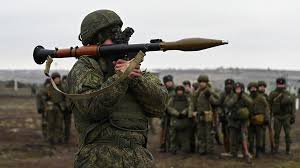
Russian Strike On Ukrainian Holiday Camp Kills 2, Injures 12

A Russian missile strike on Wednesday ignited a deadly fire at a holiday camp in Ukraine’s central Zaporizhzhia region, killing two people and injuring at least 12 others, including four children, local officials confirmed.

Images released by emergency services showed firefighters battling flames in single-storey cottages, with bodies and bloodstains visible at the scene.

The Zaporizhzhia region, partially occupied by Russian forces and split by active front lines, has faced a surge in attacks in recent weeks. Ukrainian President Volodymyr Zelensky condemned the strike, calling it senseless and aimed at terrorising civilians.

“There’s no military sense in this attack. It’s just cruelty to scare people,” Zelensky said in a social media post, noting that hundreds were left without electricity following additional strikes in the south.

Elsewhere, a separate Russian attack killed a man born in 1959 in Pokrovsk, a key logistics hub in the Donetsk region, which Moscow also claims to have annexed.

Russia, which launched its full-scale invasion of Ukraine in February 2022, has yet to comment on the latest strikes. Moscow has consistently denied targeting civilian infrastructure.

Thursday Chronicles: Is Love Still Enough In 2025?

Welcome to another spicy edition of Thursday Chronicles, where we unwrap life’s biggest questions like gala, chew them like chin chin, and swallow with laughter, facts, and one bottle of emotional minerals. If you’ve ever been in love, out of love, confused about love, or currently sending ‘good morning’ texts to three people — sit tight, this one’s for you.

In this economy, with fuel at ₦900 per litre, data finishing before the video loads, and Nigeria testing your mental strength daily, you begin to wonder, “Is love still enough?”

Once upon a time, all it took was butterflies in your belly, long midnight calls, and a mixtape from Style Plus. You would stand under the sun just to see your person. You would text “I miss you” with reckless abandon. You would save money for Valentine’s gift three months in advance, even if you were broke. Love made sense. It was sweet, warm, and affordable.

Now? Love is still sweet, but the price tag is heavy.

It starts with dates. Back then, an outing to Mr. Biggs was romantic. Now, if someone says, “Let’s go out,” your brain automatically starts calculating transport, food, soft drink, shawarma, and Uber surge. One date and your account is on life support. So, many people just say, “Come over”, not because they’re unserious, but because going out requires spiritual and financial preparation.

Then there’s the wedding dream. Every young couple wants that cute proposal, the beautiful photoshoot, a trending hashtag, and the big wedding with jollof rice that makes people cry tears of joy. But have you seen wedding vendors’ prices in 2025? Makeup artists are charging like you’re marrying into Buckingham Palace. One small engagement ring now costs enough to feed a family of six for a month. And don’t even get me started on aso-ebi, ₦45,000 for lace you may never wear again.

Love is no longer just about feelings. It’s about goals. Compatibility. Vision. Timing. A lot of people now say, “I can’t date potential,” and they mean it. Because emotions alone can’t fuel a car or pay rent. You can’t cuddle forever when your landlord is outside knocking. “I love you” is sweet, but “I paid the bills” sounds better after a long day.

Relationships in 2025 are complex. You’re dealing with distance, distractions, pressure, and sometimes, bad advice from TikTok. People are now breaking up over who should text first, who should pay the bill, and whose love language doesn’t align. Before, love was about compromise. Now, it’s about “If it’s not giving, I’m leaving.” We want perfection in a partner, when we ourselves are a work in progress.

Technology has also added wahala. One wrong emoji can end a whole relationship. You see your partner commenting “🔥🔥🔥” under someone’s post, and your chest tightens. You spend hours decoding their followers list like a detective. And if you mistakenly post a soft launch of your partner, be ready for anonymous DMs saying “Be careful o.” Love used to be a journey. Now it feels like a reality show with too many plot twists.

Yet, deep down, most people still want real love. We still want those morning texts that make us smile. We still want someone to pray for us, someone to gist with, someone who’ll hold us when the world feels heavy. We want loyalty, attention, and peace — even if we act unbothered on social media.

So, is love still enough?

Honestly, love is powerful. But in 2025, it needs support. Love needs communication, maturity, sacrifice, patience, prayer, and yes, money. Not excessive riches, but enough stability to take care of each other. Enough understanding to stay even when things aren’t rosy. Enough sense to know when to talk and when to stay silent.

Love should not be struggle, but it also shouldn’t be lazy. You can’t just say “I love you” and disappear when challenges come. You can’t love someone and be emotionally unavailable. In this day and age, love that lasts is not just found, it is built.

It is built in long conversations, in helping each other grow, in choosing to stay when everything else says walk away. It is in little gestures, buying suya on your way home, saving data for late-night calls, holding hands even when you’re tired. Love in 2025 still exists. It just requires more than vibes.

And if you’re single, don’t worry. Love isn’t a race. Everyone’s timing is different. It’s better to be alone and whole than to be in a relationship that drains you. Your soft, stable, beautiful love story is still valid, even if it’s taking time. In the meantime, love yourself deeply. That’s the relationship that sets the standard.

Thanks for reading another warm bowl of reality on Thursday Chronicles.
Whether you’re in love, recovering from love, waiting for love, or avoiding love like Lagos traffic, remember this: Love is still worth it. But add sense, savings, and self-respect to the recipe.

Catch you next Thursday, same time, same cruise, same honesty, same confusion about adulthood. Until then, love smart, love slow, and don’t forget: red flags don’t change colour with marriage.

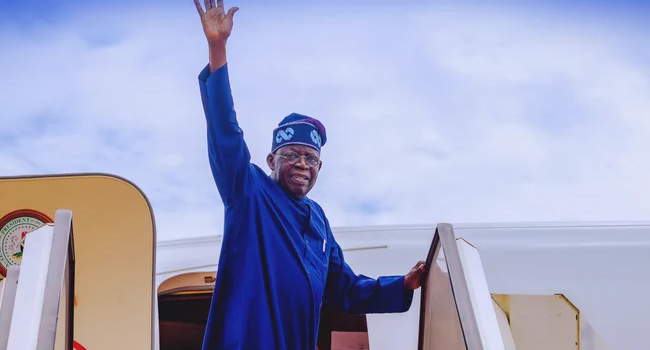
Tinubu Spends N26.38bn On Presidential Fleet In 18 Months

The Federal Government has spent approximately N26.38 billion on the Presidential Air Fleet (PAF) within the first 18 months of President Bola Tinubu’s administration, spotlighting the steep cost of maintaining executive air transport at a time of growing economic strain. According to spending data tracked by Govspend, a civic technology platform monitoring government finances, the payments were made between July 2023 and December 2024, covering operational and logistical costs tied to the fleet.

This figure draws fresh scrutiny when compared with the N81.80 billion former President Muhammadu Buhari allocated between 2016 and 2022. That included N62.47 billion for fleet operation and maintenance, N17.29 billion for local and foreign trips, and N2.04 billion for related overheads.

During Buhari’s tenure, the Presidency maintained 10 aircraft. While many aviation professionals blame the high cost of maintenance on the weakening naira and dollar-denominated aviation expenses, others attribute it to the size and diversity of the fleet.

The disbursement under Tinubu started with N846.03 million paid on July 14, 2023, followed by N674.82 million two days later. August 2023 marked a surge in releases, including a N2 billion payment on August 16, and additional transfers of N387.6 million and N713.22 million.

In November, N1.26 billion was spent, while March 2024 saw two separate N1.27 billion outflows. The largest single transaction was made on April 23, amounting to N5.08 billion.

Further breakdown shows more than N5.6 billion was spent in August 2024 alone, with significant payments of N1.25 billion and N2.21 billion on August 5, and N902.9 million and N1.24 billion on August 6.

Spending tapered slightly by the year’s end, but continued with N160.4 million paid on August 8, N35 million on September 11, and N133 million on September 29. December saw smaller disbursements including N290 million, N102.95 million, N25.25 million, and N8.7 million.

The PAF, managed by the Nigerian Air Force, provides air transport for the president, vice president, and top government officials. Yet the cost of maintaining the fleet remains a flashpoint amid Nigeria’s rising debt and calls for tighter fiscal discipline.

Frank Oruye, former Deputy Director of Engineering at the now-defunct Nigerian Airways, said the fleet’s diverse mix of aircraft is a key driver of cost. He explained that different aircraft types require different support systems, parts, and maintenance protocols — leading to duplication of ground equipment and increased spending.

“The fleet includes a French-made aircraft, a Canadian jet, an American Gulfstream, and larger carriers like the Boeing 737 and the recently acquired Airbus A350,” he noted. “Each one demands unique servicing, which drives up costs.”

Oruye also pointed out geopolitical considerations: “You can’t source all your jets from one country. Diplomatic issues could ground your entire fleet.”

FG Raises Flood Alert For 19 States As Death Toll Climbs To 191

NiMet Gives Reasons For Flooding In Lagos

The Federal Government has issued an urgent flood alert across 19 states and 76 communities, warning that sustained rainfall over the next five days could trigger severe flooding in high-risk areas nationwide. The advisory, released Tuesday by the National Flood Early Warning Systems Centre under the Federal Ministry of Environment, comes amid worsening weather conditions that have already led to fatalities, displacement, and property damage in several parts of the country.

The centre’s forecast, covering August 5 to August 9, identifies vulnerable locations in Akwa Ibom, Bauchi, Ebonyi, Cross River, Nasarawa, Benue, Kaduna, Katsina, Kebbi, Kano, Niger, Plateau, Taraba, Jigawa, Yobe, Zamfara, Sokoto, Borno, and Gombe States.

In a separate report, the National Emergency Management Agency (NEMA) disclosed that no fewer than 191 lives have been lost to flooding incidents in 2025 alone, with 94 persons still unaccounted for. The agency said over 134,000 individuals across 20 states have been affected by various degrees of flooding, with more than 48,000 people displaced.

NEMA’s disaster dashboard shows that 239 people have sustained injuries, while 9,499 homes and 9,450 farmlands have been damaged. Among those affected are over 60,000 children, 5,700 elderly persons, and nearly 2,000 individuals living with disabilities.

Recent flooding in Ogun and Gombe states illustrates the severity of the crisis. In Ogun, flash floods trapped residents and churchgoers attending the Redeemed Christian Church of God annual convention at Redemption City. Parts of the Lagos-Ibadan Expressway were submerged, while residents in communities like Estate 15 abandoned their vehicles and resorted to canoes for transportation. Church officials deployed school buses to assist stranded attendees.

In Gombe, the State Emergency Management Agency confirmed four fatalities and damage to over 278 households across local government areas including Gombe, Kwami, Billiri, and Dukku. Officials linked most of the deaths to structural collapses caused by intense rain and cracked building walls.

Elsewhere, Lagos State experienced flash floods on Monday following overnight rainfall that overwhelmed drainage systems and crippled movement across the metropolis. Areas such as Ikorodu, Lekki, Agege, Surulere, and Eti-Osa were hit. Viral videos on social media showed flooded homes, stranded commuters, and residents wading through waist-deep water. Markets were shut down and schools forced to close, further amplifying the disruption.

In Delta State, flooding has already submerged parts of Sapele and Oko communities, prompting residents to begin relocating. Similar scenes were reported in Anambra and Plateau states, where overflowing rivers cut off access routes and destroyed farmland.

Reacting to the crisis, the National Economic Council recently approved a nationwide intervention package to support emergency flood response. Each of the 36 states and the Federal Capital Territory will receive N3 billion, while N1.5 billion has been allocated to the Ministries of Environment, Budget and National Planning, and Water Resources. The National Emergency Management Agency received an additional N10 billion.

Despite repeated warnings, experts say Nigeria’s flood risk remains dangerously high due to poor urban planning, blocked drainage systems, unregulated construction, and limited enforcement of environmental laws.

Last year, over 5.2 million people were affected by flooding across 35 states, with 1,237 fatalities and the destruction of more than 116,000 houses. The collapse of the Alau Dam in Borno alone displaced over 419,000 people.

With forecasts predicting more heavy rainfall in the days ahead, NEMA has called on residents, local authorities, and stakeholders to take immediate preventive action and remain alert.

US Extradites Nigerian Man Over $819,000 Fraud, Faces 47-Year Jail Term

Nigerians in Jail

A Nigerian national residing in France, Chukwuemeka Victor Amachukwu, has been extradited to the United States to face multiple charges related to computer hacking, wire fraud, and aggravated identity theft, following his alleged role in a complex cybercrime scheme that defrauded victims of over $819,000.

According to a statement released on Tuesday by the U.S. Department of Justice, Amachukwu, 39, was handed over to American authorities on Monday and appeared before a U.S. Magistrate Judge in Manhattan on Tuesday. The charges stem from a large-scale criminal conspiracy that targeted U.S.-based tax preparation firms and government financial aid programs.

Federal prosecutors allege that in 2019, Amachukwu and unnamed co-conspirators infiltrated electronic systems of several tax preparation businesses across New York, Texas, and other U.S. states using spear-phishing emails to gain unauthorized access. The hackers allegedly stole personal data and used it to file fraudulent tax returns with the U.S. Internal Revenue Service (IRS), seeking to collect at least $8.4 million in refunds.

While the full amount was not disbursed, authorities confirmed that the syndicate successfully obtained about $2.5 million in illicit refunds. In addition to the IRS fraud, the group is accused of filing fake claims under the U.S. Small Business Administration’s Economic Injury Disaster Loan program, siphoning an additional $819,000 through fraudulent applications.

Following a thorough investigation, Amachukwu was traced to France, where he was arrested and later extradited to the United States for trial. He now faces a five-count indictment before U.S. District Judge Paul Gardephe, which includes one count of conspiracy to commit computer intrusions (maximum sentence of five years), two counts of conspiracy to commit wire fraud, and two counts of wire fraud (each carrying a maximum of 20 years), and one count of aggravated identity theft, which mandates a two-year sentence to be served consecutively.

In addition to the current charges, the U.S. Department of Justice revealed that Amachukwu is also being prosecuted in a separate case involving an investment scam. In that case, he allegedly duped victims by offering non-existent standby letters of credit, swindling millions of dollars.

Authorities emphasized that sentencing, if convicted, will be determined by the court and could result in a maximum of 47 years behind bars.

Morayo Afolabi-Brown Resigns From TVC After 12 Years As ‘Your View’ Host

TVC Communications, the parent company of TVC News, TVC Entertainment, Max FM, Adaba FM, and Yanga FM, has officially announced the resignation of Morayo Afolabi-Brown, Managing Director of TVC Entertainment and longtime host of the popular daytime show Your View.

The announcement was made in a statement issued by the company’s Public Relations Manager, Edward Akintara, who confirmed that Afolabi-Brown will step down from her role on Thursday, August 29, 2025.

“After 12 impactful years at the helm of Your View, Morayo has chosen to step down in order to fully dedicate herself to a passion project she has nurtured over the years,” the statement read. “While we are saddened to see her leave, we celebrate her outstanding contributions to the show, the network, and the countless lives she has touched across Nigeria and beyond.”

Afolabi-Brown, known for her strong voice on women’s issues and socio-political discourse, has become one of Nigeria’s most recognizable TV personalities. Since its debut, Your View has grown into a leading platform for women’s perspectives on national conversations.

TVC Communications noted that while Morayo’s presence on the programme will be deeply missed, the show remains committed to maintaining its relevance and quality.

“We extend our heartfelt gratitude to Morayo for her dedication, vision, and inspiration throughout her time with TVC Communications,” Akintara stated. “Her legacy will always be a valued part of our story, and she remains a beloved member of the TVC family.”

The company called on the public and media to show continued respect and support for Afolabi-Brown as she transitions into her next chapter. Official updates or further enquiries, it said, should be directed to the Corporate Communications team or through TVC’s verified channels.

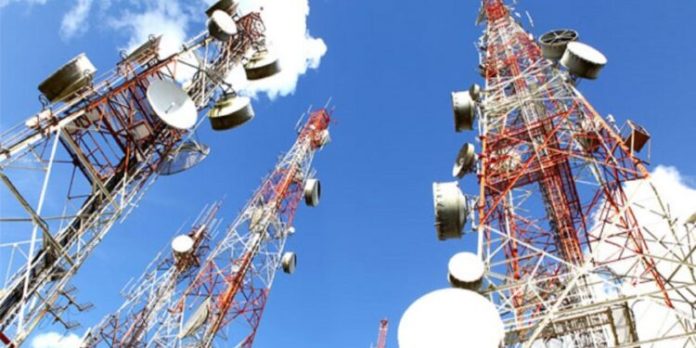
Foreign Investments In Nigeria’s Telecom Sector Drop By 58% In Q1 2025

Foreign direct investment (FDI) inflows into Nigeria’s telecommunications sector decline sharply to $80.78 million in the first quarter of 2025, reflecting a 58% decrease compared to $191.57 million recorded in the same period of 2024.

This update comes from the latest capital importation data released by the National Bureau of Statistics (NBS), which also shows that the sector records a 41% quarter-on-quarter decline from the $136.86 million posted in Q4 2024.

Despite a general increase in total capital inflows into Nigeria’s economy for Q1 2025, the telecom industry struggles to attract investors due to ongoing regulatory and structural challenges.

According to the Association of Licensed Telecommunications Operators of Nigeria (ALTON), issues such as multiple taxation and high Right of Way (RoW) charges continue to deter potential investors. The association emphasizes that sustainable growth in foreign investments may remain elusive unless these bottlenecks are addressed.

Commenting on the trend, Engr. Ikechukwu Nnamani, CEO of Digital Reality and former president of the Association of Telecommunications Companies of Nigeria (ATCON), notes that inconsistent government policies and instability in the foreign exchange market are major concerns for investors. However, he expresses optimism that recent improvements in forex stability could support future investment growth in the sector.

While the telecom sector experiences a downturn, total capital inflows into Nigeria rise significantly to $5.6 billion in Q1 2025—marking a 67.12% increase from the $3.4 billion recorded in Q1 2024.

The banking sector leads the surge, accounting for over half of the total investments. According to the NBS, banking attracts $3.13 billion (55.44%), followed by financing with $2.1 billion (37.18%) and production/manufacturing with $129.92 million (2.30%).

Analysts attribute the spike in banking sector investments to the Central Bank of Nigeria’s ongoing recapitalization policy, which prompts banks to seek fresh capital both locally and internationally to meet new regulatory thresholds.

MTN, Airtel Record Multi-Trillion Naira Data Revenue As Nigerians Prioritize Connectivity Over Essentials

Telecommunication giants MTN Nigeria and Airtel Nigeria are reporting significant increases in data revenue as mobile internet usage surges across the country, reflecting changing consumer habits and growing demand for digital connectivity.

According to the Q2 2025 financial results released by both companies, data continues to drive strong performance amid rising smartphone adoption and increased mobile content consumption.

MTN Nigeria posts an 85.6% year-on-year increase in data revenue, reaching ₦701 billion in Q2 2025, up from ₦377 billion in the same period last year. Airtel Nigeria also records a 60.3% increase in data earnings, totalling ₦260 billion (approximately $168 million), compared to ₦185.4 billion ($117 million) in Q2 2024.

Despite recent tariff increases, data consumption in Nigeria continues to climb. The Nigerian Communications Commission (NCC) reports that Nigerians used 1.04 million terabytes of data in May 2025 alone, the highest monthly figure recorded since January 2023.

MTN reports a 41.2% rise in total data traffic on its network, with average data usage per subscriber growing by 26.3% year-on-year to 13.2GB per month. Similarly, Airtel states that data consumption per customer has increased by 27.3% to 9.3GB per month, with smartphone penetration reaching 51.4%. Airtel also highlights that average data use by smartphone users has hit 11.8GB, up from 9.9GB in the same period last year.

Industry analysts say the growth reflects a shift in consumer behaviour, where mobile internet access is seen as an essential service. Social media, streaming platforms, remote work, online gaming, and cloud-based tools are now integrated into everyday life.

“For many young Nigerians, platforms like TikTok, Instagram Reels, and YouTube are major contributors to rising data usage,” says Adewale Adeoye, a telecom analyst. “These apps automatically stream high-definition video content, leading to higher bandwidth consumption.”

Presley Ibadin, CEO of K-Chronos Global Tech Limited, notes that mobile data has become a non-negotiable priority for many Nigerians. “An average user may not have food at home, but they will ensure their phone is loaded with data to stay connected and potentially seek help or opportunities,” he says.

To support the growing demand, telecom operators are increasing infrastructure investments. MTN Nigeria reports capital expenditure of ₦565.7 billion in H1 2025, a 288.4% rise compared to the same period in 2024. The investments focus on expanding 4G coverage, enhancing fibre connectivity, and establishing a new data centre.

“These funds are deployed to support increased data traffic and improve service quality for our over 84 million customers,” MTN states.

Airtel Nigeria also boosts infrastructure spending, reporting $39 million in capital expenditure for Q2 2025—slightly up from $38 million in Q2 2024. The company previously announced plans to double its annual capital investment to fast-track 5G deployment, expand rural network coverage, and upgrade its data centre capabilities.

Airtel confirms that it is positioning its infrastructure to take advantage of the 2Africa submarine cable system, which is expected to enhance Nigeria’s international bandwidth and overall network capacity.

With digital habits continuing to evolve and demand for high-speed connectivity rising, Nigeria’s telecom operators appear well-positioned for continued growth. As data becomes increasingly essential for work, entertainment, and communication, operators face the dual challenge of meeting consumer expectations while maintaining service quality and affordability.

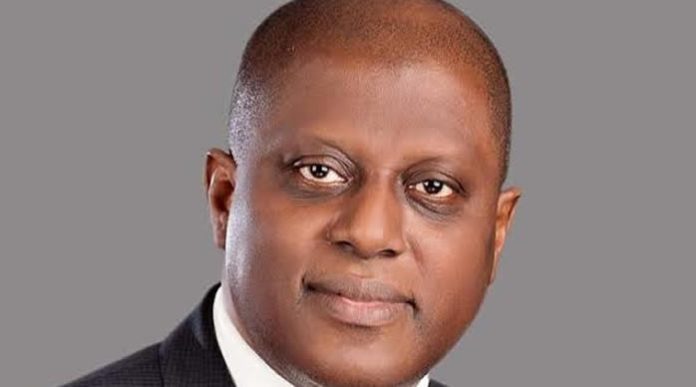
Money Market Rates Surge Following CBN’s OMO Sale

Olayemi Cardoso,

Money market rates climbed on Tuesday following the Central Bank of Nigeria’s (CBN) open market operation (OMO) aimed at curbing excess liquidity in the financial system.

The apex bank offered ₦600 billion in OMO bills but saw an overwhelming demand, raising a total of ₦2.12 trillion from investors. The auction, designed to absorb surplus cash in the banking system, comes ahead of a ₦220 billion Nigerian Treasury bills auction scheduled for midweek.

Despite sustained market liquidity, the CBN’s liquidity management efforts are beginning to push short-term rates higher. Analysts say the settlement of the OMO auction is expected to drain available funds in the system, further tightening financial conditions by Wednesday.

According to a report from TrustBanc Financial Group, banks accessed ₦1.5 trillion from the Standing Lending Facility (SLF) after three days of inactivity, while placements at the Standing Deposit Facility (SDF) eased.

Meanwhile, interbank lending rates rose across all tenor buckets. The Nigerian Interbank Offered Rate (NIBOR) for the overnight tenor increased from 26.88% to 27.18%, reflecting rising funding costs. Similarly, the Open Repo (OPR) and overnight lending rates trended higher, despite the persistence of strong liquidity.

AIICO Capital Limited reported that liquidity in the banking system increased to ₦2.26 trillion, up from an opening balance of ₦1.21 trillion earlier in the day.

Even with the improved liquidity, average funding rates surged by 60 basis points to 27.35%, with the OPR rising 50bps to 27.50% and the overnight rate up 70bps to 27.20%.

Short-term interest rates are expected to remain elevated in the near term, barring any significant liquidity injections. As of last Friday, the financial system’s liquidity surplus stood at ₦1.61 trillion, up from ₦1.35 trillion the previous week—largely driven by potential FAAC inflows, which boosted activity at the CBN’s deposit window.

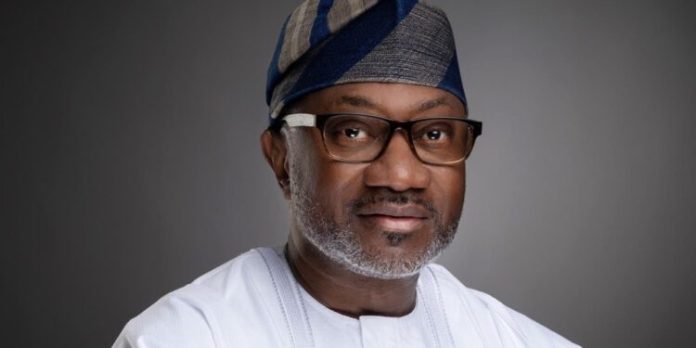
Otedola Recalls 1 a.m. Deal That Makes Tinubu Divert Diesel Cargo

Nigerian billionaire and investor, Femi Otedola, shares new insights into a pivotal moment in his energy business journey, revealing how a late-night negotiation led to the diversion of a diesel shipment originally meant for another buyer.

In an excerpt from his upcoming memoir scheduled for release in August, Otedola recounts a critical incident that unfolds during a fuel transfer operation. While managing logistics at a depot, he spots the Ocean Challenger, a diesel vessel belonging to Wale Tinubu, Group CEO of Oando Plc, anchored nearby and set to deliver fuel to one of Oando’s clients.

“At around 1 a.m., I contacted Oando’s operations staff to buy the cargo, but he declined,” Otedola writes. “I then called Wale directly and offered an extra N6 per litre. Without delay, he approved the discharge into my tanks.”

The cargo reportedly contains about 6 million litres of diesel. At a base rate of N30 per litre, approximately $1.8 million based on the N100/$1 exchange rate at the time, Otedola’s offer boosts the total value by an additional N36 million (or $360,000).

Referencing a line from The Godfather, he adds: “I made him an offer he couldn’t refuse.”

Otedola explains that his initial involvement in the diesel business is facilitated through government-linked allocations. However, when access to those channels ends, he shifts gears and approaches private suppliers instead.

In one decisive move, he offers $20 million to acquire an entire fuel depot that was initially valued at just $4 million, paying five times the asking price to secure steady supply. That deal sets the foundation for the establishment of Zenon Petroleum and Gas in 2003.

By his early 30s, Otedola becomes a major force in Nigeria’s oil trading scene. Zenon grows rapidly, capturing a large share of the diesel market and supplying major corporations across the country.

His bold tactics, including the Ocean Challenger deal, earn him the nickname “King of Diesel.”

Otedola later takes over African Petroleum, rebrands it as Forte Oil, and spearheads reforms that focus on diversification and corporate governance. He eventually exits the downstream oil business to invest in power and other emerging sectors.

His forthcoming book promises more behind-the-scenes stories of deals, risks, and pivotal decisions that define one of Nigeria’s most notable business careers.

Nigerian Man Faces U.S. Court Over Alleged Multimillion-Dollar Cyber Fraud And Identity Theft

A Nigerian citizen, Chukwuemeka Victor Amachukwu, currently stands trial in the United States following his extradition from France over serious allegations of cybercrime, identity theft, and wire fraud that reportedly defrauded American taxpayers and private victims of millions of dollars.

U.S. federal authorities, including the FBI and the Office of the U.S. Attorney for the Southern District of New York, confirm that Amachukwu arrives in the country under coordinated international law enforcement efforts. The suspect, also known by the aliases “Chukwuemeka Victor Eletuo” and “So Kwan Leung,” appears before U.S. Magistrate Judge Robert W. Lehrburger shortly after his arrival, with his case now assigned to District Judge Paul G. Gardephe.

According to the unsealed court documents, Amachukwu and several co-conspirators allegedly launch a hacking campaign as early as 2019, targeting U.S.-based tax preparation firms. Using spearphishing techniques, they reportedly gain unauthorized access to systems holding confidential tax and identity data of thousands of Americans. Prosecutors state that the stolen information is then used to submit fraudulent tax returns to the Internal Revenue Service (IRS) and various state tax bodies.

The fraudulent tax scheme reportedly seeks over $8.4 million in refunds, with at least $2.5 million successfully disbursed to the group.

In a separate allegation, Amachukwu is accused of exploiting the U.S. Small Business Administration’s COVID-19 Economic Injury Disaster Loan (EIDL) program. Using stolen identities, the group allegedly secures over $819,000 in relief funds.

Investigators also link Amachukwu to a fraudulent investment scheme involving fictitious standby letters of credit, through which he reportedly swindles investors by promising large returns, only to divert their funds for personal gain.

His arrest in France follows a request by U.S. authorities and is made possible through cooperation among the FBI, the U.S. Marshals Service, the U.S. Department of Justice’s Office of International Affairs, and French law enforcement.

FBI Assistant Director in Charge, Christopher Raia, issues a stern warning: “Anyone engaging in cyber-enabled fraud against Americans should know we have the tools and reach to bring you to justice.”

Amachukwu, 39, faces multiple charges, including:

  • One count of conspiracy to commit computer intrusions (maximum sentence: 5 years),
  • Two counts of conspiracy to commit wire fraud (up to 20 years each),
  • Two counts of wire fraud (up to 20 years each),
  • One count of aggravated identity theft (mandatory two-year consecutive sentence).

The case is being handled by the U.S. Attorney’s Office’s Complex Frauds and Cybercrime Unit, with Assistant U.S. Attorney Daniel G. Nessim leading the prosecution. Authorities clarify that all charges are allegations at this stage, and the defendant remains presumed innocent until proven guilty in court.

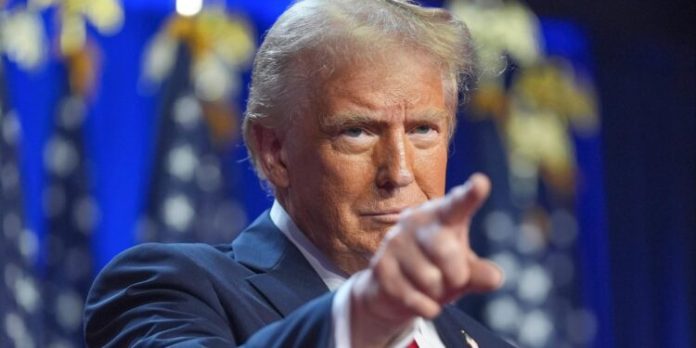
Trump Warns Of Imminent Tariffs On India

U.S. President Donald Trump has warned that India could face significantly higher tariffs within the next 24 hours due to its continued trade relationship with Russia, particularly in the purchase of Russian oil.

Speaking during an interview with CNBC on Tuesday, Trump stated:

“We settled on 25 percent, but I think I’m going to raise that very substantially over the next 24 hours, because they’re buying Russian oil.”

He accused India of “fueling the war machine” by maintaining energy ties with Moscow amid the ongoing conflict in Ukraine.

“If they’re going to do that, then I’m not going to be happy,” he added.

Trump’s comments come amid his renewed efforts to pressure countries engaging in commerce with Russia, especially as the war in Ukraine continues. Although he had previously hinted at the possibility of increased tariffs linked to Russia’s invasion of Ukraine, this is the first time he has mentioned a specific timeframe for action.

The threat also coincides with the approaching deadline Trump set for a ceasefire between Moscow and Kyiv. The 10-day deadline, announced last Tuesday, is expected to expire soon, and Trump has warned of sanctions against countries that continue to support Russia economically.

According to Trump, if no ceasefire is reached by the deadline, his administration will begin imposing penalties on Russia’s trading partners—India now appearing to be one of the primary targets.

Public Procurement Bureau Begins Rollout Of E-Government Strategy

Director-General of the Bureau, Dr. Adebowale Adedokun

The Bureau of Public Procurement (BPP) has commenced the implementation of its e-Government plan, aligning with the Federal Government’s broader drive toward digitalisation and improved efficiency in public service delivery. This development was announced in a circular titled “Transition to Electronic Submission Procedure at the BPP”, issued by the Director-General of the Bureau, Dr. Adebowale Adedokun, and dated August 4, 2025.

According to the circular, the transition is in line with the provisions of the National Digital Economy Policy and Strategy (NDEPS) 2020–2030 and the National e-Government Master Plan (NEGM) 2021.

Dr. Adedokun stated that, effective August 18, the BPP will no longer accept any form of hard copy submissions from Ministries, Departments, and Agencies (MDAs). All procurement-related documents must henceforth be submitted electronically.

“This transition is part of BPP’s ongoing efforts to implement the NDEPS and the Federal Government’s circular on the digitalisation of government operations,” he said.

MDAs are now required to send all submissions via email to: submissions@bpp.gov.ng. Each submission must be attached in two file formats—PDF for official record-keeping, and an editable format (such as .docx or .xlsx) to facilitate review and processing.

In addition, all communications and responses concerning requests for the adoption of Special or Restricted Methods of Procurement under the Public Procurement Act, 2007, are to be sent exclusively to: official@bpp.gov.ng.

As part of the transition process, MDAs are required to submit two functional official email addresses and two active telephone numbers of designated officers to the BPP for formal communication and verification purposes.

Dr. Adedokun urged all MDAs to give urgent attention to this directive and ensure full compliance to avoid any disruptions or delays in procurement submissions and reviews.

Larry Ellison’s Wealth Climbs By $12.4 Billion As Oracle Rides AI Infrastructure Surge

Oracle co-founder and Chief Technology Officer Larry Ellison gains $12.4 billion in net worth as investors bet big on the future of artificial intelligence infrastructure.

As of Tuesday, Ellison’s net worth reaches $301.7 billion, placing him as the second-richest individual globally, according to Forbes’ real-time billionaire rankings.

This sharp rise follows a 1.24% increase in Oracle’s stock price, which closes at $255.67. The rally is triggered by Bank of America’s upward revision of Oracle’s price target to $295, up from $220, reflecting renewed confidence in the company’s role within the rapidly expanding AI infrastructure space.

Bank of America highlights increased capital expenditure from tech giants such as Microsoft and Meta as an indicator of growing demand. Microsoft forecasts more than $30 billion in capex for the September quarter—well above the earlier $23.5 billion estimate. Meta raises its full-year projection to $69 billion, exceeding the prior forecast of $67 billion. Analysts interpret these numbers as evidence of significant investment in AI-related technologies, particularly agentic AI, which alone represents a potential $155 billion market—adding 8% to the total addressable software market.

Ellison’s long-standing push to diversify Oracle’s offerings beyond its core database business appears to be paying off. Over the years, the company has expanded into cloud computing through strategic acquisitions, most notably its $28.3 billion purchase of electronic health records firm Cerner in 2021.

Though he stepped down as CEO in 2014, Ellison remains actively involved in Oracle’s direction as chairman and CTO. Holding nearly 40% of Oracle’s shares, he maintains a significant influence over the company’s trajectory.

In addition to his business pursuits, Ellison is known for his distinctive lifestyle. He acquires nearly the entire Hawaiian island of Lanai in 2012 and relocates there permanently in 2020. His involvement with other tech firms includes a board seat at Tesla from 2018 to 2022, during which he amasses approximately 45 million split-adjusted shares.

Despite the bullish outlook on Oracle’s AI positioning, Bank of America maintains a “Neutral” rating. Analysts cite uncertainty around the extent to which AI-related spending will convert into tangible revenue growth for Oracle. The ongoing debate among investors focuses on how significantly Oracle can capitalize on the AI infrastructure boom in terms of topline impact.

ValueJet Pilots Sanctioned By NCAA Over Safety Breach

The Nigeria Civil Aviation Authority (NCAA) has suspended the licences of two ValueJet pilots following a serious safety breach at the Nnamdi Azikiwe International Airport, Abuja. This was disclosed in a statement signed on Tuesday by Mr. Michael Achimugu, Director of Public Affairs and Consumer Protection at the NCAA.

According to the statement, the incident occurred on Tuesday, August 5, 2025, at the Domestic Terminal of the airport. The NCAA said it received reports of a significant violation of aviation safety protocols involving a ValueJet aircraft.

As a result, the licences of the Pilot, Captain Oluranti Ogoyi, and the Co-Pilot, First Officer Ivan Oloba, have been suspended with immediate effect pending the outcome of a full investigation.

“Preliminary findings indicate that the pilot commenced departure procedures from the designated bay without obtaining the mandatory pre-departure clearance,” the statement read.

The Authority described the pilot’s actions as reckless and said they posed a serious risk to ground personnel and other airport users. It added that the conduct violated both local aviation regulations and international safety standards.

“The NCAA views this incident with utmost seriousness and remains committed to enforcing strict compliance with safety procedures to protect all stakeholders in the aviation industry,” the statement concluded.

Renaissance Energy Eyes Expansion In Nigeria’s Oil, Gas Industry

Africa’s energy powerhouse, Renaissance Africa Energy Company Limited, has emphasized the need for stronger collaboration among oil and gas industry players to drive sectoral growth and maximize Nigeria’s vast hydrocarbon resources.

This call was made by the company’s Managing Director, Mr. Tony Attah, in a statement released by Renaissance’s spokesperson, Mr. Michael Adande, in Port Harcourt on Tuesday. According to the statement, Attah made the remarks during the opening ceremony of the Society of Petroleum Engineers (SPE) 2025 Nigeria Annual International Conference and Exhibition (NAICE) held in Lagos.

Represented by the Chief Technical Officer, Mr. Abdulrahman Mijinyawa, Attah noted that strategic partnerships between Renaissance Energy and other key players in the industry are critical to creating an investment-friendly environment in Nigeria.

“Collaboration will not only enable Nigeria to fully harness its abundant oil and gas resources but also position the country as a dominant force in Africa’s energy landscape,” he said.

Attah highlighted Renaissance’s commitment to this strategy, noting its role as a key operator in Nigeria’s largest upstream joint venture, alongside NNPC Limited, TotalEnergies, Agip Energy, and Natural Resources Limited (AENR). He stated that the company is focused on becoming a continental energy leader, championing energy security across Africa and supporting the sustainable industrialisation of Nigeria’s energy sector.

On Nigeria’s crude oil output, Attah revealed that Renaissance has increased its oil production by about 40% over the past four months, contributing meaningfully to the Federal Government’s 2.06 million barrels per day (bpd) production target.

He also disclosed that, for the first time in five years, the company had met its contractual gas supply obligations to the Nigeria Liquefied Natural Gas (NLNG) Limited—an achievement attributed to recent production gains.

Reaffirming Renaissance’s commitment to Nigeria’s development, Attah said the company remains dedicated to advancing industrialisation, generating employment, and supporting overall economic growth.

He described the annual NAICE conference as a vital platform where stakeholders converge to address the evolving challenges facing the energy sector, and collaborate on sustainable solutions.

“Participating petroleum engineers are working collectively to advance Nigeria’s economy, while meeting both national and global energy demands in a safe, secure, and sustainable manner,” he added.

Yields Dip To 17.77% Ahead Of N220bn Treasury Bills Auction

The average yield on Nigerian Treasury bills eased slightly to 17.77% in the secondary market ahead of a scheduled midweek auction by the Central Bank of Nigeria (CBN), where it plans to issue ₦220 billion across standard tenors.

Trading activity remained relatively muted as investors shifted focus to the upcoming auction, where expectations are building around possible changes to spot rates. Analysts say this is being driven by signals of potential monetary easing later in the year, alongside improving macroeconomic indicators such as disinflation, exchange rate stability, and a positive economic growth outlook.

The Nigerian government appears to be dialing back on borrowing costs as structural reforms begin to yield results. This is leading to reduced bond supply and softer spot rates on short-term debt instruments.

Market sentiment was further influenced by the CBN’s recent Open Market Operations (OMO) auction, in which ₦600 billion was offered across the 105-day and 245-day maturities. This contributed to the subdued activity in the T-bills segment.

According to a report by Cordros Capital, average yields declined by 1 basis point across the short-, mid-, and long-term ends of the curve. The modest contraction was attributed to strong demand for Treasury bills maturing in 80 days, 171 days, and 353 days—all of which recorded a 1bp drop.

On the flip side, the average yield in the OMO segment rose by 6bps to 24.7%, driven by sell pressure following the large ₦600 billion offering. The auction saw overwhelming interest, particularly in the 245-day tenor, which attracted bids worth ₦2.12 trillion. The entire allotment was made in this tenor, clearing at a marginally lower rate of 23.70%.

Market Recap: Previous Week

In the previous week, the secondary T-bills market traded with a bearish tone, pushing the average yield across the curve up by 11bps to 21.37%. Specifically, yields in both the Nigerian Treasury Bills (NTB) and OMO segments rose by 7bps and 3bps, closing at 17.77% and 24.73%, respectively.

Analysts observed that selling pressure was concentrated in the mid- and long-term maturities, with the 22-Jan bill seeing a sharp 79bps rise in yield. In the OMO market, the slight 3bps increase was largely attributed to the 19-Aug bill, which surged by 173bps as it nears maturity and pulls toward par value.

BizWatchNigeria.Ng
Privacy Overview

This website uses cookies so that we can provide you with the best user experience possible. Cookie information is stored in your browser and performs functions such as recognising you when you return to our website and helping our team to understand which sections of the website you find most interesting and useful.