







Keypoints
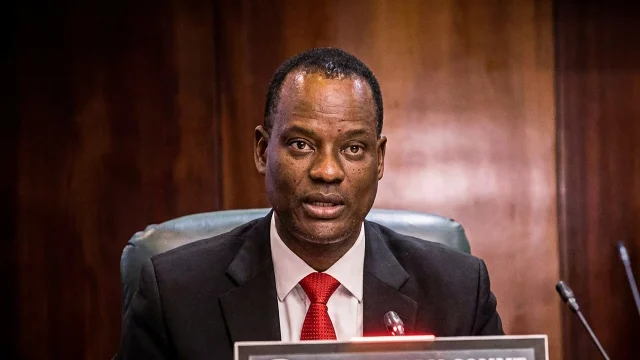
- Minister of State for Finance Taiwo Oyedele issued a statement on Sunday, April 19, 2026, clarifying that reports of “hidden spending” are based on misinterpretations of the World Bank’s Nigeria Development Update.
- The minister clarified that Federation Account Allocation Committee (FAAC) deductions are legitimate statutory obligations, including security spending, debt servicing, and refunds to states.
- Government reforms, including Executive Order 9 of 2026, have been implemented to ensure petroleum revenues are remitted directly to the Federation Account, bypassing previous middleman deductions.
- Recent data indicates a positive macroeconomic shift, with the debt-to-GDP ratio falling to 32.3% in 2026—the first such decline in over a decade.
- The World Bank report projects that current fiscal reforms could increase annual distributable revenue by approximately 0.4% of GDP.
Main Story
The Federal Government has pushed back against narratives suggesting that large portions of Nigeria’s revenue are being diverted or hidden.
Minister of State for Finance Taiwo Oyedele explained that what some analysts labeled as “leakages” are actually transparent FAAC deductions mandated by law.
These funds cover essential costs such as collection fees for revenue agencies, statutory transfers, and critical investments in national security.
Oyedele emphasized that the World Bank’s recent report actually validates the government’s fiscal direction. He pointed specifically to the landmark Executive Order 9, signed in February 2026, which stripped the national oil company of its power to deduct management fees at source.
By mandating direct remittance of oil and gas proceeds, the government aims to inject over ₦1.4 trillion into the Federation Account this year alone, strengthening the financial position of all three tiers of government.
The Issues
The primary challenge is the communication gap; the complexity of FAAC’s “net vs. gross” reporting often leads to public confusion where statutory costs are mistaken for missing money. Authorities must solve the problem of data lag, as many critics are still using 2025 figures that do not reflect the transparency gains made in the first quarter of 2026.
Furthermore, there is a fiscal transition risk; as the government moves toward a direct remittance model, it must ensure that the national oil company remains commercially viable without its traditional “management fee” cushion. To succeed, the Ministry of Finance must move toward real-time public dashboards that break down FAAC deductions for every citizen to see.
What’s Being Said
- The misreporting incorrectly characterizes FAAC deductions as “waste” or missing funds. They represent legitimate fiscal flows, stated Taiwo Oyedele.
- The World Bank acknowledged that reforms implemented in early 2026 are already addressing long-standing transparency concerns in the petroleum sector.
- Financial analysts note that the decline in the debt-to-GDP ratio to 32.3% is a significant signal of “fiscal discipline” to international investors.
- Civil society groups have called for more “granular detail” on the “security spending” category of FAAC deductions to ensure full accountability.
What’s Next
- Full implementation of Executive Order 9 is expected to reach its 90-day milestone by May 2026, with a technical subcommittee finalizing direct payment guidelines for oil contractors.
- A comprehensive legislative review of the Petroleum Industry Act (PIA) is anticipated to follow the executive order to permanently fix fiscal anomalies.
- Inflation rates are projected to continue their gradual decline throughout the second quarter of 2026 as current account surpluses strengthen the Naira.
- The Ministry of Finance is expected to host a transparency workshop for media organizations to align reporting standards with the new “direct remittance” fiscal framework.
Bottom Line
The “hidden spending” controversy highlights the friction between old accounting habits and new reform realities. By moving toward direct remittances and reducing the debt-to-GDP ratio for the first time in ten years, the government is betting that transparency will eventually silence the skeptics.