





Key points
- Industry leaders say greater technology adoption is critical to improving efficiency, safety and competitiveness.
- Stakeholders also called for sustained investment in workforce development and indigenous technical capacity.
- Oilserv highlighted its deployment of automation and AI across major gas pipeline projects.
- Experts said financial constraints are slowing technology adoption among indigenous marine operators.
Main story
Stakeholders in Nigeria’s oil and gas industry have urged operators to accelerate the adoption of advanced technologies and invest more in developing skilled manpower to improve productivity, reduce costs and strengthen the sector’s long-term competitiveness.
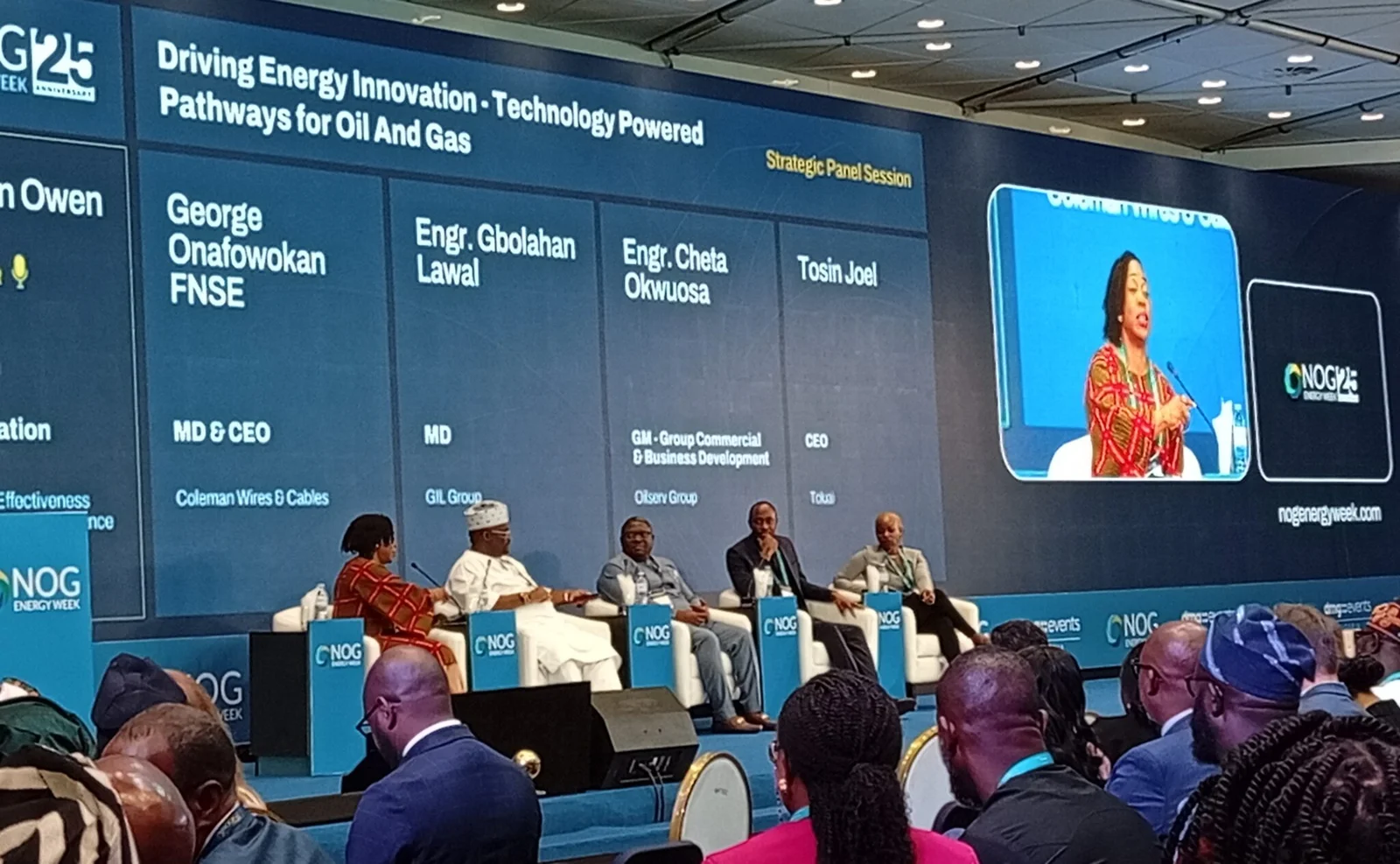
The call was made during a panel session on technology-driven innovation at the Nigeria Oil and Gas (NOG) Energy Week in Abuja, where industry leaders examined how digital solutions are reshaping operations across the energy value chain.
Participants said technologies such as artificial intelligence, automation, predictive maintenance and data analytics are becoming increasingly important in improving operational efficiency, enhancing safety and supporting Nigeria’s energy ambitions.
Oilserv Group said its transition from manual processes to automated systems has significantly improved project execution, particularly on major gas infrastructure projects such as the OB3 and Ajaokuta-Kaduna-Kano (AKK) pipelines.
Representing the company’s chairman, Cheta Okwuosa said Oilserv has also integrated AI-powered leak detection, intrusion detection and remote monitoring systems into its gas commercialisation activities, while stressing that technology investments must be matched by efforts to develop indigenous expertise capable of operating and maintaining the systems.
Industry participants also highlighted the importance of replacing outdated analogue processes with data-driven technologies and providing continuous training to ensure workers can adapt to rapidly evolving operational requirements.
However, concerns were raised over the uneven pace of technology adoption, particularly among indigenous marine logistics operators, many of whom face financing challenges that limit investment in advanced equipment.
According to experts, larger international operators have increasingly adopted technologies such as dynamic positioning systems, automated fuel optimisation and predictive maintenance, giving them a competitive advantage in securing long-term offshore contracts.
The issues
As Nigeria seeks to increase oil and gas production while expanding gas infrastructure, technology is becoming essential for improving operational efficiency, reducing downtime and enhancing safety. However, the high cost of advanced digital systems remains a significant barrier for many indigenous operators, raising concerns about widening competitiveness gaps within the industry.
What’s being said
“Technology adoption must improve speed, safety and sustainability across engineering, procurement and construction operations.” — Emeka Okwuosa, Chairman, Oilserv Group
What’s next
Industry stakeholders are expected to continue exploring investments in automation, artificial intelligence and workforce development as companies seek to improve efficiency and position themselves for future growth in Nigeria’s evolving energy sector.
Bottom line
Industry leaders believe that combining advanced technology with sustained investment in local talent will be key to improving productivity, strengthening competitiveness and supporting the long-term growth of Nigeria’s oil and gas industry.