








Key points
- NLNG has called for the commercialisation of stranded gas resources and expanded shared gas infrastructure.
- The company urged investors to leverage incentives under the Petroleum Industry Act and recent fiscal reforms.
- NLNG warned Nigeria could face a gas supply deficit by 2030 if investment does not accelerate.
- The company said it plans to increase domestic gas supply as infrastructure improves.
Main story
Nigeria Liquefied Natural Gas Limited (NLNG) has urged stakeholders to accelerate the commercialisation of stranded gas reserves, expand shared infrastructure and fully utilise incentives provided under the Petroleum Industry Act (PIA) to unlock the country’s gas potential.
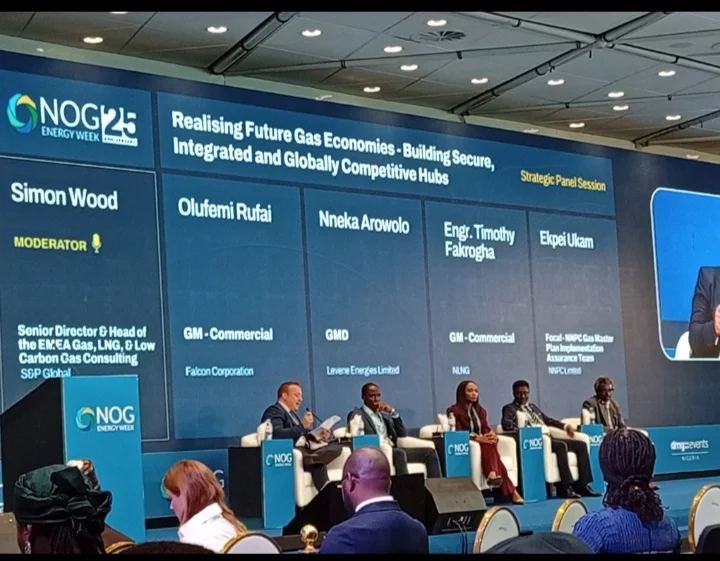
Speaking at the Nigeria Oil and Gas (NOG) Energy Week in Abuja, the company’s General Manager for Commercial, Timothy Fakrogha, said Nigeria’s vast gas resources must be converted from speculative deposits into proven reserves capable of attracting investment.
He noted that projections showing a possible gas supply deficit by 2030 should be viewed as a catalyst for increased investment rather than a setback, stressing that the country has sufficient resources to meet future demand if development is accelerated.
Fakrogha said one of the industry’s biggest priorities should be reducing the cost of gas development through shared infrastructure instead of multiple operators constructing separate transmission systems.
He pointed to NLNG’s Gas Transmission System, which pools supplies from several upstream producers, as an example of how collaborative infrastructure can improve efficiency and support faster gas commercialisation.
The NLNG executive also encouraged investors to take advantage of incentives introduced under the Petroleum Industry Act and the Federal Government’s fiscal reforms for non-associated gas projects, warning that the current investment window would not remain open indefinitely.
On the domestic market, Fakrogha said NLNG has steadily increased supplies of Liquefied Petroleum Gas (LPG) within Nigeria since entering the market in 2007, with local deliveries reaching about 520,000 tonnes by the end of 2025.
He added that the company intends to allocate part of its export volumes to the domestic market later in the decade as gas distribution infrastructure expands, while identifying projects such as the Ajaokuta-Kaduna-Kano (AKK) Gas Pipeline as critical to deepening gas access across the country.
The issues
Nigeria holds one of the world’s largest natural gas reserves but continues to face challenges in commercialising the resource because of infrastructure gaps, financing constraints and limited domestic distribution networks. Industry stakeholders believe expanding shared infrastructure and maintaining attractive investment incentives will be essential to unlocking the country’s gas potential and supporting economic growth.
What’s being said
“The challenge is how to commercialise these resources and de-risk gas development so investors can confidently commit capital.” — Timothy Fakrogha, General Manager, Commercial, NLNG
What’s next
NLNG expects ongoing pipeline projects, supportive regulatory reforms and increased investment in gas infrastructure to improve domestic gas availability, expand export capacity and accelerate the development of Nigeria’s gas industry.
Bottom line
NLNG believes Nigeria’s vast gas reserves can drive industrial growth and energy security, but only if investment is accelerated through stronger infrastructure, effective implementation of PIA incentives and faster commercialisation of stranded gas resources.


 has urged stakeholders to accelerate the commercialisation of stranded gas reserves, ...)