





By Emmanuella Opara | October 21st 2026
KEY POINTS
- Adesoji Adesugba says Nigeria must focus on implementing reforms to achieve its $1 trillion economy target by 2030.
- He identifies electricity supply, weak foreign direct investment, low productivity, fiscal integrity and insecurity as major constraints.
- Adesugba calls for a quarterly tracker to monitor progress towards the economic target.
MAIN STORY
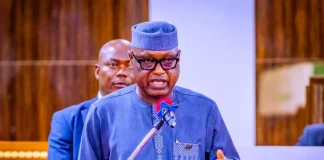
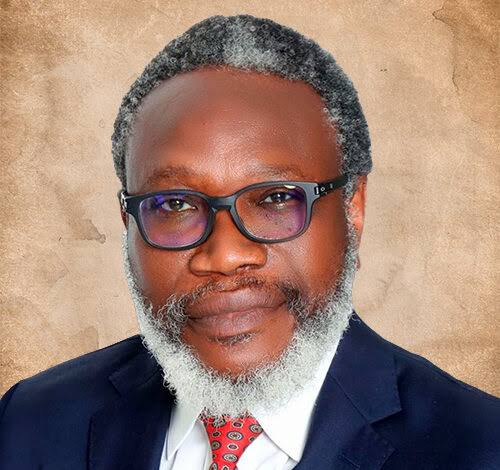
Nigeria’s ambition to build a $1 trillion economy by 2030 will depend on the effective implementation of economic reforms, increased investment and improved productivity rather than policy announcements, the First Deputy President of the Abuja Chamber of Commerce and Industry, Adesoji Adesugba, has said.
Adesugba made the call while delivering the keynote address at the 20th anniversary and award ceremony of the Commerce and Industry Correspondents Association of Nigeria (CICAN) in Abuja on Tuesday.
He said Nigeria had made progress in economic stabilisation but had yet to achieve the level of structural transformation required to reach its growth target.
Citing key economic indicators, Adesugba noted that the economy grew by 4.43 per cent in the second quarter, inflation stood at 14.63 per cent, and foreign reserves reached $55.25 billion. However, he said foreign direct investment accounted for only 1.3 per cent of capital inflows.
According to him, reaching a $1 trillion economy by 2030 would require annual dollar-denominated growth of about 28 per cent, alongside major milestones such as expanding the economy to $500 billion and increasing grid electricity supply to 8,000 megawatts.
He identified inadequate power supply, weak foreign direct investment, low productivity, concerns about fiscal integrity and insecurity as major obstacles to achieving the target.
Adesugba noted that average grid electricity availability stood at 4,758 megawatts in August, significantly below the installed capacity of 13,625 megawatts.
He urged policymakers to sustain economic reforms through the 2027 general election cycle, warning that consistent implementation would be necessary to deliver lasting results.
He also called on state governments, banks and private sector operators to play a greater role in mobilising investment, expanding access to long-term financing and improving compliance with relevant regulations.
Adesugba urged CICAN to introduce a quarterly One Trillion Dollar Tracker to monitor progress towards the government’s economic ambition and hold relevant institutions accountable.
He said journalists had a responsibility to explain economic policies, verify official claims and investigate progress towards stated targets.
“Nigeria can not get there without being reported honestly,” he said.
The Director-General of the Small and Medium Enterprises Development Agency of Nigeria (SMEDAN), Charles Odii, also expressed interest in strengthening the agency’s relationship with CICAN.
Odii, represented by the agency’s Head of Corporate Communications, Moshood Lawal, said the relationship should extend beyond media coverage to meaningful collaboration.
He said discussions were ongoing on affordable financing for micro, small and medium-sized enterprises (MSMEs), including the possibility of single-digit interest rates, subject to the relevant programme frameworks.
Odii also invited CICAN members to SMEDAN’s MSME conference scheduled for November.
Similarly, the Executive Vice Chairman of the Federal Competition and Consumer Protection Commission (FCCPC), Tunji Bello, described the media as an important channel for communicating government policies.
Bello, represented by Nicholas Utsalo, Assistant Director in the commission’s Corporate Affairs Department, said the FCCPC valued its relationship with the media and acknowledged CICAN’s contribution to economic discourse.
The ceremony concluded with the presentation of awards to dignitaries and heads of agencies under the Ministry of Industry, Trade and Investment.
THE ISSUES
Nigeria’s $1 trillion economy target requires sustained economic expansion, stronger investment flows and improvements in productive capacity. Adesugba’s remarks highlight the gap between economic stabilisation and the structural changes needed to achieve the target.
Electricity shortages can constrain industrial production, while weak foreign direct investment and limited access to long-term financing can restrict business expansion. Insecurity and concerns about fiscal integrity also affect the environment for investment and economic activity.
A quarterly monitoring mechanism could provide a way to assess progress against stated targets, provided its indicators are measurable and its findings are independently verified.
WHAT’S BEING SAID
“Nigeria can not get there without being reported honestly,” Adesoji Adesugba, First Deputy President of the Abuja Chamber of Commerce and Industry, said.
“No matter what you do, if the media is not there to project it, then you have not really done anything at all,” Tunji Bello, Executive Vice Chairman of the Federal Competition and Consumer Protection Commission, said.
WHAT’S NEXT
Adesugba wants CICAN to establish a quarterly tracker to monitor progress towards the $1 trillion economy target. Policymakers, state governments, financial institutions and private businesses will also need to sustain reforms, mobilise investment and address infrastructure and productivity constraints.
SMEDAN is continuing discussions on financing options for MSMEs and has invited CICAN members to its November conference.
BOTTOM LINE
Nigeria’s $1 trillion economy ambition will require more than policy announcements. Sustained reforms, reliable electricity, stronger investment and transparent monitoring will be central to determining whether the target can be achieved by 2030.