Keypoints
- The Federal Government has approved a nationwide scale-up of the One Kindred, One Business Initiative (OKOBI) to tackle unemployment.
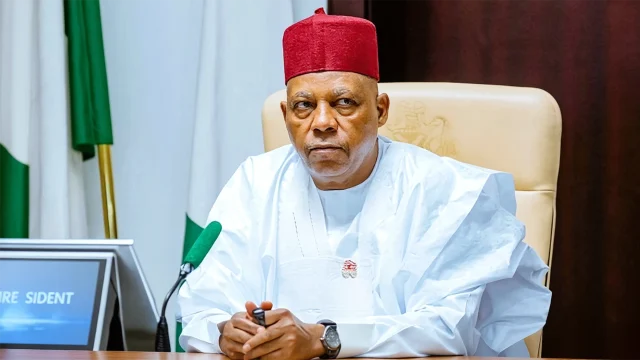
- Vice President Kashim Shettima announced the move during the launch of the OKOBI Students’ Club at Claretian University, Nekede, on Tuesday.
- The initiative aims to transition students and communities from job seekers to job creators, targeting an improved Human Capital Index ranking by 2030.
- In Imo State, over 600 OKOBI-linked businesses have already created more than 20,000 jobs.
- Seven cooperative societies received N9.5 million in grants from IHS Nigeria during the event to support community-driven ventures.
Main Story
A grassroots economic model born in Imo State is set to become a blueprint for Nigeria’s national development. The “One Kindred, One Business Initiative” (OKOBI), which encourages families and communities to form cooperatives and launch enterprises, has received formal endorsement from the Presidency for a nationwide rollout.
Representing Vice President Kashim Shettima, Mrs. Rukaiya El-Rufai emphasized that entrepreneurship is no longer an “option” but a “necessity” for Nigeria’s expanding youth population.
The program operates on the philosophy of collective action, moving away from individual job hunting toward communal wealth creation. Governor Hope Uzodimma described the initiative as a “movement” rather than a mere policy, designed to stimulate self-reliance across higher institutions and rural communities.
By integrating the model into the university system through the new Students’ Club, the government hopes to equip graduates with the financial literacy and digital tools needed to launch formal businesses immediately upon graduation.
The Issues
The primary challenge is the formalization gap; many of the businesses created at the kindred level begin as informal ventures, making it difficult for the government to track their long-term viability without sustained digital adoption and banking support. Authorities must solve the problem of capital accessibility, as the current N9.5 million in grants provided by partners like IHS Nigeria is a small fraction of the funding required for a nationwide scale-up. Furthermore, there is a sustainability risk; with 50% of the working-class population in Imo currently unemployed, the initiative must move rapidly from “grant-giving” to “profit-making” to prevent these new cooperatives from collapsing once initial aid dries up. To succeed, the national rollout must ensure that the transition from a state-led project to a federal strategy includes robust monitoring and evaluation frameworks.
What’s Being Said
- “This initiative aligns strongly with our broader national priorities… ensuring no one is left behind,” stated Vice President Kashim Shettima in a speech read by his representative.
- Governor Hope Uzodimma noted that the state is “not merely distributing funds but investing in ideas, in dreams, and in the future.”
What’s Next
- The Federal Government is expected to release a detailed roadmap for the nationwide implementation of the OKOBI model across the 36 states by late 2026.
- More higher institutions across Nigeria are anticipated to launch “OKOBI Students’ Clubs” to mirror the pilot program at Claretian University.
- A federal monitoring team is likely to be established to track the impact of the initiative on Nigeria’s Human Capital Index ranking.
- Future funding rounds are expected to involve more private sector telecommunications and infrastructure partners following the lead of IHS Nigeria.
Bottom Line
By elevating the OKOBI initiative to a national strategy, the Federal Government is betting on the power of the “kindred” to solve the “national” unemployment crisis. Success will depend on whether these community-led businesses can evolve from small-scale social groups into competitive, tech-driven enterprises that contribute meaningfully to the GDP.