




Key points
- Leaders from across the Niger Delta have called on President Bola Tinubu to immediately decentralise oil and gas infrastructure surveillance contracts.
- The stakeholders requested a state-by-state structure for pipeline security, coordinated by the Nigerian Armed Forces.
- The Ijaw Youth Council Worldwide and nine other groups warned against allowing any single non-state actor to have unchecked control over critical assets.
- Leaders who supported the government during the 2015/2016 Niger Delta Avengers crisis alleged they are being systematically excluded from current arrangements.
- The signatories called for an anti-graft investigation into the management of funds within the Presidential Amnesty Programme.
Main Story
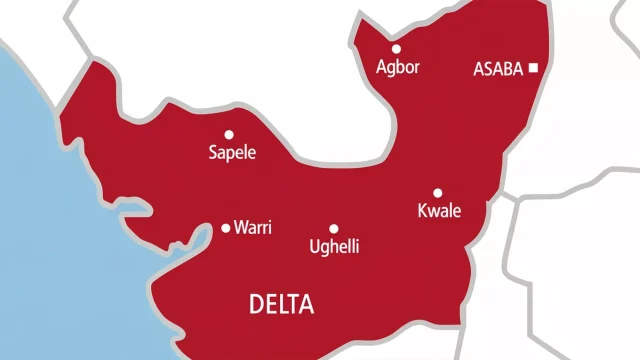
Leaders and stakeholders from the Niger Delta region have called on President Bola Tinubu to ensure the immediate decentralisation of pipeline and oil and gas infrastructure surveillance contracts across the region.
The leaders made the call in an open letter to the President, which was made available to the News Agency of Nigeria (NAN) on Thursday in Akure.
The letter was signed by the President of the Ijaw Youth Council Worldwide, Dr Alaye Tari Theophilus, and nine other leaders representing various ethnic nationalities in the region.
The stakeholders argued that the current surveillance structure sidelines individuals and groups who defended the Nigerian state during the 2015/2016 Niger Delta Avengers crisis.
They noted that during that period, crude production collapsed from 2.4 million barrels per day to approximately 900,000, yet they stood on the side of the government to prevent further destruction.
The leaders warned that the present system rewards those who once threatened national assets while excluding those who aligned with government containment efforts. Consequently, they urged the Federal Government to adopt a joint supervisory framework involving security agencies and recognized community leadership.
The Issues
- The concentration of surveillance authority in a single non-state actor is viewed by these leaders as a significant security risk to Nigeria’s most critical economic infrastructure.
- Allegations of unequal treatment and mismanagement within the Presidential Amnesty Programme have led to calls for a formal probe by anti-graft agencies.
- The exclusion of established regional leaders like High Chief Bibopere Ajube, King Michael Ateke Tom, and King Dokubo Asari from current contracts is creating a sense of marginalization among pro-government stakeholders.
What’s Being Said
- “No single non-state actor should hold unchecked operational authority over Nigeria’s most critical economic infrastructure,” the letter stated.
- “A joint supervisory framework bringing together security agencies, state coordinators, and recognised community leadership must be put in place now,” the stakeholders added.
- “Your Excellency, we are writing to tell you that the Nigeria we protected is now treating us as its enemies,” the leaders stated regarding their exclusion from the surveillance system.
- “The system being built rewards those who once threatened Nigeria and sidelines those who defended it. That is not an accident. It is a pattern and it is the same pattern Nigeria ran in 2015 and paid for dearly in 2016,” the letter stated.
- “Senior High Chief Bibopere Ajube physically sealed the waterways connecting Edo, Delta, and Ondo states with his own operational force, making it impossible for the Avengers crisis to reach the South West corridor,” the signatories recalled.
What’s Next
- The Presidency is expected to review the open letter and the specific security concerns raised regarding the South-West and South-South corridors.
- Anti-graft agencies may receive formal petitions to investigate the utilization of funds by the current management of the Presidential Amnesty Programme.
- Security agencies and the Nigerian Armed Forces may be required to assess the feasibility of a state-by-state coordination model for pipeline protection to maintain regional stability.
Bottom Line
A broad coalition of Niger Delta leaders is pushing for a total overhaul of the pipeline surveillance model, demanding that the Federal Government replace centralized private contracts with a state-by-state framework involving both the military and community leaders who have historically defended the state.