







KEY POINTS
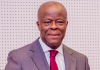
- The Chairman of the Nigerian Exchange Group (NGX Group), Dr. Umaru Kwairanga, has called for massive global investment in Nigeria’s roads, ports, power, and rail systems.
- Speaking at the Nigeria Infrastructure Investment Forum in London on Thursday, Kwairanga identified infrastructure as the “key constraint” to Nigeria’s global competitiveness.
- He addressed the forum alongside the Minister of Industry, Trade and Investment, Dr. Jumoke Oduwole, noting that Nigeria is “not seeking aid but mutually beneficial partnerships.”
- The call comes amid a major push to reach a $1 trillion economy by 2030, supported by recent multi-million pound deals for port modernization in Lagos.
MAIN STORY
The Nigerian Exchange Group (NGX Group) has called for increased investment in Nigeria’s critical infrastructure to unlock economic growth and strengthen the country’s global competitiveness.
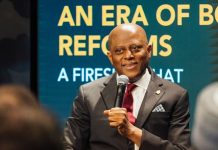
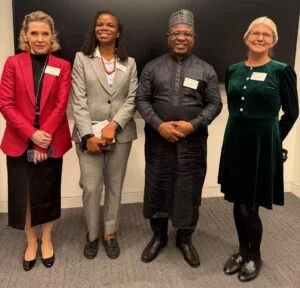
A statement by NGX Group in Lagos said its Chairman, Dr. Umaru Kwairanga, made the call on Thursday at the Nigeria Infrastructure Investment Forum held at Standard Bank International Headquarters in London. Kwairanga, who spoke alongside the Minister of Industry, Trade and Investment, Dr. Jumoke Oduwole, said Nigeria remains an attractive destination for investors, citing its vast natural resources and a workforce where over half the population is under 30.
Kwairanga noted that while Nigeria possesses significant agricultural potential and mineral resources, the lack of world-class infrastructure remains a major bottleneck. “Nigeria needs to upgrade its roads, ports, power, and rail systems to improve productivity and compete globally,” he said.
He described the combination of human capital and natural resources as two pillars of a tripod that requires the “third pillar” of infrastructure to be complete. He emphasized that the country is seeking strategic investment rather than aid to support its long-term economic expansion.
According to the NGX boss, ongoing policy reforms by the government are effectively addressing structural challenges and improving the overall investment climate. He highlighted that these reforms are creating a predictable environment for international capital, similar to the economic transformations seen in nations like China in the 1980s.
Kwairanga urged global investors to take advantage of these emerging opportunities, expressing optimism that improved infrastructure would solidify Nigeria’s position as a growth engine for the 21st century.
THE ISSUES
The core issue remains the infrastructure-productivity gap. Without efficient rail and port systems, Nigeria’s “youthful and industrious” workforce cannot move goods to global markets at competitive prices. Furthermore, the reliance on Public-Private Partnerships (PPPs) is now a necessity as public funding alone cannot bridge the massive deficit. The forum specifically targeted the “disconnect” between Nigeria’s resource wealth and its capital outcomes, aiming to turn raw commodities into investable assets through structured financial ecosystems.
WHAT’S BEING SAID
- “Nigeria needs to upgrade its roads, ports, power and rail systems to improve productivity and compete globally,” stated Dr. Umaru Kwairanga.
- “An investment in Nigeria now is akin to an investment in China in the 1980s,” Kwairanga added during the London forum.
- “The policy direction is creating opportunities for investors to participate in Nigeria’s economic development,” the NGX Chairman noted.
WHAT’S NEXT
- Following this forum, focus shifts to the implementation of the £746 million deal signed with the UK to refurbish the Apapa and Tin Can Island ports in Lagos.
- The NGX Group is preparing for significant market listings, including the Dangote Refinery and Petrochemical Complex, expected to debut on the exchange before mid-year 2026.
- NGX aims to triple key market indices within two years, driven by these new listings and increased foreign participation in infrastructure bonds and equities.
BOTTOM LINE
The Bottom Line is that Nigeria is pitching itself as a high-return investment hub, not a charity case. By framing infrastructure as the missing “third pillar” of the economy, Dr. Kwairanga and the NGX are signaling to London investors that the structural reforms of the last three years have finally made Nigeria’s massive infrastructure gap a “bankable” opportunity for global capital.




 has called for increased investment in Nigeria’s critical infrastructure to unlock economic growth and strengthen the country’s global competitiveness.)