









Key points
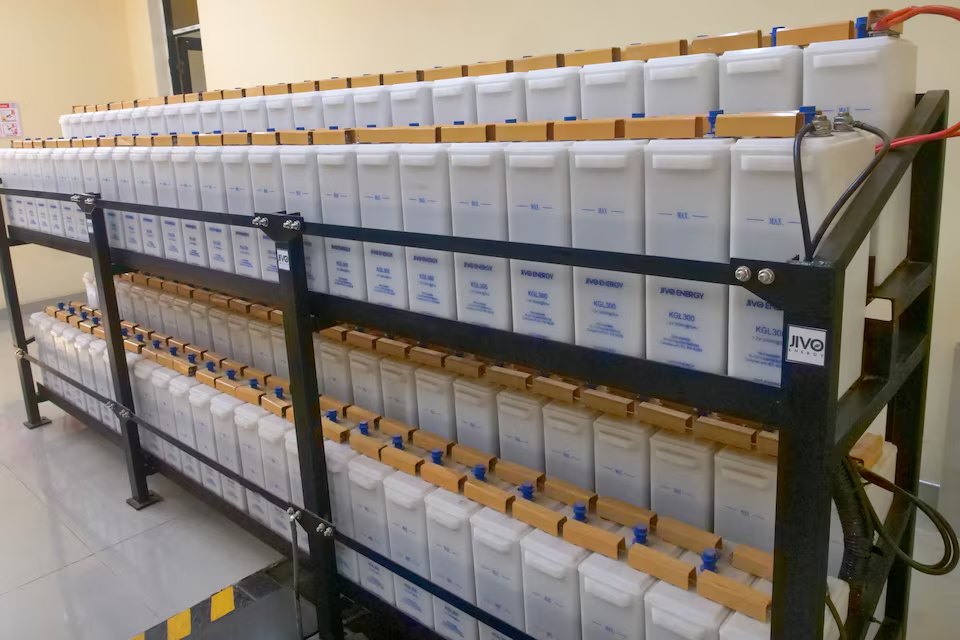
- Malawi has commissioned a 20MW utility-scale battery energy storage system in Lilongwe.
- The facility is expected to improve grid stability and reduce blackouts.
- The project supports efforts to expand electricity access to 70% of the population by 2030.
- Malawi plans to install three additional battery storage facilities with a combined capacity of 60MW.
Main story
Malawi has commissioned a 20-megawatt utility-scale battery energy storage system (BESS), becoming one of the few countries in southern Africa outside South Africa and Namibia to deploy the technology at grid scale.
The facility, located in the capital, Lilongwe, was switched on by the Electricity Supply Corporation of Malawi (ESCOM) as part of efforts to strengthen the country’s electricity network against climate-related disruptions.
The battery system is expected to improve grid stability, integrate more renewable energy and reduce the impact of declining water levels in the Shire River, which supplies most of Malawi’s hydropower generation.
Only about a quarter of Malawi’s population currently has access to electricity, with the government targeting 70% electricity access by 2030.
The country’s power sector has also faced challenges since Cyclone Freddy damaged hydropower infrastructure three years ago, while solar energy currently contributes about 100MW of Malawi’s installed generation capacity of 580MW.
Energy Minister Jean Mathanga said the battery storage project would improve the reliability of electricity supply for critical sectors, including healthcare, education and businesses.
ESCOM Chief Operations Officer Sinosi Maliyano said the project, funded by the Global Energy Alliance for People and Planet, would help connect an additional 600,000 households to the grid while reducing average power outages from four hours to less than two hours.
The utility also announced plans to develop three additional battery storage facilities with a combined capacity of 60MW in two other cities.
A local business owner, Adrian Masoambeta, expressed hope that the investment would reduce the frequent blackouts that have affected small businesses and household incomes.
The issues
Battery energy storage systems are becoming increasingly important for African power grids as countries expand renewable energy generation and seek to improve electricity reliability, particularly where hydropower is vulnerable to climate change.
What’s being said
“This project is about providing the steady, high-quality power that our hospitals need to save lives. It is about what our schools need to educate our children, and our businesses need to thrive.” — Jean Mathanga, Malawi’s Energy Minister.
Bottom line
Malawi’s first utility-scale battery storage facility marks a significant step in strengthening grid reliability and supporting the country’s drive to expand electricity access while reducing dependence on climate-sensitive hydropower.




, becoming one of the few countries in ...)