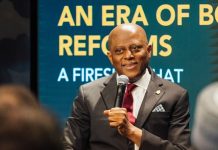


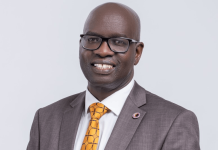



The Minister of Aviation and Aerospace Development, Festus Keyamo, has intensified his push for a structural overhaul of aircraft financing for Nigerian carriers. Leading a high-powered delegation to the Airline Economics Growth Frontiers Global Conference in Dublin on January 27, 2026, Keyamo engaged in strategic talks with AerCap, the world’s largest aircraft lessor, and Afreximbank to negotiate more flexible leasing models.
The Minister emphasized that Nigeria’s aviation roadmap now prioritizes “dry leasing” over the expensive, short-term “wet leases” that currently drain the foreign exchange of domestic airlines. By securing these global partnerships, the government aims to enable local carriers like Air Peace, United Nigeria, and Ibom Air to acquire newer-generation, fuel-efficient aircraft that can significantly reduce maintenance and operational costs.
A critical milestone in this push is Nigeria’s improved compliance with the Cape Town Convention, which has seen the country’s global aviation rating surge to 75.5 percent. This rating increase follows the full operationalization of the Irrevocable Deregistration and Export Request Authorisation (IDERA), a legal framework that guarantees lessors can quickly reclaim and export their aircraft in the event of a default.
Keyamo noted that this enhanced legal standing has finally removed Nigeria from the global “blocked list,” signaling to international financiers that the Nigerian market is now safe for long-term, low-interest asset-based financing.
To further insulate local airlines from global supply chain volatility, the Federal Government is moving forward with plans to establish a National Aircraft Leasing Company. This entity will serve as a public-private partnership (PPP) intermediary, using a shared capital pool and government-backed sovereign guarantees to negotiate bulk aircraft orders directly with manufacturers like Boeing and Embraer.
Keyamo argued that such an arrangement will allow Nigerian airlines to avoid the “lonely struggle” of negotiating with global giants, providing them with the financial weight needed to compete effectively on international routes like London and New York.
The delegation, which included the Director-General of Civil Aviation, Capt. Chris Najomo, also met with Afreximbank to discuss risk-mitigation tools that would hedge against the Naira’s fluctuation.
With the 2026 aviation strategy aiming for a total fleet renewal across the country’s 12 active carriers, these “Dublin Accords” are viewed as the most significant step toward ending the reliance on 20-year-old aircraft. The Ministry expects that as these new financing structures take effect by mid-2026, the reduction in overhead costs will naturally translate into more competitive airfares for Nigerian passengers.