







By Emmanuella Opara | October 26th 2026
KEY POINTS
- Fulani leaders want 30 per cent of the agricultural budget allocated to the Federal Ministry of Livestock Development.
- The group seeks the protection of 417 grazing reserves and pilot ranches across Nigeria’s six geopolitical zones.
- The leaders called for investigations into alleged killings of pastoralists and assistance for displaced victims.
- They urged President Bola Tinubu to convene a national dialogue on farmer-herder conflicts.
- The coalition said lasting solutions require justice, security and cooperation among farmers, herders and government institutions.
MAIN STORY
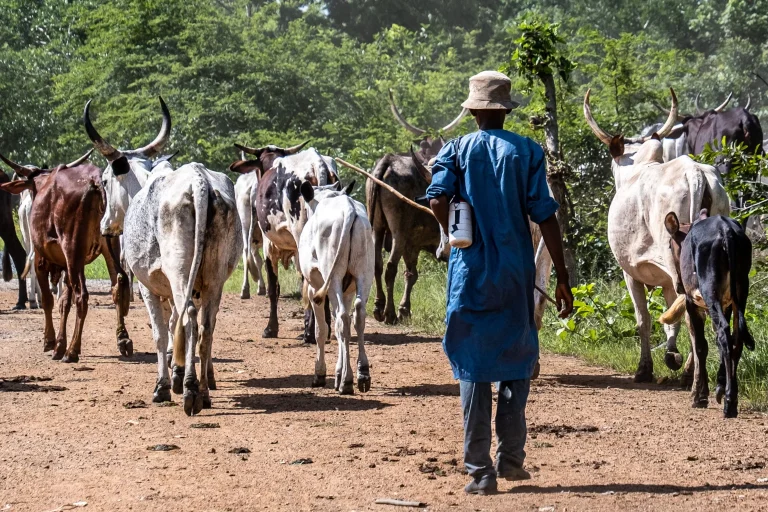
Fulani leaders under the Confederation of Pastoralists have called on President Bola Tinubu and the National Assembly to allocate at least 30 per cent of the agricultural budget to the Federal Ministry of Livestock Development and establish pilot ranches across Nigeria’s six geopolitical zones.
The leaders also urged the Federal Government to protect the country’s 417 grazing reserves, expand fodder production and investigate alleged killings of pastoralists in Plateau, Niger, Sokoto, Kebbi, Zamfara and other states.
The General Secretary of the Kautal Pulaku Fulbe Association of Nigeria, Abdullahi Ardo, made the demands on behalf of the coalition at an international press conference in Abuja on Sunday.
He said the Ministry of Livestock Development, established by Tinubu in 2024, needed adequate funding and a clear operational framework to fulfil its mandate.
“We commend President Bola Ahmed Tinubu for creating the Federal Ministry of Livestock Development – a historic decision that gave us hope after 60 years of agitation. However, years later, the ministry remains largely unfunded and without a clear operational framework,” Ardo said.
The ministry was established to modernise Nigeria’s livestock industry through ranching, pasture development and improved infrastructure, with the broader objective of addressing persistent farmer-herder conflicts and developing a commercially competitive sector.
Ardo urged the Federal Government to ensure the ministry’s activities extend to communities where pastoralists operate.
“We call on the President and the National Assembly to allocate at least 30 per cent of the agricultural budget to the ministry, immediately gazette and protect the 417 grazing reserves, start pilot ranches and fodder production in the six geopolitical zones,” he said.
The coalition described livestock as a N30tn economy, arguing that the sector required greater government attention and investment.
The leaders also called for a national dialogue involving Miyetti Allah groups, religious leaders, traditional rulers, security agencies and state governments to address the recurring clashes between farmers and herders.
According to the coalition, farmer-herder conflicts have claimed more than 20,000 lives over the past decade. The figure was presented by the group at the press conference.
Ardo further alleged that hundreds of pastoralists had been killed in attacks in several states in recent months, with women, children and elderly people among the victims.
“In many of these attacks, women, children and the elderly were killed, thousands of cattle were rustled or killed, and entire Rugas were burnt down,” he said.
The leaders called for an independent investigation into the alleged killings and urged the Federal Government to provide relief materials to displaced pastoralist communities through the National Emergency Management Agency and the National Commission for Refugees, Migrants and Internally Displaced Persons.
They also called on security agencies to protect pastoralists and ensure that allegations of attacks were investigated.
Ardo said the authorities should guarantee pastoralists the same protection and access to justice as other Nigerian citizens, citing Sections 14 and 33 of the 1999 Constitution.
The coalition urged federal and state governments, traditional institutions, farmers’ organisations, security agencies and development partners to work together towards lasting solutions to farmer-herder conflicts.
It also called for peaceful coexistence, inclusive security arrangements and cooperation among communities as part of efforts to reduce violence and support national development.
THE ISSUES
The demands come amid continuing debates over livestock production, grazing practices and the management of conflicts between farmers and pastoralists.
The proposed allocation of 30 per cent of the agricultural budget to the livestock ministry would represent a major funding commitment. Its implications would depend on the size of the agricultural budget, the ministry’s spending priorities and how the funds are deployed.
The call to protect grazing reserves and establish pilot ranches also highlights the need to determine how livestock infrastructure can be developed alongside the land rights, security and economic interests of farmers and pastoralist communities.
The allegations of killings and cattle rustling raised by the coalition require investigation by the relevant authorities. Transparent investigations and appropriate assistance for displaced victims would be important to addressing the grievances presented by the group.
WHAT’S BEING SAID
“We commend President Bola Ahmed Tinubu for creating the Federal Ministry of Livestock Development – a historic decision that gave us hope after 60 years of agitation. However, years later, the ministry remains largely unfunded and without a clear operational framework,” Abdullahi Ardo, General Secretary of the Kautal Pulaku Fulbe Association of Nigeria, said.
“We call on the President and the National Assembly to allocate at least 30 per cent of the agricultural budget to the ministry, immediately gazette and protect the 417 grazing reserves, start pilot ranches and fodder production in the six geopolitical zones,” Ardo said.
WHAT’S NEXT
The demands place responsibility on the Federal Government and the National Assembly to consider the proposed funding allocation, while the relevant authorities would need to assess the feasibility of establishing pilot ranches and protecting grazing reserves.
The coalition’s calls for investigations, relief assistance and a national dialogue also require engagement with security agencies, emergency management authorities, state governments and affected communities.
BOTTOM LINE
Fulani leaders are seeking increased public investment in livestock development, protection for pastoralist communities and a national dialogue on farmer-herder conflicts. The proposed measures would require government funding, credible investigations into reported attacks and cooperation among stakeholders to support lasting solutions.