






By Emmanuella Opara | November 10th 2026
KEY POINTS
- The Noma Centre at the National Hospital, Abuja, has carried out 457 complex reconstructive surgeries on affected children since its establishment.
- The centre has treated 321 patients and currently has more than 80 children receiving care.
- A total of 208 surgeries were performed in 2026, with treatment provided free of charge.
- The Federal Government has unveiled a N70bn five-year oral health plan to improve prevention, diagnosis and treatment.
- A 2026 study estimated 50,782 noma cases across 296 local government areas in 12 states between 1999 and 2024.
MAIN STORY
The Noma Centre at the National Hospital, Abuja, has performed 457 complex reconstructive surgeries on children affected by the disease, providing all treatments free of charge since the facility was established.
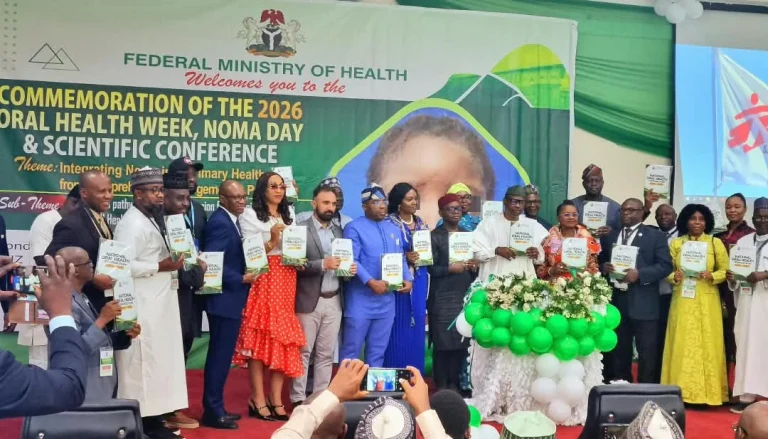
The National Coordinator of the Noma Aid Nigeria Initiative, Dr Charles Ononiwu, disclosed this during the 2026 Oral Health Week, Noma Day and Scientific Conference in Abuja.
Ononiwu said the centre had treated 321 patients and currently had more than 80 children receiving care. Of the total surgeries recorded, 208 were performed in 2026 alone.
He said the facility attended to an average of 82 patients monthly, providing treatment for children who might otherwise be unable to afford expensive reconstructive procedures.
The surgeon warned that noma, a rapidly progressing disease that destroys facial tissues, could cause severe damage within a week if left untreated.
He urged parents to take complaints of mouth pain among children seriously, particularly those aged between two and six years, and seek medical attention without delay.
“Make sure you maintain good oral hygiene for your children. If your child complains of pain in the mouth, please look for a hospital immediately,” he advised.
He identified poor oral hygiene, severe malnutrition and weakened immunity as major risk factors, noting that early diagnosis and treatment could prevent extensive tissue destruction.
According to him, treatment at the early stage may involve basic antibiotics and adequate feeding, while reconstructive surgery for advanced cases could cost between N7m and N10m.
Ononiwu urged families, healthcare workers and members of the public to report suspected cases through the initiative’s toll-free line. He said arrangements would be made to cover patients’ treatment, transportation and hospital expenses.
The centre provides care through a multidisciplinary team that includes plastic surgeons, ear, nose and throat specialists, paediatricians, clinical psychologists and other healthcare professionals.
Beyond medical treatment, affected children and their parents receive basic education, psychological support and vocational training during treatment, which may last several months.
Ononiwu said the facility also receives patients from other African countries, including Mozambique and Burundi.
He added that the initiative supported vulnerable families with business equipment and resources to establish small enterprises, as part of efforts to address poverty and reduce the conditions that increase the risk of noma.
During 2026, the centre provided direct social assistance to 57 severe cases, enrolled 132 pupils in educational programmes and empowered 143 participants through specialised skills acquisition classes.
Meanwhile, the Federal Government has introduced a N70bn National Strategic Plan for Oral Health covering 2026 to 2030, aimed at expanding access to oral healthcare, strengthening preventive services and addressing diseases such as noma.
The Minister of State for Health, Adekunle Salako, said the funding would come from the three tiers of government and development partners. State and local governments are expected to contribute 49 per cent, the Federal Government 30 per cent and development partners the remaining 21 per cent.
The plan is expected to strengthen the integration of oral healthcare into primary healthcare services, improve early diagnosis and expand access to treatment, particularly for vulnerable communities.
The World Health Organisation called for noma prevention, early detection and referral services to be incorporated into primary healthcare, with frontline health workers equipped to recognise the disease before it causes irreversible damage.
Also speaking at the conference, the Director of Hospital Services at the Federal Ministry of Health and Social Welfare, Dr Adebimpe Adebiyi, called for stronger community-based prevention and early detection.
In a memorial lecture titled A Legacy of Healing and Hope: Celebrating a Life of Dedication to Children Affected by Noma, Adebiyi urged the government to include noma awareness in school curricula. She also called on Nigerians to stop discriminating against survivors.
The President of the Nigerian Dental Association, Dr Tope Adeyemi, also acknowledged the association’s contributions to efforts to improve oral healthcare delivery.
The conference, organised by the Noma Centre Abuja in partnership with the Federal Ministry of Health and Social Welfare, brought together policymakers, healthcare professionals and development partners to assess progress in patient care, surgical interventions and public health advocacy.
The event also honoured the late Mama Ute Winkler-Stumpf, founder of Hilfsaktion NOMA E.V., whose humanitarian work supported the treatment and rehabilitation of children affected by the disease.
Noma, also known as cancrum oris, is a rapidly progressing gangrenous disease that primarily affects children between the ages of two and six, particularly those living in extreme poverty and experiencing malnutrition and poor oral hygiene.
It begins as an infection of the gums and can spread quickly, destroying soft and hard tissues in the mouth and face. Survivors may experience severe facial disfigurement, difficulty eating and speaking, as well as lasting psychological and social consequences.
The WHO added noma to its list of neglected tropical diseases in December 2023, following advocacy led by Nigeria and supported by 32 member states. The recognition was intended to attract greater international attention, research funding and access to interventions.
A study published in The Lancet Global Health in July 2026 estimated that Nigeria recorded 50,782 noma cases across 296 local government areas in 12 states between 1999 and 2024. The findings highlighted the need for stronger disease surveillance and targeted community interventions.
The WHO has stressed that early detection is critical because basic treatment, including antibiotics, improved nutrition and oral hygiene, can stop the disease before it advances to extensive facial destruction.
THE ISSUES
Noma remains a serious public health concern because it disproportionately affects young children living in conditions of extreme poverty, malnutrition and inadequate access to healthcare.
Although the disease can be stopped with basic treatment when detected early, delayed diagnosis can result in extensive facial damage requiring complex reconstructive surgery.
The National Hospital’s surgical interventions provide treatment for children with advanced cases, but the estimated 50,782 cases recorded across 12 states indicate that prevention, community awareness and early access to healthcare remain essential.
WHAT’S BEING SAID
“Make sure you maintain good oral hygiene for your children. If your child complains of pain in the mouth, please look for a hospital immediately,” Dr Charles Ononiwu, National Coordinator of the Noma Aid Nigeria Initiative, advised.
WHAT’S NEXT
Implementation of the N70bn National Strategic Plan for Oral Health will be central to efforts to expand preventive services, strengthen primary healthcare and improve access to diagnosis and treatment. Community education, school-based awareness and better surveillance will also be important in identifying cases before the disease causes permanent damage.
BOTTOM LINE
The 457 free reconstructive surgeries demonstrate the role of specialised treatment in helping children affected by noma. However, the scale of the estimated cases across Nigeria shows that sustained prevention, early diagnosis and improved access to basic healthcare are necessary to reduce the disease’s impact.