Key Points
- Medical experts advise limiting children’s screen time to protect their eyesight.
- Spending more than six hours daily on screens can harm eye health.
- The 20-20-20 rule is recommended to reduce eye strain.
- Outdoor activities can help improve vision and reduce screen exposure.
- Excessive screen use may lead to eye strain and short-sightedness.
Main Story
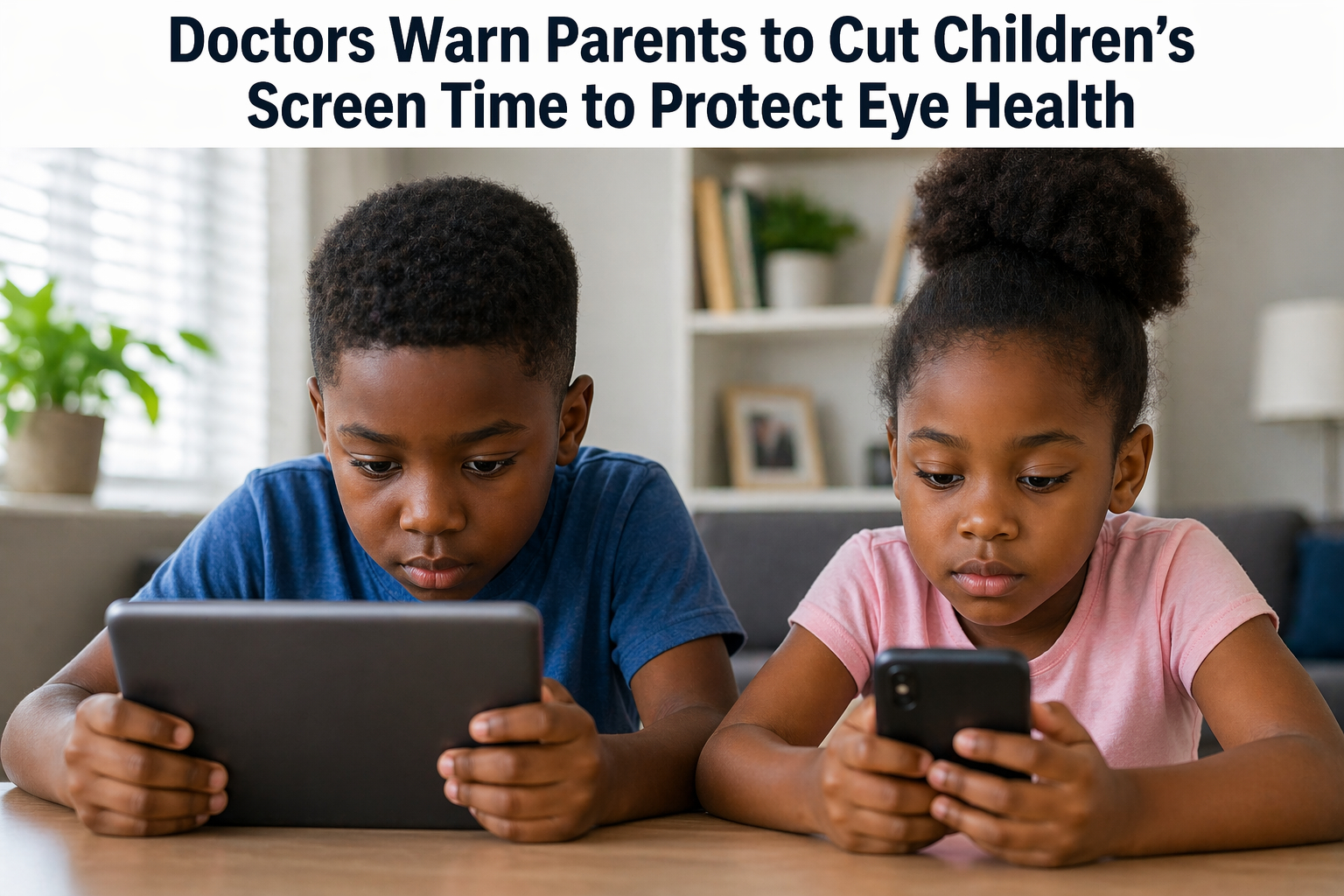
Medical experts in Lagos are urging parents to reduce the amount of time children spend on phones, tablets, and other digital devices, warning that excessive screen use could lead to long-term eye problems.
The advice comes as children are increasingly exposed to screens for both learning and entertainment, often spending several hours a day on digital devices.
Speaking in separate interviews with the News Agency of Nigeria (NAN), eye specialists highlighted the growing concern and the need for parents to take active steps to protect their children’s vision.
Dr Olufunmilola Taiwo, a consultant ophthalmologist and Head of the Ophthalmology Department at Alimosho General Hospital, said spending more than six hours daily on screens is unhealthy and should be carefully managed.
According to her, one of the simplest ways to reduce the effects of prolonged screen use is by following the 20-20-20 rule.
This rule means that after every 20 minutes of screen time, a person should look away for 20 seconds at something about 20 feet away. This helps the eyes relax and reduces strain caused by focusing on screens for too long.
Taiwo explained that breaking screen time into smaller periods, also known as using “aliquots,” can make it easier to manage usage and protect eye health.
She added that these habits are not only important for children but also for adults who spend long hours on screens.
“If these practices are followed, they can help prevent common problems like eye strain, dry eyes, and computer vision syndrome,” she said.
The Issues
The increase in screen use among children has raised concerns among health professionals. Many children now rely on digital devices for schoolwork, games, and social interaction, often with little supervision.
One major issue is that prolonged screen time forces the eyes to focus on close objects for extended periods. This can lead to eye fatigue and may contribute to short-sightedness, a condition where distant objects appear blurry.
Another concern is the lack of outdoor activity. Spending less time outside means children miss out on natural light and opportunities to rest their eyes, both of which are important for healthy vision.
There is also limited awareness among parents about how much screen time is too much and what habits can help reduce the risks.
What’s Being Said
Dr Sheidu Nasiru, Head of the Eye Clinic at Orile Agege General Hospital, also stressed the importance of reducing screen time and encouraging outdoor play.
He explained that while excessive screen use can cause eye strain and fatigue, it does not necessarily lead to serious conditions like glaucoma.
However, he warned that too much “near work,” such as staring at screens for long periods, can affect vision over time.
“Parents should ensure that their children spend more time outdoors, playing and relaxing their eyes, instead of using digital devices continuously,” he said.
Both experts agree that simple habits like taking breaks and limiting screen time can make a big difference in protecting children’s eyesight.
What’s Next
Health experts are calling for increased awareness among parents and caregivers about healthy screen habits.
They recommend setting daily limits on screen use, encouraging regular breaks, and creating more opportunities for children to play outside.
Schools and communities may also play a role by promoting balanced use of technology and educating families on eye health.
As digital devices continue to be part of everyday life, experts say the focus should be on safe and controlled usage rather than complete avoidance.
Bottom Line
Too much screen time is becoming a growing risk to children’s eye health, but it is a problem that can be managed.
By setting limits, encouraging outdoor activities, and following simple rules like the 20-20-20 method, parents can help protect their children’s vision.
In a digital world, balance is key and small changes today can prevent bigger problems in the future.