





Key points
- Residents of Awka have expressed concern over rising cooking gas prices and called for government intervention.
- Retail prices have reportedly increased from about N1,050 per kilogram at the start of the year to between N1,800 and N2,000 in many locations.
- Some households are reverting to firewood and charcoal due to the higher cost of cooking gas.
- Residents say the increase is worsening the cost-of-living pressures on families.
- Calls have been made for government to investigate factors driving the price increases.
Main Story
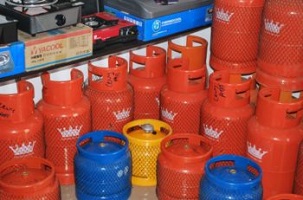
Residents of Awka, the Anambra State capital, have called on the government to intervene in the rising cost of cooking gas, saying the sustained increase is placing additional pressure on household finances.
The concerns were expressed in separate interviews with the News Agency of Nigeria on Tuesday as consumers reacted to what they described as persistent instability in cooking gas prices over the past six months.
Mr Raphael Okafor, Chief Executive Officer of Ricolen Enterprise Nigeria, a cooking gas retail outlet in Awka, said the fluctuations witnessed since the beginning of the year have been unprecedented in his more than three decades in the business.
According to him, the price of cooking gas rose from about N1,050 per kilogram at the start of the year to N1,150, N1,200 and later N1,500 before reaching between N1,800 and N2,000 per kilogram, depending on location.
Okafor said the development has affected demand, with some customers abandoning cooking gas in favour of firewood and charcoal.
He called on the government to investigate the causes of the price increases, whether linked to production challenges, supply shortages or distribution bottlenecks, with a view to stabilising the market.
The retailer also warned that increased reliance on firewood and charcoal could have environmental consequences due to higher levels of deforestation and emissions.
Residents interviewed by NAN said the higher prices were adding to existing economic pressures on households.
Mrs Chindimma Okoye, a civil servant, said the rising cost of cooking gas has worsened living conditions for salary earners struggling with multiple household expenses.
She noted that her family of six consumes a 12.5-kilogram cylinder every two months, requiring about N25,000 to refill in addition to other domestic costs.
Another civil servant, Mrs Uju Igbelina, said consumers in Nise, near Awka, now pay as much as N2,100 per kilogram due to the area’s semi-urban location.
She appealed for government intervention, saying many families were finding it increasingly difficult to afford the product.
Mrs Ukamaka Ufelle said she recently paid N25,000 to refill a 12.5-kilogram cylinder compared to N17,500 in April, describing the increase as another burden on households already struggling with food costs.
Businessman Mr Chinedu Ugwuoke said the rising cost of cooking gas and food items was pushing basic necessities beyond the reach of many Nigerians.
He urged authorities to introduce measures that would reduce the impact of high fuel and energy costs on consumers.
Mrs Amara Onuora, a petty trader, said she had stopped using cooking gas and returned to charcoal because of the rising prices.
According to her, she had previously switched from kerosene to cooking gas due to scarcity and higher costs, but cooking gas has now also become unaffordable.
The Issues
- Rising cooking gas prices and their impact on household budgets.
- Growing cost-of-living pressures facing Nigerian families.
- Shift by some households from cooking gas to firewood and charcoal.
- Potential environmental consequences of increased dependence on traditional cooking fuels.
What’s Being Said
- Raphael Okafor said: “At the beginning of this year, one kilogram of cooking gas was sold for N1, 050, the price later rose to N1,150 and from there to N1, 200, before it got to N1,500. As we speak, the price now hovers between N1, 800 and N2, 000 depending on your location.”
- He said: “Government should brainstorm to find a lasting solution to this cooking gas problem; whether it is shortage as a result of inadequate production or sabotage from the distributors and marketers, action should be taking to stablise the price.”
- Mrs Amara Onuora said: “With the prevalent hike in cooking gas price, people are faced with more serious challenges to feed. As a mother, I have decided to be using charcoal stove pending when things will get better.”
What’s Next
- Residents are calling for government investigation into the factors driving cooking gas price increases.
- Industry stakeholders may seek measures to improve supply and stabilise pricing.
- Consumers are likely to continue adjusting cooking fuel choices in response to rising costs.
Bottom Line
Rising cooking gas prices in Awka are increasing pressure on household budgets and prompting some families to return to firewood and charcoal, with residents urging the government to address the factors behind the persistent price hikes.